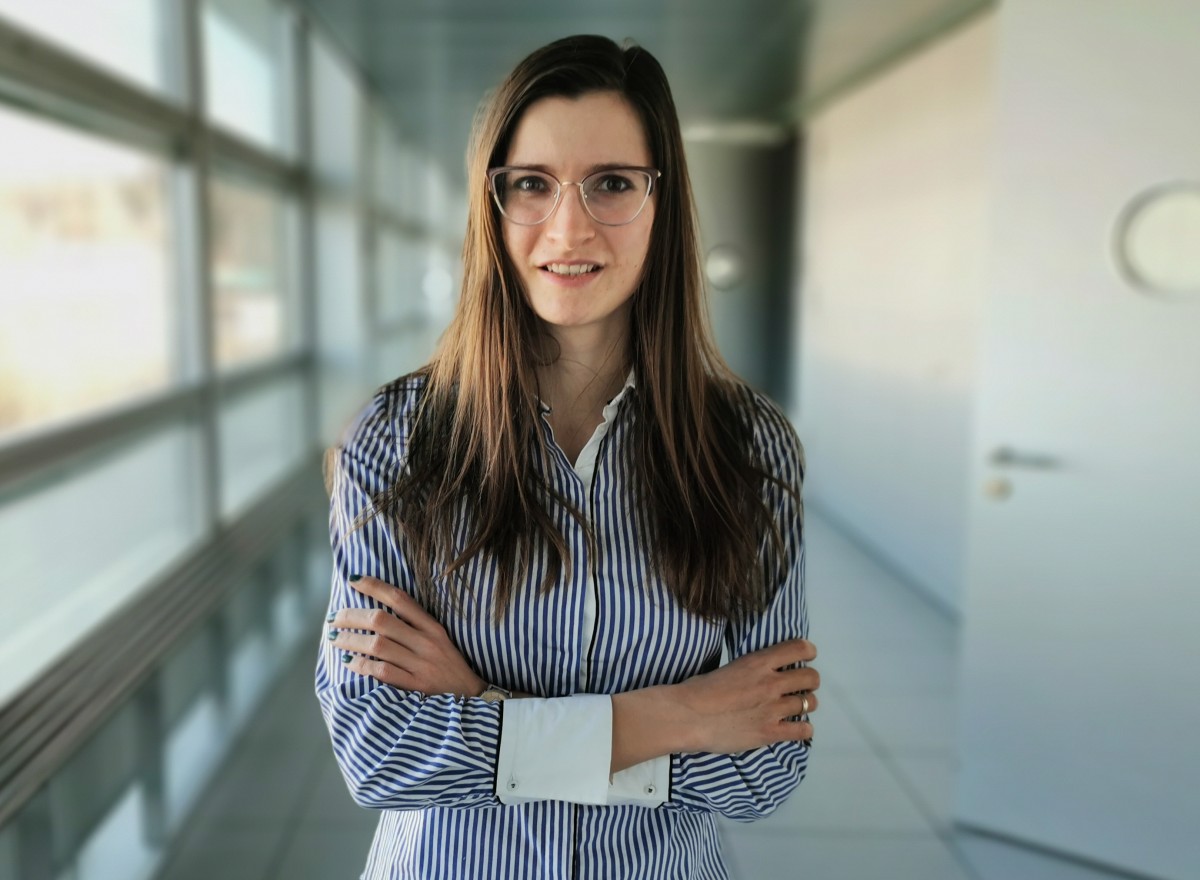
Silvia Schintke is a full professor at Haute école d'Ingénierie et de Gestion du Canton de Vaud (HEIG-VD), part of HES-SO University of Applied Sciences and Arts Western Switzerland. She leads the Laboratory of Applied NanoSciences (COMATEC-LANS) and the Industrial Systems Engineering program. Professor since 2002 Executive Diploma HSG in General Management (2012-2014) St. Gallen Leadership Certificate (2011) Her research focuses on Nanotechnology and Advanced Materials , particularly Functional Surfaces , Nanofiber Fabrication , and Flexible Electrodes . She has developed bio-sourced packaging solutions and metal-free conductive polymers for medical applications. Key projects include: Current: SIENA (electrophysiology networks in agriculture) PRONANO (nanotechnology development) Completed: NAPARDI (France-Switzerland), CORRAL (EU FP7 corrosion protection), NanoSkills (European nanotechnology training) She has secured multiple grants from: innosuisse Swiss National Science Foundation EU FP7 Leonardo da Vinci Program Her publications span conductive hydrogels , nanofiber electrodes , and molecular self-assembly techniques. She collaborates with institutions like Agroscope, Vivent SA, and international universities.
Bernhard Schuster is an Associate Professor at the Institute of Synthetic Bioarchitectures within the Department of Biotechnology and Food Science at the University of Natural Resources and Life Sciences, Vienna (BOKU). His research focuses on biomimetic systems using S-layer proteins for membrane engineering, biosensor development, and nanobiotechnology applications. Doctoral Degree (1995) and Postdoctoral Qualification (2004) from TU Graz Active in international research networks and conference presentations Key research areas include: Self-assembly of S-layer proteins and lipid membranes Bioinspired materials for antimicrobial peptide studies Nanocarrier systems with S-layer functionalization Membrane protein integration in synthetic environments Recent publications (2015-2024) demonstrate expertise in: Graphene-lipid biosensors CRISPR-based archaeal S-layer studies Hybrid polymer/lipid membrane architectures Cell-free protein synthesis for membrane transporters Scientific recognition includes: Best Paper Award (2014) at Quantum, Nano/Bio and Micro Technologies conference He contributes to: Academic community through conference keynote invitations Interdisciplinary collaborations across Europe Training in synthetic biology and membrane biotechnology
Dr. Jacqui Adcock is a Senior Lecturer at Deakin University's School of Life and Environmental Sciences within the Faculty of Science Engineering and Built Environment. Based at the Geelong Waurn Ponds Campus, she leads research in analytical chemistry with a focus on lipid analysis, oxidation mechanisms, and chromatographic method development. Her work bridges fundamental chemical principles with practical applications in food safety, health, and materials science. Dr. Adcock earned her Doctor of Philosophy and Bachelor of Forensic Science, both from Deakin University. Her educational background established the foundation for her expertise in analytical methodologies applicable across multiple scientific domains. Her research program centers on three interconnected areas: investigating lipid oxidation in food systems to improve stability and safety; enzymatic synthesis and complete characterization of lipid mediators of inflammation with therapeutic potential; and developing comprehensive two-dimensional gas chromatography techniques for lipidomics and biomarker discovery. Her work on omega-3 fatty acids and their anti-inflammatory derivatives has particular relevance for treating conditions like arthritis, Alzheimer's disease, cardiovascular disease, and cancer. She has developed novel chromatographic methods for analyzing fatty acids, sterols, tocopherols, and other lipid compounds. Analysis of her publication record reveals a researcher with exceptional breadth across analytical chemistry, materials science, and biochemistry. Her work demonstrates consistent innovation in developing analytical methods while maintaining strong connections to practical applications. A significant portion of her publications focus on chemiluminescence and electrochemiluminescence techniques, lipid analysis methods, and innovative approaches to studying lipid oxidation and inflammation pathways. Peter W. Alexander Medal for Early Career Excellence in Analytical Chemistry (2014) Australian Research Council DECRA Fellowship (2014-2018) Australian Postdoctoral Fellowship (Industry) (2010-2013) Dr. Adcock actively supervises doctoral students, currently mentoring five PhD candidates while having successfully guided eight students to completion. Her grant portfolio includes significant funding from the Australian Research Council, including the Industrial Transformation Training Centre for Facilitated Advancement of Australia's Bioactives (2022-2025) and the Green Chemistry ITTC (2021-2024), with additional support from industry partners like Kemin, HeiQ, Ridley Corporation, and Mantzaris Fisheries. She serves as President of the Australasian Section of the American Oil Chemists' Society and as an Editorial Advisor for Analytica Chimica Acta, demonstrating her leadership within the analytical chemistry community. As a member of Deakin University's Centre for Sustainable Bio-Products, Dr. Adcock collaborates with interdisciplinary teams focused on developing sustainable solutions using bio-based materials. Her work connects analytical chemistry expertise with practical applications in food science, health, and environmental sustainability.
Philippe Vroman serves as an Assistant Professor in Textile Process Engineering with a specialty in Nonwovens at the School of Textile Arts and Industries (ENSAIT), University of Lille. His research expertise encompasses advanced nonwoven-based product innovation for diverse applications including filtration, personal care, individual protection, thermal & phonic insulation, biocomposites, fashion/clothing, architecture, interior design, and medical fields. He specializes in advanced characterization techniques for nonwoven structures via image analysis, covering fiber diameter distribution, spatial uniformity metrics, pore morphology, and fiber-to-fiber contact estimation. His methodological work includes design support tools for multifunctional nonwovens and fundamental studies of property/structure/fiber and structure/process/polymer relationships. Dr. Vroman's technical focus integrates mechanical properties analysis with material science to advance nonwoven technologies across industrial and biomedical sectors. He maintains active research collaborations through ENSAIT's specialized facilities and contributes to academic knowledge via publications accessible on ResearchGate.
Dr. Nevena Paunovic is a Senior Scientist at the Institute of Pharmaceutical Sciences (IPW) of ETH Zürich , Switzerland. Her research focuses on 3D printing , biomaterials , medical devices , and personalized medicine . She leads projects supported by the InnoBooster program and has pioneered innovative technologies in biodegradable device fabrication. Education: MSc in Drug Sciences (University of Basel/ETH Zurich, 2016-2018); MSc in Pharmaceutical Sciences (University of Belgrade, 2009-2015) Nevena's research explores light-based 3D printing of biomedical inks for applications in customizable stents , photothermal therapy , and smart biomaterials . Her work bridges photopolymerization techniques with clinical translation in personalized medical devices . Recent publications analyze 4D printing of degradable elastomers, NIR-responsive hydrogels , and solvent-free biodegradable manufacturing . Themes span biomedical engineering , polymer science , and advanced manufacturing . Scientific Awards: 2024 Venture Kick Stage III and InnoBooster grants (CHF 150’000 each) 2023 ETH medal for outstanding doctoral thesis 2023 Young Investigator Award (APGI/Sanofi) 2022 ETH Pioneer Fellowship 2016 Dositeja Scholarship (Serbia) Her expertise in 3D printing and biomaterials has led to technology commercialization through ventures like OBaris (formerly Transire Bio), focusing on medical device innovation.
Jinze Dou is an Academy Research Fellow at Aalto University's Department of Bioproducts and Biosystems, specializing in biomaterials, sustainable chemistry, and plant-based resource utilization. His work focuses on valorizing underutilized biomass such as willow and spruce bark for applications in water treatment, biomedical materials, and renewable energy storage. He has led projects including the development of UV-blocking sunscreens from spruce bark stilbenes and coagulants for water purification from willow extracts. His research spans organic chemistry, material science, and environmental engineering, with a particular emphasis on circular economy principles. Notable contributions include advancing enzyme-based biomass fractionation techniques and exploring natural dye fixation methods using chitosan. Dou has collaborated internationally, contributing to UN Sustainable Development Goals related to clean water, affordable energy, and responsible consumption. Received the 2019 IAWS PhD Award for outstanding research Lead Investigator for the 2023–2027 'FACE+' project on UV-filter development Contributed to the 'BioColour' project recognized with the Iiris-palkinto award Key innovations include structural characterization of plant biomolecules via NMR and Raman spectroscopy, and demonstrating the antibacterial properties of willow bark materials for wound dressings. His work bridges fundamental plant chemistry with industrial applications, emphasizing sustainability.
Winnie Courtene-Jones is a Lecturer in Marine Pollution at Bangor University, affiliated with the School of Ocean Sciences. Previously, she worked at the University of Plymouth's International Marine Litter Research Unit. Her research focuses on microplastic pollution, its ecological impacts, and interventions to address plastic pollution. She holds a PhD in Microplastics in the deep-sea ecosystem from the Scottish Association for Marine Science (2019), an MRes in Marine Biology from the University of Plymouth (2013), and a BSc in Zoology from Bangor University (2011). Her research explores plastic pollution in marine and terrestrial environments, including the deep sea, ocean gyres, and agricultural soils. She led the eXXpedition Round the World voyage, studying global microplastic flows, and co-leads the Scientists Coalition for an Effective Plastics Treaty's working groups on Microplastics and Alternative Plastics. She actively engages in UN negotiations, policy briefs, and public communication, including appearances at the UK/EU Parliaments and BBC media outlets. Recent projects include the NERC-funded Bio-Plastic-Risk project examining biodegradable plastics' environmental impacts. She supervises PhD student Allicia Fullarton and has authored over 20 peer-reviewed publications. Her work contributes to UN Sustainable Development Goals, particularly those addressing environmental sustainability and climate action.
Fabien Alibart is a Research Officer and Permanent Researcher at the University of Sherbrooke (Canada), associated with the LN2-3IT/CNRS laboratory. His primary focus is on neuromorphic computing, memristive devices, and bio-inspired hardware solutions. He holds a PhD in Thin Film Physics from the University of Picardie Jules Verne (Amiens, France), specializing in optoelectronics and carbon-based devices. His research spans neuromorphic systems, organic electrochemical transistors, and memristive circuits. Key projects include developing iono-electronic materials for brain-inspired computing (IONOS project), cryogenic memristors, and 3D memory architectures. He has led multiple ANR and NSERC grants, focusing on neuromorphic interfaces and energy-efficient computing. Alibart's work intersects material science, electrical engineering, and biology. Notable contributions include memristor-based pattern classification, synaptic plasticity modeling, and neuromorphic hardware integration. His teams have pioneered organic/nanoparticle transistor synapses and developed CMOS-compatible memristive crossbars for analog AI acceleration. Collaborations span institutions like UdeM, IBM Zurich, and the European CHIST-ERA initiative. His lab focuses on advancing bio-interfacing technologies and neuromorphic engineering through multidisciplinary approaches.
Timothy E. Long is a Professor at Arizona State University (ASU), affiliated with the School of Molecular Sciences and the School for Engineering of Matter, Transport, and Energy. He also serves as the Director of the Biodesign Center for Sustainable Macromolecular Materials and Manufacturing. His research focuses on sustainable polymer design, additive manufacturing (3D printing), and green chemistry principles to create recyclable materials. Long holds a B.S. in Chemistry from St. Bonaventure University (1983) and a Ph.D. in Chemistry from Virginia Tech (1987). His work emphasizes circular polymer economies, integrating novel macromolecular structures with advanced manufacturing techniques. Key areas include degradable polymers, stimuli-responsive materials, and solvent-free polymerization processes. The research group collaborates across disciplines, including chemical engineering, materials science, and biochemistry, to address environmental challenges through sustainable material innovation. Publications highlight advancements in vat photopolymerization, recyclable photoresins, and biodegradable hydrogels. Long’s contributions span over 200 peer-reviewed articles and patents, with a focus on translating fundamental polymer science into practical applications. His teaching includes courses in research methods and special topics in chemistry and materials science.
Assistant Professor Peter Olsén leads the Green Polymer Chemistry (GPC) group at Linköping University's Laboratory of Organic Electronics (LOE), focusing on sustainable and functional materials through polymer, organic, and biopolymer chemistry. He holds a PhD in Fibre and Polymer Technology from KTH Royal Institute of Technology (2015) and a master's in Chemical Engineering (2010). His research spans green synthetic methodologies, biobased polymers, and chemical recycling, supported by grants from the WWSC, Olle Engkvist Foundation, and FORMAS. Notably, his group moved to LOE in 2024, expanding into organic electronics integration. Key achievements include developing novel functionalization strategies for cellulose and lignin, as well as designing recyclable polymer systems. Education: MSc/PhD in Chemical Engineering/Polymer Chemistry from KTH. Postdoc roles included Stockholm University (2016–2018) and KTH (2018–2020). His research emphasizes sustainable material design, with over 50 peer-reviewed publications. Awards include the WWSC Strategic Recruitment Package (2024) and the FORMAS Starting Grant (2020). Research interests center on green chemistry innovations, including chemical recycling pathways, biopolymer functionalization, and eco-friendly polymer synthesis. His lab's recent expansion at LiU's Norrköping campus (2024) supports advanced material experimentation. Grants and collaborations drive projects on circular materials and energy-efficient biocomposites.
Adam is a globally recognized academic and industry leader in Health Informatics, holding multiple faculty roles across prestigious institutions. He serves as Visiting Professor at Taipei Medical University, Honorary Professor at Swansea University Medical School, and holds adjunct positions at Nanyang Technological University, Hong Kong University, and others. His primary affiliation is with the National University of Singapore, where he leads the Smart Health Leadership Centre and contributes to the MSc Biomedical Informatics programme. His work emphasizes digital transformation in healthcare, stakeholder empowerment, and sustainable innovation in patient-centered care. Adam's research focuses on bridging the eHealth divide through curriculum development and stakeholder collaboration. He has pioneered initiatives like the Mini-HI™ program to address silo-based training limitations. His academic roles include supervising scholarly projects at Lee Kong Chian School of Medicine and leading research in healthcare management education. His recent publications span advanced battery technologies, with a focus on solid-state electrolytes, materials science, and energy storage solutions. Though the Mini-HI™ bio emphasizes his Health Informatics contributions, his academic output also extends into materials innovation. Adam advises institutions globally on healthcare informatics and serves on technical committees for certifications like CPHIMS (HIMSS). His advisory roles include the Healthcare Advisory Group at Nanyang Business School and leadership in international training programs.
Wil V. Srubar is a Professor and Charles Victor Schelke Endowed Professor in the Department of Civil, Environmental and Architectural Engineering at the University of Colorado Boulder. He serves as the Deming Associate Dean for Innovation & Entrepreneurship. His research focuses on biomimetic and living materials, alternative cement materials, and reducing embodied carbon in construction. He holds a PhD from Stanford University (2013), MS from UT Austin (2008), and BS from Texas A&M (2006). His work integrates synthetic biology with civil engineering to develop self-healing materials and carbon-negative construction solutions. Notable achievements include pioneering engineered living building materials and developing bio-inspired antifreeze polymers for concrete durability. He has been recognized with awards including the 2025 American Ceramic Society Fellowship and the 2023 Schmidt Science Polymaths Award. Education: PhD, Civil Engineering, Stanford University, 2013 MS, Civil Engineering, University of Texas at Austin, 2008 BS, Civil Engineering, Texas A&M University, 2006 Research emphasizes interdisciplinary approaches to sustainable materials, including biomineralization processes, carbon sequestration in construction, and AI-driven material optimization. His lab explores novel applications of microbial-induced carbonation and diatom-based materials. Recent work addresses whole-life carbon emissions of building materials and scalable low-carbon cement alternatives. Awards: 2025 Srubar Lab/Campus Sustainability Award 2023 Pritzker Emerging Environmental Genius Nominee 2020 NSF CAREER Award 2017 ENR Top 20 Under 40 Led initiatives like the Carbon-Negative Pilot project and contributed to DOE building energy studies. Current projects investigate 3D-printed bio-based insulation and AI for material property prediction. His work bridges academia and industry, fostering entrepreneurial ventures in sustainable construction technologies.
Martial Toffano is a Researcher (Chargé de Recherche) at the Laboratoire de Chimie Moléculaire (LCM) within the Institut de Chimie Moléculaire et des Matériaux d'Orsay (ICMMO) at Université Paris-Saclay. His work focuses on organocatalysis , asymmetric synthesis , phosphonate chemistry , and green catalytic processes . Key projects include developing novel organocatalysts (e.g., Fiaud’s Acid, 2-hydroxymethyl-18-crown-6), enzymatic kinetic resolution protocols, and bio-inspired catalysts derived from biomass. Research Interests : Design of chiral catalysts for enantioselective transformations Organocatalytic cascade reactions Phosphonate synthesis with biological applications Lipase-catalyzed promiscuity in novel bond formations Development of eco-friendly synthetic methods Publications Trends : Recent studies emphasize: Triple cascade organocatalysis for bis-lactone synthesis (2024) Enantioselective deacylation via CAL-B lipase (2021-2023) Computational studies (DFT/molecular docking) for drug-target interactions (2023) Novel phospholane oxides and spiro-dihydropyranones (2020-2024) Advising & Grants : Collaborations span medicinal chemistry, sustainable catalysis, and materials science. Active in training researchers through ICMMO’s doctoral programs. Labs & Teams : Part of the LCM team specializing in molecular catalysis and biomass valorization.
Prof. Dr. Wanda Guedens is a Full Professor at Hasselt University's Faculty of Sciences, leading the Biomolecule Design Group (BDG) and serving as Vice Rector for Education. Her research focuses on designing protein-based biomaterials for advanced healthcare, including hydrogels, nanobodies, and biosensors. She holds a PhD in Chemistry (1999) and has supervised 8 PhD students in areas like cancer diagnostics and biomaterials. Her work integrates biochemistry, materials science, and metabolomics, with notable contributions to early cancer detection via nanobodies and hydrogel-based drug delivery systems. She pioneered gamification tools like the GAPc project to enhance chemistry education and transition to higher education. Her interdisciplinary approach spans biomaterials development, metabolic profiling of diseases (e.g., lung cancer, diabetes), and innovative bioconjugation techniques. As Vice Rector, she oversees educational strategies at Hasselt University, emphasizing active learning and student success. Her lab, BDG, collaborates on 13 research projects, advancing materials chemistry and biofunctionalized surfaces for medical applications.
Venu G Varanasi is an Associate Professor at The University of Texas at Arlington in the College of Nursing and Health Innovation, with additional appointments in Bioengineering, Kinesiology, and Materials Science and Engineering. His research focuses on developing innovative biomaterials and 3D bioprinting technologies for bone and tissue regeneration. Dr. Varanasi received his PhD in Chemical Engineering from the University of Florida in 2004, with work conducted in partnership with Oak Ridge National Laboratory. He completed postdoctoral training at the University of California, San Francisco and Lawrence Berkeley National Laboratory before joining Texas A&M Health Science Center as an Assistant Professor. In 2018, he moved to UT Arlington where he continues his research on biomaterials for regenerative medicine. His research program centers on "in situ bioprinting" - a technique that allows for direct printing of regenerative materials into tissue defects. This approach uses biopolymers like gelatin and FDA-cleared nanoparticles to create scaffolds that facilitate natural bone healing without the need for secondary revision surgeries. His work spans materials fabrication, biomanufacturing tool development, and understanding the mechanisms that trigger rapid tissue healing. Dr. Varanasi has secured significant funding for his research, including multiple NIH grants, an NSF grant, industry funding, and foundation support. His laboratory has generated four inventions with three patents and one provisional filing. His research has resulted in over 35 peer-reviewed publications, book chapters, and patents. Senior Member Induction to the National Academy of Inventors (2024) University Award for Outstanding Research Achievement (2024) First Prize Pitch Competition, Bio North Texas (2022) Inductee, National Academy of Inventors (2022) NIH K25 career development award (2007) Dr. Varanasi actively mentors graduate students across multiple departments and serves on numerous university committees related to research, innovation, and commercialization. He teaches courses in Genomics and Nanotechnology in Health Care, Research Design, and Orthopaedic Biomaterials, bridging engineering principles with clinical applications.