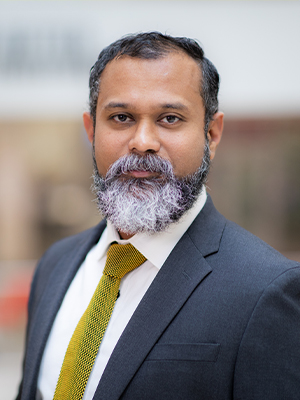
Adrian Weller is a Director of Research in Machine Learning at the University of Cambridge and Head of Safe and Ethical AI at The Alan Turing Institute, where he also serves as a Turing Fellow. He additionally directs the Trust and Society programme at the Leverhulme Centre for the Future of Intelligence. His career includes senior roles in finance and advisory positions for governmental AI ethics bodies. His research integrates technical and societal dimensions of artificial intelligence, with major foci including: Foundational ML : Statistical methods, high-dimensional inference, causality, and Monte Carlo techniques Trustworthy AI : Fairness, privacy, bias mitigation, and algorithmic transparency Applied Domains : Computer vision, reinforcement learning, and bio-applications of ML Socio-technical Systems : Policy frameworks, human perceptions of algorithms, and ethical deployment Notable recognition includes an MBE (2022) for pioneering contributions to digital innovation. His work actively informs UK and EU AI policy discussions.
João F. Mano is a Full Professor at the Department of Chemistry, University of Aveiro, and Director of the Doctoral Program on Biotechnology. He leads the COMPASS Research Group and serves as Vice-Director at CICECO - Aveiro Institute of Materials. His academic appointments include Invited Professor at University of Lorraine (France), Visiting Professor at KAIST (South Korea), and Adjunct Professor at Ajou University (South Korea). Education: PhD in Chemistry (1996, Technical University of Lisbon); D.Sc. in Tissue Engineering, Regenerative Medicine and Stem Cells (2012, University of Minho) Research Interests focus on Biomaterials for Regenerative Medicine , integrating Nanotechnology , Microtechnology , and Biofabrication . His group develops Bioinspired Materials using polymer chemistry, Decellularized Extracellular Matrix , and 3D Bioprinting to engineer Cell Microenvironments for therapeutic applications. Recent Publications highlight advancements in Human-Derived Hydrogels , Photopolymerizable Scaffolds , Magneto-Responsive Biomaterials , and Programmable Bioinks . Trends show emphasis on Organ-on-a-Chip integration, Smart Living Materials , and Green Bioprinting methodologies. Scientific Awards include: European Research Council Advanced Grants (2015, 2020) Fellow at IUPAC, European Academy of Sciences, and American Institute of Medical and Biological Engineering ERC Proof of Concept Grants Doctor Honoris Causa from University of Lorraine and Utrecht UNESCO Chair on Biomaterials George Winter Award (European Society for Biomaterials) Supervisions & Collaborations encompass 74+ MSc, 26+ PhD students, and 40+ postdocs. He co-founded METATISSUE and CELLULARIS Biomodels , and serves as Editor-in-Chief of Materials Today Bio .
Isuru Godage is an Assistant Professor in the Department of Engineering Technology & Industrial Distribution at Texas A&M University's College of Engineering. He holds affiliated faculty positions in Mechanical Engineering and Multidisciplinary Engineering. His work focuses on advanced robotics systems, particularly soft robots, continuum arms, and their applications in surgery and blockchain-based collaboration. He earned a B.Sc. (Hons) in Electronic and Telecommunication Engineering from the University of Moratuwa, Sri Lanka (2007), and a Ph.D. in Robotics, Cognition, and Interaction Technologies from the University of Genova – Italian Institute of Technology, Italy (2013). Research Interests: Soft robots and continuum robots Modular robotic systems MRI-compatible surgical robotics for intracerebral hemorrhage evacuation Motion planning and control of underactuated systems Blockchain-enabled trustless collaboration between humans and robots His publications emphasize dynamic control of soft robotic arms, kinematic modeling of continuum systems, and bio-inspired designs for medical and industrial applications. Recent work explores locomotion strategies for soft quadrupeds and snake-like robots, alongside innovations in decentralized robotic data frameworks. Dr. Godage has secured grants such as the NSF CAREER Award (2021) focused on transformable soft robots and collaborative projects with the National Robotics Initiative (NRI). His research bridges robotics mechanics, control theory, and emerging technologies like blockchain for swarm robotics.
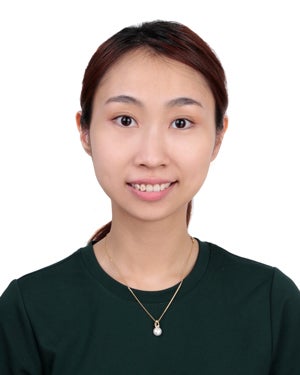
Tan Yu Jun is an Assistant Professor at the National University of Singapore (NUS), joining in January 2021. She earned her BEng and PhD from Nanyang Technological University (NTU), focusing on additive manufacturing and biomaterials, followed by postdoctoral work on stretchable and self-healing electronics. Her research lies at the intersection of manufacturing technologies and functional materials , with a focus on developing soft machines and electronics using 3D printing, self-healing materials, and bio-inspired designs. She leads the YJ Laboratory , which emphasizes eco-friendly and smart materials. Her lab has produced high-impact publications in journals like Nature Materials , Nature Electronics , Science Robotics , and Advanced Materials , with recent work on transparent, conductive, self-healing magnetic rubber published in Science Advances (2025). This aligns with her expertise in materials engineering and soft robotics. Scientific Awards & Recognition Student-led teams from her lab won gold, silver, and healthcare special awards at the 25th Singapore Science & Engineering Fair. Her postdoc Zhang Xuan and student Eddy Pang received Best Poster Awards at MRS Fall 2024 and ICMAT 2025, respectively. Her student Max Ang Yi Neng was awarded the NUS-JTC Medal for Sustainability (2021). Advising & Collaborations Advised MSc students Zhou Jinrun and Zhang Biteng to achieve A+ in ME5001. Mentored high school students from Hwa Chong Institution (HCI) and Anglo Chinese School (Independent) through research projects. Participated in organizing RoboSoft 2023 and served as a mentor in student publicity efforts.
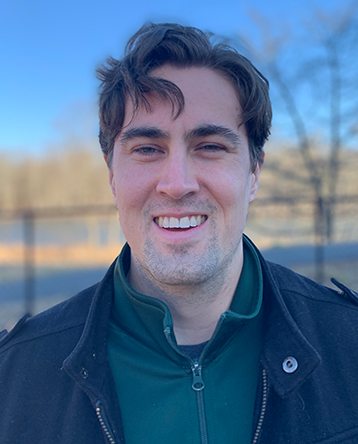
Trevor J Jones is an Assistant Professor in the Department of Mechanical Engineering at Carnegie Mellon University's College of Engineering, where he leads the Mechanically Intelligent Engineered Structures (MInEnS) Lab. His research integrates soft matter mechanics, nonlinear dynamics, and indigenous knowledge to develop novel technologies in soft robotics, meta-materials, and manufacturing. Education: Ph.D., Chemical Engineering, Princeton University (2023) B.S., Chemical Engineering, Vanderbilt University (2017) His research focuses on harnessing mechanical instabilities, fluid-solid interactions, and granular matter to create intelligent, adaptive materials. Inspired by natural phenomena and Ojibwe beadwork traditions (reflected in the MInEnS Lab's name from the Ojibwemowin word manidoominens ), his work spans soft robotics, deployable structures, and beadwoven metamaterials. He employs an interdisciplinary approach combining crafting, experimentation, and theoretical modeling. His recent publications (2022–2024) demonstrate a strong trend in leveraging buckling, plasticity, and fluid dynamics to achieve emergent intelligence and multifunctionality in soft engineered systems, particularly through innovative fabrication techniques like bubble casting and beadwork-inspired design. Scientific Awards: AISES Lighting the Pathway Fellow Trailblazer in Engineering Rising Star in Soft and Biological Matter Jones actively mentors graduate and undergraduate researchers, including PhD students Eddie Beck and Angela Lee, and undergraduates Eleni Georgountzos and Adela Qiu. He is currently recruiting PhD students and postdocs for projects in bead-woven materials and soft matter mechanics. The MInEnS Lab fosters a highly interdisciplinary environment that values curiosity, craftsmanship, and the integration of diverse cultural perspectives in scientific inquiry.
Dr. Cosmin Ioan Roman is a Lecturer at the Department of Mechanical and Process Engineering at ETH Zürich, affiliated with the Chair in Micro and Nanosystems since 2006. His research focuses on solid-state micro and nanotransducers, spanning from traditional Silicon micromachining to carbon nanotube-based (CNT) devices for bio-sensing applications, with an emphasis on energy-efficient transducer concepts. Doctoral Degree: National Polytechnic Institute of Grenoble (INPG) Roman's expertise lies in multi-physics and compact modeling of transducers. His work bridges materials science, semiconductor device physics, and biomedical sensing, utilizing advanced fabrication techniques for scalable sensor arrays on flexible substrates. The selected publications highlight his contributions to tactile sensing and cell rheology. His co-supervised doctoral thesis on carbon nanotube resonators demonstrates his interdisciplinary approach to nanoscale and biomedical systems.
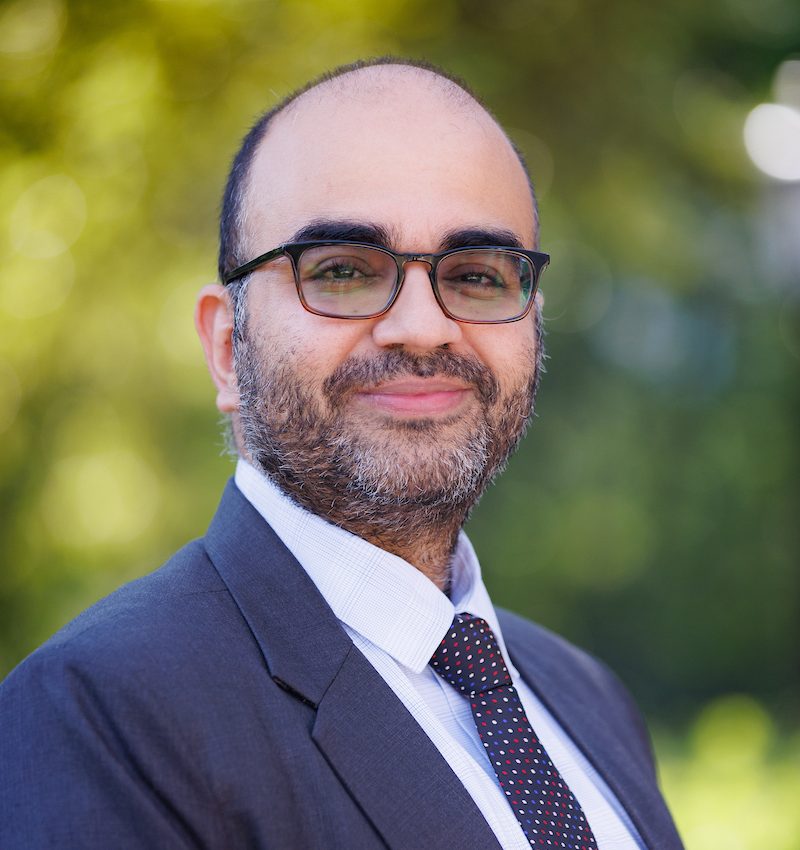
Vishesh Vikas is an Associate Professor in the Department of Mechanical Engineering at the University of Alabama, College of Engineering. He is based in the South Engineering Research Center (SERC) and leads the Agile Robotics Laboratory (ARL@UA), which focuses on bio-inspired, soft, and tensegrity robotics, as well as inertial sensing and estimation. Education: PhD, Mechanical Engineering, University of Florida, 2011 MS, Mechanical Engineering, 2008 B.Tech., IIT Guwahati, 2005 His research spans autonomous systems, wearable technologies, biomedical devices, guidance and control, intelligent systems, space robotics, and engineering education . The lab’s work integrates mechanical design, sensing, and advanced control to create agile, adaptive robotic systems for unstructured environments. The recent publications highlight a strong trend in soft and tensegrity robotics , with focus on gait synthesis, locomotion planning, shape and joint estimation, and dexterous manipulation. These works combine modeling, data-driven control, and sensor fusion, often using accelerometers, IMUs, and vision for real-time feedback. The research is published in top robotics venues such as IEEE TRO, RA-L, and ASME journals. Scientific Awards: No awards explicitly mentioned in the text. Vishesh Vikas actively advises graduate students, including PhD and Master’s candidates, and has successfully guided several to thesis and dissertation completion. His lab is affiliated with multiple research centers including the Alabama Center for the Advancement of AI, Center for Advanced Manufacturing, and Center for Advanced Public Safety. He is involved in outreach and education, including mechatronics workshops and seminar hosting. Current projects include exosuits for spine support and robotic systems for mobility in extreme environments. Laboratory and Team: The Agile Robotics Lab (ARL@UA) fosters interdisciplinary research in nature-inspired robotics, combining principles from biology, mechanics, and control. The team has hosted eminent scholars and is featured in university and college news for its innovative work on wearable robotics and soft manipulators.
Dr. Sheng Yang is an Assistant Professor in the School of Engineering at the University of Guelph. He leads the Design Innovation and Intelligent Manufacturing (DIIM) lab, focusing on advancing additive manufacturing, generative design, and smart manufacturing technologies. His research integrates IoT, big data analytics, and bio-inspired design to address challenges in aerospace, green energy, and healthcare. Key areas include computational design for additive manufacturing, data-driven mass customization, and digital twin-based optimization. Education: Ph.D. in Mechanical Engineering from McGill University (2019), followed by a Postdoctoral Fellowship at McGill (2019–2020). Joined University of Guelph in 2020. Research interests span energy efficiency, complex system optimization, and personalized healthcare products. Recent work emphasizes digital twin synchronization in robotics, machine learning for quality prediction, and sustainable additive manufacturing processes. Notable awards include the 2019 Association of Commonwealth Universities Blue Charter Fellowship and 2018 ASME Best Paper Award. His lab actively seeks partnerships in personalized healthcare, product design, and smart manufacturing. Grants and collaborations focus on advancing manufacturing technologies and sustainability. No formal advisees listed, but active in graduate training through lab projects. The DIIM lab explores cutting-edge solutions for industrial and societal challenges through interdisciplinary approaches.
Silas Alben is a Professor in the Department of Mathematics at the University of Michigan, affiliated with the College of Literature, Science, and the Arts. His research focuses on applied mathematics and mathematical biology, particularly fluid-structure interactions in biological systems. He employs computational simulations and laboratory experiments to study fundamental physics of flexible bodies in fluids. Research interests include biomechanics of swimming organisms, vortex dynamics in fluid-structure interactions, and thermal transport optimization. His work bridges mathematical modeling with experimental validation to understand complex physical phenomena. Publications demonstrate strong focus on fluid dynamics applications, including vortex-enhanced heat transfer, membrane flutter dynamics, and bio-inspired locomotion. Recurring themes include optimization of fluid-structure systems, vortex wake interactions, and computational methods for aeroelastic problems.
Florian Muijres is an Associate Professor and Chairholder at the Experimental Zoology Group, Wageningen University & Research, where he leads the Animal Flight Lab. His research focuses on the biomechanics, aerodynamics, and flight control of natural flyers such as insects, birds, and bats, with applications in bio-inspired robotics and ecological solutions like mosquito traps and flapping-wing drones. He holds a PhD from Lund University (Sweden) and conducted postdoctoral research at the Dickinson Lab, University of Washington (USA). Research Interests: Merging experimental and computational methods, his work explores primary research on flight mechanics (e.g., mosquito evasion, butterfly gliding) and applied studies (e.g., drone design, pollinator behavior in greenhouses). His lab uses advanced videography and robotic models to study flight dynamics under real-world conditions. Labs & Teams: The Animal Flight Lab collaborates with biologists, physicists, and engineers to investigate flight adaptations in mosquitoes, bumblebees, and pied flycatchers. Projects include developing high-efficiency traps and analyzing flight performance in complex environments.
Alex Chortos is an Assistant Professor of Mechanical Engineering at Purdue University's School of Mechanical Engineering. His research focuses on bio-inspired electronics, mechanically adaptive materials, and advanced manufacturing techniques. He leads the Chortos Lab, which explores innovations in soft actuators, wearable haptics, and polymer design. Chortos holds a B.A.Sc. from the University of Waterloo (2011), a Ph.D. from Stanford University (2017), and completed a postdoctoral fellowship at Harvard University (2020). His academic work bridges fundamental material science with practical applications in robotics, biomedical devices, and human-machine interfaces. Key research areas include: Multimaterial additive fabrication for soft robotics Stretchable sensors and transistors for e-skin applications Design of durable and adaptive polymer systems His publications emphasize advancements in 3D printing techniques, bioinspired sensor systems, and the development of mechanically robust electronic components. Recent work explores photodynamic polymers and machine learning-driven optimization of soft actuators.
Dr. Ting Hu is an Associate Professor in the School of Computing at Queen's University, affiliated with the Faculty of Arts and Science. She leads the Machine Intelligence & Biocomputing (MIB) Laboratory, focusing on bio-inspired AI and bioinformatics. Her research bridges evolutionary computing, machine learning, and biomedical data analysis. Dr. Hu holds a PhD in Computer Science from Memorial University and completed postdoctoral training at Dartmouth College. She teaches courses with strong student evaluations, winning the Howard Staveley Teaching Award (2019-2020) and recognition as a Mental Health Champion (2023). Education: B.Sc. in Computational Mathematics, Wuhan University M.Sc. in Computer Science, Wuhan University PhD in Computer Science, Memorial University Postdoctoral Fellowship, Geisel School of Medicine, Dartmouth College Research Interests: Evolutionary algorithms and genetic programming Interpretable and explainable AI Biomedical data mining (metabolomics, genomics) Complex network analysis Applications in precision medicine and disease prediction Awards & Recognition: Queen's AMS Undergraduate Mentorship Award (2025) IEEE CIBCB Best Student Award (2022) Howard Staveley Teaching Award (2019-2020) NSERC Discovery Grant Reviewer (2019) Memorial University's Best Professor Award (2016) Lab & Collaborations: MIB Lab develops tools like geneDRAGNN (graph neural networks for gene-disease prioritization) Active roles in IEEE Computational Intelligence Society and EuroGP Advances include vaccination strategies via graph-RL and interpretable clustering methods
Dr. Gary Glover is a Professor of Radiology (Radiological Sciences Lab) at Stanford University , with courtesy appointments in Psychology and Electrical Engineering. His work focuses on the physics and mathematics of MRI, particularly rapid scanning methods using spiral k-space trajectories for functional brain imaging and multimodal neuroimaging (fMRI/EEG/fPET/fNIRS) combined with neuromodulation techniques like TMS and transcranial ultrasound. Academic Appointments: Radiology, Psychology, Electrical Engineering Professional Affiliations: Bio-X, Stanford Cancer Institute, Wu Tsai Neurosciences Institute Research Interests include: Development of blood oxygen level-dependent (BOLD) and viscoelastic contrast in MRI Functional MR Elastography for brain activation mapping Optimization of MR-ARFI for transcranial ultrasound guidance Automated spinal cord segmentation (EPISeg) using machine learning Scientific Awards : National Academy of Engineering (2013) Gold Medal, ISMRM (2000) Steinmetz Award, General Electric (1985) Lauterbur Lecture, ISMRM (2018) Recent Publications analyze: Fast fMRI sampling and spurious signal correction Dissociated patterns in default mode network anti-correlations Neural correlates of collaborative behavior in triadic fMRI Salience network contributions to depression pathophysiology
Vivek Boominathan is an Assistant Research Professor in the Department of Electrical and Computer Engineering at Rice University. He is affiliated with the GLEE lab (Geometry, Light, & Imaging lab). His research focuses on computational imaging, combining computer vision, machine learning, applied optics, and nanofabrication to develop innovative imaging systems for applications such as robotics, medical sensing, and virtual/augmented reality. He has contributed to projects like PhlatCam (a lensless camera) and NeuWS (neural wavefront shaping). His work bridges optics, algorithms, and materials science to overcome traditional limitations in imaging systems. Boominathan's research interests include lensless imaging, optical meta-devices, turbulence mitigation, and bio-inspired imaging systems. He has developed systems like Foveated thermal imaging prototypes and real-time lensless microscopes. His lab emphasizes interdisciplinary approaches, integrating hardware design with machine learning. Key projects include: NeuWS: Neural wavefront shaping for imaging through scattering media CoIR: Compressive implicit radar for sensing applications FlatCam and PhlatCam: Ultra-thin lensless imaging devices Bioluminescence imaging in marine species His work has been published in top venues like Science Advances, Optica, and IEEE TPAMI. He collaborates with institutions like NASA JPL and industry partners on applied imaging solutions. Current research trends emphasize sensor-algorithm co-design and high-speed imaging systems for AR/VR applications. Boominathan holds a PhD in Electrical Engineering and has extensive postdoctoral experience in computational imaging. He advises projects in the GLEE lab and mentors students in hardware-software co-design for imaging systems. His lab focuses on translating theoretical innovations into practical devices with commercial potential.
Andrea W. Richa is a President's Professor at Arizona State University (ASU), holding positions in the School of Computing and Augmented Intelligence (SCAI), Barrett Honors College, and multiple research centers including the Biodesign Institute's Center for Biocomputing, Security, and Society. She specializes in distributed algorithms, programmable matter, and bio-inspired computing. Richa has led major research initiatives, including a DoD MURI award and an NSF CAREER Award, and has delivered keynote speeches at top conferences like DISC and LATIN. Her work focuses on self-organizing particle systems, wireless networks, and algorithmic foundations of active matter. Educations: PhD (Computer Science, Carnegie Mellon University, 1998), M.S. (Computer Science, Carnegie Mellon University, 1995), B.S. (Computer Science, Federal University of Rio de Janeiro, Brazil, 1989). Research Interests: Distributed algorithms, programmable matter, bio-inspired systems, wireless communication models, graph algorithms, combinatorial optimization, and resource allocation. She leads the Self-Organizing Particle Systems Lab and is part of SCAI's Theory and Algorithms group. Awards: 2024 ASU Mentorship Award, 2021 Mentor of the Year, 2017 SCAI Research Excellence Award, NSF CAREER Award (1999), and multiple grants including DoD MURI. Her research spans theoretical and applied domains, with over 150 publications in top venues. Grants: Current DoD MURI funding (2019-25), NSF awards on Markov chain algorithms and active matter (2021-25), and prior funding on programmable matter (2014-2017). Labs/Teams: SOPS Lab (sops.engineering.asu.edu), contributing to interdisciplinary research in algorithmic matter and bio-inspired systems.