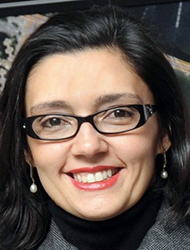
Adrian Widłak is a Teaching Assistant at the Department of Computer Science, Faculty of Computer Science and Telecommunications, Cracow University of Technology. His research focuses on information and communication technology (ICT) with specialization in point cloud analysis, visibility mapping, and network security. Specializes in LIDAR technology and Digital Surface Model (DSM) processing for viewshed generation Conducts research in big data algorithms, cryptography, and artificial intelligence Active in edge computing optimization and intelligent transportation systems His work spans multiple interdisciplinary domains including environmental monitoring, biomedical applications, and blockchain security. Recent publications demonstrate a focus on: 3D spatial analysis techniques using point cloud data Machine learning applications in ecological modeling Cybersecurity challenges in modern network architectures Optimization of edge computing infrastructures Blockchain consensus mechanisms and security frameworks
Abhishek Tripathi is an Associate Professor of Information Systems in the Department of Accounting and Information Systems at the School of Business, The College of New Jersey. With over ten years of teaching experience in IT-related graduate and undergraduate courses, Dr. Tripathi brings both academic expertise and professional experience from four years working in the software and telecom domain. Dr. Tripathi earned his Ph.D. from the University of Nebraska in 2016. His academic journey reflects a strong foundation in information systems theory and practice, preparing him for his current role shaping future business technology leaders. Dr. Tripathi's research focuses on several cutting-edge areas within information systems. His primary interests include Crowdsourcing, IS Project Management, Predictive Modeling, and IS Theory. His work bridges theoretical frameworks with practical applications, particularly in how organizations can leverage emerging technologies for improved decision-making and operational efficiency. His recent publications demonstrate a growing interest in the intersection of artificial intelligence with traditional information systems challenges, including applications in metaverse technologies, emotion classification, and nano-scale computing environments. Analysis of Dr. Tripathi's publication record over the past decade reveals an evolving research trajectory from foundational work in crowdsourcing and information systems theory toward more specialized applications of artificial intelligence and machine learning in business contexts. His work spans multiple domains including education technology, healthcare informatics, social media analysis, and project management. The consistent thread through his research is examining how information systems can solve complex organizational problems through innovative technological approaches. SIGITPM Membership Excellence Award 2021 Dr. Tripathi has been actively involved in service to the academic community through multiple committee roles. He has served on the Career Development Committee (2018-2020), Support of Scholarly Activities Committee (2019-2022), School of Business Curriculum Committee (2021-2022), and currently serves on the Committee on Faculty Affairs (2024-present) and Faculty Senate (2024-2025). His professional memberships include the Association of Information Systems and the New Jersey Big Data Alliance. While specific grant information isn't detailed in the provided text, his extensive publication record suggests successful research funding to support his scholarly activities. Dr. Tripathi teaches a variety of courses including Business Analytics for Decision Making, Database Management for Business, Foundations of Business Analytics, Introduction to Data and Information Science, Machine Learning, and Web Design and Development, reflecting his broad expertise across the information systems curriculum.
Associate Professor Scott Hawken is a faculty member at the University of Adelaide, affiliated with the School of Architecture and Civil Engineering within the Faculty of Sciences, Engineering and Technology. He serves as the Program Director for the Master of Landscape Architecture and Urban Design and is actively involved in teaching, research, and supervision at the postgraduate level. Position: Associate Professor, Landscape Architecture Role: Program Director, Master of Landscape Architecture and Urban Design Faculty: Sciences, Engineering and Technology School: School of Architecture and Civil Engineering Email: scott.hawken@adelaide.edu.au Dr. Hawken holds a PhD awarded in 2012 for his work mapping archaeological landscapes of Angkor using remote sensing. His research bridges landscape architecture, urban design, and landscape archaeology, emphasizing biodiversity-positive design, green infrastructure, and the use of advanced geospatial technologies. He is a national leader in promoting biodiversity in urban landscapes and chairs AILA's National Biodiversity Positive Working Group. His research interests span critical urban scholarship, radical political ecology, and the application of GIS, remote sensing, and geodesign in urban contexts. He has led international workshops across Asia, Europe, and North America and has consulted for the United Nations on urban development and human rights. His recent work includes editing a special issue for Urban Studies that integrates archaeology with contemporary urban planning and exploring biocultural digital twins and patch urbanism. The 15 most recent publications reflect a strong interdisciplinary trend, combining archaeology, urban studies, smart cities, and sustainability. His work consistently applies geospatial methods to historical and contemporary urban challenges, focusing on resilience, equity, and ecological integration in cities. Dr. Hawken has received recognition through editorial board appointments for Environment and Urbanisation ASIA and the Journal for Knowledge Based Development , and he regularly reviews for top journals. He was invited to deliver a keynote address to the Japanese Society of Landscape Architects in 2023. He is passionate about mentoring and is currently supervising or seeking PhD students in areas such as cultural landscapes, landscape archaeology, smart cities, green and blue infrastructure, and urban megaprojects. He has secured research grants related to urban resilience and digital transformation and has led the Smart Cities Research Cluster at UNSW in the past. Dr. Hawken leads research initiatives that integrate archaeological insights with modern urban design, particularly through his work on Angkor and rapid urban greening. He collaborates with government agencies, professional bodies, and international institutions to advance sustainable and equitable urban futures.
Şevki Işıklı is a Professor at Marmara University, Faculty of Communication, Department of Informatics . He holds a Ph.D. in Philosophy from Ankara University and has been affiliated with Marmara University since 2012, serving as Professor (2024–present), Associate Professor (2018–2024), and Assistant Professor (2013–2018). Education: Ph.D. in Philosophy, Ankara University (2012) Postgraduate in Philosophy, Atatürk University (2004) His research spans the intersection of philosophy, technology, and communication , focusing on quantum mechanics, digital ethics, gender studies, and societal implications of technology. Key themes include media ethics , social media dynamics , and human rights in digital contexts . Recent publications address AI in creative industries , platform governance , and animal rights philosophy . He supervises Ph.D. and Master’s theses on topics like social media toxicity, digital religion, and ethical journalism. Despite extensive contributions, no specific scientific awards are documented in the provided sources.
António Trigo is an Assistant Professor at ISCTE-IUL (University Institute of Lisbon) and an Integrated Researcher at ISTAR-Iscte, where he contributes to the Information Systems research group. He is affiliated with the Department of Information Science and Technology (ISTA), focusing on the intersection of technology and organizational management. His academic and professional activities span research, teaching, and leadership in information systems. Research Interests: His primary research areas include Management Information Systems, Business Process Management, IT Governance, Data Governance, Software Development, and Project Management. He investigates how organizations adopt and manage information technologies, with recent work on DevOps, low-code platforms, AI fairness, and digital transformation in education. His interdisciplinary approach integrates computer science, engineering, and management perspectives. Publication Trends: From 2022 to 2025, his research has been published in journals such as Sustainability , Journal of Open Innovation , and IT Professional , reflecting a strong focus on practical applications of information systems in business and society. Topics include digital transformation, AI ethics, project success, and data privacy, indicating a trajectory toward responsible and efficient technology deployment. Scientific Engagement: He serves on the editorial boards of several journals, including: International Journal of Information Systems and Project Management (Editor since 2015) International Journal of Human Capital and Information Technology Professionals (Editorial Team since 2020) International Journal of Smart Education and Urban Society (Editorial Team since 2017) He is also a frequent member of scientific committees for international conferences such as EMCIS, ARTIIS, and IBIMA. Teaching and Guidance: He has supervised 50 master’s dissertations and co-supervised 30, demonstrating a strong commitment to graduate education. He has held leadership roles in the Master’s program in Information Systems Management, including Director and Year Coordinator roles (2025–2027). He has also authored three editions of a textbook on programming with C#. Research Projects: He is involved in the InCITIES project, funded by the European Commission under Horizon Europe, which focuses on inclusive, sustainable, and resilient urban development through digital innovation and knowledge sharing among European universities.
Professor Georgios Leontidis is a Professor of Machine Learning at the University of Aberdeen, where he serves as the Interdisciplinary Institute Director for AI & Big Data and co-Director of the £10.9M UKRI AI CDT SUSTAIN. He is a member of the ELLIS Society and a Turing Academic Liaison, actively shaping national and international AI research agendas. His research expertise lies at the intersection of theoretical and applied machine learning, with key interests in capsule networks, domain adaptation, self-supervised learning, federated learning, and generative AI. His work addresses real-world challenges in environmental monitoring, agrifood sustainability, industrial systems, healthcare, and space science. The recent publications highlight a strong trend in developing novel AI architectures (e.g., OmniNet, Masked Capsule Autoencoders), advancing federated and self-supervised learning methods, and applying AI to sustainability (e.g., greenhouse gas accounting, yield forecasting) and scientific discovery (e.g., lunar radar analysis). His work increasingly integrates ethics, policy, and human-AI interaction, as seen in studies on bias amplification and AI copyright. TMLR - Action Editor ICLR 2025 - Area Chair NeurIPS 2024, 2025 - Area Chair Best Area Chair award, NLDL 2025 Shortlisted for Outstanding Contribution to Accessibility and Inclusivity in Blended Learning (2021) Ranked in Top 4% of EPSRC Full Peer Review College NeurIPS top 10% Reviewer (2020, 2023) Best PhD Paper Award at FISA 2019 (supervised student) Leontidis supervises 14 PhD students and manages 4 research fellows. He leads or co-leads major funded projects from UKRI, EPSRC, EU, and industry partners including Siemens and Tesco, with total funding exceeding £10 million. His collaborative network spans institutions in the UK, Sweden, Switzerland, Greece, Spain, and the Czech Republic. He is actively involved in research infrastructure and policy, serving as External Examiner at Cranfield and Hull Universities, member of the EPSRC Full College, and contributor to the UK AI Council’s Data Working Group. He also co-organized BMVC 2023 and chairs the BMVA Summer School.
Silvia Paracchini is Professor of Neurogenetics and Genomics at the University of St Andrews, School of Medicine , where she leads the Neurogenetics group within the Cellular Medicine Division. She is affiliated with several interdisciplinary units including the Centre for Biophotonics, Biomedical Sciences Research Complex, Institute of Behavioural and Neural Sciences, and the St Andrews Bioinformatics Unit. Her research focuses on the genetic basis of complex cognitive and behavioral phenotypes , particularly dyslexia, handedness, language disorders, and neurodevelopmental conditions . She employs multidisciplinary approaches such as genome-wide association studies (GWAS), whole exome sequencing, polygenic scoring, and functional genomics to uncover the molecular mechanisms underlying these traits. Her work contributes to UN Sustainable Development Goals in health and well-being. Recent publications reveal strong trends in human genetics and neurodevelopmental genomics , with studies on handedness, language acquisition in bilingual children, grip strength in youth, and machine learning applications in mental health . Her research increasingly integrates public and patient involvement , as seen in work shaping UK research priorities through lived experience of learning difficulties. Fellow of the Royal Society of Biology (2018) Fellow of the Royal Society of Edinburgh (2019) Royal Society University Research Fellowship (2011) Member of the RSE Young Academy of Scotland (2013, 2014) She actively mentors postgraduate researchers and leads significant funded projects, including the Specific Learning Difficulties Network funded by the Medical Research Council. Her lab produces open datasets and software, promoting transparency and reproducibility. She is an active participant in international conferences and public engagement, including media appearances on Left Handers Day . Her research group, the Neurogenetics group , collaborates widely across the UK and internationally, with recent work involving institutions in Hong Kong, Germany, Spain, and the US. She has served as Principal Investigator on grants from the Medical Research Council, The Royal Society of Edinburgh, and Scottish Funding Council .
Jaideep Srivastava is a Professor affiliated with Qatar Foundation (Doha, Qatar), University of Minnesota (Minneapolis, USA), and holds a PhD from University of California Berkeley. His research spans data mining, social network analysis, time series modeling, and health informatics. Recent work focuses on clinical deterioration prediction, sleep research, and computational analysis of pandemic behaviors. Key contributions in clustering algorithms and graph neural networks Active in multimodal learning and misinformation detection His publications from 2024-2022 demonstrate expertise in hierarchical clustering , large language model applications , and health data analytics . Articles often integrate machine learning , social network dynamics , and clinical monitoring systems . Current projects involve Covid-19 in-hospital mortality prediction , virtual influencer analysis , and low-light imaging techniques . Collaborations span institutions in Qatar, USA, and India with applications in urban mobility and precision medicine.
David E. Robbins is an Associate Professor and Program Director of the Master of Health Informatics and Analytics at Samford University, affiliated with the School of Public Health and the Department of Healthcare Administration and Informatics. He holds a PhD and MSEE in computer engineering from the University of Alabama at Birmingham and a BS in computer engineering from LeTourneau University. His research focuses on healthcare informatics, biospecimen informatics, data science, and machine learning, with a strong emphasis on applying software engineering and semantic web technologies to biomedical data challenges. He has developed tools for cancer genomics analysis and digital biorepositories, contributing significantly to translational research infrastructure. His recent publications demonstrate a consistent trend in leveraging big data and web-based frameworks for cancer genomics, biospecimen collaboration, and innovative applications of virtual reality in healthcare empathy training. These works reflect interdisciplinary efforts at the intersection of computer science, public health, and clinical research. Scientific Awards: Seng-jaw Soong Award for Excellence in Biostatistics and Bioinformatics Research (2013) Outstanding Service to the Society for Design and Process Science (2012) Outstanding Graduate Student Engineer of the Year (2010-2011) Dr. Robbins has served as a key contributor in developing national-level informatics tools and frameworks. While no formal advisees are listed, his role as Program Director indicates leadership in graduate education. He has not disclosed grant funding or lab affiliations in the provided text. He is actively involved in professional societies and has presented at major conferences such as Translational Science and BCB. His work supports collaborative, data-driven advancements in public health and biomedical research.
Mario Aquilina is a Senior Lecturer in the Department of English within the Faculty of Arts at the University of Malta. He holds a BA (Hons) and MA in English from the University of Malta and earned his PhD in English Studies from the University of Durham, UK in 2013. His academic work spans literary theory, electronic literature, and style studies, with particular focus on continental philosophy's intersection with literary analysis. His research interests prominently feature Critical Theory, Literary Theory, Electronic Literature, and Digital Humanities. Aquilina has made significant contributions to understanding style in literature through the lens of thinkers like Blanchot and Gadamer, while also exploring the emerging field of electronic literature and its theoretical implications. His work on the relationship between literature and digital games represents an innovative interdisciplinary approach that bridges traditional literary studies with contemporary digital culture. Aquilina's publication pattern reveals a strong trajectory in theoretical literary studies, with recent work increasingly engaging with digital humanities methodologies and big data approaches to literary analysis. His scholarship demonstrates consistent engagement with continental philosophy while progressively incorporating computational and digital perspectives on literature. As an educator at the University of Malta, he teaches within both the Department of English and the Centre for English Language Proficiency. His professional experience includes extensive work as an editor for international publishers, with particular expertise in managing multi-author projects and navigating cross-cultural editorial challenges. His academic contributions include editing multiple volumes on the history of the essay and serving as co-editor for the CounterText special issue on Electronic Literature. He maintains an active research agenda that bridges traditional literary scholarship with contemporary digital approaches, reflecting the evolving nature of literary studies in the 21st century.
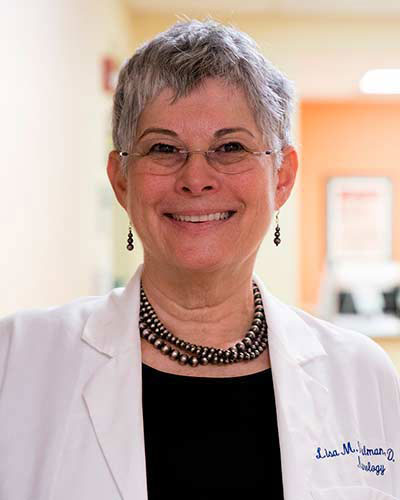
Lisa M. Shulman, MD, is a distinguished Professor in the Department of Neurology at the University of Maryland . She serves as the Division Director of Movement Disorders and Director of the University of Maryland Parkinson Disease and Movement Disorders Center , while holding the Eugenia Brin Endowed Professor of Parkinson's Disease and Movement Disorders and Rosalyn Newman Distinguished Scholar in Parkinson’s Disease titles. Extensive expertise in Parkinson's disease, movement disorders, and clinical outcomes research Active in health disparities, biosensor technology, and genetic studies Leadership roles in American Academy of Neurology and American Brain Foundation Research Focus: Dr. Shulman investigates how chronic neurological diseases affect daily function and quality of life, with emphasis on: Outcomes measurement and health disparities Exercise interventions and biosensor assessments Cognitive/behavioral problems in Parkinson's Development of quantitative models for big data analysis Genetics of Parkinson's disease Publications: Her work spans 140 peer-reviewed publications , including recent studies on longitudinal patterns in Parkinson's using wearable sensors and machine learning. Scientific Awards: Eugenia Brin Endowed Professor Rosalyn Newman Distinguished Scholar Education & Certifications: University of Miami Miller School of Medicine (MD) American Board of Psychiatry and Neurology certification Fellowship in Neurology/Movement Disorders Public Policy Fellow in US House of Representatives
Jianjun Hu is a Professor in the Department of Computer Science and Engineering at the Molinaroli College of Engineering and Computing , University of South Carolina. His research focuses on machine learning, deep learning, data mining, and evolutionary computation applied to bioinformatics, material informatics, and health informatics . Current projects include developing deep learning algorithms for intelligent audio processing , data-driven materials discovery , and medical image analysis . Education: Ph.D. in Computer Science (2004), Michigan State University Postdoc at University of Southern California (2005-2007) and Purdue University (2004-2005) Research Empowerment: Secured funding from NSF, NIH, Nvidia , and the South Carolina Department of Transportation Developed materials informatics platforms like Materialsatlas.org Created algorithms for protein-peptide binding prediction and crystal structure discovery Scientific Contributions: Editorial roles at PLOS ONE and Journal of Health & Medical Informatics Key conference reviewer for GECCO and BIBM Academic Mentorship: PhD advisors: Ananda Mondal, Jhih-Rong Lin, Emrah Atigan, Swain Mrutyunjaya MS thesis advisors: Guoyu Lu, Emrah Atilgan, Kevin Chien, Mythri Sunkara Laboratory: Machine Learning and Evolution Group (MLEG) at University of South Carolina Focus on deep learning for materials discovery , healthcare analytics , and evolutionary algorithms
Harald Gjermundrod is a Professor of Computer Science in the Department of Computer Science at the University of Nicosia's School of Sciences and Engineering, where he has served since September 2008. Previously, he was a Post-Doctorate Associate (2006-2008) at the High-Performance Computing Systems Laboratory, University of Cyprus. Education: PhD in Computer Science, Washington State University (2006) MS in Computer Science, Washington State University (2001) BS in Computer Science, Washington State University (1999) Dipl.-Ing, Oslo Metropolitan University (1998) His research spans Distributed Computing Systems , Computer Security , Blockchain Technology , and Data Protection , with emphasis on practical implementations like GridStat middleware for power grids and privacyTracker for GDPR compliance. As co-director of the Informatics Security Laboratory, he leads research on active defense mechanisms and data protection frameworks. His 87+ publications since 2001 show evolving focus from grid computing (2006-2010) to blockchain applications (2016-present), with recent work emphasizing privacy engineering, secure e-voting, and AI-driven security analytics. Key trends include transitioning from infrastructure-focused research (GridStat, ICGrid) to policy-compliant systems (privacyTracker, HoneyCY). Scientific Recognition: Senior Member of ACM Eclipse Committer Status (Alumni) Chair of ACM Cyprus Chapter (2015-2018) He has secured funding from EU programs, US National Science Foundation, and National Institute of Technology, developing software products including GridStat (critical infrastructure middleware), ICGrid (medical data sharing), and ReProTool (Bologna Process compliance). His supervision has produced student-developed prototypes like NoteLocker and HoneyCY. Current projects include privacyTracker (GDPR compliance) and SmartTeV (blockchain voting). As co-director of the Informatics Security Laboratory, he oversees research on active defense systems, honeypot frameworks (HoneyCY), and verifiable data traceability, with applications in e-government and healthcare security.
Juliana Freire is a Professor at the Department of Computer Science and Engineering at New York University (NYU). She holds concurrent appointments at the Courant Institute for Mathematical Science and serves as a faculty member at the NYU Center for Urban Science and the NYU Center for Data Science, where she is also the Director of Graduate Studies. Her research focuses on data management technology for emerging applications involving urban, scientific, and web data, with an emphasis on big-data analysis, visualization, large-scale information integration, provenance management, and computational reproducibility. Current Roles: Professor (NYU), Director of Graduate Studies (NYU Center for Data Science) Previous Roles: Associate Professor (University of Utah), Assistant Professor (OGI/OHSU), Member of Technical Staff (Bell Laboratories) Key Collaborations: NYU Center for Urban Science and Progress, Moore-Sloan Data Science Environment Her work addresses challenges in urban data analysis, enabling interdisciplinary teams to better understand cities through scalable and interactive systems. She has co-authored over 140 technical papers, developed open-source tools, and holds 10 U.S. patents. Scientific Awards & Recognition NSF CAREER Award IBM Faculty Awards (2) Google Faculty Research Award ACM Fellow Research & Grants Her research has been funded by grants from the National Science Foundation, DARPA, Department of Energy, National Institutes of Health, Sloan Foundation, Betty Moore Foundation, W. M. Keck Foundation, Google, Amazon, Microsoft Research, Yahoo!, IBM, and academic institutions like NYU and the University of Utah.
Prof. Dr. Mustafa Şahin BÜLBÜL, Kafkas University's Dede Korkut Faculty of Education, Department of Special Education, is a leading scholar in inclusive science education, particularly for visually impaired students. With a PhD in Secondary School Science and Mathematics Education from Middle East Technical University (2014) and an MSc in Physics from Kafkas University (2004), he has focused on universal design, drama-based learning, and technology integration in education. His career spans roles from Research Assistant (2007-2014) to Professor (2023-). PhD: Middle East Technical University (2014) MSc: Kafkas University (2004) BSc: Kafkas University (2002) His research bridges physics education and special education, emphasizing accessible laboratories, tactile learning materials, and AI applications. Recent publications analyze Google Trends for educational equity, universal design in STEM, and science fiction's role in fostering creativity. He has pioneered 3D electric circuits for blind learners and adaptive smartphone apps for physics. Notable awards include the 2017 Bağımsız Eğitim Çalışanları Sendikası Onur Ödülü and 2009 METU Fen Bilimleri Enstitüsü Ders Ödülü. He has collaborated with researchers like Belkıs Garip and Ali Eryılmaz on 14 projects, including hospital-based science curricula and AI-generated data challenges.