

Ridhi Kashyap is a Professor of Demography and Computational Social Science at the University of Oxford, where she contributes significantly to demographic research through innovative computational approaches. She is affiliated with the Leverhulme Centre for Demographic Science, where she co-leads the Digital and Computational Science strand. Her work bridges traditional demographic methods with cutting-edge computational techniques to address pressing social issues related to population dynamics and inequalities. Dr. Kashyap's research spans multiple areas of demography, with particular focus on: Mortality and population health, including pandemic impacts on life expectancy Gender inequality, especially son preference and digital gender gaps Marriage and family dynamics in relation to educational expansion and gender norms Migration and ethnicity patterns using digital data sources Sustainable development goals related to digital access and gender equality Her methodological expertise lies at the intersection of demography and computational social science. She leverages agent-based models, microsimulation, and machine learning techniques applied to novel data streams such as digital trace data from social media platforms. A notable example of her work is the digitalgendergaps.org platform, which nowcasts global digital gender inequalities in internet and mobile access - a key sustainable development goal indicator where official data is lacking. Her research demonstrates how computational approaches can fill critical data gaps and provide timely insights for policy decision-making. Analysis of Dr. Kashyap's recent publications reveals a strong focus on digital demography and computational approaches to understanding population dynamics. Her work frequently examines gender inequalities through digital lenses, including analyses of LinkedIn data to understand professional gender gaps and social media data to track digital access disparities. She has made significant contributions to understanding pandemic mortality patterns, particularly in India and the US, and has pioneered methods for using social media data to nowcast demographic phenomena. Her research consistently bridges theoretical demographic concepts with practical computational methodologies. Dr. Kashyap has been actively involved in several significant research initiatives, including leading the development of the Digital Gender Gaps dashboard and contributing to the creation of the World Cybercrime Index. Her work with the Leverhulme Centre for Demographic Science has positioned her at the forefront of computational demographic research. Within her academic role, Dr. Kashyap supervises graduate students and collaborates with interdisciplinary teams across demography, computer science, and public health. She has secured funding for projects that leverage digital data to address demographic research questions, particularly those related to gender inequality and sustainable development goals. Her work with social media data platforms demonstrates innovative approaches to overcoming traditional data limitations in demographic research. Dr. Kashyap co-leads the Digital and Computational Science strand at the Leverhulme Centre for Demographic Science, where she oversees a team of researchers working at the intersection of demography and computational methods. Her team develops innovative approaches to using digital trace data for demographic research, with particular focus on gender inequality metrics and pandemic impact assessment. The Digital Gender Gaps project represents one of her team's flagship initiatives, providing near-real-time monitoring of a key sustainable development indicator.
جستوجوی استاد و پژوهشگر
استاد راهنما، استاد دانشگاه یا پژوهشگر مناسب برای مسیر پژوهشیتان را پیدا کنید و با او ارتباط بگیرید.
نمایش ۷۰۶-۷۲۰ از ۹٬۱۲۰ استاد راهنما
اطلاعات این پروفایلها از صفحات عمومی دانشگاهها جمعآوری شده و ممکن است بهروز نباشد.
Ji Maمشاهده پروفایل
استادیار
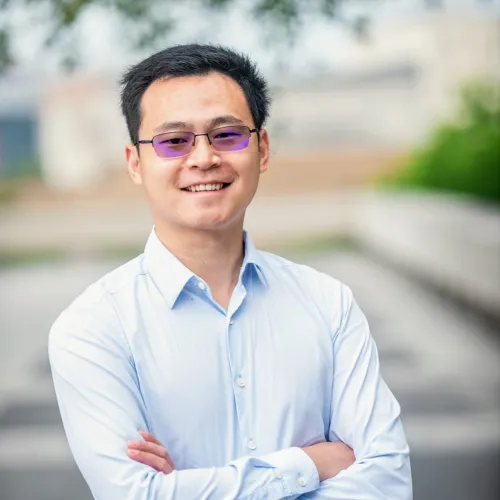
Ji Ma is an Assistant Professor at the Lyndon B. Johnson School of Public Affairs at the University of Texas at Austin, with affiliate appointments at the Center for East Asian Studies, School of Information, and Asia Policy Program. He also serves as a Visiting Researcher at the Gradel Institute of Charity, University of Oxford. Dr. Ma received his PhD from Indiana University, establishing a foundation for his interdisciplinary work at the intersection of computational methods and social science. Dr. Ma's research centers on three interconnected streams: computational approaches to social science, knowledge production for evidence-based policymaking, and state-society relations in China. His work bridges advanced technologies with public affairs, developing innovative methods to analyze nonprofit sectors and civil society dynamics. He has pioneered the application of computational social science in nonprofit studies, creating valuable research infrastructure for the field. His recent publications show a clear trend toward integrating AI and computational methods with traditional social science questions. He has made significant contributions to understanding citation patterns in policy communities, consensus formation in academic fields, and the dynamics of state-society relations in China. His work often combines large-scale data analysis with theoretical insights from multiple disciplines. Dr. Ma actively contributes to teaching through courses like "Computational Social Science Methods" and "Data Management and the Research Life Cycle," helping students develop skills in data analysis and research methodology. His teaching emphasizes practical applications of computational methods in public affairs research. Among his notable projects are pracademia.one (an information aggregation platform), npoclass (a nonprofit classifier), and the Research Infrastructure of Chinese Foundations (RICF). These projects reflect his commitment to developing methodological tools that advance research in public administration and nonprofit studies, creating valuable resources for scholars worldwide.

Henrikki Tenkanenمشاهده پروفایل
استادیار
Henrikki Tenkanen is an Assistant Professor in the Department of Built Environment at Aalto University, specializing in Geoinformatics. His research focuses on geospatial analysis, urban planning, transportation accessibility, and open data applications for sustainable development. His primary research interests include Geospatial Analysis , Urban Planning , Transportation Accessibility , and Population Dynamics . Tenkanen's work integrates mobile phone data, social media, and open geospatial sources to understand urban environments, accessibility patterns, and carbon emissions. His research contributes significantly to UN Sustainable Development Goals related to sustainable cities and communities. Tenkanen's recent publications demonstrate strong trends in high-resolution spatial analysis of urban environments, with particular emphasis on transport equity , carbon emissions mapping , and rural population representation . His work combines advanced geocomputing techniques with practical urban planning applications, often developing open-source tools to enhance reproducibility and accessibility of geospatial research. As an active member of the academic community, Tenkanen serves as a peer reviewer for journals including Big Data & Society and Environment and Planning B, and participates in conference committees such as the International Conference on Location Based Services. His research has garnered significant attention, with multiple publications featured in news outlets and academic platforms. Tenkanen leads several major research projects including Geo-R2LLM (developing geographic large language models), Geoportti (open geospatial infrastructure), MAPICO (mapping commute-related carbon emissions), and LIH: Location Innovation Hub. His work bridges academic research with practical applications for urban planning and sustainable mobility.
Veronica Fransمشاهده پروفایل
پژوهشگر ارشد
Veronica Frans is a Stanford Science Fellow at Stanford University and a sixth-year PhD Candidate in Fisheries & Wildlife and Ecology, Evolutionary Biology & Behavior at Michigan State University (MSU). She is affiliated with MSU’s Center for Systems Integration and Sustainability (CSIS), the Klausmeier-Litchman lab at Kellogg Biological Station, and holds certifications in Community Engaged Scholarship and Spatial Ecology. Her research focuses on human influence on species distributions, integrating ecological modeling, GIS, and community outreach. BS/BA in Environmental Sciences and French from Messiah College MSc in International Nature Conservation from Goettingen University Her research spans ecology, conservation biology, and sustainability, emphasizing human-nature interactions through metacoupling, telecoupling, and stakeholder collaboration. She has conducted fieldwork in Alaska, Hong Kong, and the Falkland Islands, leveraging local knowledge to address global conservation challenges. Recent publications highlight her expertise in species distribution modeling, sustainability tool development (e.g., seesus, SDGdetector), and conservation policy analysis. Articles frequently explore metacoupling, anthropogenic impacts, and marine ecosystem dynamics, with applications in deforestation, biodiversity, and SDG implementation. NSF GRFP Fellow University Enrichment Fellow Outstanding Paper in Landscape Ecology Award Veronica collaborates with the Klausmeier-Litchman lab at MSU’s Kellogg Biological Station and works under Dr. Jianguo (Jack) Liu at CSIS. Her work bridges marine environments, stakeholder engagement, and global sustainability through interdisciplinary research and community-based conservation.
- Climate
- Climate change
- Climate dynamics
- +۹ مورد دیگر
Jost-Diedrich Graf Von Hardenberg is a Full Professor in the Department of Environmental, Land and Infrastructure Engineering (DIATI) at the Polytechnic University of Turin. He serves as the Energy and Climate Change Area Coordinator and is a Scientific Advisor of the HPC-AI Advisory Council. His research focuses on climate science and geophysical fluid dynamics, with significant contributions to understanding climate change impacts and Earth system modeling. Professor Von Hardenberg's research interests span multiple areas of climate science, including climate dynamics, geophysical fluid mechanics, hydrological cycle analysis, numerical climate modeling, and precipitation downscaling. His work particularly emphasizes climate tipping points and extremes, Rayleigh-Bénard convection in geophysical contexts, high-resolution Earth-system climate modeling, and stochastic approaches to precipitation downscaling. His research integrates theoretical, computational, and observational approaches to address fundamental questions about climate system behavior and change. His recent publications demonstrate a strong focus on Atlantic Meridional Overturning Circulation (AMOC) dynamics, climate extremes in Alpine regions, urban climate effects, and interdisciplinary applications of climate science to ecological and conservation challenges. His work bridges fundamental climate dynamics with practical applications for climate adaptation and environmental management. Among his notable recognitions are the Research in Paris award from the Maire de Paris (2009) and Fellowships at the London School of Economics and Political Science (2001-2002, 2004-2006). He has participated in numerous research networks including the European Geosciences Union section 'Nonlinear Processes in Geophysics' (2004-2012), the EC-Earth Consortium (2012-present), and COST Action ES0805 TERRABITES 'The terrestrial biosphere in the earth system' (2010-2014). Professor Von Hardenberg actively supervises PhD students including Marianna Albanese, Maria Clara Corda, Sara Filippini, and Jacopo Grassi, among others. He leads multiple significant research projects such as ROTurb (Resolving Ocean Macroscale Turbulence), LocClima (Impact of LOCal conditions on Italian microCLIMAtes), CRAWL (Carbon Release in A Warming cLimate), and CliMOC (Climate Impacts of the Atlantic Meridional Overturning Circulation), with funding from EU, national programs, and commercial contracts. He is a member of the Interdepartmental Center SmartData@PoliTO - Big Data and Data Science Laboratory, where he contributes expertise in climate data analysis and modeling. His collaborative work extends to multiple institutions through non-commercial agreements with the National Research Council and various international research consortia focused on climate system understanding.
Peng Gaoمشاهده پروفایل
استادیار
- Cybersecurity
- Network Security
- AI for Security
- +۷ مورد دیگر
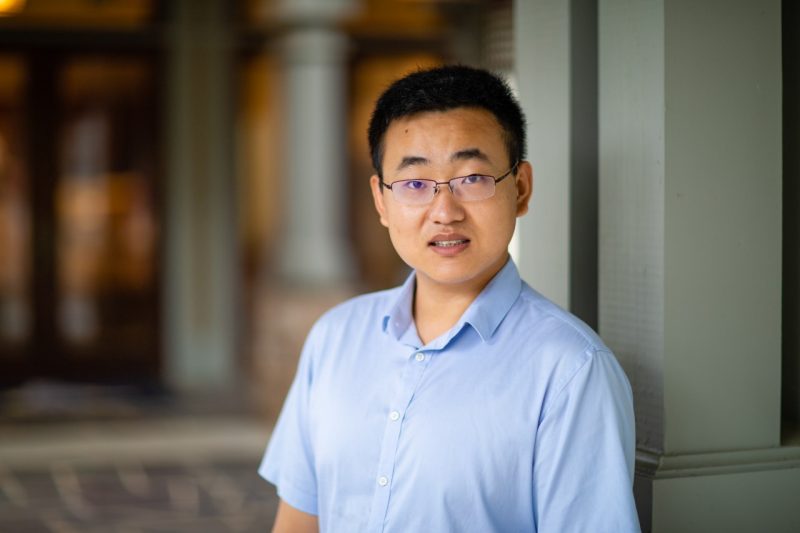
Peng Gao is an Assistant Professor in the Department of Computer Science at Virginia Tech. He is affiliated with the Virginia Tech Security & Intelligence Lab and holds a Ph.D. in Electrical Engineering from Princeton University. Prior to his faculty position, he was a postdoctoral researcher at UC Berkeley and held research internships at Microsoft Research, Facebook, and NEC Laboratories America. Education includes a B.Eng. from Shanghai Jiao Tong University (2009-2013), M.A. and Ph.D. from Princeton (2013-2019), and an exchange program at the University of Hong Kong (2012). Key roles include Technical Program Committee memberships for conferences like IEEE S&P, USENIX Security, and CCS. Research focuses on Cybersecurity (APT prevention, network security with P4/eBPF) AI applications (LLMs for security, AI safety) Systems security (attack investigation, threat intelligence) AI for science (molecular/materials prediction) Notable awards include the 2022 Amazon-VT Initiative Faculty Award, CCI Fellowships, and multiple best paper nominations. His lab has received grants from CCI, NSF, and industry partners like Google Cloud and Cisco. Teaching includes courses on Principles of Computer Security (CS 4264) and Blockchain Technologies (CS 5594). He advises ~20 students across Ph.D., MS, and undergraduate levels.
Norm Murray is a Professor at the Canadian Institute for Theoretical Astrophysics (CITA) within the University of Toronto . With a Ph.D. from UC Berkeley (1986), his research spans nonlinear dynamics , planetary formation , solar system evolution , and active galactic nuclei . His work combines theoretical physics with observational data from radio telescopes, X-ray satellites, and cosmological simulations. Recent research focuses on galaxy formation (via FIRE simulations), dark matter interactions in dwarf galaxies, and AGN disk dynamics . He employs machine learning for planetary collision modeling and investigates the interplay of magnetohydrodynamics and radiative transfer in quasar environments. Publications highlight his expertise in computational astrophysics, spanning topics from cosmic molecular gas mapping to the stability of exoplanetary systems.
Tanya Golubchikمشاهده پروفایل
مدرس ارشد
Tanya Golubchik is a Senior Lecturer in Computational Microbiology and an NHMRC Principal Research Fellow at the University of Sydney's School of Medical Sciences under the Faculty of Medicine and Health. She is affiliated with the Sydney Southeast Asia Centre and the Sydney Infectious Diseases Institute (Sydney ID). Her research focuses on applying modern genomics technologies to study pathogen evolution and transmission, particularly in viruses and bacteria with public health significance. She has collaborated extensively with institutions such as the University of Oxford's Big Data Institute and the PANGEA-HIV Consortium, contributing to HIV and SARS-CoV-2 genomic analysis. Educated at the University of Sydney with a dual major in biology and computer science, she earned her PhD in molecular biology. Her postdoctoral work at the University of Oxford involved pneumococcal vaccine escape variants and within-host bacterial evolution. She led computational analysis of SARS-CoV-2 sequencing during the pandemic as part of the COG-UK Consortium and returned to Sydney in 2022. Her research interests include understanding how pathogens evolve within hosts, develop strategies to combat infections, and integrate metagenomics for clinical insights. She has pioneered methods like targeted metagenomics for simultaneous sequencing and transcriptional profiling of pathogens. Recent work examines RSV intrahost diversity in infants and SARS-CoV-2 transmission dynamics in the UK. She also explores climate change impacts on disease through CLIMADE and investigates HIV transmission networks in Africa. Her scientific contributions include the 2023 Thompson Prize from the University of Sydney. Research grants span projects like genomics solutions for HIV surveillance in low-income settings, vector-borne disease detection amid climate change, and metagenomic studies in female reproductive health. Her work bridges epidemiology, genetics, and translational research, emphasizing interdisciplinary approaches to global health challenges. In advising and grants, she has secured funding for high-throughput sequencing and transmission network analysis. While no formal advisee names are listed, her supervisory roles in molecular epidemiology and bioinformatics suggest active student mentoring. Collaborations with international teams and institutes highlight her global engagement in addressing infectious disease threats through computational and genomic strategies. Key teams include the PANGEA-HIV Consortium, COG-UK, and CLIMADE. She leads initiatives at Sydney ID and the School of Medical Sciences, advancing pathogen genomics and outbreak response methodologies.
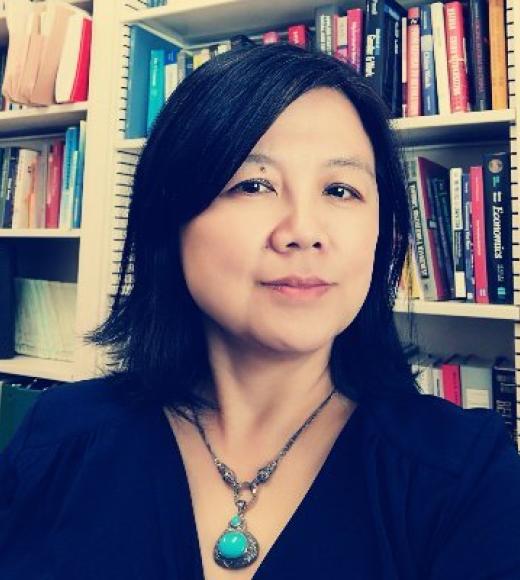
Xiaoling Shu is a Professor of Sociology at the University of California, Davis. Her research focuses on marketization, globalization, gender inequalities, and data science methodologies. She holds a Ph.D. in Sociology and an M.S. in Computer Science from the University of Minnesota. Dr. Shu has served as director of East Asian Studies at UC Davis (2017-22), chair of the American Sociological Association's Section on Asia and Asian America (2018-21), and president of the International Chinese Sociological Association (2016-17). Her expertise includes knowledge discovery, data mining, and advanced quantitative methods. She is affiliated with multiple institutes, including Computational Social Science, Communication, and the Global Tea Institute. Notable awards include a MacArthur Fellowship (1991-95) and multiple Faculty Career Development Awards. Education: Ph.D. Sociology (Minnesota), M.S. Computer Science (Minnesota), B.A. English & Economics (Beijing Foreign Studies University) Key Research Areas: Social Stratification, Gender Attitudes, Data Mining, Cohort Analysis Affiliations: East Asian Studies, Feminist Research Institute, Data Science & Informatics Her recent work examines global gender ideologies, health inequalities, and transitional marital dynamics in China. She has authored influential books like Knowledge Discovery in the Social Sciences and Chinese Marriages in Transition , demonstrating interdisciplinary integration of computational methods with sociological inquiry.

Nakyung Kyungمشاهده پروفایل
استادیار
Nakyung Kyung is an Assistant Professor at the Department of Information Systems & Analytics, School of Computing, National University of Singapore. Her research integrates Information Systems, economics, and healthcare to address challenges in health behavior change, healthcare analytics, and mobile business analytics. She focuses on AI/ML-based nudge design, mobile health, and the societal effects of IT, including ethical issues and side effects. Education: B.A. in Business Administration (Hanyang University), M.Sc. and Ph.D. in Management Engineering (KAIST). She has conducted research projects such as 'Mandated vs Autonomous AI Use' and 'The Effect of Health IT on Behavior Change,' using big data analytics, econometrics, and field experiments. Courses taught include BT2101 Econometrics Modeling for Business Analytics and IS2238 Economics of IT and AI. Research highlights include analyzing weather-based message framing in mobile health apps and investigating algorithmic control in gig platforms. Her work on weather-contingent nudges was published in Information Systems Research and recognized with awards like the Health IT in Action award (CHITA 2023). Awards include Best Student Paper (CHITA 2019), Doctoral Consortium (ICIS 2020), and Best Paper in Healthcare Track (ICIS 2021). Her research emphasizes ethical AI design and long-term behavioral interventions to promote health equity and societal welfare.

Silvia Massini is a Professor of Economics and Management of Innovation at the Alliance Manchester Business School, University of Manchester, leading the IMP Innovation, Strategy and Sustainability division (2017–2022). She holds editorial roles including Senior Editor of Management and Organization Review and Guest Editor for Research Policy and Journal of International Business Studies . Her research focuses on digital transformation, global innovation sourcing, and skills development in the digital economy. Education: PhD in Technological Diffusion Models (La Sapienza University, Rome, 1999) MSc in Economics (Warwick University) Laura in Statistics and Economics (La Sapienza University, Rome) Research Interests: Digital technologies' impact on innovation, industry-university collaborations, global sourcing of innovation, intellectual property strategies, and absorptive capacity development. Her work bridges organizational routines and global innovation dynamics, with recent focus on AI, big data, and 3D printing investments. Grants & Advising: Supervised 12 PhD/MSc projects (e.g., digital technologies and sustainability) Recipient of ESRC funding for UK digital adoption research Labs/Platforms: Co-leads the Manchester Institute of Innovation Research (MIOIR) and contributes to the Digital Futures initiative, fostering interdisciplinary innovation studies.
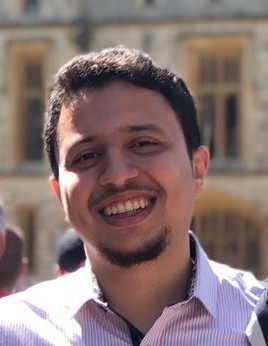
Al Amjad Tawfiq Isstaif is a Research Associate in the Systems Research Group (SRG) at the Department of Computer Science and Technology (also known as "The Computer Lab") at the University of Cambridge, working with Professor Richard Mortier. He is a member of Clare College. In 2018, he was awarded the Said Foundation Cambridge Scholarship to study the MPhil in Advanced Computer Science (ACS) at the Computer Lab. Before moving to Cambridge, he co-founded several projects for empowering engineering students in Syria, including the award-winning education enterprise: Wikilogia. His research interests include: Cloud and Edge Computing Microservices and Serverless Operating Systems and Middleware Networked and Distributed Systems Machine Learning Systems Human-Centred Computing Machine Learning and Artificial Intelligence Systems and Networking Isstaif's primary research focus is on building self-scaling network services on top of next generation infrastructure (IoT/5G/edge), leveraging lightweight virtualization techniques and distributed tracing. His work falls under the Compute First Networking research project. He has deep passion for social entrepreneurship and the role of digital infrastructure in addressing development and sustainability challenges across the globe. His technical expertise bridges the IT and telecom worlds, with emphasis on cloud-native and open source movements shaping future infrastructure. His recent publications demonstrate a strong focus on optimizing serverless computing environments, with particular attention to scheduling algorithms, resource management, and latency optimization in Linux-based systems. The trajectory of his work shows progression from database performance modeling to cutting-edge research in edge computing and network infrastructure. Notable awards and recognitions: Said Foundation Cambridge Scholarship (2018) Co-founded Wikilogia, an award-winning education enterprise for engineering students in Syria Isstaif has teaching experience in Operating Systems (LT 2021) and maintains an active research profile within the Systems Research Group. His work connects theoretical computer science with practical applications in cloud infrastructure, particularly focusing on how these technologies can serve broader societal needs in developing contexts. He is located in Room FN07 at the William Gates Building, 15 JJ Thomson Avenue, Cambridge CB3 0FD.
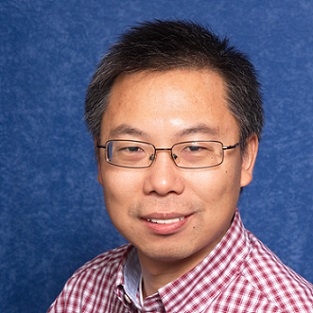
Liqiang Wang is a Professor in the Department of Computer Science at the University of Central Florida (UCF), where he directs the Big Data Lab. Previously, he served as faculty at the University of Wyoming (2006-2015). He holds a Ph.D. in Computer Science from Stony Brook University (2006) and spent a visiting research period at IBM T.J. Watson Research Center (2012-2013). His research focuses on big data analytics, high-performance computing, parallel systems optimization, and applying deep learning to detect programming errors and enhance model robustness. Education: Ph.D., Computer Science, Stony Brook University (2006); Visiting Researcher, IBM Watson (2012-2013). Research Interests: Improving accuracy and security of big data models, optimizing parallel computing systems (HPC, Cloud, GPUs), program analysis for concurrency errors, and deep learning applications in anomaly detection and adversarial robustness. Notable projects include scalable LSQR algorithms for seismic tomography and the OpenMP Analysis Toolkit (OAT) for concurrency error detection. Key Awards: NSF CAREER Award (2011), Castagne Faculty Fellowship (2013-2015), UCF Mid-Career Refresh Award (2020), and grants including a $50K NSF CIVIC-PG grant (2022) and Google/Meta donations. Advising and Grants: Supervises over 20 Ph.D./M.S. students and has secured grants totaling over $100K. Notable collaborations include seismic tomography with NCAR and cloud computing optimization. Labs/Teams: Director of UCF’s Big Data Lab, collaborating on projects like Parallel LSQR and Anti-Neuron Watermarking.

Kourosh Davoudi is an Associate Professor of Computer Science at Ontario Tech University's Faculty of Science. He holds a PhD in Computer Science from York University with a focus on Machine Learning and Data Mining. Prior to joining Ontario Tech in 2019, he was a postdoctoral research fellow at the University of Waterloo's Department of Management Sciences. His research interests span Natural Language Processing, Deep Learning, Reinforcement Learning, Graph Mining, and Machine Learning. He actively supervises graduate students in these areas and teaches courses such as Data Mining and Artificial Intelligence. His research emphasizes practical applications of AI techniques in areas like outbreak detection, sentiment analysis, and automated grading systems. Recent work includes innovations in neural document segmentation, vision-language models, and hybrid outbreak detection using social media data. His publications consistently address challenges in algorithm design, explainable AI, and domain-specific NLP applications. Dr. Davoudi has contributed to conferences such as COLING, EMNLP, and IEEE transactions, focusing on interdisciplinary applications of machine learning. His work bridges theoretical advancements with real-world problems in healthcare, education, and social media analysis.
Tero Päivärinta is a Professor at the University of Oulu, Faculty of Information Technology and Electrical Engineering. His work focuses on software engineering, digital ecosystems, and cybersecurity. He specializes in empirical studies of software systems, digital twins, and autonomous driving technologies. His research explores hybrid intelligence systems, data-centric decision-making, and governance of collective ambidexterity in digital initiatives. Education: PhD holder with extensive experience in academic and industry collaborations. Key research domains include cyber-physical systems, DevSecOps automation, and IT governance in public sectors. He co-leads projects such as the NUVE Lab’s vehicle testing frameworks and contributes to initiatives like the Software-Defined Vehicle project. Research highlights include advancing knowledge graphs for manufacturing, cybersecurity compliance in DevOps pipelines, and evaluating data-driven decisions. His articles emphasize interoperability challenges, adaptive systems design, and sustainable digital transformation in public utilities. Professional contributions include organizing the TKTP Annual Symposium and co-editing volumes celebrating academic peers like Markku Oivo. His work bridges theoretical software engineering with practical applications in mobility, governance, and industrial systems.