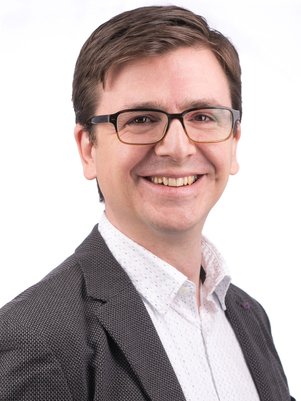
Dr. Juan Durán is an Assistant Professor at the Faculty of Technology, Policy and Management at TU Delft, specializing in the philosophy of science and technology. His work focuses on computer simulations, AI ethics, Big Data, and the epistemological challenges in computational science. Education: Bachelor/Master in Computer Science and Philosophy, National University of Córdoba (Argentina) PhD in Cluster of Excellence SimTech, University of Stuttgart (Germany) Research interests: Epistemic opacity and trust in algorithms Ethics of medical AI and machine learning Computational reliabilism as a framework for justification Dark data and scientific data governance Teaching roles include courses on ethics and engineering, IT and values, and philosophy of science. His publications include influential works like Computer Simulations in Science and Engineering (2014) and co-authored papers on AI trustworthiness and medical epistemology.
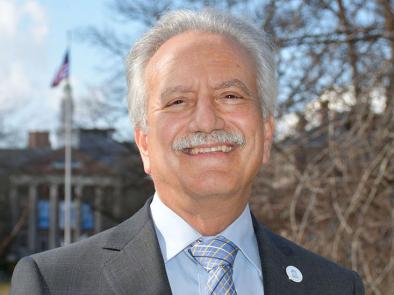
Dr. Gary Marchionini is the Cary C. Boshamer Distinguished Professor and Dean of the School of Information and Library Science (SILS) at the University of North Carolina at Chapel Hill. He previously served as a professor at the University of Maryland's College of Library and Information Services and as a member of the Human-Computer Interaction Laboratory. His expertise spans information interaction, human-computer interaction, digital libraries, and information policy. Marchionini holds a PhD in mathematics education from Wayne State University, emphasizing educational computing. His research focuses on interfaces for information seeking, digital video retrieval, and the impact of data science. Notable projects include the Information in Life Video Series (2007), one of the first academic YouTube channels, and leadership in the Open Video Project . He has secured grants from NSF, NASA, Microsoft, and Google, among others. Marchionini's awards include the ASIS&T Award of Merit (2011) and the LITA Kilgour Award (2000). He has served as editor-in-chief of ACM Transactions on Information Systems (2002–2008) and as president of ASIS&T (2010). Current interests include the societal impact of information, personal health records usability, and digital curation strategies. His leadership roles include serving on the iSchools Board of Directors and directing the Center for Information Impact. He has advised numerous grants, including Mellon Foundation-funded initiatives and EPA research library operations. Marchionini's work bridges academic research with real-world applications, emphasizing human-centered design and interdisciplinary collaboration.
Prof. Dr. Luis Aguiar is an Associate Professor in the Department of Business Administration at the University of Zurich, Switzerland, and a DSI Professor at the University’s Digital Society Initiative (DSI). He holds a PhD in Economics from Universidad Carlos III de Madrid and previously served as a Research Fellow at the European Commission’s Joint Research Center. His expertise lies in the economics of digitization, focusing on digital markets, media industries, and the impact of technological change on firms and consumers. Educational Background: PhD in Economics, Universidad Carlos III de Madrid MSc in Economics, Finance and Management, Universitat Pompeu Fabra Bachelor’s in Economics, University of Geneva Research Focus: Luis investigates how digitization transforms consumer behavior and market structures in digital media sectors, with particular attention to online platforms, music streaming, and intellectual property policies. His work employs advanced econometric methods to analyze welfare effects, platform power dynamics, and content distribution trends. Key Contributions: His research has been published in top journals like the Journal of Political Economy and Information Systems Research , and has received significant media coverage from outlets such as The Economist and Forbes . He currently co-edits Information Economics and Policy and leads the Swiss National Science Foundation-funded project on online platforms' power dynamics. Professional Roles: DSI Professor, Digital Society Initiative (UZH) Fellow of the CESifo Research Network Labs & Teams: His research is anchored in UZH’s Department of Business Administration and the DSI, collaborating with interdisciplinary teams to address societal challenges posed by digital transformation.
Dr. Judith Verstegen is an Assistant Professor in the Department of Human Geography and Spatial Planning at Utrecht University's Faculty of Geosciences. Her research focuses on geosimulation modeling and spatial optimization, with applications in urban planning, environmental vulnerability assessment, and policy analysis. She leads projects such as HEADS 4 Health (2023-2024), which integrates agent-based models into urban digital twins, and coordinates the GeoSIM research group. Her work emphasizes interdisciplinary collaboration, including projects analyzing linguistic diversity in South America and environmental threats to Amazonian indigenous lands. She is the Program Chair of the MSc Geographical Information Management and Applications (GIMA) program and serves as Editor-in-Chief of the Journal of Spatial Information Science. Notable contributions include methodologies for spatial optimization under uncertainty and agent-based modeling of pedestrian behavior in urban environments. Key research areas include applied data science, complex systems analysis, and the PtS - Transforming Cities initiative. She has advised PhD students on topics ranging from fire prevention optimization to indigenous land vulnerability. Her lab at the University of Münster previously focused on spatial modeling frameworks, and she collaborates internationally with institutions like Leiden University and the PBL Netherlands Environmental Assessment Agency. Recent projects highlight innovation in computational methods, such as Python-based open-source tools for land-use modeling (IMAGE-land) and immersive video experiments for behavioral studies. Her work bridges theoretical modeling with practical policy applications, addressing challenges in sustainable urban development and environmental conservation.
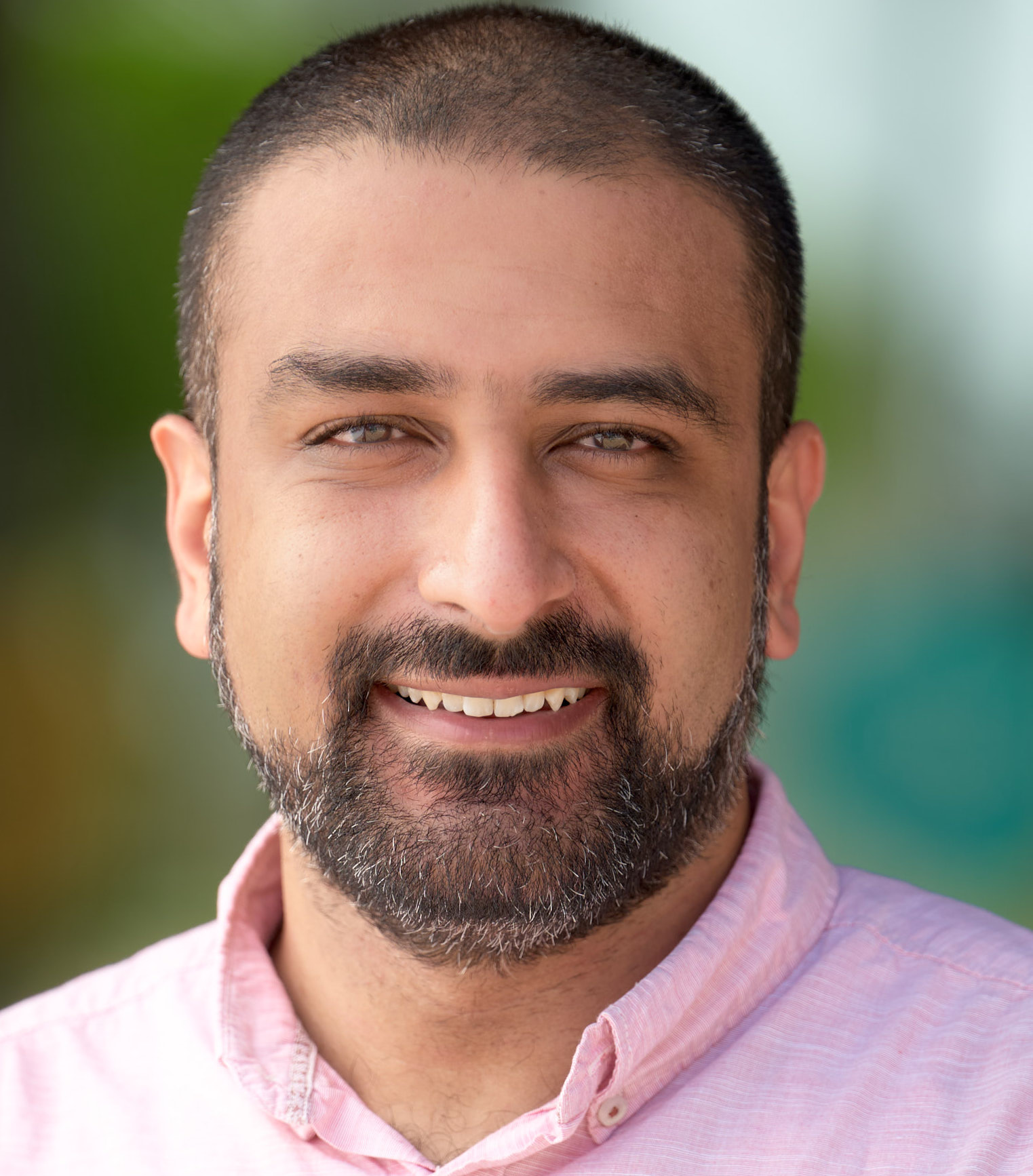
Dr. Ahmed M. A. Sayed is a Senior Lecturer (equivalent to Associate Professor) and Director of the MSc Big Data Science Programme at Queen Mary University of London's School of Electronic Engineering and Computer Science. He leads the SAYED Systems Group and focuses on distributed systems, federated learning, edge computing, and network optimization. His research bridges system design and machine learning, emphasizing scalability and efficiency. Education: PhD in Computer Science (HKUST, 2017), M.Sc. and B.Sc. (Assiut University, 2012 and 2007). Prior roles include Research Scientist at KAUST and Senior Researcher at Huawei's Future Network Lab. Research Interests: Systems for ML, federated learning, edge/Cloud computing, network congestion control, and IoT. He has secured £730K+ in grants, including a UKRI-EPSRC grant for the KUber project (2024–2027). Awards: 2024 Best Student Paper (IJCAI FL Workshop), Hong Kong PhD Fellowship (2013–2017), and numerous travel grants. Actively supervises PhD/MSc students and postdocs. Grants & Leadership: PI of UKRI-EPSRC KUber project, Co-I in HKRGC and KAUST grants. Organizes workshops at venues like MobiSys and serves on TPC for ICML, EuroSys, and NeurIPS. Labs: Leads SAYED Systems Group, affiliated with Networks Group and DT4SGD Lab at Queen Mary.
Nicolò Cesa-Bianchi is a Professor of Computer Science at the University of Milan, Department of Computer Science (Dipartimento di Informatica), and affiliated with the DEIB Department at Politecnico di Milano. His research focuses on foundational aspects of machine learning, particularly online learning, multi-armed bandits, reinforcement learning, and graph analytics. He is an ELLIS Fellow and a corresponding member of the Accademia Nazionale dei Lincei. Research interests include the design and analysis of algorithms for prediction, clustering, and online decision-making, with applications to digital markets, social networks, and bioinformatics. Notable contributions span cooperative online learning, multitask learning, and bandit algorithms. He co-authored the influential book Prediction, Learning, and Games (2006). Professional roles include Board member of ELLIS, co-director of the Milan ELLIS unit, and involvement in EU initiatives like ELSA (Secure & Safe AI) and ELIAS (AI for Sustainability). He teaches graduate courses on statistical methods, machine learning, and reinforcement learning, with a focus on theoretical foundations. Key awards: ELLIS Fellowship (2020), Corresponding Member of the Accademia Nazionale dei Lincei (Italian National Academy of Sciences). His work bridges theory and practice, addressing challenges in adaptive systems, market design, and algorithmic fairness. Current projects explore distributed learning, regret minimization in adversarial environments, and interpretable models.
Milica Orlandic is an Associate Professor in the Department of Electronic Systems at NTNU. She holds an MSc from the University of Montenegro (2009) and a PhD from NTNU (2015). Her research focuses on hyperspectral imaging, remote sensing, FPGA-based systems, and embedded computing for aerospace applications. She is actively involved in the HYPSO CubeSat mission, developing onboard processing systems for Earth observation. Education: MSc in Electrical Engineering, University of Montenegro (2009) PhD in Electronics, NTNU (2015) Research Interests: Her work spans hyperspectral data processing , including compression, anomaly detection, and onboard computing for satellites. She also explores reconfigurable hardware (FPGAs) for real-time signal processing, cyber-physical systems, and spaceborne sensor systems. Publications Trends: Recent work emphasizes lightweight machine learning for anomaly detection, FPGA acceleration of hyperspectral compression (CCSDS 123), and algorithm co-design for CubeSat missions. Key contributions include robust onboard processing frameworks for HYPSO-1 and adaptive hardware-software systems. Advising & Teams: She supervises a dynamic team of over 40 PhD and MSc students working on FPGA implementations, satellite systems, and hyperspectral algorithms. Notable collaborations include the HYPSO CubeSat project, which aims to deliver high-resolution Earth observation data with low latency. Labs & Infrastructure: Her research leverages NTNU’s facilities for embedded systems prototyping, FPGA development, and CubeSat payload testing. The HYPSO mission integrates her team’s hardware-software co-design innovations for space applications.
Jouni Kuha is a Professor of Social Statistics and MSc Social Statistics Programme Director at the London School of Economics and Political Science (LSE), Department of Statistics. His expertise lies in latent variable modeling, survey data analysis, measurement error, and missing data, with applications in social sciences. He collaborates on projects addressing education mobility, public attitudes toward policing, family support dynamics, and global medicine accessibility. He contributed to the UK General Election exit poll analysis and was elected a Fellow of the British Academy in 2021. Education: MSocSc (Statistics) from the University of Helsinki (1992), PhD (Social Statistics) from the University of Southampton (1996). Prior roles include postdoctoral research at Nuffield College, Oxford, and Assistant Professor at Pennsylvania State University. Teaching includes courses on applied regression analysis, multivariate analysis, and statistical modeling. Research interests span latent variable models, categorical data analysis, and methodological advancements in multilevel and latent class analysis. Recent work focuses on digital trace data biases, procedural justice in policing, and intergenerational welfare dynamics. His methodological contributions include R package implementations for multilevel latent class analysis. Scientific awards include Fellowship of the British Academy (2021). Key grants and collaborations involve cross-national studies on citizenship norms, crime victimization, and healthcare policy. He advises on statistical methodologies for social science applications and maintains active involvement in the LSE’s Department of Methodology.
Dr. Steven Kleinstein is the Anthony N. Brady Professor of Pathology at the Yale School of Medicine, with secondary appointments in Immunobiology and Biomedical Informatics. He is Co-Director of Graduate Studies in Computational Biology and Biomedical Informatics, and leads the Kleinstein Lab. His research focuses on computational immunology, integrating big data analysis with immunology to study immune responses, including B cell receptor (BCR) repertoire profiling via AIRR-seq and multi-omic studies of infection/vaccination responses. Dr. Kleinstein holds a BAS in Computer Science from the University of Pennsylvania (1994) and a PhD in Computer Science from Princeton (2002). He is a member of the Computational Biology and Bioinformatics Program and the Human and Translational Immunology Program. Education: B.A.S. in Computer Science, University of Pennsylvania, 1994 Ph.D. in Computer Science, Princeton University, 2002 Research Interests: His lab develops computational tools (e.g., Immcantation framework) for analyzing BCR repertoires and immune responses to pathogens like SARS-CoV-2, HIV, and influenza. Key projects include understanding germinal center B cell maturation, antibody specificity prediction via language models, and immune correlates of disease severity in hospitalized patients. Collaborations span clinical and basic science groups to apply these methods to autoimmune diseases, allergies, and cancer. Grants & Collaborations: Active in NIH/NIAID initiatives (e.g., HIPC, PRIME) and industry partnerships. Lab members collaborate with institutions globally on projects like the IMPACC study and malaria vaccine research. Labs/Teams: The Kleinstein Lab at Yale is part of the Center for Biomedical Data Science and the Yale Cancer Center, emphasizing computational and experimental immunology integration.
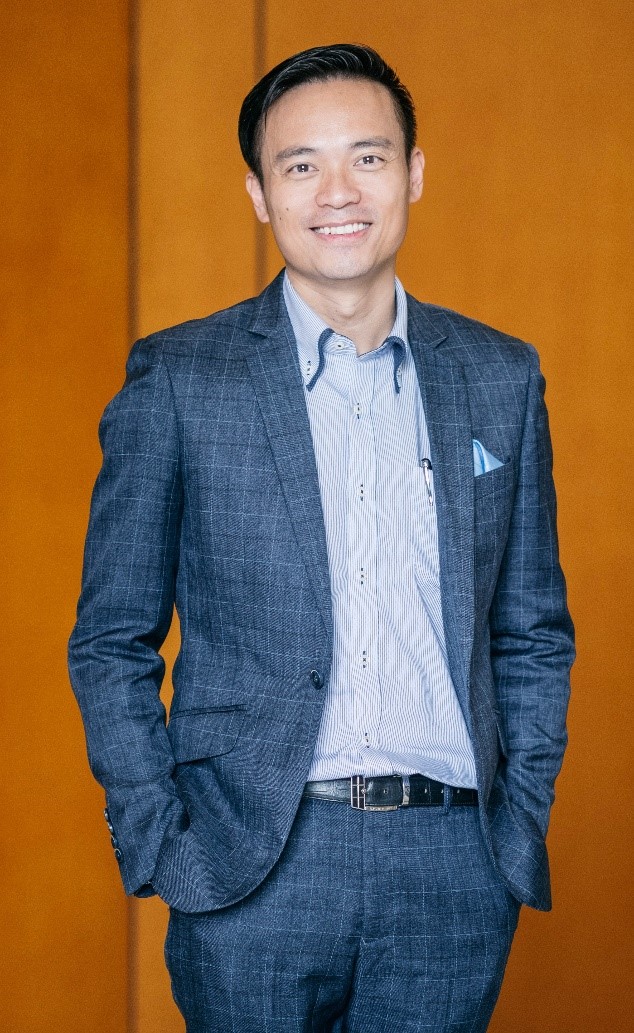
Prof. Kelvin Kam-fai TSOI is an Associate Professor at the JC School of Public Health and Primary Care, Faculty of Medicine, The Chinese University of Hong Kong (CUHK). He holds courtesy appointments at the Stanley Ho Big Data Decision Analytics Research Centre and The Jockey Club Institute of Ageing. A Visiting Associate Professor at Nanyang Technological University’s Lee Kong Chian School of Medicine and Visiting Professor at Shenzhen Institutes of Advanced Technology, he specializes in Digital Health and Epidemiology. Education: BSc in Statistics and PhD in Public Health from CUHK. Postdoctoral training in Gastroenterology and Hepatology at CUHK’s Department of Medicine and Therapeutics. Served as Director of the CUHK JC Bowel Cancer Education Centre and worked in the Hospital Authority on chronic disease management projects. Research interests focus on digital innovations for chronic disease management, including AI in hypertension, cognitive screening technologies, and wearable health devices. His work combines traditional epidemiology with big data analytics, emphasizing interdisciplinary collaboration between medicine and engineering. Key projects include developing a mobile blood pressure management platform via DeepHealth Limited, a social enterprise he founded in 2019. Current research explores seasonal effects on blood pressure variability and AI applications in healthcare. He co-founded the International Society for Digital Health and organizes global symposiums on digital health innovation. Grants & Awards: Supported by CUHK’s Sustainable Knowledge Transfer Fund (SKPF). Awards include IBM Honorarium Award (2020) and President’s Prize for Best Paper Presentation (2017).
Anna Monreale is an Associate Professor in the Department of Computer Science at the University of Pisa and a key member of the Knowledge Discovery and Data Mining Laboratory (KDD-Lab), a joint research group with the Information Science and Technology Institute of the National Research Council (ISTI-CNR) in Pisa. Her academic career is rooted in the University of Pisa, where she completed her Bachelor's, Master's, and Ph.D. in Computer Science. Her research focuses on privacy-preserving data analytics, with core interests in big data analytics, social network analysis, spatio-temporal mining, and explainable AI. She is particularly known for her work on privacy-by-design in data mining and evaluating privacy risks in analytical processes. Her research bridges technical innovation with ethical and legal considerations in data science. Her recent publications reveal a strong trend toward explainable AI, privacy in federated learning, and risk assessment in mobility and health data. She actively contributes to developing methods for explaining black-box models, assessing privacy exposure, and balancing privacy, utility, and fairness in AI systems. Privacy by Design Ambassador (2014) ISTI-CNR Young++ Researcher Award (2014) Monreale has advised and co-chaired several international workshops, including PriSMO, PinSoDa, and MoKMaSD, and serves on editorial boards such as Transactions on Data Privacy. She teaches advanced data mining, big data ethics, and database systems across multiple graduate and undergraduate programs. She is involved in major EU projects like SoBigData, XAI, TAILOR, and HumMingBird, reflecting her leadership in data science and AI ethics. She is affiliated with the KDD-Lab, a prominent research group focused on knowledge discovery, social mining, and big data analytics, contributing to both theoretical advances and real-world applications in privacy-aware data science.
Luis Antonio Azpicueta Ruiz is an Associate Professor in the Department of Signal Theory and Communications at Carlos III University of Madrid. He leads research in the Signal Processing and Learning Group (GTSA) and Machine Learning for Data Science (ML4DS) group, focusing on interdisciplinary applications spanning acoustics, telecommunications, and machine learning. Research Interests: His work bridges signal processing theory with practical applications in environmental acoustics, adaptive filtering systems, and machine learning. Key research themes include: Advanced adaptive filtering architectures for nonlinear systems Distributed estimation in sensor networks Acoustic echo cancellation and room equalization Psychoacoustic evaluation methods Machine learning applications in noise monitoring and sound analysis Research Projects: Principal investigator for multiple funded projects including: Diagnóstico del ruido de chorro en aeronaves (AEI, 2022-2025) LearnINg FLow and Noise Dynamics via AI (COMUNIDAD DE MADRID, 2024-2026) BODYinTRANSIT - Sensory-driven Body Transformation (EUROPEAN COMMISSION, 2022-2026) Aprendizaje Automático para análisis Big Data (MINISTERIO DE ECONOMÍA, 2018-2021)
Scot M. Miller is an Associate Professor in the Department of Environmental Health and Engineering at the Whiting School of Engineering, Johns Hopkins University. He leads the Greenhouse Gas Research Group, focusing on quantifying emissions of greenhouse gases and air pollutants using satellite, aircraft, and tower observations. His research spans global scales, from Arctic ecosystems to urban and industrial sources in the U.S. and China. His research interests include atmospheric science, greenhouse gas emissions, inverse modeling, big data analytics, and climate policy. He integrates tools from statistics, high-performance computing, and satellite remote sensing to improve emission estimates and inform environmental regulations. Recent publications highlight trends in methane, ethane, and sulfuryl fluoride emissions, carbon cycle dynamics, and innovative methods for analyzing massive satellite datasets. His work increasingly leverages OCO-2 and OCO-3 satellite data to study carbon dioxide and methane fluxes across diverse ecosystems. Scientific awards include the NSF CAREER Award, JHU Catalyst Award, and the Carnegie Distinguished Postdoctoral Fellowship. He was also recognized with Harvard’s Certificate of Excellence in Teaching. Miller advises multiple PhD students, including Mingyang Zhang, Dylan Gaeta, and Leyang Feng, and has secured grants from NASA, NSF, NOAA, and JHU. He is a member of the NASA OCO Science Team and collaborates with institutions such as Northern Arizona University, Carnegie Institution, and NOAA. His lab is involved in urban environmental monitoring in Baltimore and interdisciplinary climate policy research.
Jane Andrew is a Professor and Head of Discipline at the University of Sydney Business School, specializing in Accounting. She joined the University of Sydney in 2010 after holding various academic positions at the University of Wollongong. Andrew serves as co-editor-in-chief for Critical Perspectives on Accounting (since 2018) and is an Associate Editor for Abacus, with editorial board memberships for several prominent accounting journals. Professor Andrew's research explores the relationship between accounting information and public policy, with particular focus on climate change accounting, prison privatisation, and neoliberalism. Her work examines how accounting practices influence policy decisions, particularly in areas traditionally managed by governments, including prisons, immigration detention, and environmental regulation. She has made significant contributions to understanding the role of accounting in processes of neoliberalisation and the privatisation of public services. Her recent publications demonstrate a growing focus on data privacy, surveillance capitalism, and the financialisation of social services. Her work spans critical accounting, political economy, and interdisciplinary research, often collaborating with scholars from law, political science, and criminology. Andrew's research has practical policy implications, as evidenced by her submissions to parliamentary inquiries and engagement with government departments. Professor Andrew actively supervises PhD students and teaches postgraduate courses including ACCT6001 Intermediate Financial Reporting, ACCT6002 International Accounting, and BUSS4001 Business Honours Research Methods. Her supervision spans diverse topics including accountability in microfinance, time budgeting in consulting firms, and the interplay between accounting practices and architectural design. Her scholarly impact extends beyond traditional publication through submissions to public inquiries, policy-relevant research reports, and media articles where she actively engages in evidence-based policy discussions with industry and government partners.