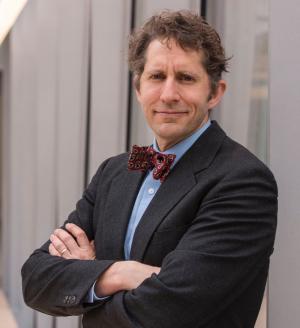
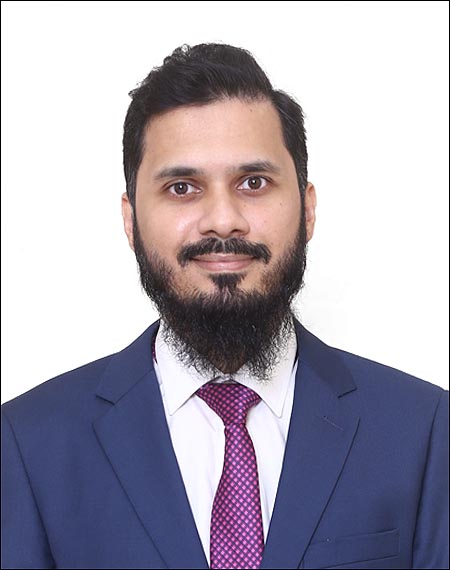
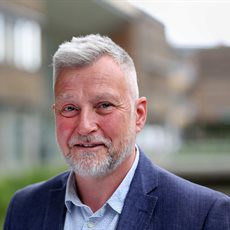
John Gallagher is Associate Professor in English and Information Sciences at UIUC. His research examines how writers adapt to participatory audiences in digital environments, including social media interactions and AI writing tools. Using case studies and computational methods, he explores algorithmic audiences, ethical implications of AI, and technical communication in institutional contexts. He teaches courses in professional writing, digital rhetoric, and research methodologies. Recent projects analyze content creators' narratives about platform algorithms, inclusive emoji design, and academic integrity challenges posed by generative AI.
Dr. Md Manjurul Ahsan serves as a Research Assistant Professor in the Department of Industrial & Systems Engineering at the University of Oklahoma, where he develops AI-driven solutions for healthcare diagnostics and advanced manufacturing optimization. His work bridges theoretical AI advancements with practical industrial and medical applications. Education: Ph.D. in Industrial and Systems Engineering, University of Oklahoma M.S. in Industrial Engineering, Lamar University B.S. in Industrial and Production Engineering, Shahjalal University of Science and Technology Research Focus: Dr. Ahsan specializes in Artificial Intelligence with technical depth in Machine Learning , Deep Learning , and Computer Vision to solve critical challenges in healthcare diagnostics and additive manufacturing . His research emphasizes Explainable AI to enhance model trustworthiness and deployment efficiency across Cyber-Physical-Social Systems, with significant contributions to Aerospace and Defense applications. Publication Trends: Recent work (2023-2025) reveals a strategic expansion from core manufacturing applications into medical AI (diffusion models for diagnostics), cultural preservation (NLP for Dravidian languages), and geopolitical AI analysis. His publications consistently address data imbalance challenges while advancing digital twin integration in quality control systems. Scientific Recognition: GCOE Dissertation Excellence Award (2023) International Student Scholarship (2022) Outstanding Academic Achievement in Engineering (2022) IEEE IEMCON Best Paper Award (2020) Netti Vincent Boggs Engineering Excellence Award (2020) Research Leadership: As director of the Sooner Additive Manufacturing Laboratory , Dr. Ahsan leads cross-disciplinary teams developing real-time monitoring systems using FARO arms and CMM metrology. His postdoctoral work at Northwestern University (2023-2024) advanced AI deployment frameworks, resulting in 60+ peer-reviewed publications with multiple papers ranking in engineering's top 1% for citations.
James A. Evans is a Professor at the University of Chicago, where he serves as Director of the Knowledge Lab and Faculty Director of the Masters Program in Computational Social Science. He is also an External Professor at the Santa Fe Institute. His research bridges computational methods with social theory to analyze collective cognition, innovation, and knowledge production across science, technology, and broader societal domains. Director, Knowledge Lab Faculty Director, Masters Program in Computational Social Science External Professor, Santa Fe Institute Evans’s research explores how social and technical institutions shape discovery processes, utilizing machine learning, network modeling, and large-scale data analysis. His work spans fields like computational social science, sociology of science, and data science, focusing on team dynamics, peer review, and the global structure of scholarship. His recent publications examine team size effects on innovation, discursive influence in academia, and the interplay between tradition and novelty in research strategies. Articles trend toward interdisciplinary approaches combining social theory, computational methods, and science policy. Evans supports novel observatories for human understanding through crowdsourcing, sensor networks, and semantic modeling. He has received funding from the National Science Foundation, National Institutes of Health, and Air Force Office of Scientific Research, with findings featured in major media outlets like Nature , Science , and The New York Times .
Alan Marco is an Associate Professor at the Jimmy and Rosalynn Carter School of Public Policy within Georgia Tech's Ivan Allen College of Liberal Arts. His research focuses on innovation policy, patent economics, and intellectual property strategy. Previously, he served as Chief Economist at the U.S. Patent and Trademark Office (USPTO), where he co-created PatentsView.org and led the Cancer Moonshot Patent Challenge. Research interests span antitrust regulation, patent valuation, technology markets, and empirical legal studies. Marco holds a Ph.D. in economics from UC Berkeley and a B.A. from Skidmore College. Publications demonstrate expertise in patent analytics, with recent work examining strategic citation behaviors, FRAND royalty calculations, and links between antitrust enforcement and innovation. Research methodologies emphasize large-scale data analysis of USPTO records, litigation outcomes, and market transactions.
Javier Franco Aixelá **Roles and Affiliations**: Full Professor of Translation and Interpreting at the University of Alicante, Director of the Department of Translation and Interpretation (2017–2021). Coordinates the Master's in Institutional Translation (Legal and Economic). Active in teaching Translation Theory, Professional Ethics, and Advanced Literary Translation. **Education**: PhD in English Philology (University of Alicante, 1996), Licenciatura in English Philology (Complutense University of Madrid, 1986), Expert in Translation (Complutense University of Madrid, 1991). **Research**: Specializes in translation theory, cultural aspects of translation, and bibliometrics. Founded the BITRA database (70,000 entries by 2017), a comprehensive online bibliography on translation and interpreting. Recent focus on bibliometric analysis of translation studies, including advertising translation, open access in academia, and cognitive approaches. **Teaching**: Taught courses like Professional Ethics, Advanced Literary Translation, and Translation of Research Genres. Supervised over 125 theses in the last five years, including high-impact works on medical neologisms (Habiba Chbab El Fakhi) and gender-neutral translation (María López Medel). **Awards**: Coordinator of the University of Alicante's Translation Doctoral Program, which received a quality distinction from the Ministry of Education. His theses have been awarded "Excellent Cum Laude" by the university. **Projects**: Led competitive research projects such as the 2021–2025 bibliometric study on economic translation and the BITRA database expansion (2007–2010). Collaborated on international initiatives like the 5th ICEBFIT Conference (2023). **Publications**: Authored 40+ books (e.g., *La traducción condicionada de los nombres propios*), co-edited *ENTI: Encyclopedia of Translation and Interpreting*, and published widely in journals like *META* and *Translation & Interpreting*.
Dr. Amir Ghanbaripour is a Discipline Lead in Planning, Property, and Project Management at Bond University's Faculty of Society & Design, with a PhD in Construction Project Management (2020). He teaches postgraduate courses and leads the Project Management program. His expertise spans project management methodologies, systems thinking, organizational maturity, and gender equality in projects. He is an active member of the Project Management Institute (PMI) as Associate Director for Academic Outreach. Education: PhD in Construction Project Management (Bond University, 2020), MSc in Civil Engineering (Iran University of Science and Technology, 2012), BSc in Civil Engineering (Amirkabir University of Technology, 2009). Research focuses on project success models, agile methodologies, and technology integration in construction education. He leads research projects on megaprojects, sustainable practices, and gender diversity in the industry. Grants include the 2023 FSD Research Project Grant (focusing on construction project strategies) and the 2023 FSD Deans Award (exploring robotics in manufacturing). He supervises PhD candidates and collaborates with national/international organizations on project management innovation.
Dr. Anas Iftikhar is an International Lecturer (Assistant Professor) in Logistics and Supply Chain Management at Lancaster University's Management School, United Kingdom. He is affiliated with the Centre for Productivity and Efficiency and contributes to the Supply Chain Management department with research focusing on contemporary supply chain challenges. Dr. Iftikhar completed his Ph.D. in Economics, Management, and Quantitative Methods from the University of Salento, Italy in May 2021. During his doctoral studies, he held visiting researcher positions at Ghent University (Belgium) and Cardiff Business School at Cardiff University (UK), gaining valuable international research experience. Prior to his academic career, he accumulated industry experience in inventory planning and operations management. Dr. Iftikhar's research primarily investigates how supply chain capabilities enhance resilience in disruptive and complex environments. His work explores the intersection of supply chain complexity, digital technologies, and resilience strategies. He employs methodological approaches including systematic literature reviews, meta-analysis, and structural equation modeling. His research has significant implications for organizations navigating geopolitical uncertainties, digital transformation, and supply chain disruptions. His publication portfolio demonstrates a clear evolution from foundational work on network trust and ripple effects to more sophisticated examinations of digital transformation's role in supply chain resilience. Recent publications increasingly focus on the synergistic effects of multiple capabilities (network capability, innovation ambidexterity) in addressing complex challenges like geopolitical turmoil. The research trajectory shows a progression from single-factor analyses to more complex, integrated models that better reflect real-world supply chain dynamics. Dr. Iftikhar actively participates in the academic community through presentations at major conferences including the European Operations Management Association (EUROMA) annual conference, IFAC Conference on Manufacturing Modelling, Management & Control, and Industrial Engineering Operations Management (IEOM) society events. He has also delivered invited talks such as 'Contemporary Issues in Logistics Management' at Bukhara State University. As an educator, Dr. Iftikhar is willing to supervise PhD students in supply chain resilience, disruption management, supply chain complexity, and innovative technologies in supply chain management. His industry experience enriches his teaching approach, bridging theoretical concepts with practical applications. His research outputs have been published in leading Operations and Supply Chain Management journals including International Journal of Production Research, Production Planning and Control, Annals of Operations Research, and Journal of Business Research.
Eileen M. Van Aken is a Professor and Department Head in the Department of Industrial and Systems Engineering at Virginia Tech's College of Engineering. She holds a Ph.D. (1995), M.S. (1991), and B.S. (1988) in Industrial and Systems Engineering from Virginia Tech. Her research focuses on performance measurement systems, lean work systems, and organizational improvement methodologies, with particular emphasis on Kaizen event effectiveness, nonprofit performance frameworks, and military organizational dynamics. Key professional roles include Editor of Engineering Management Journal (2012-present), ABET Evaluator, and Fellowships in IISE, ASEM, and the World Academy of Productivity Sciences. Recent research projects include studies on lean management in local governments, digital engineering metrics, and nonprofit performance measurement systems. She has led over 20 sponsored research initiatives, including studies funded by the Belgian Armed Forces, National Science Foundation, and Danaher Corporation. Education: Ph.D. & M.S. in Industrial and Systems Engineering (Virginia Tech, 1995/1991), B.S. Industrial Engineering (Virginia Tech, 1988) Research Projects: Kaizen sustainability (NSF), military learning organizations (Belgian Armed Forces), and enterprise transformation frameworks Professional Roles: IISE Fellow (2014), ASEM Fellow (2010), Technical Vice President of Institute of Industrial Engineers (2012-2015) Publications emphasize Kaizen event success factors, lean healthcare systems, and nonprofit performance measurement. Her work bridges theoretical frameworks and practical applications in organizational performance improvement across industries and military contexts.
Jodi Schneider is an Associate Professor at the University of Illinois Urbana-Champaign , with affiliate appointments at the Beckman Institute , Health Care Engineering Systems Center , European Union Center , and Center for Health Informatics . She directs the Information Quality Lab and focuses on the science of science through argumentation and evidence analysis. PhD in Informatics (National University of Ireland, Galway) M.S. in Library and Information Science (UIUC) M.A. in Mathematics (UT-Austin) B.A. in Liberal Arts (St. John's College) Her research examines how scientific controversies persist through citation patterns, the role of knowledge brokers in public policy, and information quality in biomedical contexts. She has developed semantic frameworks for micropublications and knowledge maintenance in digital libraries. Recent publications include citation integrity studies in Scientometrics , retraction indexing in STI Conference , and argumentation mining in Human Language Technologies . Collaborative projects span institutions like Harvard Radcliffe Institute and RWTH Aachen . NSF CAREER Award IMLS Early Career Award Senior Member, Association of Computing Machinery Marie Curie Fellow She advises graduate students in information quality and knowledge representation , with funding from the Alfred P. Sloan Foundation , NIH , and European Commission . Her lab develops tools to combat scientific misinformation and improve public health informatics .
Dr. June Cao is an Associate Professor at the University of Southampton . Her research focuses on Environmental, Social, and Governance (ESG) Accounting , Corporate Social Responsibility (CSR) , and Sustainability Reporting , with a particular emphasis on Greenwashing , Carbon Emission Trading , and Accounting Education . Key research areas include ESG, CSR, and sustainability frameworks. Prominent publications analyze environmental regulation, green revenues, and digital transformation in sustainability. Her recent work explores greenwashing behaviors, peer benchmarking, and labor investment dynamics. Scientific Awards : None explicitly mentioned in the data. Notable collaborations include co-authoring papers with scholars from Curtin University , Satya Wacana Christian University , and Xiamen University . Her contributions to Systematic Literature Reviews and Bibliometric Analysis highlight her methodological expertise.
Arash Joorabchi is an Assistant Professor at the Department of Electronic and Computer Engineering, Faculty of Science and Engineering, University of Limerick, Ireland. His research focuses on the intersection of machine learning, educational technology, and digital library systems, with particular emphasis on automated assessment, text mining, and knowledge organization techniques. Research Trends: Analysis of his publications reveals sustained contributions to automated short-answer grading, Arabic text classification, and semantic integration of Wikipedia with academic resources. Key methodologies include sentence transformers, hybrid text representation models, and citation-based indexing techniques. Technical Domains: His work spans natural language processing, educational data mining, metadata management, and semantic web technologies. Specific applications include Q&A platform analysis, library resource discovery, and curriculum development systems.
Alasdair Reid is a Lecturer at Edinburgh Napier University within the School of Computing, Engineering and the Built Environment. He specializes in sustainable urban development and Smart Cities research, with a particular focus on planning and development. His academic background includes a BSc (Hons) in Real Estate Management (RICS accredited), an MSc in City Planning and Regeneration (RTPI accredited), and a PG Cert in Learning, Teaching and Assessment Practice in Higher Education. His research interests span across: Sustainable urban development Smart Cities Urban Studies Planning and Development Real Estate Management Reid's scholarly work demonstrates a strong focus on the intersection of urban development, digital technologies, and sustainability. His recent publications analyze the evolution of smart city research, identify methodological approaches to overcome research divisions in the field, and explore strategic principles for smart city development based on European best practices. He has made significant contributions to understanding smart specialization strategies and their implementation in regional policy contexts, with particular attention to the transition from Triple to Quadruple Helix innovation models. His notable scientific achievements include: Chartered Planning and Development Surveyor (MRICS) - 2020 Fellow of the Higher Education Academy (FHEA) - 2017 Reid has been actively involved in several significant research projects including SURegen, CLUE, EXPGOV, Smart Accelerator, and Online S3. His current work includes the "Phase 2: Digital Transformation Of The Building Standards System" project running from 2023-2025, which supports the Scottish Government's commitments to digital transformation in building standards. He also contributes to the Institute for Sustainable Construction, focusing on sustainable urban development within the Culture and Communities research theme.
Viktoriya Olari is a researcher at the Didactics of Computer Science department, Freie Universität Berlin. Her work focuses on artificial intelligence literacy, data literacy, and digital education frameworks for K-12 and teacher training programs. She contributes to projects like ENKIS, DigiProMIN, and TrainDL, emphasizing interdisciplinary approaches to computer science education. Key Projects: ENKIS, AMI, Digi4All, siMINT, AI@IT2School Her recent publications address pedagogical methods for AI/data literacy integration, teacher professional development, and physical computing in education. She holds weekly consultation hours for students and maintains research partnerships across Germany. Research Themes: AI education in schools, data-driven pedagogy, digital transformation of teacher training
Scott McCabe is a Professor of Marketing at Birmingham Business School, University of Birmingham. He earned his PhD from the University of Derby in 2001, focusing on visitor motivations in the Peak District National Park, and holds an MA in Leisure and Tourism Studies from the University of North London (1993) and an HND in Leisure Studies from the University of Salford (1991). Current co-editor in Chief of the Annals of Tourism Research Editorial board member of Tourism Management Elected fellow of the International Academy for the Study of Tourism (2019+) His research spans social tourism , responsible tourism , tourist emotions , and socio-linguistic methodology , with significant work on wellbeing outcomes from supported holidays for disadvantaged families. He has contributed to Annals of Tourism Research , Journal of Travel Research , and other top-tier journals. Recent publications address topics like qualitative research sampling , tourism theory , dark tourism motivations , and smart destination engagement . His work combines tourism policy critique , consumer behavior analysis , and methodological innovation . Scientific awards include fellowships and leadership roles in international tourism research committees. He has served as VP for the International Sociological Association's Tourism Research Committee and co-chairs the Academy of Marketing's Tourism Marketing SIG.
Dr. Timothy H. Murphy is a Professor in the Department of Psychiatry at the University of British Columbia's Faculty of Medicine. He is also an Associate Member of the School for Biomedical Engineering and a Member of the Djavad Mowafaghian Centre for Brain Health. Dr. Murphy leads the Dynamic Brain Circuits in Health and Disease initiative and the Division of Neuroscience and Translational Psychiatry at UBC. Dr. Murphy received his Ph.D. from Johns Hopkins University in 1989 and his B.Sc. from Saint Mary's College Maryland in 1984. His research focuses on understanding brain circuit structure-function relationships in relation to stroke recovery, psychiatric disorders, and neurological diseases. He specializes in mesoscale imaging techniques to study cortical activity patterns and develop automated approaches for brain imaging and stimulation. His laboratory develops innovative tools including open-source hardware for automated mouse brain imaging, synthetic data generation for behavioral analysis, and chronic recording systems that enable simultaneous mesoscale cortical imaging with subcortical or peripheral nerve activity monitoring. Research from the Murphy Lab has significantly advanced our understanding of how brain circuits reorganize after stroke and in models of psychiatric disorders. Dr. Murphy's recent publications reveal trends in mesoscale cortical imaging, development of synthetic data for behavioral analysis, and exploration of circuit-level changes in neurological and psychiatric disease models. His work bridges basic neuroscience with potential clinical applications for stroke recovery and mental health treatments. Dr. Murphy has mentored numerous students and postdoctoral fellows who have gone on to successful careers in neuroscience and related fields. His laboratory has received funding to support innovative approaches to understanding brain circuit function and recovery mechanisms. The Murphy Lab maintains strong collaborative ties across UBC and develops open-source tools that are widely adopted by the neuroscience community. Their work on automated home-cage imaging systems, synthetic behavioral data generation, and chronic recording technologies represents significant methodological advances in the field.