Andrea Martinangeli is an Associate Professor in Economic Sciences at Université Paris 2 Panthéon-Assas, specializing in the behavioral and psychological impacts of inequality, social hierarchies, and institutional quality on economic and social interactions. His research focuses on public policy demand, social trust, belief formation, and social norms. Affiliation: Université Paris 2 Panthéon-Assas Research Areas: Political economy, inequality, corruption, behavioral economics, institutional design Martinangeli's work spans experimental economics, exploring how inequality shapes unethical behaviors, the interplay between organized crime and state legitimacy, and the causal links between institutional quality and social trust. Recent projects include BREAKING (funded by ANR) and collaborations with researchers across Europe. Scientific Grants: Agence Nationale de la Recherche (2025-2029), €436,181 Norwegian Research Council (2026-2030), NOK 8,000,000 (~€690,000) CLOSER (2024-2025), University of Turin Swedish Research Council (2020-2024), SEK 2,305,642 (~€215,700) Labs & Teams: Affiliated with the Laboratoire d'économie mathématique et de microéconomie appliquée (LEMMA) and collaborators across institutions in France, Italy, Sweden, and Norway.
D'Maris Coffman is a Professor in Economics and Finance of the Built Environment at the Bartlett School of Sustainable Construction, University College London (UCL). She serves as Vice Dean for Innovation & Enterprise and has held leadership roles including Director (Head of Department) of BSSC from 2017-2023. She is Editor-in-Chief of Structural Change and Economic Dynamics , contributes to editorial boards of journals like The Journal of Cleaner Production , and holds visiting appointments at Tsinghua University, the University of Milan, and Beijing Institute of Technology. PhD in Economics (University of Pennsylvania, 2008) MA in Economics (University of Pennsylvania, 2004) MA in History (University of Cambridge, 2011) BSc in Economics (University of Pennsylvania, 1999) Her research bridges economic history, infrastructure economics, and climate change mitigation, with a focus on: Measuring welfare impacts of infrastructure investment Financial tools for decarbonization (carbon trading, CDR futures) Regional carbon emissions in China and Zambia Supply chain dynamics during crises (e.g., Great Fire of London, COVID-19) Construction industry challenges (trade credit reliance, rare earth supply) Urban sustainability through bike-sharing systems Recent publications analyze historical financial systems, urban carbon patterns in China, and climate-resilient infrastructure. Her work has been cited over 1,000 times, with notable impact on Nature Sustainability (378 citations) and Nature Human Behaviour (683 citations). Scientific distinctions include Fellowships with the Royal Geographical Society (2022), Academy of Social Sciences (2023), and Accademia Nazionale dei Lincei (2023). She has held editorial leadership roles since 2016. As a mentor, she has guided PhD students in topics ranging from colonial Indian railways to energy policy in Zambia. Graduates now hold roles at Oxford, LSE, UCL, and the Tony Blair Institute. She currently supervises four research students and an incoming scholar on Kenyan public sector capabilities.
Associate Professor Melissa Day is affiliated with the School of Psychology at The University of Queensland (UQ) under the Faculty of Health, Medicine and Behavioural Sciences, where she serves as Director of Higher Degree Research. She is also an Affiliate Associate Professor at the University of Washington. Her program focuses on optimizing non-pharmacological treatments for chronic pain through randomized controlled trials and mechanisms of cognitive-behavioral and mindfulness-based interventions. Bachelor of Science, The University of Alabama Masters (Coursework), The University of Alabama Doctor of Philosophy, The University of Alabama Research interests span chronic pain management, mindfulness-based cognitive therapy (MBCT), cognitive-behavioral therapy (CBT), neurosciences, and adapting therapeutic approaches for low-socioeconomic groups. Her 15 most recent works emphasize telehealth delivery, athlete pain dynamics, and psychosocial treatment variability. She leads the Centre for Innovation in Pain and Health Research (CIPHeR) and chairs the Australian SHAPE Futures EMCR Network, promoting early-career researchers in SHAPE disciplines.
Dr Beth Armstrong is a Researcher at the University of Sheffield's School of Geography and Planning, where she investigates critical intersections of food security, consumer behavior, and sustainable diets within the UK context. Her work is prominently featured in the Food Standards Agency's longitudinal Food and You 2 project, examining pandemic-era food system vulnerabilities and policy implications. Her research program centers on food insecurity dynamics , particularly risk factors for severe food insecurity and food bank utilization patterns among vulnerable populations. She employs mixed-methods approaches to analyze food safety behaviors—especially among older adults—and explores how ethical information and country-of-origin labeling shape consumer perceptions. A significant strand examines sustainable diet adoption barriers , investigating how food security status influences choices toward healthier, environmentally conscious eating patterns using nationally representative survey data. Analysis of her 2021-2025 publications reveals consistent thematic focus on crisis-responsive food systems, with methodological diversity spanning longitudinal mixed-methods studies, secondary dataset analysis, and digital citizen science applications. Key contributions include identifying demographic predictors of food insecurity, evaluating post-pandemic consumer risk perceptions, and developing behavior-change interventions for food waste reduction. Scientific awards: No awards documented in source materials. Advising and grants: No formal student advisees listed. Grant involvement includes the Citizens Food Waste Prevention Behaviour Change Grant (RAF 100-304), funding a university student food waste reduction app pilot. Her Food and You 2 contributions represent sustained collaboration with the UK Food Standards Agency across eight survey waves.
Lian Hill is a Lecturer and researcher in the Discipline of Behavioural Health within the College of Medicine and Public Health at Flinders University. She serves as Deputy Course Coordinator and teaches across multiple graduate counseling courses including Research Methods in Counselling, Cognitive Behavioural Approaches in Supervision, Fundamentals of Clinical Practice, and Clinical Placement courses. Her academic qualifications include: Doctor of Philosophy Masters of Psychology (Clinical) Bachelor of Health Science (Hons) Graduate Diploma in Psychological Science Bachelor of Arts Dr. Hill's research focuses on the intersection of clinical psychology, mental health, and human-animal relationships. Her work explores the feasibility of strengths-based guided self-help approaches, the relationship between companion animals and human social support, and self-identity within interpersonal contexts. As a clinical psychologist with experience across private, public, and government sectors, she specializes in schema therapy and cognitive behavioural therapy frameworks with emphasis on relational pedagogy. Her recent publications demonstrate a strong focus on human-animal bonds and psychological resilience, as well as interventions in emergency settings. These works highlight her interdisciplinary approach bridging clinical psychology with practical mental health applications, showing particular attention to mental health (100%), social support (91%), psychological interventions (91%), and emergency department applications (91%). She has an h-index of 23 with research outputs cited 23 times according to Scopus, and her work has garnered attention across academic platforms with 62 readers on Mendeley and social media mentions. Dr. Hill also maintains an external position as a Psychologist with the Government of South Australia, Department for Child Protection since 2020. Her supervisory interests include clinical psychology, animal-human relations, mental health, personality, post-trauma recovery, and building resilience. She demonstrates commitment to culturally responsive teaching with both domestic and international student cohorts.
Dominique Lauga serves as Professor of Marketing at Cambridge Judge Business School, University of Cambridge, while directing the Management Studies Tripos and holding a Fellowship at Emmanuel College. Education: Dipl.Ing., Ecole Polytechnique Corps des Ponts, Ecole Nationale des Ponts et Chaussees MA, Université Paris 1 Pantheon-Sorbonne PhD, Massachusetts Institute of Technology Research Focus: Her work centers on marketing strategy , innovation processes , advertising effectiveness , and behavioral industrial organization , with applied studies examining waste management systems, fairness perceptions in business transactions, and e-waste disposal challenges. This bridges theoretical experimental economics with real-world organizational problems. Previous Appointments: Assistant Professor of Management and Strategy, Rady School of Management (UC San Diego) PhD Course Instructor, Brandeis University Teaching Assistant for Microeconomics, MIT As part of Cambridge Judge's Marketing subject group, she collaborates with international organizations to translate research into strategic business insights while mentoring through institutional frameworks like the Management Studies Tripos.
Professor Tahir M. Nisar serves as Professor of Strategy and Economic Organization and Behaviour at the University of Southampton's Southampton Business School . His research focuses on Artificial Intelligence , Automation , Crowdfunding , and Organizational Dynamics , with applications in Insurance, Financial Services, and Health (NHS). Current research includes AI-driven workplace gamification (KTP project with Execview), ESRC-funded AI applications in service sectors, and Alan Turing Institute collaborations on AI's impact on work. Teaching areas: Organization & Management, Entrepreneurship, Strategy & Behavior, Human Resource Management. Editorial roles: Associate Editor for Management Decision , editorial board member for European Journal of Marketing . Scientific recognition: Stanford 2% Global Scientist , multiple journal awards, and Whitehall Fellowship. His work bridges technical AI implementation with human-centric organizational design, emphasizing sustainable practices and productivity enhancement through data analytics.
Barnini Bhattacharyya serves as an Assistant Professor of Organizational Behaviour at Ivey Business School, Western University. She is also designated as a Western Space Investigator with research interests spanning Remote Health, Space Law and Policy, and Space-based Education and Outreach. Her educational background includes a PhD in Organizational Behaviour & Human Resources from the University of British Columbia (2022), MPhil in Management & Labour Studies from Tata Institute of Social Sciences (2015), MA in Human Resource Management & Labour Relations from Tata Institute of Social Sciences (2011), and BA in Economics (Honours) from Shree Ram College of Commerce (2009). Bhattacharyya's research focuses on equity, diversity, and inclusion in organizations with specific expertise in intersectionality and allyship . Her work examines barriers to inclusion for marginalized identities in workplaces and develops frameworks for creating more inclusive organizational structures. She integrates her prior industry experience in banking and nonprofit sectors across multiple geographies into both teaching and research, while maintaining a personal commitment to decolonization and justice. Her publication portfolio shows consistent output in top-tier journals like Journal of Applied Psychology, Organizational Behavior and Human Decision Processes, and Journal of Business Ethics, with research trends emphasizing intersectional approaches to workplace inclusion, visibility dynamics for marginalized groups, and effective allyship models. Journal of Applied Psychology Monograph Winner (2022) Consulting Editor, Journal of Applied Psychology (2023) Bhattacharyya currently teaches Leading People and Organizations in the HBA program at Ivey. Her active grant portfolio includes Caste out in Canada: An examination of privilege and marginalization within overlapping systems of power of white supremacy, racism, and casteism in Canadian workplaces (Social Science Humanities Research Council, 2024) and VR4EDI: Using Virtual Reality to Build Skills for Inclusive Educational & Workspaces (Ivey Research Fund, 2024).
Marlene Ågerstrand is a Senior Lecturer at the Department of Environmental Science , Stockholm University . Her research focuses on the science-policy interface in chemical risk assessment and management, emphasizing how scientific data inform decision-making, the effectiveness of regulatory strategies, and the role of experts in policy development. She actively collaborates with ecologists, toxicologists, chemists, political scientists, and environmental lawyers. Key affiliations: International Panel on Chemical Pollution (IPCP) Board member Co-developer of the SciRAP web tool for structured chemical evaluations Member of the Baltic Sea Fellows interdisciplinary network Research Interests include improving environmental risk assessments of chemicals, science-policy interactions in chemical management, and pathways to a non-toxic circular economy. She specializes in qualitative methods like document analysis and stakeholder interviews. Recent Publications span environmental quality standards under the Water Framework Directive, essential-use concepts in REACH authorization, regulatory disparities in antimicrobial substance controls, and systematic review frameworks for endocrine disruptors.
Oliver Carsten is a Professor of Transport Safety at the Institute for Transport Studies within the Faculty of Environment at the University of Leeds. His career spans over three decades, including leadership roles as Director of ITS (2004–2007) and Director of Research at ITS (2000–2004). PhD in History, University of Michigan MA in History, University of Michigan BA in Modern History, Oxford University Research focuses on integrating safety with emerging transport technologies, including: Road safety policy and accident causation Human-machine interfaces in vehicles Intelligent speed adaptation systems Naturalistic driving studies (e.g., UDRIVE, ecoDriver) His work has addressed European and global challenges through projects like XCYCLE (cyclist safety) and ADAS User Attentiveness. While no specific publications or awards are listed in the provided text, his career includes 15+ large-scale research initiatives funded by entities such as EPSRC, EC Framework Programmes, and UK government agencies. He leads the Human Factors and Safety research group and has advised on policy through roles like Chair of the Road User Behaviour Working Party for PACTS and membership in EU advisory bodies (GEAR 2030, C-ITS Platform). Teaching activities include courses on future transport technologies and traffic management.
André Aleman is a Professor at the Faculty of Behavioural and Social Sciences , University of Groningen , specializing in Neuropsychology across the Life-Span . With over 509 research outputs, he leads the Clinical Cognitive Neuropsychiatry Research Program (CCNP) and collaborates internationally on brain disorders.
Dr. Wesley O'Brien is a Senior Lecturer in Physical Education and Coaching Science at University College Cork (UCC), serving as Programme Director for the B.Ed. in Physical Education, Sports Studies and Arts Degree within the School of Education. With over fourteen years of teaching experience, he has lectured at institutions including The University of Bolton, Dublin City University and Munster Technological University before joining UCC in 2014. His educational background includes: PhD in youth physical activity promotion from Dublin City University (2013) Bachelor of Education in Sports Studies and Physical Education (First Class Honors) from UCC (2010) Dr. O'Brien's research focuses on physical literacy, physical education, wellbeing, motor competence, and physical activity among children, adolescents and adults. His work explores evidence-based approaches for youth physical activity promotion through physical education environments, whole school physical literacy initiatives, motor competence development, intervention implementation, measurement techniques, sedentary behavior, and wellbeing promotion across educational settings. His research has been presented at numerous international conferences and published in leading journals including Sports Medicine, Physical Education and Sport Pedagogy, and the British Journal of Sports Medicine. His recent publications demonstrate a strong focus on physical literacy assessment and intervention, with particular attention to the FLAME (Fundamental and Functional Literacy for Activity and Movement Efficiency) program, Y-PATH interventions, and the measurement of motor competence. His work spans multiple contexts including school settings, community sports programs, and cross-border collaborations across Ireland. Much of his research employs mixed-methods approaches to understand both the quantitative and qualitative aspects of physical activity promotion. Dr. O'Brien has received numerous scientific awards including the FIEP Europe Thulin Award (2021), the Ellen Griffin Scholar at UNC Greensboro (2017), and multiple College Scholar awards from UCC. His 2024 awards include recognition as a Deakin University Catalyst Visiting Scholar and Auckland University of Technology Catalyst Visiting Scholar. As a Principal Investigator, Dr. O'Brien leads several significant research projects including Project FLAME, Gaelic for Girls, Gaelic4Mothers&Others, and State of Mind Ireland. He has secured substantial research funding from diverse sources including ERASMUS, the Irish Research Council, and various institutional funds. His research portfolio demonstrates strong collaboration across institutions including Dublin City University and the Irish Heart Foundation on the Y-PATH PE4Me programme. Outside his academic work, Dr. O'Brien is actively involved in UCC GAA club, having served as conditioning and skills coach for various teams. Notably, he coached the UCC senior hurling team to win the Fitzgibbon Cup All-Ireland Championship in 2019 and the Cork Minor hurling team to win the All-Ireland Championship in 2021. He has also coached the Cork Senior Camogie team to multiple All-Ireland Senior Camogie Championships.
Ben Amies-Cull is a Lecturer at the University of Oxford, affiliated with the Nuffield Department of Population Health and Green Templeton College . His work integrates Public Health , Health Economics , and Epidemiology to address non-communicable disease burdens through simulation modelling and policy analysis. DPhil in Public Health from University of Oxford MSc in Health Policy from Imperial College London MRes in Qualitative Methods (University of Manchester medical degree) Research focuses on obesity prevention , takeaway food regulation , and health economic evaluation of dietary and physical activity interventions. Projects include the PRIMEtime model , COPPER , and BRC Oxford Health , with secondment to the Health Foundation REAL Centre . Recent publications analyze takeaway management zones , SSB taxation , and social care demand drivers . Methodologies span simulation modelling , qualitative policy analysis , and small area estimation for BMI distributions. Teaches Statistics and Epidemiology on the NDPH Masters , Public Policy at the Blavatnik School , and Public Health for BSc Human Sciences . Active as a General Practitioner in inner-city practice.
Dr. Ramona Roller is a Researcher in Sociology at the Faculty of Social and Behavioural Sciences, Utrecht University. She is affiliated with the Chair Buskens Social Networks, Solidarity and Inequality and contributes to the Institutions for Open Societies (IOS) initiative, specifically focusing on Behaviour and Institutions and In-Equality research areas. Her research expertise spans Analytical Sociology, Experimental Sociology, Computational Humanities, Computational Social Sciences, and Network Analysis. Dr. Roller employs a complex systems perspective to study how local human interactions give rise to global group phenomena. Her work focuses on two main areas: cooperation in modern work teams and the diffusion of ideas in historical societies. In her research on contemporary teams, Dr. Roller investigates fair, productive, and sustainable cooperation through the spontaneous emergence of roles in software development teams. She is part of the SCOOP project (Sustainable COOPeration), collaborating with Rafael Wittek from Groningen and Vincent Buskens from Utrecht. On a societal level, she studies the evolution and spread of ideas during the Reformation in 16th-century Europe using letter correspondences of scholars. This interdisciplinary work involves collaboration with researchers from historiography, theology, and linguistics to address complex challenges in historical analysis. Dr. Roller applies diverse research methodologies including field studies, behavioral experiments, social network analysis, spatio-temporal modeling, and causal inference methods. Her recent publications demonstrate expertise in computational approaches to historical data, particularly in analyzing 16th-century correspondence networks and territorial concepts.
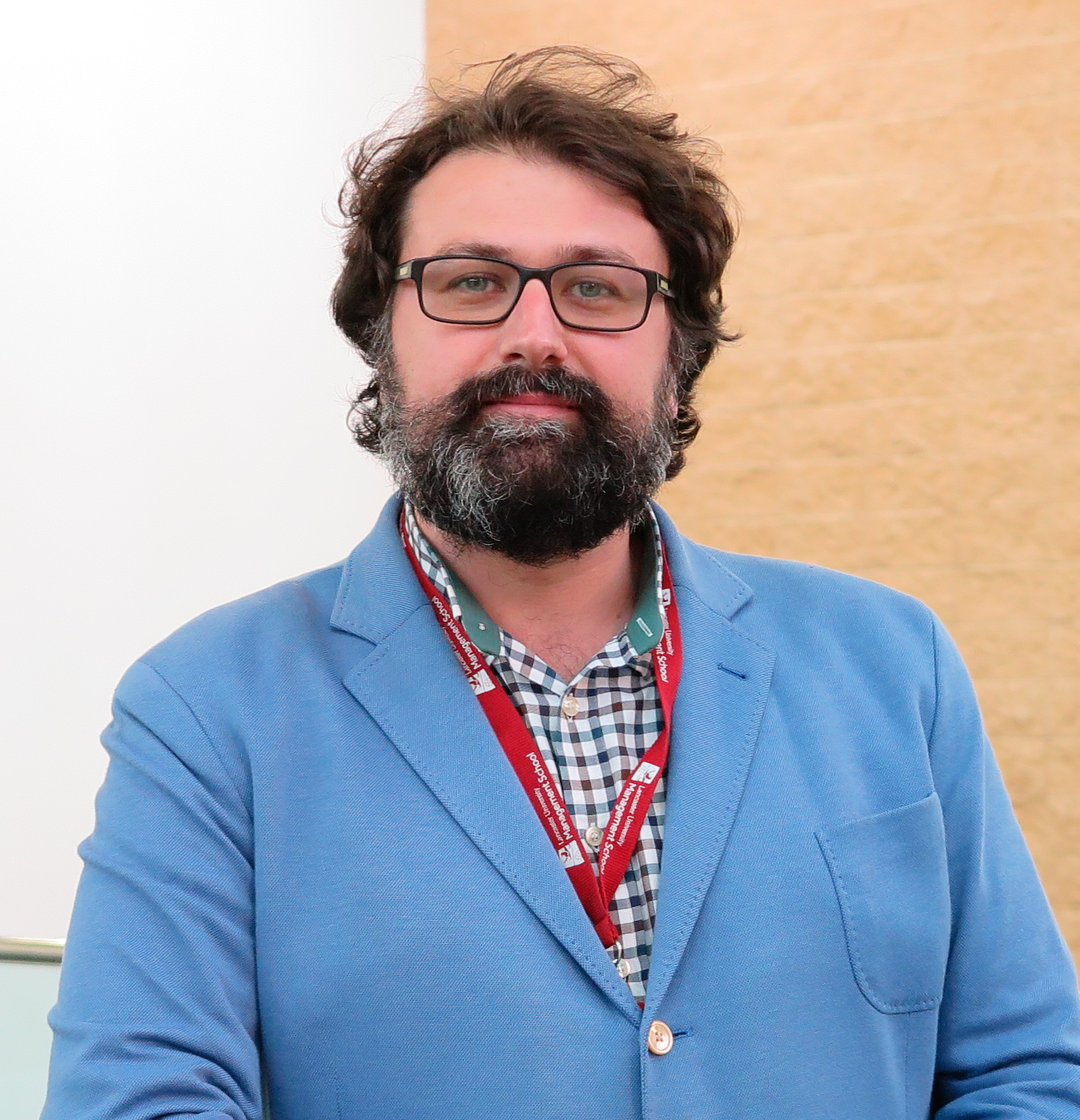
Dr. Emre Tarim is a Lecturer in Behavioural Sciences at the Lancaster University Management School , Department of Marketing. He serves as Deputy Head of Engagement , PG Admissions Tutor , and Departmental Ethics Officer , demonstrating extensive administrative involvement alongside his research and teaching roles. His interdisciplinary research examines human behavior in markets through sociological and behavioral lenses, focusing on sustainability and climate change , household financial practices , and migration dynamics . Methodologically, he specializes in ethnography, narrative methods, interviews, and corpus analysis of textual data. 2025: Using Imagination in Management Education (Journal article) 2024: Carbon Trading Market Speculation (Blog) 2023: Folk Economics in Financial Markets (Journal article) Scientific recognition includes: Best Qualitative Paper Award (2017) Dean's Award (2025) He supervises PhD projects on behavioral aspects of financial markets, energy transitions, and migrant household economics, with current teaching responsibilities in strategic marketing, pricing theory, and sustainability ethics.