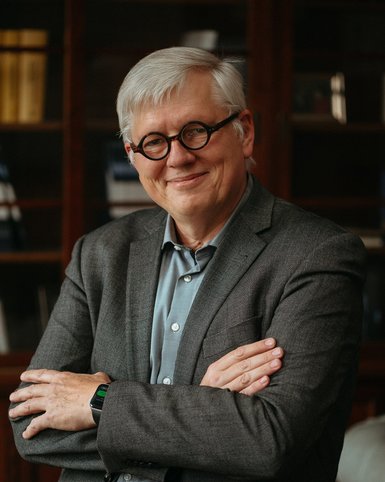
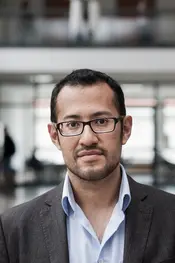
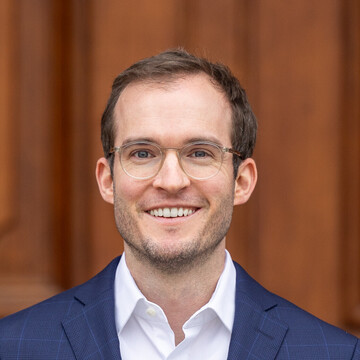
Ulrich Hommel is a Professor of Corporate Finance and University Finance at EBS Business School, where he also serves as Vice Dean and Director of the Strategic Finance Institute (SFI). His academic career spans multiple leadership roles including Dean (2000-2002) and Rector/Managing Director of EBS (2003-2006). He holds a doctorate in economics from the University of Michigan (Ann Arbor) and completed his habilitation in business administration at WHU. Hommel's research focuses on corporate finance, university finance, risk management, and entrepreneurial finance, with significant contributions to understanding venture capital structures, payment systems, and business school administration. His work demonstrates a consistent interest in how financial mechanisms operate within educational institutions and broader market contexts, particularly examining governance structures, risk allocation, and quality management frameworks. His recent publications reveal trends toward analyzing corporate venture capital governance, payment system evolution, and the impact of external shocks like the pandemic on responsible management education. The research shows increasing attention to ESG considerations within private equity and the transformation of business education models in response to digital disruption and global challenges. Hommel has directed the Strategic Finance Institute at EBS Business School, focusing on interdisciplinary research at the intersection of finance, risk management, and educational leadership. His collaborative work spans multiple continents, reflecting the global nature of contemporary finance research and business education challenges.
Dr. Tobias Bahr is a computer science education researcher at the Institute of Educational Science , University of Stuttgart , focusing on technology didactics. He holds a PhD (Dr. phil.) in educational science and teaches courses on computer science didactics, educational research methods, and quantitative methodologies. Education: 1. Staatsexamen in Mathematics and Computer Science (2014–2021), University of Stuttgart; Erasmus+ Exchange, University of Bergen (2017–2018) His research focuses include computational thinking , gender dynamics in STEM , and AI integration in education . He leads projects like MakeTechEarly (2024–2027) and LPI (2023–2025), examining interdisciplinary STEM programs and teacher training interventions. Recent publications analyze AI chatbot usage in higher education, hybrid teacher training models, and computational thinking in early education. He has presented at conferences including EDUCON , ISSEP , and WiPSCE , with a focus on empirical studies and evidence-based practices. Teaching portfolio includes Didactics of Computer Science I/II and Quantitative Research Methods . He has developed AI-assisted task differentiation tools and conducted workshops on agile teaching methods in computer science education.
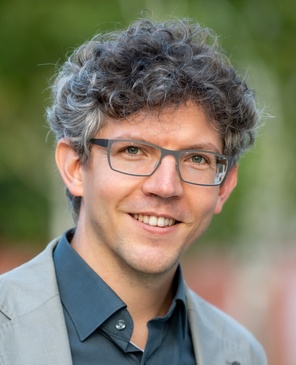
Arash Akbarinia is a researcher at the School of Psychology and Sports Science at Justus Liebig University Giessen. His work operates at the intersection of biological and artificial neural networks , focusing on visual information processing and the psychophysics of perception. Primary research areas include computational modeling of vision, contrast sensitivity, color categorization, and haptic saliency Active in developing deep learning frameworks for sensory processing analysis Recent publications highlight collaborations with Prof. Karl Gegenfurtner and colleagues, exploring phenomena like color constancy , gloss perception , and haptic stimulus modeling through deep neural architectures. His repository contributions include tools for analyzing sensorimotor processing and tactile perception using PyTorch implementations.
Mansi Nagpal is a doctoral researcher at the Department of Economics within the Research Unit Environment and Society at Helmholtz Centre for Environmental Research - UFZ in Leipzig, Germany. She is part of the Graduate School AGRI-TRANSFORM since 2020 and contributes to projects focused on climate change adaptation in agriculture. Education : M.Sc. in Sustainability Management (2017-2020), University of Leipzig M.A. in Agribusiness Economics (2013-2015), Gokhale Institute of Politics and Economics, India B.A. in Economics (2009-2012), University of Delhi Research interests include climate change adaptation and mitigation , agricultural economics , sustainable development , and agent-based modeling . She specializes in analyzing drought impacts on agriculture, irrigation demand under climate change, and economic responses to extreme weather events. Recent publications focus on hydro-economic modeling of drought resilience, crop adaptation to climate variability, and stakeholder perceptions of sustainable agriculture in Germany. Her work employs computational models to project future water demand and assess biophysical-economic impacts of droughts. Projects include her doctoral research on Future drought impacts on German agriculture , participation in the FUSE: Food-Water-Energy for Sustainable Urban Environments project, and contributions to stakeholder-driven sustainability assessments in the Thirsty Cities PhD college.
Prof. J. Rod Franklin, PhD is a Full Professor of Logistics and Academic Director of Executive Education at Kühne Logistics University (KLU) in Hamburg, Germany. With an extensive background spanning both academia and industry, Professor Franklin brings deep practical experience to his academic role. He has held significant leadership positions at KLU, including Dean of Programs, and was instrumental in the university's planning stages as he states: "KLU is near and dear to my heart, because I was one of the individuals that helped plan the university." His unique blend of academic rigor and industry expertise makes him a central figure in KLU's mission of providing world-class logistics education and research. Professor Franklin's academic foundation is impressive: Doctorate of Management, Case Western Reserve University, USA (2000) Master of Business Administration, Harvard Graduate School of Business, USA (1979) Master of Science in Mechanical Engineering, Stanford University, USA (1975) Bachelor of Science in Mechanical Engineering, Purdue University, USA (1974) His research focuses on applying modern management techniques to supply chain operations, with pioneering work in sustainable business models, green logistics, corporate social responsibility, and cloud-based supply chain management. Professor Franklin is a leading authority on the Physical Internet concept, which seeks to revolutionize logistics through interconnected systems inspired by the digital internet. His research consistently bridges theoretical frameworks with practical industry applications, addressing critical challenges in modern logistics networks while promoting sustainability and efficiency. Professor Franklin's publication record over the past two decades reveals a clear evolution from traditional logistics service innovation toward cutting-edge research on the Physical Internet, predictive analytics, and big data applications in supply chains. His recent work demonstrates increasing emphasis on urban logistics solutions, sustainability challenges, and the integration of digital technologies with physical logistics networks. His seminal 2020 paper "From the Digital Internet to the Physical Internet" has significantly advanced the conceptual framework for this emerging field, while his 2024 protocol design work continues to push the boundaries of practical implementation. Professor Franklin leads significant research initiatives including "Accelerating the Path Towards Physical Internet - SENSE," "Internet of Food and Farm 2020," and "URBANE - Upscaling innovative green urban logistics solutions." His work has been published in top-tier journals including Journal of Business Logistics, IEEE Transactions on Systems, Man and Cybernetics, and International Commerce Review, demonstrating substantial scholarly recognition. While specific individual awards aren't detailed in available information, his leadership in major funded research projects indicates significant institutional support for his work. As Academic Director of Executive Education at KLU, Professor Franklin oversees programs that effectively bridge academic theory with industry practice. His teaching portfolio includes MBA courses on Critical Thinking, Design Thinking, Managing Multiple Complex Expectations, and Systems Thinking - all emphasizing practical application of theoretical concepts. His extensive industry background, including executive roles at Kühne + Nagel and other major logistics firms, directly informs his approach to academic supervision and executive education. Professor Franklin has successfully secured research funding for multiple projects focused on sustainable logistics innovation, demonstrating his ability to translate theoretical concepts into impactful research initiatives. Professor Franklin leads collaborative research teams focused on the Physical Internet concept and its applications in modern logistics. Through projects like SENSE and URBANE, he works with international researchers, industry partners, and policymakers to develop innovative solutions for sustainable urban logistics. His research integrates expertise from computer science, operations research, and business management to address complex supply chain challenges. The BizSLAM App, developed as part of his work on multi-level SLA management, exemplifies his team's ability to create practical tools with direct industry applications, demonstrating the real-world impact of his research vision.
MA Silke Lipinski is a Research Associate at the Institute of Psychology , Humboldt University of Berlin, specializing in Clinical Psychology of Social Interaction within the Faculty of Life Sciences . She coordinates the Center for Patient and Public Involvement (PPI) at the German Center for Mental Health (DZPG) and serves as a PPI consultant at the Berlin-Potsdam site. Her work bridges academia and community advocacy, focusing on participatory research models. Institution: Humboldt University of Berlin Department: Department of Psychology Role: Research Associate & PPI Coordinator Contact: silke.lipinski@hu-berlin.de Research Focus: Her work centers on Autism Spectrum Disorders , emphasizing participatory research methods , patient and public involvement (PPI) , and improving mental health care accessibility for autistic adults. She advocates for co-creating healthcare solutions with affected communities. Publications (2019-2024): Silke Lipinski’s research spans autism-focused psychotherapy, PPI integration in mental health systems, and self-help resource design. Her work appears in journals like Der Nervenarzt , Autism in Adulthood , and Journal of Autism and Developmental Disorders , with recent emphasis on interdisciplinary guideline development and national mental health infrastructure. Labs & Teams: She collaborates with the Dziobek-Lab and contributes to the German Center for Mental Health (DZPG), driving stakeholder engagement and translational research initiatives.
Matthias Kalkuhl is a Professor of Climate & Growth at the University of Potsdam and Head of the Climate Economics and Policy Department at the Potsdam Institute for Climate Impact Research (PIK) . He specializes in carbon pricing mechanisms , climate policy design , and financing global public goods like climate protection and biodiversity. His work bridges theoretical economic modeling with practical policy solutions for distributional equity in decarbonization. University of Potsdam Faculty of Economics and Social Sciences PIK (Potsdam Institute for Climate Impact Research) Mercator Research Institute on Global Commons and Climate Change (MCC Berlin) [2015-2023] Research Themes : Kalkuhl focuses on CO2 pricing with compensation mechanisms (e.g., Gebäudeklimageld), geopolitical externalities of fossil fuel consumption, and carbon dioxide removal (CDR) governance. His work includes modeling clean-up certificates for EU ETS and quantifying the security dividend of climate policy. Scientific Recognition : Featured in Capital 's "Top 40 under 40" list twice, with policy briefs influencing EU climate debates. His 2024 paper on oil consumption's military costs gained significant policy attention. Key Contributions : • Quantified 37€ security savings per euro of EU oil reduction • Designed weak Pareto-improving climate mechanisms • Advocated for green-golden debt rules linking fiscal policy to emissions • Created DOSE subnational economic output database
Leonardo Tonetto is a researcher at Technical University of Munich (TUM) within the Chair of Connected Mobility, working under Prof. Jörg Ott. His office is located in FMI 01.05.038 and he maintains an active presence in both academic research and open-source development with significant GitHub contributions (19 repositories, 73 stars). His work bridges theoretical research and practical implementation in mobility systems. Dr. Tonetto's research spans Mobile User Modeling , Deep Learning & Data Analysis , Signal Processing , and Complex Networks . His work demonstrates particular expertise in extracting meaningful patterns from human mobility data while addressing critical privacy concerns. Recent publications show increasing focus on ethical implications of location-based data and energy-efficient computing for augmented reality applications. Analysis of his publication record from 2014-2025 reveals a consistent research trajectory evolving from fundamental mobility pattern analysis toward more complex systems integrating privacy considerations and energy efficiency. His work increasingly intersects computer science with social implications, particularly in location-based services and epidemic modeling. The research shows strong methodological diversity, employing machine learning, network analysis, and signal processing techniques across various application domains. Through his GitHub profile and open-source contributions, Tonetto demonstrates commitment to reproducible research and community engagement. His technical skills span multiple programming languages and systems, supporting both theoretical research and practical implementation of mobility-aware systems. While specific grant information isn't publicly available, his consistent publication output suggests successful research funding.
Prof. Dr. Philipp Slusallek serves as Scientific Director and executive board member at the German Research Center for Artificial Intelligence (DFKI), where he leads the Agents and Simulated Reality research area. He holds a Full Professorship in Computer Graphics at Saarland University since 1999, co-founded the European AI initiative CAIRNE as Director of Strategy, and directs research at the Intel Visual Computing Institute. His career spans leadership roles in the Excellence Cluster on Multimodal Computing and Interaction and prior visiting positions at Stanford University and Nvidia Research. His academic foundation includes: 1983-1990: M.Sc. in Physics, University of Tübingen 1992-1995: Ph.D. in Computer Science, University of Erlangen Slusallek's research bridges Artificial Intelligence, Simulated Reality, and Computer Graphics with applications in high-performance computing, motion synthesis, and AI for science. His interdisciplinary work integrates real-time rendering, heterogeneous system programming (CPU/GPU/FPGA), and biomechanical modeling, driving innovations in digital reality frameworks and AI-driven simulation systems across medical, engineering, and autonomous vehicle domains. His 2025 publications reveal a strong focus on graphics compilation (Vulkan SPIR-V), rehabilitation biomechanics, and multi-agent motion simulation, demonstrating consistent integration of computer graphics foundations with emerging AI methodologies for practical real-world applications. Award highlights include the Eurographics Gold Medal (2023), acatech membership (2018), Land of Ideas Awards (2015, 2010), and Eurographics Fellowship (2013), recognizing his transformative contributions to computer graphics and AI. Eurographics Gold Medal (2023) acatech Membership (2018) Land of Ideas Award: Display as a Service (2015) Fellow of Eurographics Association (2013) CeBIT Innovation Award (2013) Land of Ideas Award: DFKI Visualization Center (2010) Slusallek leads major research initiatives including B5GCyberTestV2X (cybersecurity for autonomous driving), ENGAGE (AI computing environments), Carousel+ (digital character interaction), PRIME (predictive rendering), and TAILOR (trustworthy AI). His DFKI research group pioneers virtual environment frameworks while his academic mentorship has shaped generations of computer graphics researchers through Saarland University's programs. He co-founded the Intel Visual Computing Institute and established foundational visualization infrastructure at DFKI, maintaining active leadership in European AI strategy through CAIRNE and prior service on the European Commission's High-Level Expert Group on AI.
Prof. Dr. Hermann Winner is a full Professor and Head of the Institute of Automotive Engineering (FZD) at Technische Universität Darmstadt since 2002. He previously held leadership roles in predevelopment and series development at Robert Bosch GmbH (1987–2001) and served on international standards committees like ISO/TC204/WG14. Education : Diplomphysicist (1981), Westfälische Wilhelms-Universität Münster Doctorate (1987), Westfälische Wilhelms-Universität Münster (Topic: Dynamics of domain walls in metal ferromagnetic materials) Research Interests : His work focuses on automated driving systems , automotive sensor modeling , and safety validation methodologies . Key contributions include modular safety frameworks (S2I2), behavior-semantic scenery descriptions for autonomous vehicle development, and advanced driver assistance systems (PRORETA 5). He has pioneered research on lidar sensor simulation, brake wear particle emissions, and motorcycle dynamics safety. Article Trends : Recent publications (2022–2024) emphasize automated urban driving safety , semantic scenario modeling , and sensor-based localization . Earlier works (2012–2021) established foundational concepts in fail-operational architectures , collision criticality metrics , and automotive system decomposition . Scientific Awards : IEEE-ITS Institutional Award (2012) for leadership in automated driving research Labs & Projects : He leads the Institute of Automotive Engineering (FZD) at TU Darmstadt and has been integral to projects like UNICARagil (disruptive vehicle architectures), PRORETA series (collision avoidance systems), and collaborations with institutions such as the Daimler und Benz Stiftung and the Bundesanstalt für Straßenwesen.
Prof. Dr. Thomas Schack is a faculty member in the Department of Sport Science at Bielefeld University , specifically within the Faculty of Psychology and Sport Science and the Center for Cognitive Interaction Technology (CITEC) . His research focuses on the intersection of Neurocognition and Movement - Biomechanics , with significant contributions to understanding motor learning, cognitive representations in sports, and neurophysiological adaptations. Key Research Areas : Academic resilience, EEG neurofeedback applications, sport emotion validation, motor imagery classification, and balanceability enhancement through spinal cord stimulation. Notable Methodologies : Psychometric validation across cultures, longitudinal studies on student engagement, and ERP/EEG studies on motor planning and execution. Impact : His work bridges sports science with cognitive neuroscience, emphasizing cross-cultural applications (e.g., Ghanaian educational contexts) and technological interventions in athletic performance. Publications show a strong emphasis on academic resilience in educational settings, motor skill acquisition through neurocognitive frameworks, and cross-cultural psychometric validation. His recent studies analyze balanceability support systems and expertise-dependent cognitive performance in sports and chess.
Christian R. Proaño is a Professor of Economics at Otto-Friedrich-Universität Bamberg, specializing in Macroeconomics and International Finance. He previously served as an Assistant Professor at The New School for Social Research (2010–2015) and as a Research Economist at the Institute for Macroeconomics and Economic Research (IMK) in Germany (2008–2010). His academic journey includes a PhD in Economics from Bielefeld University (2008) and studies at the Catholic University of Ecuador (PUCE). Education: PhD in Economics (Bielefeld University, 2008) Current Roles: Professor at Bamberg University, Vice-Chairman of Keynes Gesellschaft, Research Fellow at CAMA Research Focus: Behavioral macroeconomics, income distribution, financial cycles, and macroeconomic stability Proaño’s research integrates behavioral economics into macroeconomic frameworks, analyzing how heterogeneous expectations and psychological factors influence financial markets, monetary policy, and business cycles. His work on non-linear macroeconometrics and climate change economics explores systemic risks and policy design for sustainable growth. His recent publications highlight trends in financial cycle analysis, behavioral political economy, and inequality dynamics. Notable collaborations include studies on income inequality’s macroeconomic effects and agent-based modeling of financial stability. Scientific Awards: Research Fellow, Centre for Applied Macroeconomic Analysis (CAMA) Fellow, Euro Area Business Cycle Network (EABCN) Proaño supervises external doctoral candidates and contributes to academic governance via roles in the German Network for New Economic Dynamics (GENED) and the Computational and Financial Econometrics (CFE) Network.
Dr. Narges Arastouei serves as a postdoctoral researcher at the Chair of Mobile Business & Multilateral Security, Goethe University Frankfurt since 2019. With over 12 years of industry experience including leadership of security operations at Iran's largest mobile provider (MCI), she specializes in cybersecurity for next-generation mobile networks and critical infrastructure protection. Her educational background includes: Ph.D. in Computer System Networking and Telecommunications from Amirkabir University of Technology (AUT), Tehran Research focuses on network security, 5G/6G communications, IoT security, and Security Operations Center (SOC) frameworks. Current work bridges theoretical networking with practical incident handling, emphasizing human factors in cybersecurity and privacy-preserving healthcare applications. Her projects address evolving threats in mobile ecosystems through both technical solutions and policy frameworks. Publication trends reveal progression from foundational work in opportunistic network routing (2013-2019) to cutting-edge 6G security research (2022-2025), with consistent emphasis on real-world implementation challenges. Key themes include risk-aware protocols, botnet detection, and secure healthcare systems. Scientific recognition includes: First-place doctoral student award She leads coordination of EU-funded CyberSec4Europe and CyberSecPro projects while spearheading human factor components in the ECCO initiative. Secured Goethe-Corona-Fonds grant funding for longitudinal study on Germany's Corona Warning App adoption. Hosts the SECMGT workshop on information security management since 2023. Active within Goethe University's security research ecosystem, she contributes to multilateral security frameworks and mentors junior researchers through student assistant programs.
Michael Raupach is a Professor at RWTH Aachen University holding the Chair of Building Materials Science - Building Conservation. His work focuses on concrete durability, reinforcement corrosion, and sustainable construction materials, with particular expertise in alkali-activated binders, carbon textile reinforcement, and electrochemical monitoring systems. Research Interests: Concrete durability, corrosion protection, sustainable materials, structural maintenance, BIM applications, and non-destructive testing. Recent Work: Investigates electrically heated carbon textile reinforced concrete systems, develops hybrid alkali-activated materials for realkalization, and explores chloride diffusion mechanisms in low-carbon binders. Publications: Active in journals covering concrete technology, corrosion engineering, and sustainable construction methods.
Max Reinwald is an Assistant Professor in the Department of Management at the University of Mannheim Business School . His research focuses on Responsible Leadership , Diversity in Organizations , Teamwork and Collaboration , and Change Management . Research Trends Reinwald’s recent publications examine: Political and societal influences on workplace diversity and absenteeism Dynamics of female leadership appointments during crises (glass cliff phenomenon) Employee responses to organizational change initiatives Impact of team faultlines and leadership signaling on inclusion Decentralization’s effects on organizational performance His work combines quantitative analysis, multilevel modeling, and theoretical frameworks from organizational behavior and social psychology.