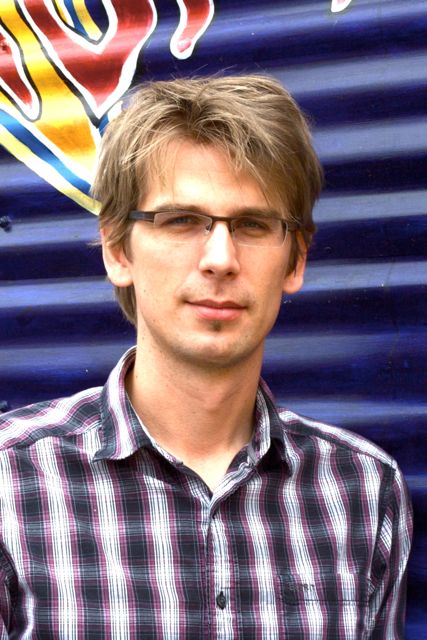
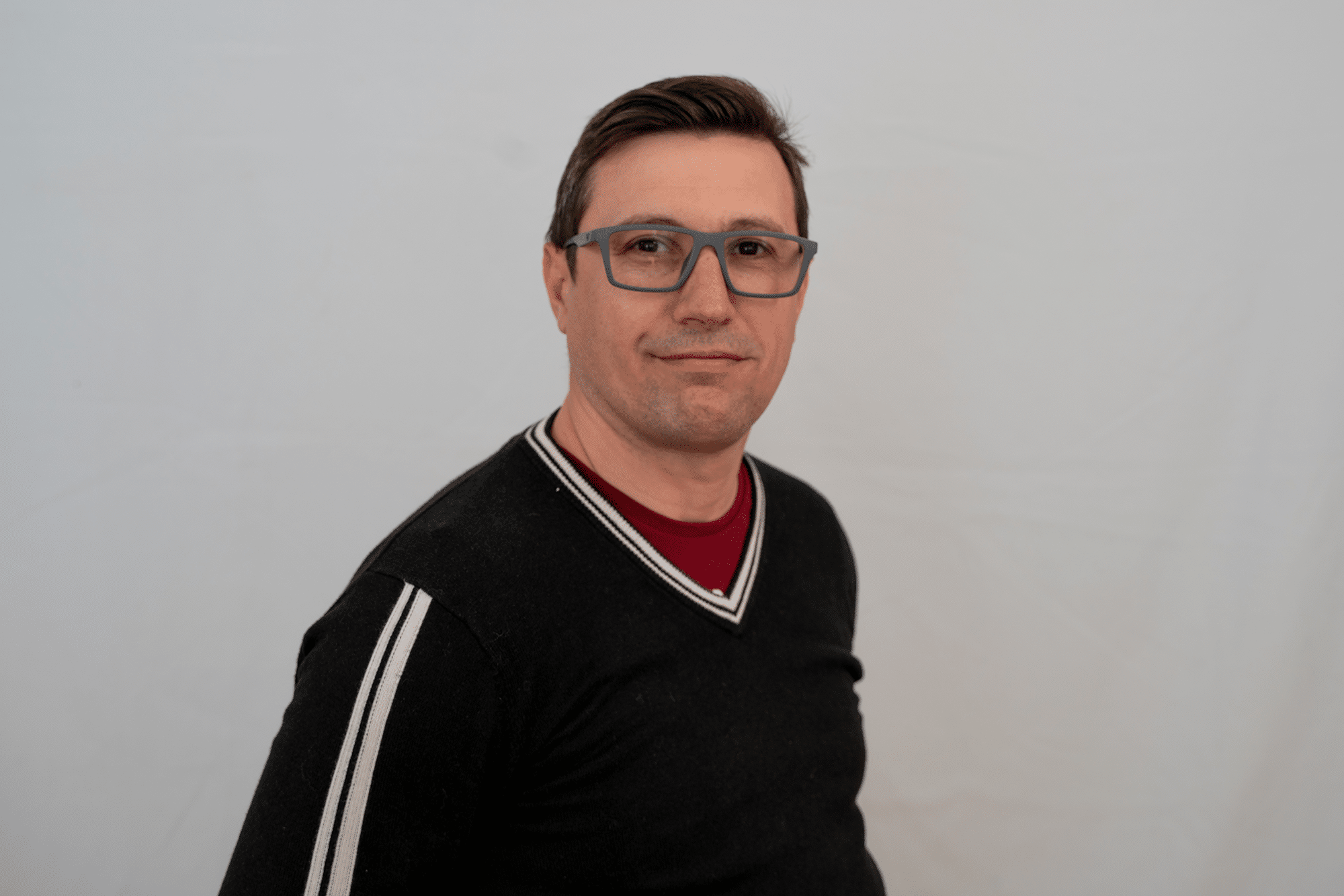
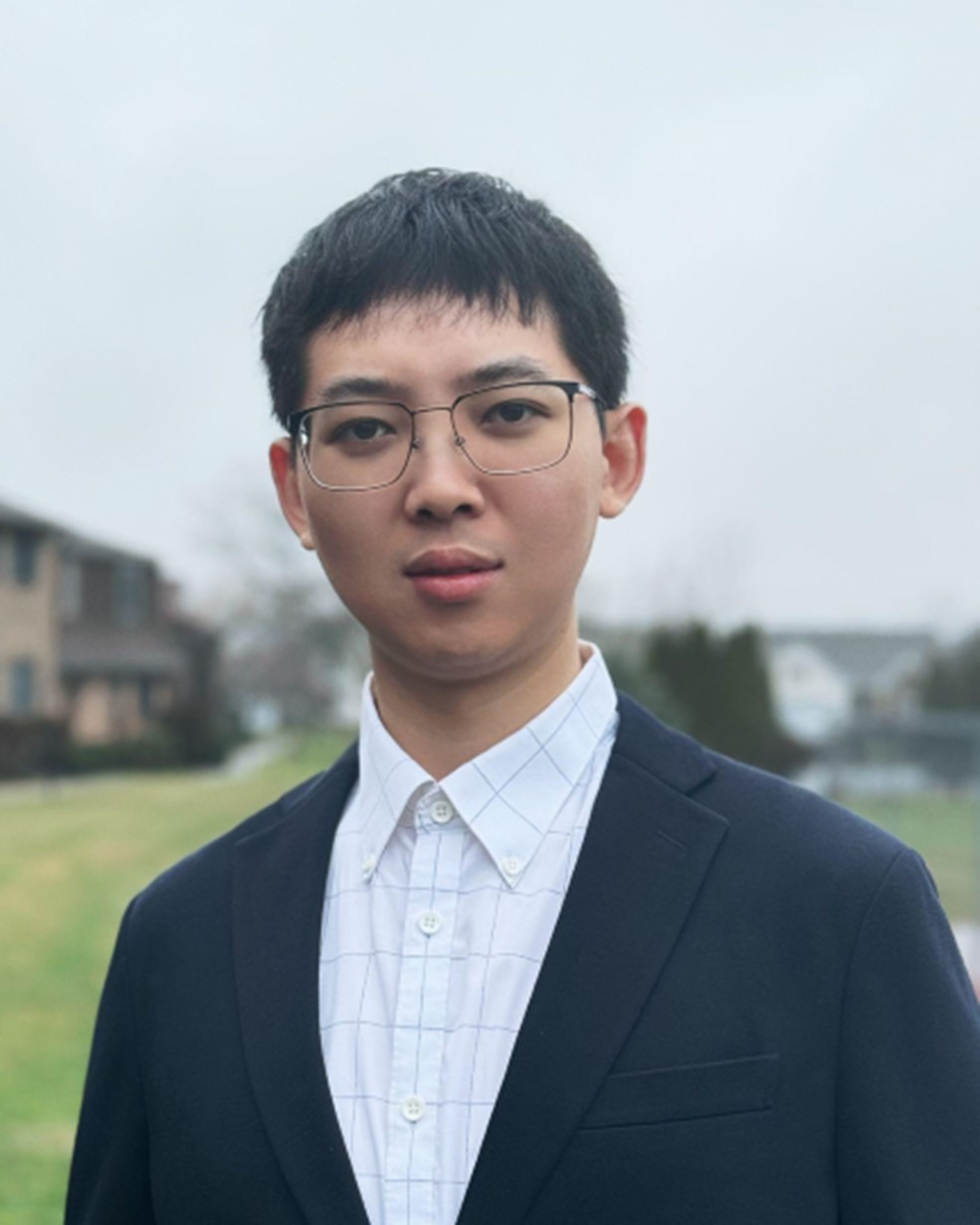
Dr. Wan Renjie is an Assistant Professor in the Department of Computer Science at the Faculty of Science, Hong Kong Baptist University (HKBU). He holds a BEng in Network Engineering from the University of Electronic Science and Technology of China and a PhD from Nanyang Technological University (NTU), Singapore. Prior to joining HKBU, he was a Wallenberg-NTU Presidential Postdoctoral Fellow (2020–2022) and a guest researcher at Peking University (2019–2020). His research focuses on computational photography, 3D vision, AI security, digital watermarking, and neural representations . He explores robustness and security in vision models, especially concerning NeRFs and 3D Gaussian Splatting, and develops methods for low-light enhancement, reflection removal, and domain adaptation. Dr. Wan has published in top-tier venues including TPAMI, IJCV, CVPR, ICCV, NeurIPS, AAAI, and ECCV . His recent work emphasizes copyright protection for neural 3D models , adversarial attacks in multimodal and event-based systems, and medical image reconstruction. He is actively mentoring PhD students and research assistants. VCIP 2020 Best Paper Award Outstanding Reviewer, ICCV 2019 He teaches courses such as Introduction to AI and ML (COMP3057) , AI Application Development (COMP3065) , and Python for Data Analysis and Machine Intelligence (COMP7035) . Dr. Wan leads a dynamic research group with ongoing projects on watermarking, 3D reconstruction, and AI security, and he is currently recruiting new PhD students and research assistants.
Georg Stadler is a Professor of Mathematics and Computer Science at New York University's Courant Institute. His research focuses on computational inverse problems, uncertainty quantification, and PDE-constrained optimization, driven by applications in climate modeling, geophysics, and plasma physics. He holds a PhD from the University of Graz (2004) and has been recognized with awards including the Gordon Bell Prize (2015) and the SIAM Computational Science & Engineering Best Paper Prize (2019). Education: Ph.D. (Dr.), Mathematics, University of Graz, Austria, 2004. M.S. (Mag.), Mathematics, University of Graz, Austria, 2001. M.S., Mathematics and Geometry Education, Graz University of Technology and University of Graz, 2001. Research Interests: Large-scale PDE solvers, Bayesian inverse problems, extreme event probability estimation, and optimization under uncertainty. Applications in climate (sea/land ice, tsunamis), plasma physics (fusion), and computational earth science (mantle flow, plate tectonics). Recent Research Trends: His work emphasizes scalable algorithms for high-dimensional Bayesian inverse problems, with applications to tsunamis, stellarator coil design, and ice sheet dynamics. Recent articles highlight advancements in extreme event probability estimation and robust multigrid solvers for incompressible Stokes equations. Awards: Gordon Bell Prize (2015) for extreme scalability of implicit solvers. SIAM Best Paper Prize (2019) for computational science contributions. Young Scientist ASCINA Award and Springer CSE Prize (2011). Advising & Grants: Current PhD student Sonia Reilly and former advisees include Chen Li and Shanyin Tong. His research is supported by NSF, ONR MURI, and the Simons Foundation. He co-leads the Computational Mathematics and Scientific Computing Seminar at Courant. Labs & Collaborations: Active in Courant’s interdisciplinary groups, focusing on high-performance computing and inverse problems. Collaborates with institutions like UT Austin on mantle dynamics and fusion energy projects.
Olivier FARGES is a Senior Lecturer and HDR (Habilitation à Diriger des Recherches) holder at the University of Lorraine, affiliated with ENSGSI (École Nationale Supérieure de Géologie et Sciences Industrielles) within the Groupe INP. He serves as Director of Industrial Partnerships at ENSGSI and is part of the LEMTA Laboratory (CNRS-University of Lorraine), focusing on multiphysics and multiscale modeling of heat transfer in complex environments. His academic roles include teaching courses such as Heat and Mass Transfer, Fluid Mechanics, Scientific Computing Modeling, and Renewable Energy. Dr. FARGES holds a Ph.D. in Energy and New R&D (2014) and an Engineering degree in Energy Engineering (2010), both from the École de Mines Albi. His research emphasizes coupled conductive-radiative heat transfer in porous media, thermal property characterization of heterogeneous materials, and Monte Carlo-based computational methods for energy systems. He has contributed to advancements in photovoltaic system modeling, solar thermal power optimization, and urban climate studies. His work bridges theoretical and applied thermal engineering, with applications in sustainable energy systems, material science, and industrial partnerships. Key research themes include radiative transfer modeling, multiphysics simulation frameworks, and the development of innovative tools for thermal property measurement and energy performance assessment.
Dr. Roy Lederman is an Assistant Professor at the Department of Statistics and Data Science , Yale University. He is affiliated with the Quantitative Biology Institute (QBio) , the Applied Math Program , the Institute for Foundations of Data Science (FDS) , and the Wu Tsai Institute (WTI) . He was awarded the Sloan Research Fellowship (2023) . He previously held a Gibbs Assistant Professorship at Yale (2014-2015) and a postdoc at Princeton University (2015-2018) . Education: PhD in Applied Mathematics, Yale University (2014); dual BSc in Physics and Electrical Engineering, Tel-Aviv University. Teaching: Courses include Computational Tools for Data Science, Signal Processing, and Mathematical Machine Learning. Research Areas: Dr. Lederman works at the intersection of computational biology , structural biology , Bayesian inference , numerical analysis , and machine learning . His recent work focuses on cryo-EM and hyper-molecules for studying molecular heterogeneity, alternating diffusion for common variable recovery, and Zernike polynomials for 3D imaging. He also develops Hamiltonian Monte Carlo methods and randomized DNA sequencing algorithms . Publications Trends: His publications (15 most recent) emphasize structural biology and cryo-EM applications, machine learning (Bayesian deep learning, diffusion maps), numerical analysis (Fourier/Laplace transforms), and computational biology (DNA sequencing algorithms). Key sub-fields include heterogeneity analysis , manifold learning , Hamiltonian Monte Carlo , and Zernike polynomials . Scientific Awards: Sloan Research Fellow (2023) Dr. Lederman actively mentors graduate students and postdocs at Yale, and co-organizes the One World Cryo-EM seminar series . His lab develops open-source software (e.g., prolate function implementation ) and explores theoretical bounds on transforms and common variable recovery in multi-sensor experiments.
Xiajun Jiang is an Assistant Professor in the Department of Computer Science at the University of Memphis, joining in Fall 2024. He holds a PhD in Computing and Information Sciences from Rochester Institute of Technology (2024), an M.S. in Computer Science from the University of Southern California (2018), and a B.S. in Electrical Engineering and Automation from Zhejiang University (2016). His research focuses on adaptive AI computing, physics-informed deep learning, and their applications in healthcare, particularly in medical imaging and cardiac simulation. Key contributions include hybrid neural state-space modeling for electrocardiographic imaging and physics-informed frameworks for bi-ventricular electrophysiological simulations. Education: PhD, Rochester Institute of Technology, 2024 M.S., University of Southern California, 2018 B.S., Zhejiang University, 2016 Research Interests: Machine learning for healthcare Adaptive computing in AI models Physics-informed deep learning His work bridges machine learning and biomedical engineering, with applications in cardiac imaging and electrophysiology. Recent articles highlight advancements in hybrid models for ECGI and meta-learning approaches for personalized cardiac simulations. He has reviewed for top conferences like ICLR, NeurIPS, and MICCAI, and contributed to projects like the Computational Biomedical Lab (CBL).
Dr. David R. Themens is an Associate Professor in Space Environment within the Space Environment and Radio Engineering (SERENE) group in the School of Engineering at the University of Birmingham. He specializes in modeling and mitigating the impacts of space weather on radio communications and navigation systems, with a particular focus on the ionosphere's effects on these technologies. Dr. Themens earned his academic credentials from Canadian institutions: BSc (Hons) in Physics from the University of New Brunswick (2011) MSc in Atmospheric and Oceanic Science from McGill University (2013) PhD in Physics from the University of New Brunswick (2018) His research primarily focuses on four interconnected areas: ionospheric modeling, ionospheric physics, measurement techniques, and radio propagation. Dr. Themens is particularly interested in the interaction between the ionosphere and the atmosphere, specifically how lower atmospheric forcing drives variability within the ionosphere and the interactions between the ionosphere and thermosphere. He is the principal developer of the Empirical Canadian High Arctic Ionospheric Model (E-CHAIM) , a high-latitude alternative to the International Reference Ionosphere (IRI) used for HF/UHF signal propagation modeling. His work includes exploring synergistic properties of different earth observation instruments, measurement technique development, data assimilation, and empirical modeling. Analysis of Dr. Themens' recent publication record reveals a strong emphasis on space weather phenomena, ionospheric modeling, and radio propagation. His work spans from fundamental ionospheric physics to practical applications in navigation and communication systems. Key themes include the development and validation of ionospheric models, analysis of space weather events (including the May 2024 geomagnetic superstorm), and the impact of solar phenomena on Earth's upper atmosphere. His research increasingly incorporates advanced data assimilation techniques and leverages multiple observational platforms including radar systems, GNSS networks, and satellite measurements. Dr. Themens holds significant leadership positions in the international space science community: Co-Chair of IAG-GGOS Joint Study Group on Understanding Ionospheric and Plasmaspheric Processes (2023-present) Chair of URSI Data Assimilation Working Group (2023-present) Co-Chair of IAGA Geospace Data Assimilation Working Group (2023-2027) URSI Commission G Early Career Representative (2023-2029) Chair of Canadian Association of Physicists Division of Atmospheric and Space Physics (2022-present) Dr. Themens actively mentors graduate students and is 'always looking for new Ph.D. students interested in the ionosphere, data assimilation, and radio propagation.' His research has been supported through contracts with Defence Research and Development Canada (DRDC) and various international collaborations. He leads the Canadian High Arctic Ionospheric Models (CHAIMs) project, which builds upon his doctoral work developing the E-CHAIM model. At the University of Birmingham, he teaches courses in Space System Engineering and Design, Space Mission Analysis and Design, and Space Environment.
Professor Ana Ferreira is a leading seismologist at University College London, focusing on deep Earth structure and earthquake source processes. Her research integrates seismic and geodetic data to understand planetary dynamics from the surface to the lowermost mantle. Her work includes pioneering seismic tomography, such as the SGLOBE-rani 3D anisotropy model, and earthquake source analysis using InSAR and normal mode data. She leads the Seismological Laboratory and teaches Seismology II and Field Geophysics. Recent projects include the UPFLOW experiment, which deployed 49 ocean bottom seismometers in the Atlantic, and studies on Greenland ice sheet evolution and Tonga volcanic eruptions. Her EU-funded research emphasizes multidisciplinary data integration and numerical modeling. Key article trends cover mantle anisotropy, global tomography, earthquake source inversion, cosmology-inspired machine learning, and ocean bottom seismology applications in geodynamics and cryospheric processes.
Anna Kuparinen is a Professor at the University of Jyväskylä's Faculty of Mathematics and Science, Department of Biological and Environmental Science. Her research group, EcoEvoAqua, focuses on aquatic species and their ecosystems, particularly eco-evolutionary dynamics. Key research areas include ecological modeling, fisheries-induced evolution, food web stability, and environmental impacts on species survival. Recent work examines predator reintroduction effects, climate-driven selection pressures, and parasite-host interactions in aquatic systems. Publications span theoretical ecology, conservation biology, and fisheries management. Her research emphasizes interdisciplinary approaches to address complex ecological challenges. Education details are not explicitly listed, but her academic career reflects extensive contributions to aquatic ecology and conservation. Awards are not mentioned in the text, though her prolific publication record indicates recognition in her field. She leads the EcoEvoAqua research team, which integrates computational models with empirical data to study ecosystem resilience and biodiversity. Ongoing projects include modeling Lake Oulujärvi dynamics and exploring manganese toxicity in fish populations.
Eric Hetland is an Associate Professor in the Department of Earth and Environmental Sciences at the University of Michigan. His research focuses on geophysical natural hazards, particularly earthquake dynamics from a geodetic perspective. He investigates fault loading processes during interseismic and postseismic periods, and collaborates on modeling volcanic eruption conditions with Prof. Becky Lange. His work integrates machine learning methods into geodetic data analysis, addressing climate studies and hazard vulnerability. Applied mathematics and computational science are central to his interdisciplinary approach. Education: PhD in Geophysics from MIT (2006), MA in Geology from SUNY Binghamton (2000), BS in Physics from UC Santa Cruz (1996) Research Interests: Seismology, Geodesy, Crustal Deformation, Geodynamics, Magmatism and Volcanism Lab/Teams: Active collaborations with interdisciplinary teams, leveraging geodetic and computational tools His recent publications emphasize coseismic slip distribution modeling, Bayesian stress inversion, and transient strain analysis using advanced statistical methods. He has no listed scientific awards but maintains an active research program funded through collaborative grants. Advising focuses on graduate student training in geophysical hazards and computational geophysics.
Naratip Santitissadeekorn is a Senior Lecturer in Data Assimilation at the School of Mathematics and Physics, University of Surrey, where he is affiliated with the Mathematics at the Interface Group. His work bridges mathematics, data science, and real-world applications in urban planning, crime analysis, and geophysical fluid dynamics. Dr. Santitissadeekorn received his PhD from Clarkson University in 2008, with a dissertation titled "Transport Analysis and Motion Estimation of Dynamical Systems of Time-Series data." His doctoral research was supervised by Professor Erik Bollt. Following his PhD, he completed two significant postdoctoral positions: from 2008-2011 at the University of New South Wales, Sydney, Australia, working with Professor Gary Froyland on numerical techniques for finite-time Lagrangian coherent set identification, with applications to delimiting the polar vortex and Agulhas rings; and from 2011-2014 at the University of North Carolina-Chapel Hill, working with Professor Chris Jones on data assimilation projects. Dr. Santitissadeekorn's research focuses on inverse problems and data assimilation in geophysical fluid dynamics, the applications of Lagrangian Coherent Structures (LCS), and computational ergodic theory. His work combines theoretical mathematics with practical applications, particularly in urban growth modeling and crime analysis. He has developed innovative methods for identifying coherent structures in fluid flows, estimating transition probabilities from spatiotemporal data, and creating data-driven frameworks for urban expansion scenarios. His research demonstrates how mathematical techniques can be applied to solve real-world problems in environmental science, urban planning, and public safety. An analysis of Dr. Santitissadeekorn's recent publications (2020-2023) reveals a strong focus on urban expansion modeling and network analysis. His work on urban growth has evolved from basic cellular automata models to sophisticated frameworks that manage uncertainty through parameter clustering and growth mode identification. His research on Hawkes processes has advanced ensemble-based filtering techniques for analyzing count data in large networks. These publications demonstrate a consistent pattern of applying mathematical rigor to complex spatiotemporal phenomena, with increasing emphasis on data-driven approaches and practical applications. Dr. Santitissadeekorn has made significant contributions to data assimilation methods, particularly through the development of the extended Poisson-Kalman filter (ExPKF) for urban crime modeling. His teaching includes courses in Algebra and Bayesian Statistics, reflecting his expertise in both theoretical and applied mathematics. While specific awards are not mentioned in the available information, his extensive publication record in high-impact journals demonstrates recognition within his field. Dr. Santitissadeekorn's research has practical implications for urban planning and law enforcement. His work on urban expansion models helps planners understand different growth trajectories, while his crime modeling research contributes to improved police patrolling strategies. His interdisciplinary approach, combining mathematics, computer science, and domain-specific knowledge, positions him at the forefront of applying data science to societal challenges.
Daniela Calvetti is the James Wood Williamson Professor in the Department of Mathematics, Applied Mathematics, and Statistics at Case Western Reserve University. Her research focuses on large-scale scientific computing, computational inverse problems, uncertainty quantification, and predictive modeling in neuroscience, metabolism, and cellular physiology. She holds a PhD from the University of North Carolina-Chapel Hill. Her work integrates advanced mathematical techniques with biomedical applications, including brain energy metabolism modeling, MEG/EEG source reconstruction, and computational methods for medical imaging. Notable contributions include Bayesian hierarchical algorithms for inverse problems and interdisciplinary collaborations bridging mathematics with neuroscience and physiology. Recent research highlights include developing sparsity-promoting Bayesian models for tomography, computational frameworks for neuromuscular control variability, and predictive models of disease dynamics like post-pandemic COVID-19 recurrence. Her methodologies emphasize statistically inspired preconditioning and adaptive meshing techniques to enhance computational efficiency in solving complex inverse problems. Dr. Calvetti has published extensively across computational science, inverse problems, and biomedical applications. She leads a research group advancing interdisciplinary computational methods with applications in neuroscience, virology, and metabolic systems.
Alexandros Kontogiannis is a research fellow at the University of Cambridge, Department of Engineering, specializing in fluid dynamics and applied mathematics. His work combines Bayesian inference, machine learning, and physics-informed algorithms to solve inverse problems in magnetic resonance velocimetry (MRV) and fluid-structure interaction. EPSRC National Fellow in Fluid Dynamics Member of Energy, Fluids and Turbomachinery Division Research Focus: Development of digital twin frameworks that integrate MRV data with Navier-Stokes equations to reconstruct flowfields, infer rheological parameters in non-Newtonian fluids, and estimate hidden quantities like pressure and wall shear stress. Key innovations include: Physics-informed compressed sensing for sparse MRV data Simultaneous boundary shape and flowfield estimation Bayesian turbulence model parameter learning Scientific Awards: ASME Fluids Engineering Division Graduate Student Scholar (2021) Technical Chamber of Greece (TEE) Award (2018) Limmat Foundation Academic Excellence (2017) Mentzelopoulos Scholarship for international studies (2017) Greek State Scholarships Foundation Award (2012) Key Contributions: Algorithms for 3D flow reconstruction with adaptive discretization, viscous signed distance field regularization, and multi-objective aerodynamic shape optimization. His methodologies enable 27x reductions in MRI scanning time while maintaining diagnostic accuracy.
Cristina Butucea is a Professor of Statistics and Machine Learning at ENSAE-CREST, Institut Polytechnique de Paris . She was nominated an IMS Fellow (2019) for her contributions to nonparametric and high-dimensional statistics. She has co-organized major conferences like Fréjus 2018 , Luminy 2019-2020 , and Oberwolfach 2021 , and serves as Associate Editor for ALEA . Fields of interest: Nonparametric statistics, quantum statistics, differential privacy, inverse problems, machine learning. Awards: IMS Fellowship, conference organization leadership. Research trends: Focuses on optimal estimation under privacy constraints, quantum state reconstruction, high-dimensional inference, and adaptive nonparametric methods. Email: Cristina.Butucea@ensea.fr | Cristina.Butucea@ip-paris.fr
Xuming He is an Associate Professor at the School of Information Science and Technology (SIST), ShanghaiTech University, where he leads the PLUS Lab. His research spans computer vision and machine learning with a focus on developing algorithms that operate effectively under limited supervision and evolving data conditions. His core research interests include weakly-supervised and few-shot learning for scenarios with sparse annotations, continual learning frameworks for knowledge retention during sequential task acquisition, semantic segmentation techniques for scene understanding, and multimodal vision-language representations. He emphasizes interpretable machine learning to build transparent AI systems capable of human-understandable reasoning, addressing critical challenges in model trustworthiness and deployment reliability. Recent publications reveal strong trends toward novel class discovery in long-tailed recognition scenarios, physics-informed generative modeling for scientific applications, and robust segmentation under distribution shifts. His work increasingly integrates large language models for multimodal reasoning while maintaining focus on efficiency in resource-constrained environments like robotic grasping and medical imaging analysis. He actively mentors students, having supervised Qian He to PhD completion and Chuanyang Hu to Master's degree in 2023. He welcomes prospective graduate students through ShanghaiTech's Computer Science & Technology program and offers undergraduate research projects requiring minimum six-month commitments. The PLUS Lab under his direction drives innovation in learning under supervision constraints, with recent work spanning medical tumor analysis, cross-view geolocation, photonic computing, and semiconductor design verification. The lab's research bridges theoretical advances with practical applications across healthcare, robotics, and scientific discovery domains.
Markus Lange-Hegermann serves as Professor of Mathematics and Data Science at Ostwestfalen-Lippe University of Applied Sciences (TH OWL) since 2018 and holds a board position at the Institute for Industrial Information Technology (inIT). His career bridges academic research and industrial applications, with expertise in translating machine learning theory into practical engineering solutions for automation and manufacturing sectors. His educational foundation includes a Diplom (Master equivalent) in Computer Mathematics from RWTH Aachen University (2004-2008) followed by a Dr. rer. nat. (PhD equivalent) in algorithmic differential algebra (2008-2014). Prior to academia, he gained industry experience at FEV GmbH as an R&D engineer (2014-2017) and P3 automotive GmbH as a Data Science Consultant (2017-2018). Lange-Hegermann's research centers on probabilistic machine learning with distinctive emphasis on physics-informed approaches. He develops Gaussian process methodologies that incorporate differential equations to model time dependencies, uncertainties, and physical constraints in industrial systems. His work enables robust data-based modeling and optimization for cyber-physical systems, with applications spanning predictive maintenance, process control, and quality assurance in manufacturing. Analysis of his 15 most recent publications (2024-2025) reveals consistent innovation in physics-integrated machine learning, particularly using Gaussian processes to solve partial differential equations and optimal control problems. The research demonstrates strong industrial applicability across domains including medical imaging, material science, automotive engineering, and brewing processes, with recurring themes of anomaly detection in time-series data and uncertainty-aware decision making. His scientific contributions have earned significant recognition: Forschungspreis TH OWL (2024) Top reviewer award at NeurIPS (2023) Outstanding reviewer award at NeurIPS (2021) Best poster award at Bosch AI CON (2019) Borchers Plakette for outstanding dissertation (2014) Springorum Denkmünze for outstanding diploma (2009) As chairman of the Data Science study program and vice chairman of undergraduate examination boards, Lange-Hegermann actively shapes academic curricula while supervising graduate theses. His governance roles include serving on professorship search committees at multiple institutions and contributing to examination regulations. He maintains active research funding through collaborations with industrial partners and reviews proposals for initiatives like It's OWL and 3IA Côte d’Azur. Lange-Hegermann leads the Mathematics and Data Sciences research group within inIT, fostering collaboration between theoretical machine learning and industrial automation. He co-founded AICOmmunityOWL and the Informatics Europe working group on Data Analysis and Reporting, while organizing machine learning reading groups and data science hackathons to bridge academic research with industrial problem-solving.