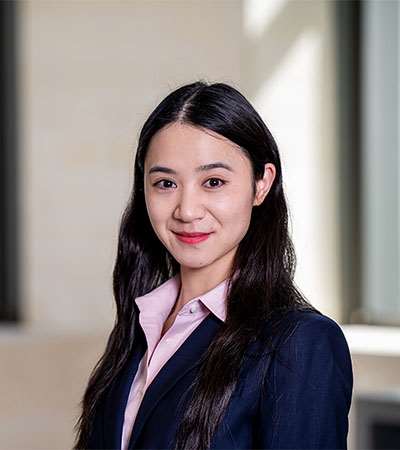
Duo Yu, PhD is an Assistant Professor in Biostatistics at the Medical College of Wisconsin (MCW), joining in fall 2023. She also serves as a biostatistician in MCW’s Center for Advancing Population Science (CAPS), where she bridges statistical theory with deep learning for healthcare applications. Education: PhD in Biostatistics, The University of Texas Health Science Center at Houston Research Interests: Dr. Yu specializes in integrating statistical methods with machine learning and deep learning. Her work spans large-scale EHR analytics for clinical outcome prediction, developing interpretable AI models, and advancing precision oncology through Bayesian patient subgroup identification. Additional focus areas include mathematical modeling of infectious disease transmission and improving transparency in healthcare-focused machine learning systems. Publication Trends: Her research emphasizes applying Bayesian frameworks to electronic health records, cross-disciplinary projects in cardiology and oncology, and hybrid statistical-deep learning models for real-time healthcare decision support.
Russell C. Hardie is a full-time Professor at the University of Dayton , holding positions in the Department of Electrical and Computer Engineering with joint appointments in Electro-Optics and Photonics and Bioengineering . His academic journey began with a B.S. in Engineering Science from Loyola College (1988), followed by M.S. and Ph.D. in Electrical Engineering from the University of Delaware (1990, 1992). Prior to joining the University of Dayton in 1993, he served as a Senior Scientist at Earth Satellite Corporation (now MDA Federal). Research Interests : Digital signal/image processing, medical imaging, super-resolution techniques, hyperspectral/infrared imaging, pattern recognition Key Awards : 2006 Alumni Award in Teaching (University of Dayton) 1998 Rudolf Kingslake Medal (SPIE) 1999 School of Engineering Excellence in Teaching 2002 IEEE Professor of the Year 1997 Epsilon Delta Tau Engineering Professor of the Year Recent Work : Focuses on machine learning applications for medical imaging (lung segmentation, nodule detection), atmospheric turbulence mitigation, and hyperspectral data analysis. His 15 most recent publications span topics from zero-shot chest X-ray analysis to methane plume detection and turbulence-corrected imaging systems. Contact: rhardie1@udayton.edu
Annie Tang is an Assistant Professor in the Statistics Department at Colby College, Waterville, ME. Her research spans both theoretical and applied statistics, with a focus on high-dimensional data analysis and Bayesian methodologies. She earned her PhD in Statistics from North Carolina State University under the supervision of Ryan Martin. Dr. Tang's research interests encompass high-dimensional statistics, Bayesian and Bayesian-adjacent methods, conformal prediction, variational inference, and foundational statistics. She applies these methods to health services research, including population health and sepsis outcomes. Her work often addresses sparse modeling and empirical prior methods to improve statistical inference in complex datasets. Analysis of her recent publications (2020-2025) reveals a strong focus on developing novel Bayesian and empirical Bayes techniques for high-dimensional problems, with increasing applications in healthcare. Her research bridges theoretical statistics and real-world health policy questions, particularly in sepsis mortality and regional healthcare variation. She has also contributed software tools such as the R package 'ebreg'.
Daniel Schmidt is a Senior Lecturer in Data Science at Monash University's Faculty of Information Technology, specializing in Bayesian inference, information theory, and statistical genomics. He holds a PhD in Computer Science (2008) and a Bachelor of Digital Systems (Honours) from Monash University (2003). His research focuses on high-dimensional Bayesian regression, Minimum Message Length (MML) principles, and applying machine learning to medical risk prediction, particularly in breast cancer via mammography analysis. He leads projects on scalable time series forecasting, quantum computing applications, and epileptic seizure prediction. Teaching commitments include developing and lecturing in units like FIT2086 (Modelling for Data Analysis) and FIT3154 (Advanced Data Analysis). He collaborates with institutions like the University of Melbourne (Adjunct Senior Research Fellow) and has contributed to open-source tools like the BayesReg package and GitHub repositories for statistical methods. His work contributes to UN Sustainable Development Goals related to health and innovation. Key research projects include efficient time series classification (MONSTER repository), seizure forecasting using EEG data, and quantum computing applications. He has authored over 119 publications, with recent work addressing adversarial attacks on time series models and Bayesian shrinkage priors for regression. Notable collaborations involve international teams in cancer genomics, statistical epidemiology, and materials science. His GitHub contributions include tools for random correlation matrix generation and fast AR model estimation.
Dr. Houying Zhu is a Lecturer in Statistics at Macquarie University's School of Mathematical and Physical Sciences. Her research focuses on high-dimensional learning, statistical computing, and modelling/visualization, with an emphasis on developing efficient methodologies for modern data analysis. She holds a PhD in Applied Mathematics from the University of New South Wales and has held research roles at City University of Hong Kong and the University of Melbourne as a Maurice Belz Research Fellow in Statistics. Dr. Zhu is Co-Director of the Statistical Modelling Research Group, providing mentorship to early-career researchers and HDR students through regular supervision and collaborative projects. She actively engages in academic leadership, serving on the Board of Directors for the IASC-ARS (2023-2027) and the SSA NSW branch council (2021-2023). Her teaching spans undergraduate and postgraduate units, including Bayesian Data Analysis, Generalized Linear Models, and Statistical Graphics. Research Highlights: Innovations in quasi-Monte Carlo methods, feature selection algorithms, and medical imaging applications. Awards: Includes the President’s Award for Leadership in Statistics (2022) and multiple funding grants (MATRIX Family Funding, SSA Fellowship). Community Engagement: Organized the MATRIX Computational Mathematics for High-Dimensional Data program (Feb 2023) and contributes to statistical education initiatives. Her interdisciplinary work bridges computational statistics and real-world applications, with recent projects addressing wildfire risk modelling, protein engineering, and 6G communication systems.
Jan-Willem Romeijn is a Professor of Philosophy of Science at the University of Groningen, affiliated with the Faculty of Philosophy's Theoretical Philosophy department. He earned dual degrees in Physics and Philosophy from Utrecht University (cum laude) and a PhD in Philosophy from the University of Groningen (cum laude, 2005). His research focuses on probability theory, statistical methodology, and their applications in science and psychiatry. Notably, he received a Vidi grant from NWO (2010) to study probability and statistical methodologies in science and business, and was named Lecturer of the Year 2009 at the University of Groningen. Romeijn's work spans interdisciplinary collaborations, including projects on psychiatric classification, Bayesian model selection, and formal epistemology. He has advised on judicial and policy contexts and led research initiatives like the Vici project 'Gold Rush in the Data Mine' (2023). His recent articles address topics such as group deliberation dynamics, statistical weighting mechanisms, and psychiatric disorder subtyping. Romeijn also served as Dean of the Faculty of Philosophy (2020–2022) and contributes to ancillary activities like lecturing for legal professionals.
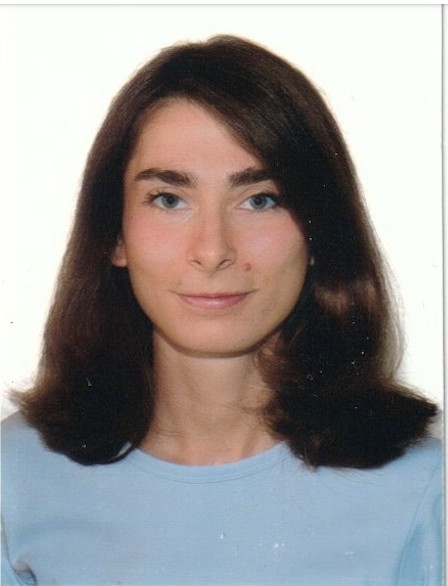
Dr. Anna Scampicchio is a Researcher at ETH Zürich, affiliated with the Professorship for Intelligent Control Systems. Her work focuses on advancing control theory and machine learning methodologies, particularly in data-driven control systems, model predictive control, and Bayesian learning techniques. She has contributed to the development of algorithms for system identification, optimal control, and robust control strategies. Her research integrates theoretical analysis with practical applications in robotics and dynamical systems. Key publications include studies on kernel methods, randomized signatures for learning dynamics, and Bayesian multi-task learning approaches. Dr. Scampicchio holds a Ph.D. (implied by her title) and has published extensively in top-tier journals and conferences, addressing challenges in intelligent control systems and machine learning integration.
Qiying Wang is a Professor of Statistics and Econometrics in the School of Mathematics and Statistics at the University of Sydney. His research focuses on nonstationary time series econometrics, nonparametric statistics, econometric theory, local time theory, and self-normalized limit theory. He is a member of the Statistics research group. Research Interests : Nonstationary time series econometrics Nonparametric statistics Econometric Theory Local time Theory Self-normalized limit theory Publications : Dr. Wang has published extensively in top journals such as Econometric Theory, Journal of Econometrics, and Statistica Sinica. Recent work includes advancements in nonlinear cointegration, optimal bandwidth selection, and stochastic processes analysis. His contributions span theoretical econometrics, time series modeling, and statistical methodologies. Awards/Grants : While no explicit awards are listed, his prolific publication record underscores sustained academic excellence. His research has been supported through collaborations with institutions and co-authors globally. Lab/Teams : Engaged with the Statistics research group at the University of Sydney, contributing to collaborative projects in econometric theory and statistical inference.
Dr. Paul Kabaila is an Associate Professor of Statistics at La Trobe University's Mathematics & Statistics school. He holds a PhD from the University of Newcastle and prior degrees from the University of New South Wales. His research focuses on statistical inference methodologies, particularly confidence intervals affected by preliminary model selection, frequentist methods utilizing uncertain prior information, and model-averaged confidence intervals. He has supervised numerous PhD students across diverse fields including biostatistics, bioinformatics, and business analytics. Dr. Kabaila has held visiting appointments at prestigious institutions including Oxford University and the Australian National University. He secured an ARC Discovery Grant (2002–2005) advancing statistical analysis of count data, with applications in epidemiology and finance. He led La Trobe University's first Statistics Program accreditation by the Statistical Society of Australia. His recent work emphasizes high-dimensional data challenges in statistical/machine learning and post-shrinkage strategies. He received the 2020 Distinguished Author Award from the Journal of Time Series Analysis for sustained contributions. His teaching spans all levels of statistical education, including advanced subjects like Statistical Inference and Theory of Statistics .
Aliaksandr Hubin is an Associate Professor of Statistics at Østfold University College (OUC), affiliated with the Section for Research Administration. He provides statistical support to researchers at OUC while conducting methodological research in Bayesian statistics, machine learning, and operations research. His academic background includes a PhD from the University of Oslo (2014–2018), a Master's from Molde University College (2012–2014), and a Specialist degree from Belarusian State University (2008–2013). His research focuses on Bayesian model selection, nonlinear regressions, neural networks, and weak supervision in machine learning. Hubin has held positions at the Norwegian Computing Center (2018–2020) and the University of Oslo as a postdoc (2021–2022). His work spans methodological advancements in MCMC algorithms, variational inference, and applications in epigenetics, econometrics, and healthcare. Key achievements include developing the GMJMCMC algorithm for Bayesian logic regression and the 'skweak' framework for weak supervision in NLP. His awards include the NIMA 2014 award for best MSc graduate, Belarusian Ministry of Education First Award (2013), and recognition at the Graybill 2017 conference. His research has been published in journals like Bayesian Analysis , Neural Computing & Applications , and Scientific Reports , with a focus on model uncertainty quantification and scalable Bayesian methods.
Joshua Lukemire is an Assistant Research Professor at Emory University's Department of Biostatistics and Bioinformatics. His research focuses on developing statistical methods for analyzing high-dimensional imaging data, particularly in pediatric applications like near-infrared spectroscopy for monitoring red blood cell transfusion efficacy in preterm infants. He also explores brain network differences between clinical groups using Bayesian techniques and hierarchical modeling. Education: B.S. from University of Georgia; M.S. and Ph.D. from Emory University (Department of Biostatistics). Research interests include Imaging Bayesian Analysis, longitudinal brain network connectivity studies, and statistical methods for healthcare applications. His work bridges neuroimaging analysis, pediatric medicine, and advanced computational statistics. Recent publications highlight innovations in functional brain network generation with graph neural networks (e.g., Fbnetgen and Braingb tools), as well as clinical studies on transfusion efficacy in preterm infants and electroconvulsive therapy outcomes. His methodological contributions include sparse Bayesian modeling, optimal experimental designs, and nonparametric vector autoregression approaches. No advising or grant details are listed in the provided text. His work is supported by collaborations across disciplines, though specific lab affiliations are not mentioned.
Professor Yasser Roudi holds the position of Professor of Disordered Systems at King’s College London’s Department of Mathematics, within the Faculty of Natural, Mathematical & Engineering Sciences. He earned his PhD from SISSA (International School for Advanced Study) in 2005 and a physics degree from Sharif University of Technology in Tehran. Prior to joining King’s, he worked at prestigious institutions like the Kavli Institute for Systems Neuroscience in Norway and NORDITA. His research focuses on theoretical neuroscience, neural networks, and the physics of disordered systems, employing mathematical tools to model information processing in brains and machines. He has been recognized with awards including the Eric Kandel Young Neuroscientist Prize (2015) and membership in the Royal Norwegian Society of Sciences and Letters. His work explores topics such as grid cells’ toroidal topology, restricted Boltzmann machines, and maximum entropy models for cortical populations. Recent publications highlight advancements in understanding neural oscillations, stochastic processes, and reinforcement learning algorithms. Roudi leads the Disordered Systems research group at King’s, contributing to the study of complex systems and statistical mechanics. Education: PhD, SISSA (2005); BSc, Sharif University of Technology (Physics). Affiliations: King’s College London, Kavli Institute for Systems Neuroscience, NORDITA, UCL, and the Institute for Advanced Study. Roudi’s research bridges theoretical physics and neuroscience, addressing fundamental questions about neural information processing and system dynamics. His awards underscore his impactful contributions to the field, while his interdisciplinary approach continues to push boundaries in understanding complex biological and artificial systems.
Fabrizio Leisen is a Professor of Statistics at King’s College London, Department of Mathematics, within the Faculty of Natural, Mathematical & Engineering Sciences. Previously, he held positions at the University of Nottingham (Professor), University of Kent (Reader), and institutions in Spain and Italy. He earned a PhD in Mathematics from the Università di Modena e Reggio Emilia, specializing in Probability. His research focuses on Bayesian inference, nonparametric methods, objective Bayesian analysis, and foundational statistical theory, with notable contributions to predictive constructions, knockoff procedures, and stochastic processes. He serves as an Associate Editor for Bayesian Analysis , Statistics and Probability Letters , and Statistical Methods and Applications . Leisen’s work bridges theoretical and applied statistics, emphasizing Bayesian nonparametric priors for complex data structures and model selection. His recent articles address survival analysis, prior elicitation without subjective inputs, and algorithmic advancements in Bayesian computation. He collaborates globally, including co-supervising a PhD student at the Università di Bologna. His teaching includes Computational Statistics and Probability and Statistics Skills sessions. Research interests span Bayesian foundations, model selection via knockoffs, stochastic processes, and interdisciplinary applications like genomic and biostatistical analysis. His lab is affiliated with King’s Statistics group, focusing on MCMC methods, Bayesian nonparametrics, and experimental design.
Carlos M. Carvalho is a La Quinta Centennial Professor in Business and Professor of Statistics at The University of Texas at Austin McCombs School of Business. He joined UT Austin in 2010 after serving on the faculty at the University of Chicago Booth School of Business. Carvalho also serves as the Executive Director of the Salem Center for Policy, which supports research, education, and dialogue around the impact of economic policies on markets and the free enterprise system. Dr. Carvalho's educational background includes: Ph.D. in Statistics, Duke University, 2006 His research focuses on Bayesian statistics in complex, high-dimensional problems with applications ranging from finance to genetics. Carvalho's work encompasses several key areas including causal inference , machine learning , policy evaluation , and empirical asset pricing . His research interests specifically include modern statistical tools for causal inference, dimensionality reduction in high-dimensional models, advanced statistics in asset pricing, and time series analysis. His work often bridges theoretical statistical methodology with practical applications in various domains. Analysis of Carvalho's recent publications reveals a strong focus on Bayesian methods, causal inference, and high-dimensional statistics. His work spans multiple disciplines including statistics, finance, medicine, and social science. A notable trend is the application of Bayesian techniques to complex real-world problems, particularly in causal inference and treatment effect estimation. His research shows increasing interdisciplinary collaboration, with applications in healthcare, finance, and social policy. Dr. Carvalho holds the prestigious La Quinta Centennial Professorship at UT Austin, recognizing his significant contributions to the field of statistics and business. While specific awards aren't detailed in the provided text, his extensive publication record demonstrates recognition by his peers. As an academic leader, Carvalho directs the Salem Center for Policy, which facilitates research on economic policies and market impacts. His work appears to involve collaboration with researchers across disciplines, particularly in finance, healthcare, and social sciences, though specific lab structures aren't detailed in the provided text.
Asuman Turkmen is a Professor of Statistics at The Ohio State University, affiliated with the Translational Data Analytics (TDA) initiative and based at the Newark Campus. She holds a PhD from Auburn University (2008) and specializes in robust statistical methods for multivariate analysis and statistical genetics. Her research focuses on outlier detection, rare variant associations in complex diseases, and addressing missing heritability through approaches like structural variations, epigenetics, and gene-environment interactions. Her professional service includes roles such as Newark Campus Ombudsman (2022–present), judge for student research forums, and leadership in university committees (e.g., JEDI Committee, Undergraduate Committee). She co-directs the TDAI Data Science for Women Summer Camp and mentors in doctoral programs. Notably, she received the Ohio State University Newark Scholarly Achievement Award in 2015. Dr. Turkmen’s recent work emphasizes Bayesian methods for population stratification correction, X-linked variant effects, and robust statistical techniques. Her publications span Genetic Epidemiology , Annals of Human Genetics , and other top journals, reflecting her contributions to both theoretical and applied statistical genetics.