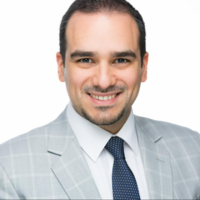
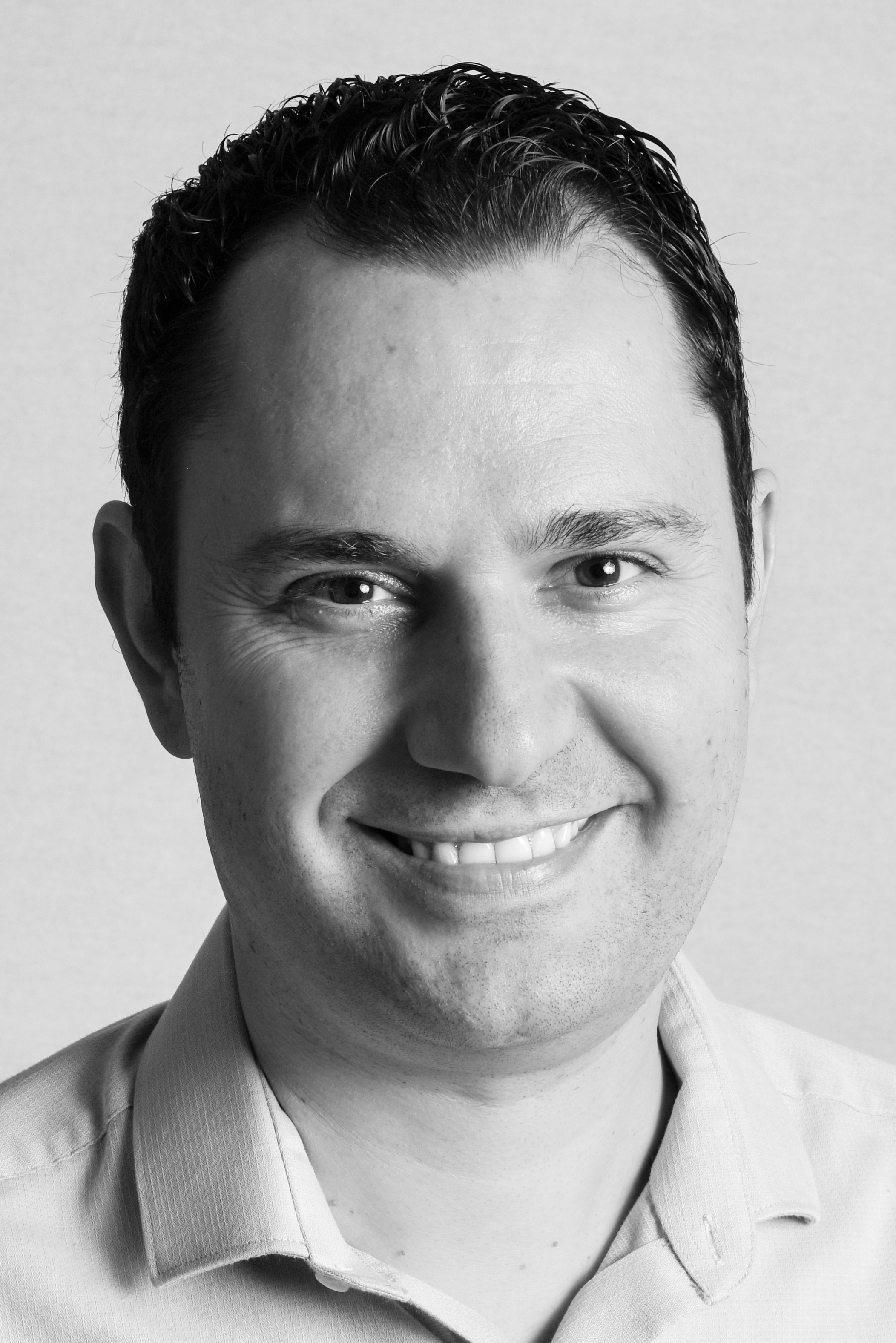
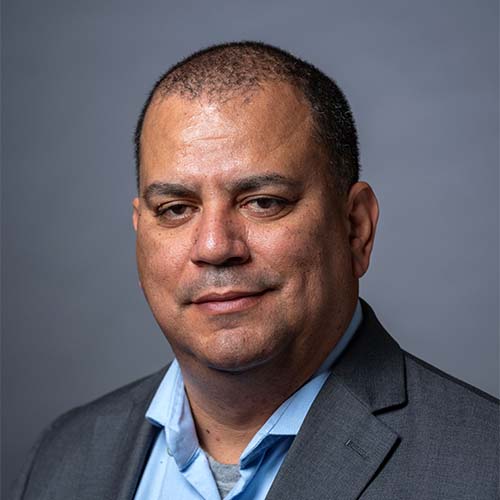
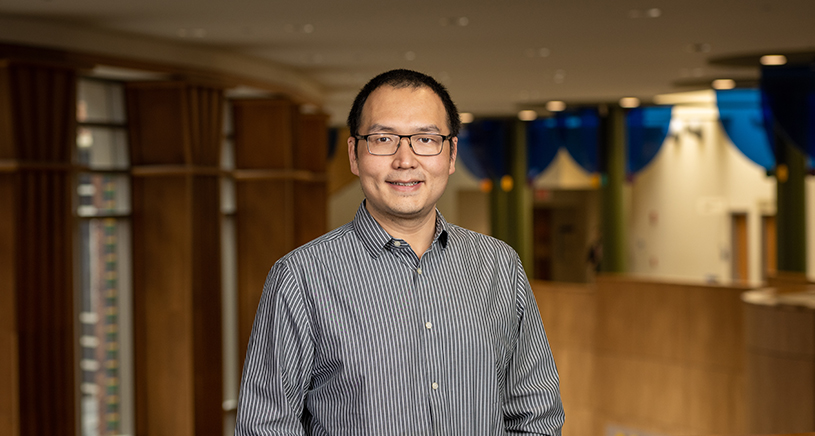
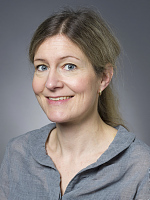
Hamidreza Mahyar is an Assistant Professor at the Faculty of Engineering , McMaster University , and an Associate Member of the Computing and Software department. His academic journey includes postdoctoral work at Boston University and TU Wien , and a Ph.D. in Computer Science from Sharif University of Technology . Research Focus: Mahyar's work bridges machine learning and network science , emphasizing graph neural networks for applications in social networks , recommendation systems , drug discovery , and generative AI . His research spans industrial AI (Industry 4.0 projects at Infineon Technologies), biomedical engineering (organoid morphology analysis), and semiconductor manufacturing (wafermap modeling). Scientific Recognition: McMaster Teaching Merit Award (2022) Vector Scholarship in AI (2023) NSERC USRA Award (2022) Google Cloud Platform for Research Award (2018) Best Paper Selection, Complex Networks (2018) Academic Leadership: He mentors PhD students (Taraneh Ghandi) and MSc students (Reza Namazi, Mohammad Khodadad, Ali Shiraei), while leading AI initiatives at Mind Lab 56 and BrainMaven . Former mentees include industry leaders at Google, Accenture, and ETH Zurich.
Emtiyaz Khan is a Researcher at the RIKEN Center for AI Project in Tokyo, Japan. His work focuses on Bayesian deep learning, optimization, and variational inference methods. He leads research on the Bayesian Learning Rule framework, which bridges deep learning optimization with Bayesian principles. His research interests include developing scalable Bayesian methods for large neural networks, uncertainty quantification in deep learning, optimization algorithms (natural gradients, variational inference), and applications to foundation models. Key areas are efficient adaptation methods, model sensitivity analysis, and Bayesian principles for deep learning. Khan's publications demonstrate strong focus on Bayesian deep learning, optimization techniques, and uncertainty estimation, with applications ranging from large-scale models (GPT-2, ImageNet) to theoretical foundations of variational inference. He leads the Team Approx-Bayes research group focused on approximate Bayesian inference methods and maintains collaborations through JST CREST-ANR and Kakenhi grants.
Johannes Bjerva is a Full Professor at Aalborg University's Department of Computer Science (Campus Copenhagen), leading the Copenhagen branch and conducting interdisciplinary NLP research integrating linguistic typology. His work focuses on low-resource languages, language model security, and societal AI impact. PhD (University of Groningen, 2017): Thesis on multitask/multilingual lexical modeling M.A. & B.A. in Computational Linguistics (Stockholm University) Research interests span linguistically-informed NLP , language model security , and low-resource language technology . Current projects include the DFF Sapere Aude grant (2025) for language model detection security and the LM2-SEC project (2025–2030). His 2024 ACL paper on embedding inversion security and 2024 EMNLP paper on typological diversity exemplify recent work. Scientific awards include: 2021: Teacher of the Year (AAU Computer Science) 2019: Google Cloud research credits 2022: Carlsberg Semper Ardens (5M DKK) 2024: Novo Nordisk Data Science grant (~10M DKK) Supervision includes 8 PhD students across projects like CreoleVal and HiFi-KPI . He serves on the Industrial Researcher Committee at Innovation Fund Denmark and is a member of Det Unge Akademi (2023–2028).
Dr. Clark N. Taylor is an Associate Professor of Computer Engineering and Director of the ANT Center at the Air Force Institute of Technology (AFIT), located at Wright-Patterson Air Force Base, Ohio. He is actively engaged in research and education within the Graduate School of Engineering and Management, focusing on advanced navigation and sensor fusion technologies for autonomous systems. Ph.D., Electrical and Computer Engineering (Computer Engineering), University of California, San Diego, 2004 M.S., Electrical and Computer Engineering, Brigham Young University, 1999 B.S., Electrical and Computer Engineering, Brigham Young University, 1995 Dr. Taylor's research spans computer engineering, navigation systems, and autonomous robotics, with a strong emphasis on sensor fusion, state estimation, and robust uncertainty modeling. His work integrates vision, inertial, magnetic, and pressure sensors for navigation in GPS-denied environments, particularly for unmanned aerial vehicles (UAVs). He is a leading expert in factor graph-based estimation, visual-inertial odometry, cooperative localization, and magnetic navigation. His publications demonstrate a consistent trend toward robust, uncertainty-aware estimation frameworks. Over the past decade, his research has evolved from early work on visual stabilization and pose estimation to advanced topics such as conservative covariance estimation, invariant filtering, and machine learning for spacecraft pose estimation. His recent articles focus on factor graphs, multi-agent fusion, and deep learning, indicating a trajectory toward intelligent, resilient navigation systems for defense and aerospace applications. Scientific awards include a Best Presentation in Session award at the ION GNSS+ conference in 2021. His research is supported by the U.S. Air Force and related defense agencies, with applications in surveillance, autonomous refueling, and on-orbit inspection. Dr. Taylor has advised numerous MS and PhD students, particularly in the areas of UAV navigation, sensor fusion, and cooperative localization. His lab, the ANT Center, focuses on advanced navigation and tracking, bringing together students and researchers to develop cutting-edge solutions for real-world operational challenges. The team conducts both simulation and experimental work, often integrating novel sensor modalities and estimation algorithms for improved system performance.
Dr. Hong Ming Tan is a Senior Lecturer at the Department of Analytics and Operations, NUS Business School, and a Research Fellow at the Institute of Operations Research and Analytics (IORA) at National University of Singapore. He holds a PhD in Operations Research and Analytics (2021), MSc in Mathematics (2017), and BSc (Hons) in Applied Mathematics and Economics (2013) from NUS. Doctor of Philosophy, Operations Research and Analytics (2021) Master of Science, Mathematics (2017) Bachelor of Science (Hons), Applied Mathematics and Economics (2013) His research spans Business Analytics , Machine Learning , Operations Research , and Pharmacogenetics . Recent work includes: EcoVal Framework for efficient data valuation in ML Personalized Mental Health through adaptive testing and clustering Antibiotic Resistance modeling using antiresistic strategies CYP2D6 Methylation prediction for precision medicine His publications demonstrate expertise in ML optimization , healthcare informatics , behavioral analytics , and decision science . Current projects include AI-led Smart Data Centre Management and SIA Corp Lab research. He serves as Chair of the Department Finance Committee and advisor to student clubs like Business Analytics Consulting Team. His work addresses real-world challenges in industrial operations, healthcare diagnostics, and educational innovation.
Theodore Kypraios is a Professor of Statistics at the School of Mathematical Sciences, University of Nottingham, United Kingdom. He serves as Course Director for the MSc in Statistics and MSc in Statistics with Machine Learning programmes, and as Head of the Statistics and Probability Section. Kypraios joined the University of Nottingham in September 2006 as a Research Fellow and was appointed as Lecturer in 2008. His research focuses on developing novel statistical methodology for Bayesian inference and model selection for high-dimensional complex data, with particular emphasis on stochastic epidemic models and infectious disease outbreak data. Kypraios has made significant contributions to Bayesian nonparametric methods, as evidenced by his PNAS publication on heterogeneously mixing infectious disease models which enables more data-driven approaches to understanding transmission mechanisms without strict parametric assumptions. Kypraios has been actively involved with the Royal Statistical Society, serving as Chair of the Computational Statistics and Machine Learning Section until December 2020, and currently sits on the Academic Advisory Group committee. He has presented his work at major conferences including the International Symposium for Bayesian Analysis and the Bayesian Inference for Stochastic Processes Workshop. As an educator, Kypraios has taught Statistical Inference and Data Analysis and Modelling modules at Nottingham, and has been an instructor for the 'MCMC II for Infectious Diseases' module at the Summer Institute in Statistics and Modeling in Infectious Diseases since 2010. His teaching emphasizes both classical and Bayesian approaches to statistical inference with applications to real-world problems. He has supervised PhD students including Dr. Rowland Seymour, whose thesis work formed the basis of the PNAS publication. His research has practical implications for understanding disease transmission mechanisms, as demonstrated by his analysis of the 2001 UK foot and mouth disease outbreak, and contributes to the development of more effective disease control strategies.
Alexandre Barreto serves as an Associate Professor in the Department of Cyber Security Engineering at George Mason University, specializing in cybersecurity applications for transportation systems and critical infrastructure. His work integrates air traffic management expertise with advanced security protocols to address defense and infrastructure vulnerabilities. Education PhD, Instituto Tecnológico de Aeronáutica, Brazil Barreto's research centers on transportation security (particularly aviation), cyber impact assessment, and blockchain applications for critical infrastructure. He develops secure protocols for air traffic systems like ADS-B and creates decision support frameworks for defense scenarios. His methodology combines machine learning, network security, and risk modeling to enhance resilience in smart grids and urban air mobility systems. Analysis of his 15 most recent publications reveals dominant themes in aviation cybersecurity (ADS-Bsec frameworks, Cyber-ARGUS), energy infrastructure protection (SIAD-AERO), and blockchain integration for air traffic management. Over 60% of his work focuses on securing air traffic surveillance systems, while emerging research explores carbon emissions prediction and deep space navigation applications. Advising and Grants No specific student advisement records or grant funding details were documented in the source material, though his classroom activities span graduate and undergraduate cybersecurity education.
Sameer Deshpande is an Assistant Professor in the Department of Statistics at the University of Wisconsin–Madison. His research bridges Bayesian methodology development with applications in public health and sports analytics. Prior to joining UW–Madison, he completed a postdoctoral fellowship with Professor Tamara Broderick at MIT and earned his Ph.D. in Statistics from the Wharton School under Professors Ed George and Veronika Rockova. His educational background includes undergraduate studies in mathematics at MIT and a year at Jesus College, Cambridge through the Cambridge-MIT Exchange program. His research focuses on advancing Bayesian hierarchical modeling, treed regression, and causal inference techniques, with particular emphasis on flexible tree-based methods like BART variants for complex data structures. Deshpande's recent publications reveal a strong trend toward developing scalable Bayesian methods for high-dimensional data while maintaining rigorous uncertainty quantification. His work frequently applies these techniques to sports analytics (particularly baseball and football) and public health studies examining long-term effects of adolescent sports participation. The consistent focus on methodological innovation paired with substantive applications demonstrates his dual commitment to statistical theory and real-world impact. He actively mentors graduate students at UW–Madison, requiring STAT 775 as preparation for research collaboration. His Deshpande Lab focuses on Bayesian computation and causal inference, though specific grant details are not publicly listed. Notable projects include the NFL Big Data Bowl submission analyzing quarterback decision-making using Expected Hypothetical Completion Probability. Outside academia, Deshpande maintains interests in cooking, cocktail making, and photography, while remaining a devoted fan of Dallas sports teams – often seen wearing a Texas belt buckle.
Laurence S. Magder, PhD, serves as Professor in the Department of Epidemiology and Public Health at the University of Maryland School of Medicine, where he has held continuous faculty positions since 1994 after progressing from Assistant to Associate to full Professor. With over 30 years of biostatistical expertise, he has contributed to nearly 200 biomedical publications through collaborative research across diverse health domains. Educational background includes: PhD in Biostatistics, Johns Hopkins University (1994) Master of Public Health, University of Michigan (1983) His research program centers on developing accessible statistical methodologies for real-world biomedical challenges. Key specialties include longitudinal data analysis, handling misclassified/missing data, transmission probability modeling, and systemic lupus erythematosus applications. Magder actively promotes a paradigm shift in statistical practice—advocating for evidence quantification over rigid hypothesis testing frameworks, which he argues renders traditional concerns like one-sided tests and multiple comparisons adjustments largely obsolete in scientific decision-making. Publication analysis reveals consistent methodological innovation across infectious disease modeling, diagnostic test evaluation, and missing data solutions. His work prioritizes practical applicability, translating complex statistical theory into tools usable by non-statisticians while maintaining rigorous evidence standards. Recurring themes include simplification of analytical approaches and contextual interpretation of statistical evidence within broader scientific judgment. As a collaborative biostatistician, Magder has supported numerous biomedical research projects throughout his career, though specific advising relationships and grant details remain undocumented in available sources. His role exemplifies the critical contribution of statistical expertise to advancing medical and public health research through both methodological development and direct project consultation.
Jessica A. Wachter is the Dr. Bruce I. Jacobs Professor in Quantitative Finance at the Wharton School of the University of Pennsylvania . She is a leading scholar in asset pricing and behavioral finance, with significant contributions to understanding rare events and investor memory in financial decision-making. PhD in Business Economics and AB in Mathematics from Harvard University Editor of Review of Financial Studies Former Chief Economist and Director of DERA at SEC (2021-2025) Published in top journals: Journal of Finance , Journal of Financial Economics , Quarterly Journal of Economics Her research explores asset pricing anomalies through Bayesian learning, correlation neglect, and representativeness heuristics. Recent work examines superstitious investors, sovereign default risk, and experience-driven behavioral biases in trading decisions. Key research themes: Stochastic disaster risk modeling Experience-based investor behavior Time-varying equity premiums Dynamic asset pricing Human capital risk Memory effects in economic decisions She has served on editorial boards of major finance journals and held academic positions at Wharton (2003-present) and NYU Stern School of Business.
Jian Kang is a Professor and Associate Chair for Research at the University of Michigan School of Public Health , specializing in Biostatistics . His work focuses on developing advanced statistical methods for large-scale biomedical data , with applications to precision medicine , neuroimaging , and genomics . Education: PhD in Biostatistics, University of Michigan (2011) MS in Mathematics (Statistics), Tsinghua University (2007) BS in Statistics, Beijing Normal University (2005) Research Interests include Bayesian nonparametric methods , deep learning for medical imaging , ultra-high-dimensional variable selection , and graphical models for network inference . His 2025-2023 publications demonstrate expertise in Bayesian hierarchical modeling , spatial statistics , and machine learning for healthcare . Scientific Awards : Michigan SPH Excellence in Research Award (2025) ICSA President's Citation Award (2024) Statistics in Biopharmaceutical Research Best Paper (2023) Best Paper in Biometrics by IBS Member (2022) Fellow, American Statistical Association (2021) Grants include NSF-IIS (2021-2025) for BCI statistical learning , NIGMS (2020-2022) for metabolomics biomarker selection , NIDA (2020-2025) for imaging data analysis , and NIMH (2014-2025) for multidimensional neuroimaging methods . Labs and Teams develop Bayesian computational tools for neuroimaging and spatial transcriptomics , collaborating with institutions like Emory University and University of North Carolina.
Ida Scheel is an Associate Professor in Statistics and Data Science at the University of Oslo , Department of Mathematics. She specializes in Bayesian hierarchical modeling, recommendation systems, and stochastic processes on networks. Her research interests include: Bayesian statistics and model diagnostics Data science applications in environmental and health domains Network-based machine learning Uncertainty quantification in predictive modeling Recent publication trends show a focus on Bayesian model validation, machine learning for product adoption prediction, and real-estate analytics. She contributes to interdisciplinary projects like BigInsight and CELS . Scientific awards : Sverdrup Prize for Young Researchers (2011) Advising : Supervised 8 PhD students (main/co-supervisor) in areas spanning Bayesian causal effects, neural network survival analysis, and model conflict detection. Key grants include participation in the Data Science@UiO and Integreat projects. Labs/teams : Active member of the Center for Computational Inference in Evolutionary Life Science (CELS) and the BigInsight center.
L. Jason Anastasopoulos is an Associate Professor of Public Administration and Policy and Statistics (by courtesy) at the University of Georgia's School of Public and International Affairs (SPIA). He holds dual appointments as a Faculty Fellow at the Benson-Bertsch Center for International Trade and Security (formerly CITS) and a faculty affiliate at the Institute for Artificial Intelligence, with additional affiliation at USC’s Civic Leadership Education and Research Initiative. His research centers on the political economy of technology, investigating how political institutions adapt to technological change and its implications for democratic governance. Key focus areas include AI’s impact on bureaucracy, causal inference methodologies, machine learning applications in social science, historical analysis of democratic backsliding during technological transitions, and the evolving political role of central banks. His methodological work emphasizes Bayesian approaches and computational techniques for improving empirical analysis in political science. Recent publications reveal a dominant trend in integrating artificial intelligence with public administration and political economy, spanning temporal causal inference frameworks, comparative AI governance across sectors, historical technological disruptions (e.g., rural electrification), and algorithmic bias in public services. His work consistently bridges theoretical political science with cutting-edge computational methods, particularly natural language processing and deep learning applications for policy analysis. Dr. Anastasopoulos has mentored eight graduate students across International Affairs, Political Science, Public Administration, and Statistics programs. His advisees include tenure-track professors at Ripon College, University of Florida, and California State University, alongside industry professionals at Lockheed Martin and the Tampa Bay Rays. He actively contributes to interdisciplinary research through leadership roles at the Benson-Bertsch Center for International Trade and Security and UGA’s Institute for Artificial Intelligence.
Stephen Jessee is a Professor in the Department of Government at the University of Texas at Austin, affiliated with the College of Liberal Arts. He earned his Ph.D. from Stanford University and holds undergraduate degrees from UT Austin. Education: Ph.D. (Stanford), B.A./B.S. (UT Austin) Research Focus: American politics, statistical methodology, ideology measurement, and judicial-political behavior Key Topics: Congressional voting patterns, Supreme Court dynamics, public opinion, causal inference His recent publications emphasize causal inference methods, public opinion analysis, and quantitative political methodology. Collaborative work spans topics like abortion policy impacts, educational effects on partisanship, and ideological alignment between citizens and elites. Stephen Jessee teaches graduate and undergraduate courses in statistical methodology, causal inference, and American politics. Contact: Office (BAT 4.128), Phone (512-232-7282), Email (sjessee@mail.utexas.edu).
Dr Dee Wu serves as a Senior Lecturer at the School of Civil and Environmental Engineering at the University of Technology Sydney (UTS), specializing in the integration of computational mechanics, machine learning, and engineering design. With a strong research profile focused on structural reliability and safety assessment, Dr Wu develops innovative frameworks that bridge theoretical mechanics with practical engineering applications, particularly in the realm of composite materials and uncertain structural behavior. Dr Wu's research interests center on computational stochastic and non-stochastic mechanics, with particular emphasis on machine-learning-aided engineering safety assessment, nondeterministic methods for isogeometric analysis with polymorphic uncertainties, and AI techniques for composite material design. Their work addresses critical challenges in structural engineering where uncertainty quantification becomes essential for safety evaluation. The research output reveals a clear trajectory toward developing virtual modeling techniques that significantly enhance computational efficiency while maintaining accuracy in structural analysis. Dr Wu's publications demonstrate expertise in phase-field methods, support vector regression variants (including Extended SVR, Capped SVR, and Twin SVR), and uncertainty quantification frameworks that handle both aleatoric and epistemic uncertainties. These techniques have been successfully applied to fracture mechanics, buckling analysis, vibration analysis, and impact assessment problems. Dr Wu actively pursues funded research in three main areas: Digital twin applications in Civil Engineering, Machine learning aided engineering analysis and design, and Safety assessment for Smart City initiatives. Currently, they are a key participant in the ARC Discovery Project 'Assessment of Dynamic Pile Driving Using Machine Learning' (DP230102781), running from June 2023 to May 2026, working alongside researchers Khabbaz M, Fatahi B, and Zhang X. In teaching, Dr Wu delivers courses including Introduction to Civil and Environmental Engineering (48310), Advanced Engineering Computing (48371), and Finite Element Analysis (49047), demonstrating commitment to both foundational and advanced engineering education. Their ORCID identifier is 0000-0002-7284-5024, and they maintain an active Google Scholar profile reflecting their substantial research contributions in computational structural engineering.