معرفی
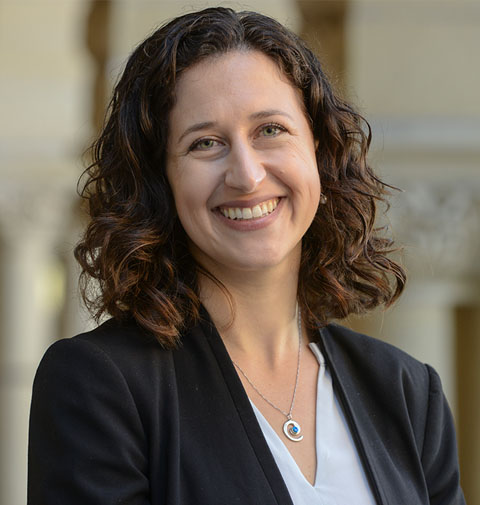
L. Jason Anastasopoulos is an Associate Professor of Public Administration and Policy and Statistics (by courtesy) at the University of Georgia's School of Public and International Affairs (SPIA). He holds dual appointments as a Faculty Fellow at the Benson-Bertsch Center for International Trade and Security (formerly CITS) and a faculty affiliate at the Institute for Artificial Intelligence, with additional affiliation at USC’s Civic Leadership Education and Research Initiative.
His research centers on the political economy of technology, investigating how political institutions adapt to technological change and its implications for democratic governance. Key focus areas include AI’s impact on bureaucracy, causal inference methodologies, machine learning applications in social science, historical analysis of democratic backsliding during technological transitions, and the evolving political role of central banks. His methodological work emphasizes Bayesian approaches and computational techniques for improving empirical analysis in political science.
Recent publications reveal a dominant trend in integrating artificial intelligence with public administration and political economy, spanning temporal causal inference frameworks, comparative AI governance across sectors, historical technological disruptions (e.g., rural electrification), and algorithmic bias in public services. His work consistently bridges theoretical political science with cutting-edge computational methods, particularly natural language processing and deep learning applications for policy analysis.
Dr. Anastasopoulos has mentored eight graduate students across International Affairs, Political Science, Public Administration, and Statistics programs. His advisees include tenure-track professors at Ripon College, University of Florida, and California State University, alongside industry professionals at Lockheed Martin and the Tampa Bay Rays. He actively contributes to interdisciplinary research through leadership roles at the Benson-Bertsch Center for International Trade and Security and UGA’s Institute for Artificial Intelligence.