Masahiro Kunimoto is a Japanese Associate Professor at Waseda University's Faculty of Science and Engineering and Global Center for Science and Engineering , specializing in composite materials , electroless deposition , and surface-enhanced Raman spectroscopy (SERS) . He holds a Doctor of Engineering degree from Waseda University (2012) and has published extensively on electrode interfaces and nanoscale reaction mechanisms.
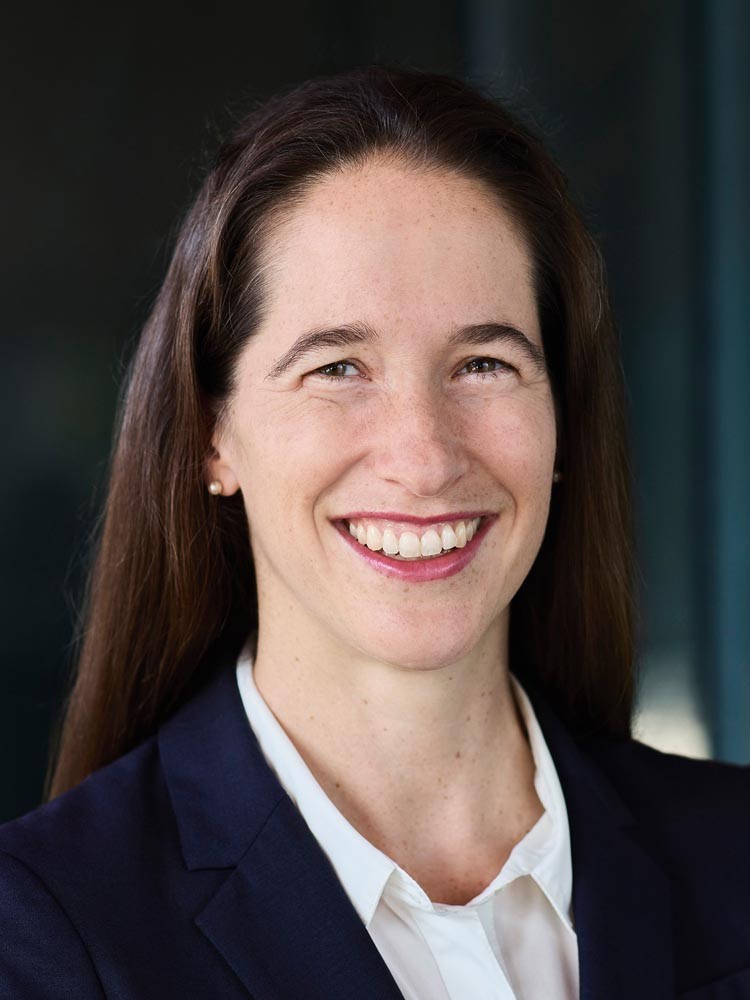
Vanessa Wood is a full professor and chair at the Institute for Electronics (IfE) in the Department of Information Technology and Electrical Engineering (D-ITET) at ETH Zürich. Since 2021, she has served as Vice President for Knowledge Transfer and Corporate Relations at ETH Zürich. She was appointed assistant professor in 2011, received tenure in 2014, and was promoted to full professor in 2019. From 2018 to 2020, she served as head of the Department of Information Technology and Electrical Engineering. Her educational background includes a Bachelor of Science in Applied Physics from Yale University (2005), a master's in Electrical Engineering and Computer Science from MIT (2007), and a PhD in Electrical Engineering from MIT (2009). Her doctoral research with Prof. Vladimir Bulovic focused on quantum dot LED technology. She completed postdoctoral work at MIT from 2010-2011 with Profs. Yet-Ming Chiang and W. Craig Carter on lithium ion battery flow cell technology. Prof. Wood's research spans multiple areas of materials science and engineering, with particular emphasis on nanocrystal synthesis, battery technologies, and electronic materials. Her work bridges fundamental materials science with practical applications in energy storage and optoelectronics. She employs advanced characterization techniques including cryo-TEM, neutron scattering, and various spectroscopic methods to understand materials at the nanoscale. Analysis of her recent publications reveals a strong focus on next-generation energy storage systems, particularly lithium-sulfur batteries, with investigations into conversion pathways and rate limitations. Her research also encompasses nanocrystal engineering for catalysis, phase change materials for memory applications, and photonic crystals for optical applications. The interdisciplinary nature of her work combines materials synthesis, advanced characterization, and computational methods. Her scientific achievements have been recognized with prestigious awards including the 2014 Science Prize in Electrochemistry endowed by BASF and Volkswagen Group and the 2018 Materials Research Society Outstanding Young Investigator Award. As Vice President for Knowledge Transfer and Corporate Relations, Prof. Wood oversees ETH Zürich's engagement with industry and society, facilitating technology transfer and research collaborations. She leads the Materials and Device Engineering Group (MaDE), which focuses on the development of novel materials and devices through bottom-up approaches. Her group maintains strong collaborations with various research institutions and industry partners, securing significant funding for projects in energy storage, nanomaterials, and electronic devices.
Bertrand Barbedette serves as a Teacher-Researcher at ESTACA (Higher School of Aeronautical and Automotive Construction Techniques) within the School of Secure and Embedded Transport Systems and ESTACA'Lab research department. His work bridges academic instruction and applied research in automotive engineering. His research focuses on electric vehicle systems , hybrid energy storage (particularly battery-supercapacitor integration), and automotive mechatronics . Key contributions include developing sizing methodologies for human-powered hybrid vehicles, optimizing thermal management valves, and creating energy management strategies for electric drivetrains. His work demonstrates strong emphasis on Component pre-sizing under mass constraints Multiphysical modeling validation Real-world drive cycle analysis Embedded control system design Barbedette teaches across multiple academic levels: 3rd year courses in systems modeling and mechanics; 4th year instruction in multiphysical modeling and VICOM (driving assistance functions); and 5th year practical work in mechatronics design. His publications reveal consistent focus on sustainable transportation solutions since 2009. His technical leadership appears through ESTACA'Lab where he contributes to Electric vehicle drivetrain development Hybrid energy storage system optimization Automotive safety analysis frameworks Thermal management component design
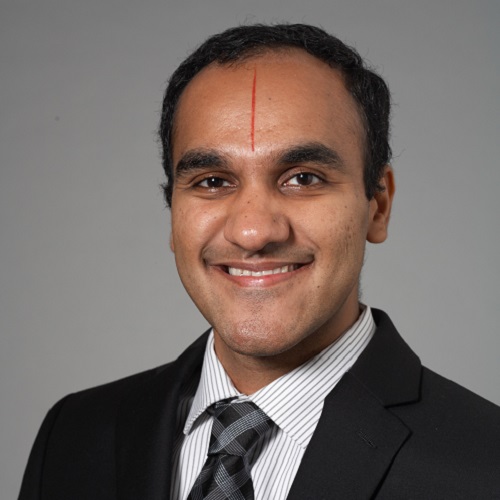
Welcome to the Energy Materials, Characterization, and Device Engineering Group page led by Assistant Professor Sudarshan Narayanan at the Indian Institute of Technology Kanpur. His research focuses on synergizing renewable energy generation and storage solutions through advanced materials engineering. Education: M.S. & Ph.D. in Materials Science, Carnegie Mellon University (2009-2014) B.Tech. in Engineering Physics, Indian Institute of Technology Madras (2005-2009) Research Areas: Engineering materials and interfaces for Energy Storage (solid-state batteries) Multi-layer spectrally-selective thin film coatings Building-integrated photovoltaics Advanced ex-situ, in-situ, and operando characterization techniques Microstructural, chemical, and electrochemical evolution analysis Applications in architectural glazings, automotive windshields, and optoelectronic devices Career Summary: A materials scientist with 10+ years of combined academic and industry research experience in thin film coatings, transparent conductors, and battery materials. He aims to create sustainable energy solutions by integrating advances in energy generation and storage technologies.
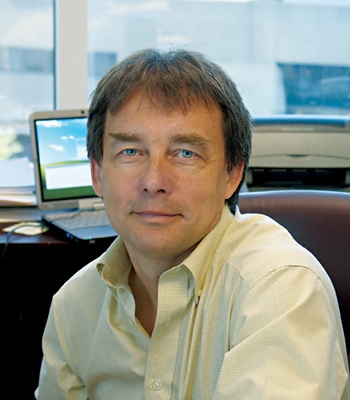
Alexei P. Sokolov is the UT-ORNL Governor's Chair and Professor of Chemistry and Physics at the University of Tennessee, with a joint appointment at Oak Ridge National Laboratory (ORNL). He leads the Soft Materials and Membranes group at ORNL and holds an adjunct professorship at Georgia Tech. Sokolov earned his M.S. in Physics from Novosibirsk State University (1981) and his Ph.D./Dr.Sci. from the Russian Academy of Sciences (1986/1993). His research focuses on: Dynamics of soft materials (glass transition, polymer dynamics) Design of functional polymers for energy/sustainability Solid-state batteries and carbon-capture materials Self-healing/recyclable polymers and vitrimers Recent publications emphasize polymer electrolytes, vitrimer mechanics, composite materials, and sustainable polymer design. His work consistently integrates fundamental physics with applications in clean energy and advanced manufacturing. Honors: Fellow, American Physical Society Fellow, American Association for the Advancement of Science Member, National Academy of Inventors He advises ~30 researchers and has secured grants for projects on polymer electrolytes (DOE), sustainable composites (NSF), and battery technologies. His lab develops experimental tools for materials characterization and collaborates with national labs/industry.
Yet-Ming Chiang is a Professor of Materials Science and Engineering at the Massachusetts Institute of Technology (MIT) and Co-Director of the Center for Electrification and Decarbonization of Industry (CEDI). He holds over 110 patents and has authored more than 300 scientific articles, focusing on energy storage, battery technology, and decarbonization solutions. Chiang’s research has led to the creation of eight climate-focused startups, including Form Energy (iron-air batteries) and Sublime Systems (low-carbon cement), collectively raising over $2.5 billion in funding. His work spans batteries, electric aviation, and industrial decarbonization, aiming to address global climate challenges through scalable technologies. Education: Ph.D. in Ceramics from MIT (1985), joined MIT faculty and achieved tenure at 32. Research Group: ~25 members including graduate students and postdocs. Key Projects: Electrochemical materials for energy storage, novel battery architectures, and sustainable industrial processes. Notable Contributions: Pioneered high-capacity battery systems, developed low-cost decarbonization technologies, and advanced materials science for renewable energy integration. His startups include Form Energy (long-duration energy storage), Sublime Systems (green cement), and Propel Aero (electric aircraft engines). Chiang serves as Chief Science Officer in several ventures and actively pursues innovations in critical minerals extraction and geologic hydrogen. His research emphasizes electrifying industrial processes to reduce greenhouse gas emissions, leveraging materials science for sustainable solutions.
Dr. Rebecca Stewart is a Senior Lecturer in the Dyson School of Design Engineering at Imperial College London, with affiliations to the e-Body Lab and the Human Behaviour and Experience Network. Previously, she held positions at Queen Mary University of London in the School of Electronic Engineering and Computer Science. Her research focuses on wearable technology, audio interfaces, and textile-based sensors, emphasizing accessibility and interdisciplinary collaboration. She leads the e-Body Lab, which develops innovative e-textiles and explores their integration into design and healthcare applications. Education: PhD in Electrical and Electronic Engineering from Queen Mary University of London (2006–2010). Her academic roles include Senior Lecturer at Imperial College London (2023–present) and prior Lecturer positions (2016–2023). Research interests span e-textiles, sensor technology, and human-computer interaction, with notable projects like the STELEC initiative and graphene-based wearable sensors. Key contributions include advancements in durable, UV-resistant sensors and collaborations with textile designers to integrate technology into creative practices. Her work bridges engineering, design, and healthcare, addressing challenges in sustainability and user-centric design.
Kara Fong is an Assistant Professor of Chemical Engineering at the California Institute of Technology (Caltech), affiliated with the Division of Chemistry and Chemical Engineering. She joined Caltech in June 2025 after serving as a Schmidt Science Fellow and Trinity College Junior Research Fellow at the University of Cambridge. Her PhD (2022) from UC Berkeley focused on ion transport theory in Li-ion batteries. Her research integrates molecular simulations and statistical mechanics to study electrochemical systems, emphasizing sustainable energy storage (e.g., batteries, supercapacitors) and water treatment processes like desalination. The Fong Lab uses multi-scale approaches, combining molecular dynamics, quantum chemistry, and machine learning to address fundamental questions in ion transport and electrochemical interface behavior. Recent work highlights include investigating proton behavior at graphene-water interfaces, surface charging in hexagonal boron nitride, and ion pairing in nanoconfined electrolytes. These studies contribute to improving battery performance and water purification technologies. Dr. Fong has received the Battery Division Student Research Award (2020) and actively contributes to pedagogical innovations, including improving graduate teaching courses to enhance inclusive education practices. Her lab’s interdisciplinary focus bridges computational theory with practical applications in clean energy and environmental science.
Kristin Persson is the Daniel M. Tellep Distinguished Professor in Engineering at the University of California, Berkeley, in the Department of Materials Science and Engineering. She directs the Materials Project , a multi-institutional initiative using high-throughput computing to predict inorganic material properties for energy applications. Her research bridges computational physics, chemistry, and machine learning to accelerate materials discovery. Research Focus: Persson's group develops atomistic computational methods for clean energy materials, specializing in: Battery technologies (lithium-ion, multivalent, solid-state) Data mining and machine learning for materials property prediction Electrolyte design and interfacial reactions Sustainable material circularity (e.g., polymer recycling) Her work emphasizes predictive modeling to guide experimental synthesis. Publication Trends: Recent articles (2023–2025) demonstrate: Dominant focus on battery materials (cathodes, electrolytes) and computational methods. Integration of machine learning for property prediction and reaction modeling. Themes of sustainability (recycling, earth-abundant materials) and high-throughput screening. Awards & Honors: National Academy of Engineering Member (2025) U.S. DOE Distinguished Scientist Fellow (2024) Royal Swedish Academy of Sciences Foreign Member (2024) Cyril Stanley Smith Award (2022) Fellow: AAAS, APS, Materials Research Society Research Infrastructure: Leads the Persson Group at Lawrence Berkeley National Lab's Energy Sciences Area. The group maintains open-source databases (e.g., Materials Project) and collaborates globally with experimentalists to validate computational predictions.
Joe Baio is an Assistant Professor in the Department of Chemical, Biological & Environmental Engineering at Oregon State University. His research focuses on understanding chemical interactions between biological surfaces and their environments using advanced surface analytical techniques. He earned his Ph.D. in Chemical Engineering from the University of Washington in 2011. His lab develops methods to characterize biomaterial interfaces, including studies of protein orientation, lipid membrane interactions, and bio-inspired materials like gecko adhesion systems. Key research interests include surface chemistry, biomaterials, nanotechnology, and biomineralization. Recent work explores molecular boundary lubricants in snakeskin, diatom biomineralization mechanisms, and nanoparticle-cell interactions. Collaborations span material science, biomedical engineering, and environmental chemistry. Notable contributions include studies on surface-functionalized nanomaterials, bio-inspired adhesives, and analytical techniques such as ToF-SIMS, NEXAFS, and SFG spectroscopy. His group has published extensively on lipid-protein interactions, biomedical surface modifications, and energy storage materials. Advises graduate students Elliott Fowler and Thaddeus Golbek. Future work aims to advance surface engineering for medical devices, sustainable energy systems, and environmental monitoring through biomimetic approaches.
Adam is a globally recognized academic and industry leader in Health Informatics, holding multiple faculty roles across prestigious institutions. He serves as Visiting Professor at Taipei Medical University, Honorary Professor at Swansea University Medical School, and holds adjunct positions at Nanyang Technological University, Hong Kong University, and others. His primary affiliation is with the National University of Singapore, where he leads the Smart Health Leadership Centre and contributes to the MSc Biomedical Informatics programme. His work emphasizes digital transformation in healthcare, stakeholder empowerment, and sustainable innovation in patient-centered care. Adam's research focuses on bridging the eHealth divide through curriculum development and stakeholder collaboration. He has pioneered initiatives like the Mini-HI™ program to address silo-based training limitations. His academic roles include supervising scholarly projects at Lee Kong Chian School of Medicine and leading research in healthcare management education. His recent publications span advanced battery technologies, with a focus on solid-state electrolytes, materials science, and energy storage solutions. Though the Mini-HI™ bio emphasizes his Health Informatics contributions, his academic output also extends into materials innovation. Adam advises institutions globally on healthcare informatics and serves on technical committees for certifications like CPHIMS (HIMSS). His advisory roles include the Healthcare Advisory Group at Nanyang Business School and leadership in international training programs.
Volker Blum is the Rooney Family Associate Professor in the Thomas Lord Department of Mechanical Engineering and Materials Science at Duke University, with additional appointments as Associate Dean for Research and Infrastructure in the Pratt School of Engineering and Associate Professor of Chemistry. He leads the 'Ab initio materials simulations' group, focusing on computational materials science using quantum mechanical principles to predict material properties from atomic scales upwards. Education: PhD from Friedrich-Alexander-Universität Erlangen-Nürnberg (2001). Research interests center on First-principles prediction of material properties Interface and nanoscale systems for electronic applications Energy conversion materials Molecular structure and spectroscopy Novel semiconductor development Publications emphasize computational methods, perovskite materials, and electronic structure theory. Recent works focus on quantum phenomena in perovskites, efficient computation methods, and materials design principles. Awards: Not documented in provided sources. Research leadership includes Principal Investigator for NSF and DOE grants: DMREF: Hybrid Materials for Superfluorescent Quantum Emitters (NSF, 2023-2027) REU SITE: Nanoscale Detectives (NSF, 2021-2025) Defect-Resistant Multinary Chalcogenides (DOE, 2019-2025) Lab: Heads the Ab Initio Materials Simulations (AIMS) group at Duke.
Dr. Jochen Stahn is an Instrument Scientist at the Paul Scherrer Institute (PSI) in Switzerland, leading the AMOR reflectometer facility. He specializes in neutron scattering techniques for studying advanced materials, with a focus on thin films, magnetic systems, and energy storage materials. His research spans topics such as magnetic proximity effects in superconductors/ferromagnet multilayers, lithium ion battery materials, and interface engineering in nanostructured systems. He has pioneered developments in neutron optics including the Selene guide concept for enhanced reflectometry. Key contributions include in-situ neutron reflectometry studies of thin film growth mechanisms, magnetic domain structure analysis, and neutron instrumentation advancements. His work integrates materials characterization with fundamental physics insights, addressing challenges in energy materials and spintronics. Dr. Stahn has collaborated with international teams on ESS instrument development and led projects in neutron beam focusing systems. His research outputs include over 100 peer-reviewed articles, with emphasis on structural and dynamic properties of complex materials at the nanoscale.
Professor Venkat R. Subramanian holds the Ernest Dashiell Cockrell II Professorship in Engineering at the University of Texas at Austin, affiliated with the Cockrell School of Engineering. He specializes in advanced materials science, complex systems, and electrochemical engineering, with a focus on battery technology and model-based design. His research group develops next-generation energy storage systems, particularly in lithium-ion and lithium-metal batteries, emphasizing safety, longevity, and efficiency. He has pioneered fast-impedance simulation methods and robust solvers for battery models, improving battery life by 2x in 18Ah cells through model-based charging profiles. Education: B.Tech. in Chemical and Electrochemical Engineering from Central Electrochemical Research Institute (CECRI), India (1997); Ph.D. in Chemical Engineering from the University of South Carolina (2001). Research Interests: Advanced battery management systems (BMS), capacity fade mechanisms, phase-field modeling, electrochemical impedance spectroscopy, and model-based design for next-gen energy storage. His work bridges fundamental science and engineering applications, addressing challenges in battery degradation, thermal management, and multi-scale modeling. Key Awards: Elected ECS Fellow; Past Chair of IEEE Division (Electrochemical Society); Past Technical Editor of Electrochemical Society; Past Chair of Area 1e: Electrochemical Engineering (AIChE). Lab Affiliation: M.A.P.L.E. Lab (Modeling and Analysis of Processes in Lithium Electrochemistry), focused on high-energy batteries for clean energy grids and transportation. The lab’s innovations include the fastest battery simulators and IP-protected solvers, contributing to safer and more efficient energy storage systems.
Prof. Michael Eikerling is a Professor at the Institute of Energy Technologies (IET) of Forschungszentrum Jülich , leading the group "Theory and computational modeling of materials in energy engineering (IET-3)" . His research focuses on computational modeling of electrochemical interfaces, fuel cell materials, and energy storage systems. Key areas include proton exchange membrane (PEM) fuel cells, ionomer-catalyst interactions, and degradation mechanisms in electrochemical devices. He holds a doctoral degree (Dr. rer. nat.) and has authored over 100 publications since 2021, with a strong emphasis on electrocatalysis, computational fluid dynamics, quantum annealing for battery optimization, and impedance spectroscopy diagnostics. His work bridges theoretical models (e.g., variational functional theory) with experimental validation, addressing challenges like water management in PEMFCs and stability of electrocatalysts. Recent projects include developing AI-driven tools for materials analysis ( UTILE framework) and investigating high-entropy solid electrolytes for all-solid-state batteries. Michael collaborates across disciplines, integrating computational chemistry, materials science, and engineering to advance clean energy technologies. His group's expertise spans from atomistic simulations to large-scale device modeling.