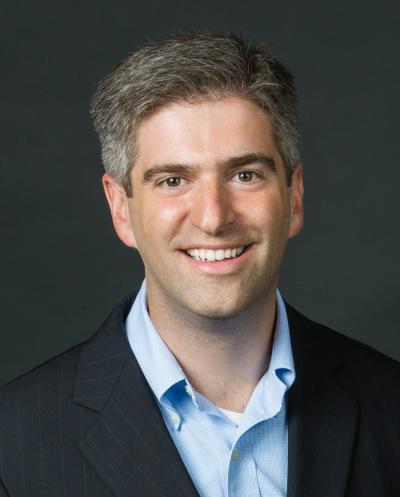
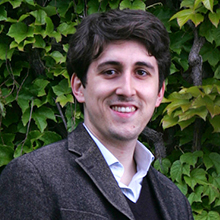
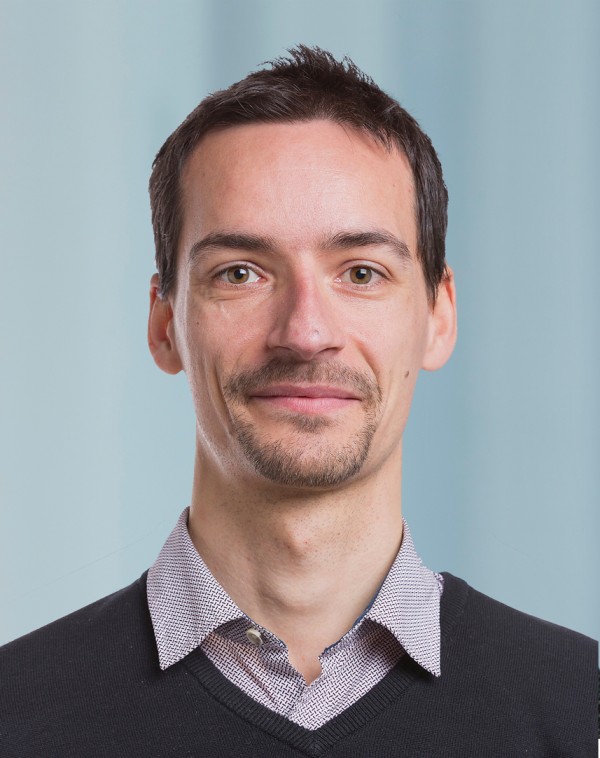
Benjamin J. Keys is a Research Associate at the University of Pennsylvania's Wharton School within the Public Economics program. His work focuses on public economics, environmental economics, and financial risk management with particular emphasis on housing markets and climate change impacts. University of Pennsylvania - The Wharton School Public Economics Department His research explores: Climate risk capitalization in housing markets Mortgage insurance moral hazard Consumer credit card payment behaviors Emergency credit systems Regional economic redistribution through mortgages Email: benkeys@wharton.upenn.edu Scientific awards include: Fellowships on Consumer Financial Management
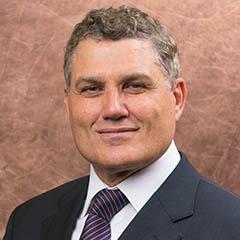
Professor Begona Dominguez is a faculty member in the School of Economics at The University of Queensland (UQ), within the Faculty of Business, Economics and Law. She holds a Doctor of Philosophy in Economics from Universitat Autònoma de Barcelona. Her research focuses on Macroeconomics, Public Finance, and Monetary Economics, with emphasis on fiscal policy design, central bank balance sheets, and optimal taxation frameworks. Her key projects include Supporting Entry and Growth of Australian Businesses via Tax and Transfers (2022–2024) and The role of a central bank's balance sheet in shaping the economy (2021–2024) . She is available for PhD supervision and actively contributes to applied macroeconomic analysis, particularly in urban economic advantages and policy evaluation. Publications span topics like fiscal sustainability, inflation dynamics under central bank policies, and the implications of constitutional constraints on taxation. Her work bridges theoretical models (e.g., Ramsey frameworks) with empirical applications in tax policy and public debt management. Professor Dominguez maintains affiliations with the Centre for Applied Macroeconomic Analysis (ANU) and has reviewed prominent texts such as John Taylor's Reform of the International Monetary System . She is based in Room 507, Colin Clark Building at UQ.
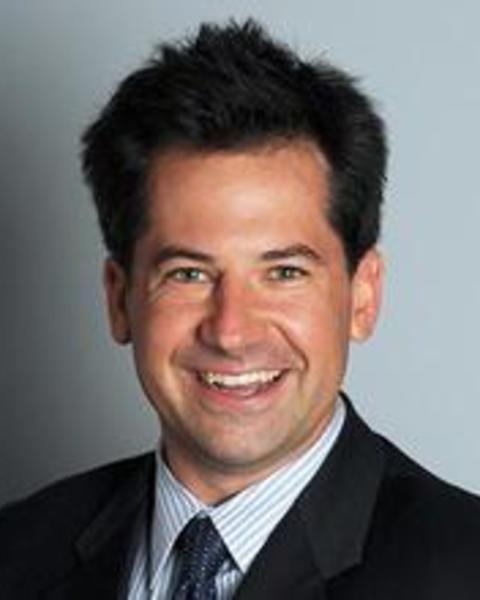
Samuel G. Hanson is the William L. White Professor of Business Administration at Harvard Business School (HBS), a Research Associate at the National Bureau of Economic Research (NBER), and a Faculty Affiliate of the Harvard Department of Economics. He teaches Finance 1 in the MBA curriculum and Ph.D. courses in Corporate Finance and Empirical Methods. His research focuses on asset pricing, behavioral finance, corporate finance, and financial intermediation, with a particular emphasis on debt markets and financial stability. Hanson holds a Ph.D. in Business Economics from Harvard University and a B.A. in Quantitative Economics and Philosophy from Tufts University. Before academia, he worked at Lehman Brothers, the Federal Reserve Bank of New York, and the U.S. Treasury Department during the 2009 financial crisis. His work explores investor behavior, institutional factors, and policy interventions to enhance financial stability. Key awards include the 2014 RFS Rising Scholar Prize and the 2015 Brattle Group Distinguished Paper. His research is published in top journals like the Quarterly Journal of Economics, Journal of Finance, and Journal of Financial Economics. He also contributes to policy discussions on banking regulation and government debt management.
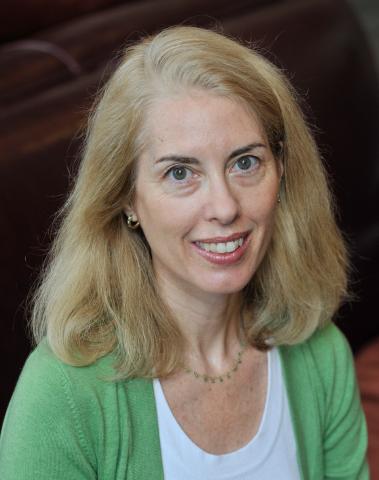
Dr. Sarah Smith is a Lecturer (Teaching & Scholarship) in the Business School at the University of Aberdeen, appointed in June 2020. She previously served as Reader at the University of Stirling from 2015 and as Senior Lecturer in Accounting, following a lectureship at Heriot-Watt University from 2001 to 2008. Education: BAcc in Accountancy, University of Stirling (1996, First Class Honours) MSc by Research, University of Stirling (1998) PhD, University of Stirling (2003) Her research centers on accounting and finance, with a strong focus on intellectual capital disclosure, corporate financing decisions, leasing, and academic labor in UK higher education. She employs empirical and methodological approaches, including content analysis and survey research, to explore disclosure practices and financial decision-making. Her work addresses both corporate reporting behavior and the sociology of accounting academia. Her recent publications (2018) analyze academic labor shortages in UK accounting departments and the role of social capital in PhD assessment, reflecting her dual interest in financial reporting and academic practice. Earlier works from the 2000s examine leasing, lease-debt substitutability, and the impact of disclosure on equity risk, establishing a long-standing contribution to financial accounting research. Scientific Awards: Best thesis on leasing across Europe (2003, Leaseurope) Carnegie Trust PhD Scholarship Dr. Smith has advised on research and contributed to academic discourse through extensive publishing, though no formal PhD or Master’s students are listed. She has not been associated with specific grants in the text, but her PhD was externally funded. Her teaching qualification (PGCAP) underscores her commitment to scholarship in education. She has not been affiliated with any named research labs or collaborative teams in the provided text, but her frequent co-authorship with Valerie Urquhart and Vic Beattie indicates strong research collaborations.
Kathryn M. Dominguez is a Professor of Public Policy and Economics at the University of Michigan's Gerald R. Ford School of Public Policy, where she also serves as Associate Dean for Academic Affairs. She maintains a dual affiliation with the Department of Economics as director of the honors program. Her educational background includes: PhD in Economics from Yale University (1987) AB from Vassar College (1982) Dominguez's research focuses on international financial markets and macroeconomics, with particular expertise in foreign exchange rate behavior. Her work examines global financial systems, exchange rate interventions, and monetary policy across borders. She has authored influential works including 'Exchange Rate Efficiency and the Behavior of International Asset Markets' and 'Does Foreign Exchange Intervention Work?' (co-authored with Jeff Frankel). Her recent publications reveal a strong emphasis on understanding financial crises, particularly the Great Recession and pandemic-era challenges, with attention to policy responses and international ramifications. Her research demonstrates consistent engagement with central banking policies, exchange rate dynamics, and international financial stability. Professional affiliations: Research Associate, National Bureau of Economic Research Member, Panel of Economic Advisers at the Congressional Budget Office Member, Advisory Scientific Committee of the European Systemic Risk Board Dominguez has advised major institutions including USAID, the Federal Reserve, IMF, World Bank, and Bank for International Settlements. She previously taught at the Kennedy School, Woodrow Wilson School, London School of Economics, and UC Berkeley's Goldman School. At Michigan, she teaches macroeconomics, finance, and international economics courses including Global Financial Markets, Crises, and Policy, and Macroeconomics.
Prof. Dr. Mareike Kühne is a full-time Professor of Business Administration at the Department of Business and Management, Brandenburg University of Technology. With a unique interdisciplinary background spanning economics, business administration, philosophy, and neuroscience, she bridges affective dimensions with economic rationality to develop holistic decision-making frameworks. Doctorate in Economics, Otto von Guericke University Magdeburg (1992-1997) Fulbright Scholar, San Diego State University (1997-1998) Studies in Philosophy, Humboldt University (2007-2011) Doctoral and Master’s in Neuroscience, Berlin School of Mind and Brain (2011-2013) Her research integrates insights from psychology and neuroscience into capital market-oriented corporate reporting, corporate governance, and normative rationality frameworks. She critiques current economic models for neglecting the embodied nature of cognition, advocating for a more nuanced understanding of rationality that incorporates lived experience. Her 15 most recent works span sustainability reporting (2025), neuroeconomics (2021), M&A disputes (2017), and IFRS standard evolution (2005-2012). These publications highlight her focus on reconciling traditional accounting principles with interdisciplinary approaches to decision-making. Fulbright Scholar (1997-1998) Prof. Kühne has taught at Humboldt University, HHL Leipzig, and the Berlin School of Mind and Brain. She actively participates in professional organizations including the German Society for Philosophy, European Accounting Association, and European Financial Reporting Advisory Group. Her work emphasizes the practical impact of neuroscientific findings on economic policy and standard-setting.
Kristin J. Forbes is the Jerome and Dorothy Lemelson Professor of Management and Global Economics at MIT’s Sloan School of Management. She holds a PhD from MIT and graduated summa cum laude from Williams College. Her research focuses on international macroeconomics, monetary policy, and financial stability. She has served in senior policy roles, including External Member of the Bank of England’s Monetary Policy Committee (2014–2017) and Member of the White House Council of Economic Advisers (2003–2005). Academic Affiliations: NBER Business Cycle Dating Committee, CEPR Research Associate, US Monetary Policy Forum, Council on Foreign Relations Policy Roles: Advisory positions at Bank for International Settlements, IMF, and Massachusetts State Governor’s Council of Economic Advisers (2009–2014) Honors: Honorary Commander of the Order of the British Empire (2019), MIT Bicentennial Medal (2015), 2021 Digital Teaching Award Her research examines monetary policy frameworks, rate cycles, macroprudential regulation, and exchange rate dynamics. Notable contributions include analyses of post-pandemic inflation drivers and global quantitative tightening strategies. She regularly advises central banks and international organizations on policy design and implementation.
Beata Csatho PhD is a Professor in the Department of Earth Sciences at the University at Buffalo, affiliated with the College of Arts and Sciences. Her research focuses on remote sensing, glaciology, climate change, and geophysics. She holds a PhD in Geophysics from the University of Miskolc, Hungary (1993). Her work integrates geophysical, remote sensing, and climatic data to study ice sheet dynamics and cryospheric changes. She leads the Remote Sensing lab and teaches courses like GLY 465/565 (Environmental Remote Sensing) and GLY 325 (Geophysics). Recent research emphasizes Greenland and Antarctic ice dynamics, ICESat-2 validation, and developing tools like Ghub for collaborative glaciology. She advises PhD and Master's students and collaborates on major projects like ISMIP7 and IceBridge. Her lab focuses on advancing laser altimetry, DEM correction, and cryosphere observation techniques.
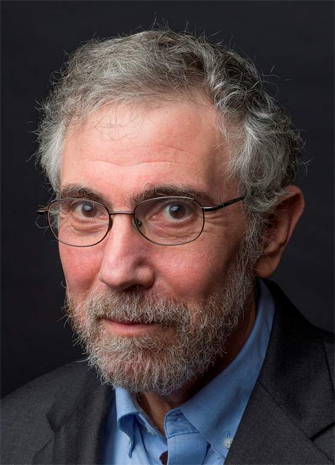
Paul Krugman is a Distinguished Professor of Economics at the CUNY Graduate Center and a Senior Scholar at the Stone Center on Socio-Economic Inequality. He holds a core faculty position there and is a LIS senior scholar. Previously, he taught at MIT, Stanford, and Princeton University. Krugman's work focuses on macroeconomics, globalization, trade, labor markets, and economic policy. His research has earned him prestigious awards, including the Nobel Memorial Prize in Economic Sciences (2008), the Prince of Asturias Award (2004), and the John Bates Clark Medal (1991). His major contributions include groundbreaking work on international trade and economic geography. Key publications include Geography and Trade , The Return of Depression Economics , and Arguing with Zombies . He has also been a prolific commentator on economic policy through his columns in The New York Times and his Substack newsletter. Krugman’s research explores topics like financial crises, debt dynamics, inequality, and the role of government in stabilizing economies. He frequently engages with public debates, emphasizing evidence-based policymaking and critiquing austerity measures. His recent work includes analyses of the 2008 financial crisis, the U.S. trade deficit, and the political economy of economic inequality. Awards: Nobel Prize in Economics (2008), Prince of Asturias Award (2004), John Bates Clark Medal (1991) Key Roles: Stone Center Senior Scholar, Core Faculty at CUNY Graduate Center Public Engagement: Former NYT columnist, Substack newsletter author, frequent media commentator
Naz Koont is an Assistant Professor of Finance at the Stanford Graduate School of Business . Her research explores how technology and nonbank intermediaries reshape banking landscapes, focusing on financial stability, competition, and consumer welfare. PhD in Finance (Columbia Business School, 2024) MPhil in Finance (Columbia Business School, 2021) Honors BSc in Mathematics and Economics (University of Toronto, 2018) Her research interests include: Financial Intermediation : Analyzing digital banking’s impact on bank roles. Credit Markets : Studying credit lines and leverage constraints. Industrial Organization : Modeling competition dynamics in banking. Technology : Assessing digitalization’s effects on financial systems. Article trends reveal her work combines empirical analysis and structural modeling to examine: Digital banking’s role in bank competition and consumer welfare Credit lines’ function in debt dilution mitigation ETFs’ active management strategies in illiquid markets Peer effects in deposit market demand Scientific awards include: HEC Paris Top Finance Graduate Award (2024) Bernstein Center Doctoral Grant (2021) Columbia Finance Department Best 4th Year Paper (2021)
Dan A. Iancu is an Associate Professor of Operations, Information & Technology at Stanford Graduate School of Business, affiliated with the Emmett Interdisciplinary Program in Environment and Resources (E-IPER). He holds a BS from Yale, SM from Harvard, and PhD from MIT. His research bridges operations, finance, and sustainability, focusing on dynamic optimization under uncertainty and its applications in supply chains, FinTech, and healthcare. Notable work includes designing financing solutions for global supply chains and promoting ethical analytics. Education: BS in Electrical Engineering (Yale, 2004), SM in Engineering (Harvard, 2006), PhD in Operations Research (MIT, 2010). Professional experience includes a Goldstine Fellowship at IBM Research and teaching roles at Wharton and INSEAD. He has won multiple awards including INFORMS Optimization Society (2009) and JFIG (2013) prizes. Research emphasizes fairness and environmental impact, with recent projects on sustainable palm oil production and climate impacts of digital supply chains. His work appears in Management Science, Operations Research, and Mathematics of Operations Research. Awards include Srivani Faculty Scholar (2023–24) and teaching commendations at Harvard, MIT, and INSEAD. He advises on multi-disciplinary projects involving engineering, environmental science, and business students.
Dr. Khaled Amira is an Associate Professor in the Department of Finance at St. Bonaventure University's School of Business. He has extensive academic experience, having previously taught at Ohio University, Auburn University, Syracuse University, and others. His research focuses on ambiguity in corporate finance and financial markets. Dr. Amira holds a Ph.D. in Finance from George Washington University (1999), an M.S. in Financial Economics from the University of Maryland (1993), an MBA in International Business from George Washington University (1989), and a B.S. in Economics from the University of Tunis (1984). He also worked as an Account Officer at Tunis International Bank before entering academia. Dr. Amira has received the 1996-1997 Senior Teaching Award for Excellence in Teaching at George Washington University. His research interests include corporate governance, asset pricing, international equity correlations, and sovereign bond dynamics. He has published extensively on topics such as leverage effects, competition among stock exchanges, and global bond pricing structures. His work bridges theoretical finance with practical applications in corporate decision-making and market analysis. Education Ph.D., Finance, George Washington University, 1999 M.S., Financial Economics, University of Maryland, 1993 M.B.A., International Business, George Washington University, 1989 B.S., Economics, University of Tunis, 1984 Awards 1996-1997 Senior Teaching Award for Excellence in Teaching (George Washington University) Dr. Amira’s academic career spans multiple institutions, emphasizing both teaching and research. His publications analyze market structures, corporate finance challenges, and global financial instruments. He actively contributes to academic conferences and has explored topics ranging from volatility impacts on equity correlations to the pricing mechanisms of bearer vs. registered bonds.
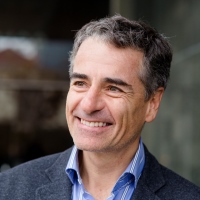
Andrés Velasco is Dean of the School of Public Policy at the London School of Economics and Political Science (LSE). Formerly, he served as Chile's Minister of Finance (2006–2010) and held academic positions at Columbia University and Harvard Kennedy School. He specializes in macroeconomics, economic policy, populism, and development. His research explores fiscal policy, inflation targeting, and crisis management in emerging economies. He has authored over 100 academic articles and books, including Liberalismo en Tiempos de Cólera and Contra la Desigualdad . Velasco has advised governments globally and chairs international commissions like the Global Panel on Multilateral Lending Institutions. Awards include the Inter-American Development Bank's Excellence in Research Award (2006). His work bridges academic rigor and policy relevance, addressing global challenges in finance, development, and governance. Education: BA/MA Yale University, PhD Columbia University, Postdoctoral Fellowship at Harvard/MIT. Awards: Multiple recognitions for economic research and policy contributions. Publications: Over 100 articles, books on macroeconomic policy, and policy analyses. Professional Roles: G20 Eminent Persons Group member, Board roles at Adecoagro and Itaú-Unibanco. Research focuses on fiscal rules, commodity-driven booms, and the political economy of policy reforms. His recent work addresses pandemic economics, inflation dynamics, and populism's impact on governance.
Filippo Mezzanotti is an Associate Professor of Finance at the Kellogg School of Management, Northwestern University. His research bridges corporate finance with innovation economics, fintech, and historical analysis of financial systems. He teaches Finance II (Corporate Finance), focusing on capital structure, investment decisions, and valuation methods. Doctor of Philosophy (2016), Business Economics, Harvard University Master of Arts (2014), Economics, Harvard University Master of Science (2010), Economics, Universita Commerciale Luigi Bocconi Bachelor of Arts (2008), Economics, Universita Commerciale Luigi Bocconi Mezzanotti's work examines how financial frictions shape real economic activity. Key areas include technology adoption dynamics during liquidity shocks, patent policy effects on corporate innovation, and private equity's role in crisis resilience. His empirical approach frequently leverages historical events like the Great Depression and Sherman's March for modern economic insights. Recent publications analyze critical issues in financial technology (mobile payments in India), corporate R&D allocation under funding constraints, and legal frameworks affecting patent litigation. His research reveals connections between demographic factors, debt restructuring mechanisms, and institutional recovery patterns. Faculty Research Fellow, National Bureau of Economic Research (2024-present)
Daniel Farinotti is a Professor of Glaciology at the Department of Civil, Environmental and Geomatic Engineering at ETH Zurich and at the Swiss Federal Institute for Forest, Snow and Landscape Research (WSL). His work focuses on understanding glacier evolution and its impacts on water resources across mountainous regions globally. Dr. Farinotti's research interests center on glaciological modeling and its applications to water resource management. His expertise includes estimating glacier ice thickness from surface properties, long-term modeling of glacier mass changes, quantifying runoff contributions from glaciated catchments, and implications for water management in high mountain areas. His research integrates field observations, remote sensing data, and numerical modeling to address critical questions about glacier response to climate change. Dr. Farinotti's scientific achievements have been recognized with prestigious awards including the 2017 Nature Research Award for Outstanding Achievements in Review and the 2013 Award for Outstanding Contributions to Review from the Journal of Geophysical Research - Earth Surface. His publications demonstrate a consistent pattern of high-impact research across glaciology, hydrology, and climate science, with particular emphasis on the interactions between glacier dynamics and water resources. As a principal investigator, Dr. Farinotti has secured significant research funding from organizations including the Swiss National Foundation and German Federal Foreign Office. His work often involves international collaborations across multiple institutions, reflecting the global nature of glacier research and its implications for water security. He maintains active involvement in major scientific initiatives focused on glacier monitoring and climate change impacts. Dr. Farinotti leads the Glaciology research group at ETH Zurich's Laboratory of Hydraulics, Hydrology and Glaciology (VAW), which conducts fieldwork across multiple mountain ranges globally. The group employs advanced techniques including geophysical surveys, remote sensing, and numerical modeling to investigate glacier dynamics and their hydrological impacts.