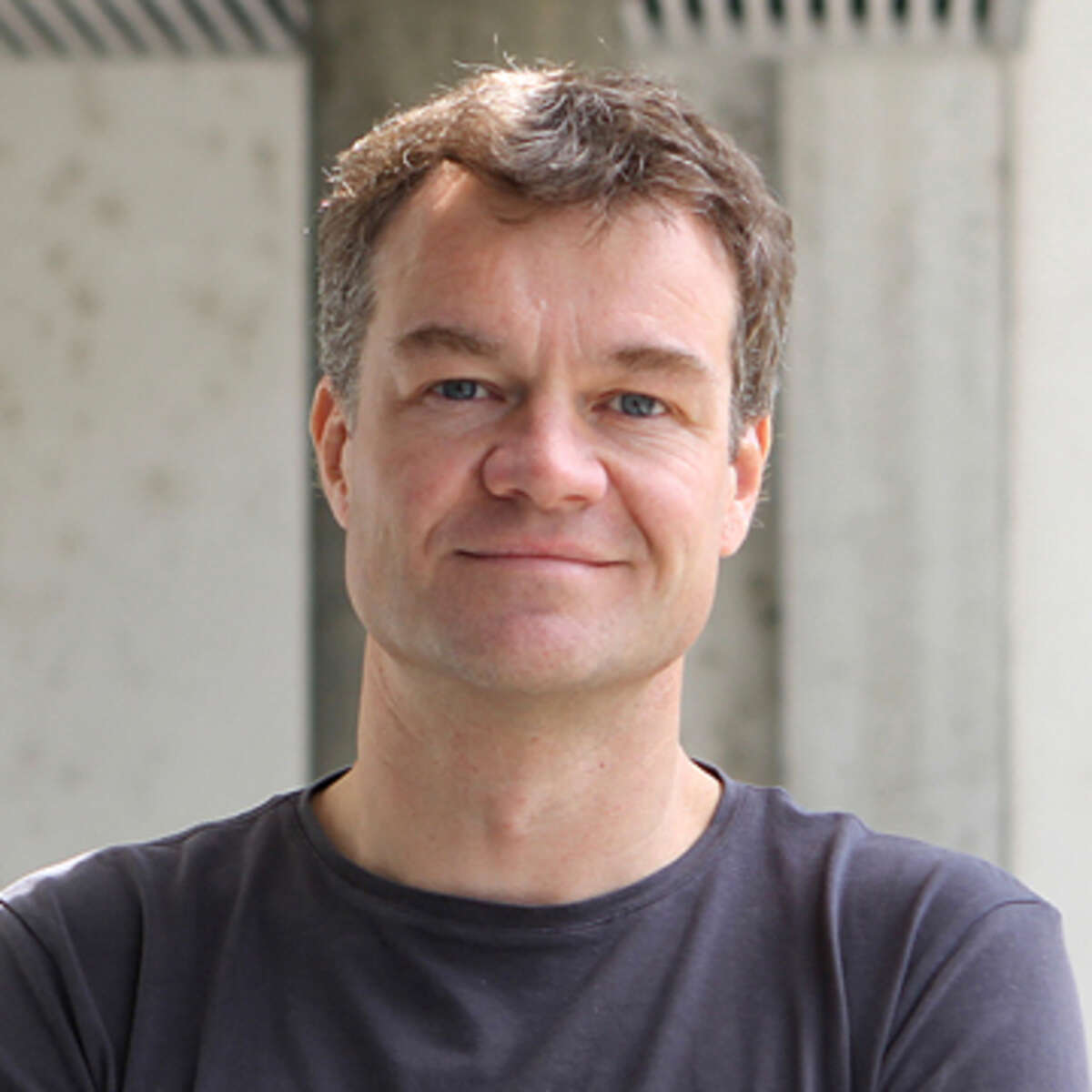
Prof. Knut Drescher is an Associate Professor at the Biozentrum, University of Basel , leading a research group focused on bacterial biofilms , swarming , and microbial multicellularity . Previously, he served as a Professor of Biophysics and Max Planck Research Group Leader at Philipps-Universität Marburg (2015-2021) and conducted postdoctoral research at Princeton University. Research Interests: Physical and biological mechanisms of biofilm formation Cell-cell interactions in microbial communities Antibiotic resistance in biofilms Hydrodynamics of bacterial swarms Evolution of cooperation in multispecies biofilms Development of bioimaging software (BiofilmQ, BacStalk) Scientific Awards: 2023: SNSF Consolidator Grant 2019: Heinz Maier-Leibnitz Prize (DFG), VAAM Research Prize, IUPAP Young Scientist Prize 2016: ERC Starting Grant Advising & Grants: Advises PhD and Master's students in microbiology, biophysics, and bioinformatics Secured major grants from ERC , HFSP , and DFG
Professor Urs Jenal is a Full Professor at the Biozentrum of the University of Basel, Switzerland, where he has led research on bacterial signal transduction since 2008. His laboratory investigates the molecular mechanisms of bacterial persistence and antibiotic resistance, with particular focus on pathogens causing chronic infections in humans. Previously, he served as Associate Professor (2002-2008) and Assistant Professor (1996-2002) at the same institution, and completed postdoctoral training at Stanford University and ETH Zurich. Education 2000: Habilitation and VENIA DOCENDI in Microbiology, University of Basel 1987-1991: PhD in Molecular Microbiology, ETH Zurich (supervisor: Prof. T. Leisinger) 1982-1986: Studies of Experimental Biology, ETH Zurich 1977-1981: Gymnasium with Matura Type C, Chur Research Focus Prof. Jenal's research centers on understanding how bacterial pathogens persist in the human body despite antibiotic treatments. His laboratory investigates cyclic nucleotides, particularly c-di-GMP, as signaling molecules that control bacterial biofilm formation, virulence, and antibiotic tolerance. His team studies pathogenic Escherichia coli causing recurrent urinary tract infections and Pseudomonas aeruginosa causing long-term lung infections in cystic fibrosis patients. Recent work has revealed how "sleeping" bacteria survive antibiotic treatments and how pathogens breach respiratory epithelia through goblet cell invasion. Scientific Recognition 2014: Elected member of the European Academy of Microbiology (EAM) 2013: ERC Advanced Investigator Award 2012: Elected member of the European Molecular Biology Organization (EMBO) 2011: Elected member of the American Academy of Microbiology (AAM) Mentorship and Collaborations Prof. Jenal has mentored numerous PhD students and postdocs, many receiving awards for their research. His laboratory is part of the NCCR AntiResist initiative focused on developing novel approaches against antibiotic resistance. He collaborates extensively with clinical researchers and has developed innovative models, including human mini-lungs, to investigate pathogen-host interactions. His recent publications demonstrate how understanding bacterial persistence mechanisms can lead to new therapeutic strategies against chronic infections.
Prof. Dr. Alex Hall is an Associate Professor at the Department of Environmental Systems Science and Head of the Institute of Integrative Biology at ETH Zürich , Switzerland. He holds a PhD from the University of Edinburgh (2008), followed by postdoctoral work at the University of Oxford and ETH Zürich, including prestigious SNSF Ambizione and Marie Curie Intra-European fellowships. Research Focus: The Hall lab investigates Microbial interactions in human microbiomes Antibiotic resistance evolution Horizontal gene transfer dynamics Computational and in vitro modeling of microbial communities Evolutionary medicine applications Scientific Contributions: His recent studies analyze probiotic treatments for Staphylococcus aureus decolonization, strain-specific ecological success in gut microbiomes, and CRISPR-Cas system roles in plasmid conflicts. The lab employs computational frameworks combined with experimental validations. Scientific Awards: SNSF Ambizione fellowship Marie Curie Intra-European fellowship He also serves on the SNSF PRIMA fellowship evaluation panel and the ETH Zürich Coordination Council Medicine .
Louis Du Plessis is a Lecturer at ETH Zürich's Department of Biosystems Science and Engineering in Basel, Switzerland. His research focuses on computational evolution with particular emphasis on infectious disease dynamics and genomic analysis. He maintains an active research profile with numerous high-impact publications in top-tier journals. Dr. Du Plessis completed his doctoral studies at ETH Zürich in 2016 with a thesis titled 'Understanding the spread and adaptation of infectious diseases using genomic sequencing data,' building upon his 2011 Master's work on evolutionary rate variation. His current research sits at the intersection of computational biology, epidemiology, and evolutionary genetics. His research interests span computational epidemiology, phylodynamics, viral evolution, and infectious disease modeling. He has made significant contributions to understanding pandemic dynamics, particularly regarding influenza and SARS-CoV-2, using genomic and epidemiological data integration. His methodological work includes developing computational approaches for estimating epidemic dynamics and viral transmission patterns. Analysis of his recent publications reveals a strong focus on how pandemics disrupt normal viral circulation patterns, with particular attention to influenza evolution during the 2009 H1N1 and COVID-19 pandemics. His work often combines phylogenetic analysis with epidemiological modeling to extract maximum information from genomic and case count data. Dr. Du Plessis has received research funding from European Commission projects including 'From Foundations of Phylodynamics to new applications in Cell Biology' (grant 101001077) and 'MOnitoring Outbreak events for Disease surveillance in a data science context' (grant 874850). He is actively involved in developing computational tools for analyzing pathogen genomic data and has contributed to several software packages used in the field. His work has significant implications for public health surveillance and pandemic preparedness.
Prof. Dr. Sven Panke is a Full Professor and Head of the Department of Biosystems Science and Engineering at ETH Zürich. His research focuses on bioprocess engineering, synthetic biology, and enzymatic process development. Key areas include miniaturized bioreactor systems, microbial engineering for novel metabolite production, and high-throughput screening methodologies. Education: Studied Biotechnology at TU Braunschweig, with postgraduate research at the German National Research Center for Biotechnology and ETH Zurich. Transitioned from industry (DSM) to academia in 2001 as an Assistant Professor, progressing to Associate Professor (2007-2009) before leading the BSS department. Research interests emphasize directed evolution of enzymes, metabolic pathway engineering, and systems biology approaches to optimize microbial production systems. Current projects include bio-indigo synthesis, antimicrobial peptide discovery, and synthetic biology tools for cellular engineering. Labs/Teams: Leads the Bioprocess Engineering Lab at ETH Zurich, collaborating on projects like the E. coli import system design and γ-glutamyltransferase engineering. Active in developing microfluidics platforms for parallel reaction analysis. Grants/Advising: Funded by initiatives in sustainable biomanufacturing and synthetic biology. Supervises graduate students in bioprocess design and microbial systems engineering.
Prof. Dr. Marek Basler is an Associate Professor of Infection Biology at the Biozentrum, University of Basel , leading a research group focused on the Type VI Secretion System (T6SS) in bacterial pathogens. His work bridges structural biology, molecular microbiology, and computational analysis to unravel the mechanisms of this contractile nanomachine. PhD in Microbiology (2007, Institute of Microbiology, CAS, Prague) Postdoctoral Fellow (2007–2013, Harvard Medical School) Assistant Professor (2013–2018) and Associate Professor (since 2018) at Biozentrum His research explores the structure, assembly, and therapeutic potential of the T6SS, a critical virulence factor in pathogens like Pseudomonas aeruginosa . Key themes include bacterial defense strategies , intermicrobial competition , and host-pathogen interactions . Recent projects highlight T6SS roles in antibiotic resistance and horizontal gene transfer . The most recent publications (2025–2024) reveal novel insights into T6SS activation by environmental stress , toxin diversity , and host cell targeting . Trends span microbial ecology , nanomachine dynamics , and computational modeling of bacterial interactions. Scientific Awards : EMBO Membership (2023) ERC Consolidator Grant (2019) EMBO Gold Medal (2018) Friedrich Miescher Award (2018) EMBO Young Investigator (2015) His lab (Basler Lab) utilizes state-of-the-art microscopy , biochemical techniques , and live-cell simulations (e.g., BacFighT6 ). Collaborations span institutions like Harvard Medical School and NCCR-AntiResist , with future work targeting antibacterial therapies .
Yuping Li is a Tenure-track Assistant Professor at the Biozentrum, University of Basel, where she leads a research group focused on the genetics and evolution of bacteria-jumbophage interactions. She was appointed in 2024 and received an SNSF Starting Grant the same year. Her research explores the unique biology of jumbophages—phages with large genomes and eukaryote-like properties—and their co-evolution with bacterial hosts, particularly the Pseudomonas phage phiKZ and the bacterial 'jumbophage killer' (Juk) immune systems. Nationality: Chinese Current Position: Tenure-track Assistant Professor, University of Basel, Biozentrum (since 2024) Previous Position: Postdoctoral Researcher, University of California, San Francisco (2019–2024) Visiting Scientist: EMBL, Heidelberg (2022–2023) Her research interests center on molecular microbiology, bacteriophage biology, bacterial immunity, and evolutionary genetics . She investigates how jumbophages form protective 'nuclei' inside bacterial cells to evade host defenses and how bacteria have evolved counter-mechanisms like the Juk system. This work combines genetics, microscopy, biochemistry, and structural biology to understand infection dynamics and evolutionary arms races. The ultimate goal is to harness jumbophages in fighting antibiotic-resistant bacteria. The recent publications show a strong trend in phage-host interactions, anti-CRISPR mechanisms, microbial evolution, and systems-level analysis of adaptation . Her work bridges fundamental virology with applied antimicrobial strategies, often using high-throughput sequencing, proteomics, and mathematical modeling. Articles span top journals like Cell , Nature Communications , and PLoS Biology , reflecting interdisciplinary impact. Scientific Awards: SNSF Starting Grant (2024) Postdoctoral Independent Research Grant, Program for Breakthrough Biomedical Research, UCSF (2021–2022) CEHG Predoctoral Fellowship, Stanford University (2018–2019) Genentech Foundation Predoctoral Fellowship (2016) Outstanding Student Scholarship (2007–2011) Yuping Li advises PhD students and postdoctoral fellows, including Elena Kaube, Dr. Marina Mahler, and Dr. Sam van Beljouw. Her group is supported by competitive grants such as the SNSF Starting Grant. She collaborates with leading scientists like Dr. Joseph Bondy-Denomy (UCSF) and Dr. Nassos Typas (EMBL). Her lab employs cutting-edge techniques in genetics, proteomics, and structural biology to dissect phage infection and bacterial immunity mechanisms. Her research group is part of the Biozentrum at the University of Basel, a leading institution in life sciences, and she is affiliated with the NCCR AntiResist initiative, focusing on antimicrobial resistance solutions.
Monika Maurhofer is a Professor at the Department of Environmental Systems Science, ETH Zurich , specializing in multitrophic interactions within the rhizosphere. Her research bridges plant pathology, microbial ecology, and biological control of plant diseases and insect pests. 1988: Dipl. sc. nat., ETH Zurich 1993: Dr. sc. nat., ETH Zurich Research focuses on biocontrol pseudomonads and their molecular interactions with plants, fungi, and insects. Key projects include: Understanding Pseudomonas protegens mechanisms in rhizosphere colonization Comparative genomics of entomopathogenic bacteria Developing disease-suppressive compost diagnostics Investigating microbial consortia for pest control 2024-2025 publications highlight her work on entomopathogenic pseudomonads and nematode-bacteria symbiosis , with applications in sustainable agriculture. She received the Golden Owl Award for teaching excellence in 2014 and 2017. Current collaborations include Syngenta Crop Protection and interdisciplinary teams at University of Zurich and University of Basel.
Marie Schölmerich is an Assistant Professor of Environmental Microbiology at ETH Zurich's Department of Environmental Sciences , affiliated with the Institute of Biogeochemistry and Pollutant Dynamics. Her research focuses on anaerobic microorganisms and their roles in greenhouse gas cycling, particularly the Wood-Ljungdahl pathway in anoxic ecosystems. She employs metagenomics, fieldwork, and biochemical methods to study microbial physiology and biogeochemical processes. Education: B.Sc. Biochemistry (Leipzig University, 2011), M.Sc. Molecular Biosciences (Frankfurt University, 2013), Ph.D. Biology (Frankfurt University, 2018). Postdoctoral training included positions at Hamburg University (2018–2020) and UC Berkeley (2021–2023). Research Interests: Anaerobic microbiology, environmental metagenomics, microbial physiology, and protein biochemistry. Her lab investigates methane and CO₂ conversion mechanisms in anaerobic archaea, leveraging extrachromosomal elements and genomic diversity. Awards: SNSF Starting Grant (2025) Walter Benjamin Fellowship (DFG, 2020) Postdoc Plus Stipend (Claussen-Simon Foundation, 2019) Advising & Grants: Leads the Schölmerich Lab at ETH Zurich, mentoring students and securing grants like the SNSF Starting Grant. Her work bridges environmental microbiology with applied biotechnology. Labs/Teams: Schölmerich Lab, ETH Zurich. Focus areas include anaerobic metabolism, microbial symbiosis, and biogeochemical modeling.
Berit Ada Siedentop serves as a Visiting Professor in Theoretical Biology at ETH Zurich, Switzerland, based at the CHN K 16 building (Universitätstrasse 16, 8092 Zürich) within the Bonhoeffer research group. Her work bridges mathematical modeling and empirical microbiology to address evolutionary dynamics in bacterial systems. Her core research spans Theoretical Biology , Evolutionary Microbiology , and Antimicrobial Resistance , with specialized focus on plasmid transmission mechanisms, CRISPR-Cas defense systems, and antibiotic combination therapies. She employs meta-analytical frameworks to quantify resistance evolution and investigates how bacterial innate/adaptive immunity constrains horizontal gene transfer. Recent publications (2022-2024) reveal a cohesive trajectory examining microbial conflict systems: three 2024 papers dissect plasmid-phage-antibiotic interactions through CRISPR-mediated defense, conjugative plasmid barriers, and resistance meta-analysis, while her 2022 work established foundational models for plasmid co-infection dynamics. This body of work consistently integrates ecological modeling with evolutionary genetics to predict pathogen adaptation. Dr. Siedentop actively collaborates with the Bonhoeffer group on theoretical frameworks for microbial evolution, maintaining laboratory operations at ETH Zurich's Center for Microbiology and Environmental Systems Science infrastructure.
PD Dr. Jochen Klumpp is a Senior Lecturer in the Department of Health Sciences and Technology (D-HEST) at ETH Zurich. His research focuses on bacteriophage biology, bacterial pathogenesis, and antimicrobial strategies. He leads studies on phage-host interactions, phage-based diagnostics, and phage therapy applications, particularly targeting pathogens like Campylobacter, Salmonella, and Mycobacterium tuberculosis. Key research areas include phage resistance mechanisms, genomic analysis of bacterial pathogens, and development of broad-spectrum phage cocktails. His work spans food safety, clinical microbiology, and evolutionary virology. Recent studies emphasize engineering phages for rapid pathogen detection in clinical samples and exploring phage diversity in environmental and clinical settings. Publications highlight innovations in phage taxonomy, CRISPR-Cas9 systems in bacteria, and structural biology of phage-tail components. Collaborations with global institutions, including Thailand and Kenya, underscore his commitment to addressing global health challenges through phage research. Awards: None explicitly listed. Advising/Grants: No student names or grant details provided. Research is supported through institutional and collaborative funding. Labs/Teams: Part of D-HEST's microbiology and biotechnology research groups, focusing on applied and fundamental phage research.
Dr. Francesca Fiegna is part of the Professorship for Evolutionary Biology at ETH Zurich's Department of Environmental Systems Science, within the Institute of Integrative Biology. Her research focuses on microbial ecology, particularly bacterial social behavior, predation dynamics, and density-dependent traits under environmental stress. She investigates how ecological contexts like temperature and pH influence predator-prey relationships and microbial community structures. Key research interests include: microbial predation reversal mechanisms, evolutionary responses to novel environments, and the role of kin discrimination in microbial social systems. Her work integrates experimental evolution, genetic analysis, and ecological modeling to understand cooperative behaviors and evolutionary hotspots in soil microbes. Recent studies highlight her exploration of Myxococcus xanthus as a model organism, examining outer membrane exchange, kin recognition, and population-level adaptations. She also explores applications of predatory bacteria as biocontrol agents against fungal pathogens like Zymoseptoria tritici. Collaborations include funding from Swiss National Science Foundation (SNF) grants, focusing on motile bacterial adaptation and predation mechanisms.
Leo Meile is an Adjunct Professor at ETH Zurich's Department of Health Sciences and Technology, specializing in food biotechnology. His research encompasses food microbiology, fermentation technology, probiotic safety, and antimicrobial resistance in food systems. Research areas: Microbial ecology of fermented dairy products Biogenic amine formation in fermented foods Antifungal cultures for food preservation He has published extensively on traditional fermentation processes across Africa and Europe and contributed to safety assessments of dairy microorganisms. His work supports the ETH spin-off PharmaBiome.
Dr. Isabel Z. Martínez is a Lecturer at the Department of Management, Technology, and Economics at ETH Zurich, affiliated with the KOF Swiss Economic Institute. Her research focuses on Public Economics, particularly income and wealth distribution, taxation, and labor economics. She is a Research Affiliate at CEPR and CESifo, a Fellow of WID.world and the SIAW Institute at the University of St.Gallen, and a member of the Swiss Competition Commission since 2018. Academic Appointments Current: Lecturer, ETH Zurich (since 2020) Previous: Economist, Swiss Federation of Trade Unions SGB-USS (before 2020) Research Interests: Martínez specializes in the distribution of income and wealth, behavioral responses to taxation, and economic policy analysis. Her work combines empirical research with policy recommendations, often utilizing novel datasets like Swiss rich lists and Google Trends. Scientific Awards: Top 10 Most Influential Economists in Switzerland (NZZ) Top 4% Female Economists (RePEc) Fellow, World Inequality Database (WID.world) Fellow, SIAW Institute (University of St.Gallen) Distinguished Visiting Scholar, City University of New York (CUNY, 2021/2022) Publications and Media: Martínez has published in leading journals such as the American Economic Review and The Review of Economics and Statistics. She co-founded the open-source project trendEcon to develop real-time economic indicators using Google Trends data. Her media contributions include a monthly column in the Swiss business newspaper Handelszeitung (2020-2022). Labs and Teams: She leads the research section Inequality and Public Economics at KOF Swiss Economic Institute, ETH Zurich, and collaborates with institutions like CEPR, CESifo, and WID.world.
Prof. Dr. Erik van Nimwegen is a Professor at the Biozentrum of the University of Basel, where he leads a research group focused on computational and systems biology. His laboratory is housed in Room 08.012 at the Biozentrum, with contact information including phone number +41 61 207 15 76 and email erik.vannimwegen@unibas.ch. His administrative support is provided by Rita Ruppen and Jonila Vladi. Van Nimwegen's research centers on understanding the function and evolution of genome-wide regulatory networks. His group investigates how cells control gene expression using both theoretical and experimental methods, with particular interest in deciphering the genome's regulatory code, analyzing gene expression dynamics from single cells to genome-wide regulatory programs, and uncovering quantitative laws of genome evolution. His interdisciplinary approach combines computational predictions with experimental data to model regulatory networks across organisms from E. coli to humans. His work has significant implications for understanding cellular behavior, developing evolutionary theory based on measurable quantities, and potential applications ranging from taming pathogens to engineering human tissue. Analysis of his recent publications reveals a consistent focus on gene regulatory networks, with increasing emphasis on single-cell analysis, computational modeling of biological systems, and the evolutionary aspects of gene regulation. His work spans bacterial systems (particularly E. coli) to higher eukaryotes, with recent publications showing expansion into visualization techniques for single-cell data, cancer research related to RNA processing, and even virology with work on COVID-19 origins. A notable trend is the integration of multiple data types (multiomics) and the development of sophisticated computational tools for analyzing complex biological systems. Van Nimwegen's group has developed numerous software tools and web services for regulatory and comparative genomics, including ISMARA (Integrated System for Motif Activity Response Analysis), CRUNCH (for ChIP-seq data analysis), SwissRegulon database, Phylogibbs, and others. These resources reflect his commitment to creating practical tools that advance the field of computational biology. His laboratory operates as an interdisciplinary team with researchers from diverse backgrounds including theoretical physics, computer science, and molecular biology. The group actively recruits postdocs and engineers, as evidenced by a 2018 posting seeking researchers for computational analysis of bioimages. His work has established important theoretical frameworks for understanding gene regulatory networks and their evolution, with significant contributions to the field of systems biology.