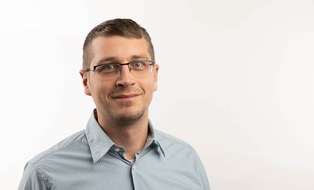
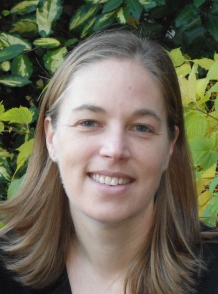
Ling Tao is a Researcher at the National Renewable Energy Laboratory (NREL) , focusing on Techno-economic Analysis , Process Integration , and Sustainable Aviation Fuels . Their work spans Bioenergy , Lignocellulosic Biomass , and Energy System Optimization . Education : Bachelor in Chemical Engineering (Tsinghua University), PhD in Chemical Engineering (University of Massachusetts Amherst) Research interests include Catalytic Processes , Life Cycle Assessment , and Supply Chain Simulation for biofuels. Recent publications emphasize Biomass-to-Aviation Fuels and Climate Change Impact on Renewable Energy . 2025 publications highlight Dynamic Process Computation for sustainable aviation fuels and Process Optimization for bioconversion systems. Collaborations involve experts in Catalysis and Green Energy . Awards : NREL Distinguished Member of Research Staff (2021)
Prof. Dr.-Ing. Daniela Thrän serves as Professor of Bioenergy Systems at the University of Leipzig's Faculty of Economics and Head of the Department of Bioenergy at the Helmholtz Centre for Environmental Research (UFZ), positions she has held since 2011. She concurrently leads Germany's delegation in IEA Bioenergy Task 44 on Flexible Bioenergy and System Integration and chairs the Social Sustainability Transformations group at UFZ, bridging academic research with national climate policy through roles in the Federal Bioeconomy Council (2012-2023) and Thuringia's Climate Advisory Board. Her academic background includes: Engineering studies in Technical Environmental Protection at Technical University of Berlin (1989-1995) Doctorate at Bauhaus University Weimar (1998-2001) on material flow management in rural regional development Thrän's research centers on bioenergy's role in climate neutrality, specializing in carbon dioxide removal (CDR) via bio-based methods including BECCS, life cycle sustainability assessment, and spatial modeling of renewable energy systems. She analyzes biomass resource potentials within circular bioeconomy frameworks and investigates socio-economic drivers of energy transitions, with recent work focusing on urban-rural biomass integration and flexible bioenergy services for grid stability. Her 2023-2025 publications reveal intensifying focus on bio-CDR implementation challenges and policy frameworks, alongside systematic assessments of biomass allocation in Germany's net-zero pathways. Key trends include AI-enhanced literature mapping for climate research, municipal-scale renewable integration dynamics, and cross-national comparisons (e.g., Germany/Canada biogas systems), with growing emphasis on socio-technical trade-offs in land use and stakeholder acceptance. No scientific awards, prizes, or fellowships were documented in the provided text. Thrän actively mentors doctoral candidates as DBFZ's representative for bioenergy colloquia and leads major initiatives: IEA Bioenergy Task 44: National Team Leader for Germany (2019-present) Helmholtz Climate Initiative (HI-CAM): Co-author of spatial energy transition reports Editor-in-Chief of Springer's "energy, sustainability and society" (2017-present) She directs UFZ's Department of Bioenergy (BEN) and Models team, developing spatially resolved energy system tools like BENOPTex. Her groups focus on techno-economic analysis of biogenic resources, smart bioenergy system services, and socio-ecological impacts of renewable energy expansion, with strong links to European standardization bodies (ISO/TC 238, CEN TC 335) and Germany's aviation biofuels advisory board (aireg).
Hanna Breunig is a Research Scientist at Lawrence Berkeley National Laboratory and Deputy of the Sustainable Energy & Environmental Systems Department. She holds a secondary appointment in the Earth Systems and Society Domain within the Climate and Ecosystem Science Division. Her work focuses on validating emerging energy technologies through process design, techno-economic modeling, and market analysis. Education: PhD in Civil and Environmental Engineering from UC Berkeley (2015), MSc (2011), and BSc from Cornell University (2010). Her research spans hydrogen storage , CO2 capture/utilization , brine management , and technoeconomic modeling for systems in data centers, hospitals, mines, aviation, and ports. She co-leads the DOE HyMARC consortium and the systems analysis team for the ARCHES California Hydrogen Hub. Recent publications highlight advancements in metal-organic frameworks (MOFs) for hydrogen storage, solar hydrogen production , and high-temperature thermal energy storage . She has received accolades like the 2023 Energy & Environmental Science Lectureship and 2014 Schmidt MacArthur Fellowship. Scientific Awards: 2023 Energy & Environmental Science Lectureship 2021 Early Scientific Career Award 2019 CEC Bioenergy Project Leadership 2017 LDRD Early Career Award 2014 Schmidt MacArthur Fellowship Hanna mentors graduate and undergraduate students and contributes to tools like the BioSiting v2 software for U.S. bioeconomy resource analysis.
Amanda Maycock is Professor in Climate Dynamics at the University of Leeds' School of Earth and Environment, where she directs the Institute for Climate and Atmospheric Science (ICAS). She holds an MPhys from Manchester (2006), MSc (2008) and PhD (2012) in Atmosphere, Oceans and Climate from Reading. Her research specializes in climate dynamics, atmospheric circulation, stratosphere-troposphere interactions, and radiative transfer, with ongoing projects including ExtAnt, TWISTA, and the Leverhulme Prize-funded climate dynamics initiative. Research interests span: Climate variability and change mechanisms Atmospheric teleconnections and jet stream dynamics Stratospheric impacts on surface climate Chemistry-climate feedbacks including ozone layer interactions Radiative transfer modelling and climate projections Her recent publications (2020-2025) demonstrate strong focus on: Arctic-midlatitude climate linkages and jet stream behavior ENSO teleconnections and hydrological extremes Polar vortex influences on European storminess Climate mitigation impacts on stratospheric temperature Renewable energy-climate interactions Scientific honors include: Philip Leverhulme Prize (2018) Arne Richter Award for Early Career Researchers (2019) STAC Outstanding Early Career Award (2022) water@leeds Water Woman Award (2023) NERC Independent Research Fellowship (2015-2020) She leads 12 PhD students including projects on atmospheric rivers, ENSO dynamics, and jet stream extremes, supported by NERC, EPSRC, and Met Office collaborations. Current grants include £5M+ from Horizon Europe, Wellcome Trust, and UKRI for projects examining Antarctic extremes (ExtAnt), stratospheric aerosols (TWISTA), and sustainable aviation (JetZero). Directs ICAS research group with 4 postdoctoral researchers and coordinates the NERC PANORAMA DTP Atmosphere Theme. Contributes to IPCC assessments and co-chairs WCRP/SPARC initiatives on atmospheric temperature changes.
Abolfazl Simorgh is a researcher at Charles III University of Madrid's Department of Aerospace Engineering, specializing in climate-optimized aviation systems. His work bridges mathematical control theory with practical climate impact mitigation, focusing on robust trajectory optimization under environmental and operational uncertainties. He leads development of open-source tools for sustainable flight planning while contributing to major European aviation initiatives. Education: B.Sc. in Control Engineering (2017) M.Sc. in Control Engineering (2020) Ph.D. in Aerospace Engineering from Charles III University of Madrid Dr. Simorgh's research centers on developing mathematical frameworks that reconcile aircraft trajectory optimization with climate impact reduction. His expertise spans robust control systems, optimization under uncertainty, and climate modeling integration, with particular emphasis on non-CO₂ emissions. His methodology addresses both CO₂ and non-CO₂ climate forcing mechanisms through computationally efficient algorithms that account for weather variability and climate metric uncertainties. This work directly supports aviation's decarbonization by providing operational strategies that reduce environmental footprint without prohibitive cost increases. Analysis of his 15 most recent publications reveals a cohesive research trajectory focused on operationalizing climate-optimal flight planning. His work consistently integrates climate science with aerospace engineering through robust optimization frameworks, demonstrating particular innovation in handling multiple uncertainty sources (weather, climate models, emissions). The publications cluster around three interconnected themes: 1) Development of open-source computational tools (ROOST, CLIMaCCF), 2) Network-scale implementation of climate-aware air traffic management, and 3) Risk analysis of climate mitigation strategies. This body of work establishes new methodological standards for quantifying and minimizing aviation's total climate impact. Scientific Awards: Luis Azcárraga Aeronautical Innovation Award for collaborative research impact Best Paper Award (2022) from a high-impact aerospace journal Dr. Simorgh secures significant research funding through European Commission projects including FlyATM4E (climate-optimized flight planning), ALARM (aviation emissions reduction), and RefMAP (sustainable aviation pathways). His grant portfolio emphasizes practical implementation of climate mitigation strategies, with strong industry-academia collaboration. He mentors junior researchers through project teams and has developed three major open-source Python libraries (CLIMaCCF, ROOST, ROC) that have become community standards for climate impact assessment in aviation research. His current work focuses on scaling climate-optimized trajectories to continental airspace while addressing operational constraints and economic viability. He leads a research group focused on climate-aware air traffic management, developing the ROOST simulation framework for GPU-accelerated trajectory optimization and the CLIMaCCF library for standardized climate metric calculations. His team collaborates with European air navigation service providers and aircraft manufacturers to transition research into operational practice, with current projects emphasizing real-time implementation and regulatory compliance frameworks.
Dr. Kevin A. Adkins is a Professor in the College of Aviation at Embry-Riddle Aeronautical University , where he teaches aerodynamics, aircraft performance, and uncrewed aircraft systems (UAS) courses. He pioneered the first collegiate Advanced Air Mobility (AAM) course in the U.S. in 2023 and directs two labs: the Advanced Air Mobility Research and Innovation Lab (AAMRIL) and the Uncrewed Vehicle and Atmospheric Investigation Lab (UNVAIL) . Education : Ph.D. in Aerospace Engineering (Mississippi State University), M.Eng. and B.S. in Aerospace Engineering (University of Michigan-Ann Arbor) His research focuses on atmospheric boundary layer meteorology using UAS, AAM concepts of operation (ConOps), and flight test engineering. He collaborates extensively on sensor development for environmental monitoring, including low-cost particulate matter sensors and bioaerosol sampling mechanisms. Recent publications emphasize UAS applications in wildfire detection, urban microclimate analysis, and wind farm humidity studies. Dr. Adkins serves on advisory committees for the Florida Department of Transportation's AAM initiative and ASTM International's UAS standards. Awards : Fellow of the Royal Aeronautical Society, ERAU Researcher of the Year (2020), PIEoneer Real Life Learning Award (2019), AUVSI Best Paper Award (2019) He mentors numerous student projects on UAS sensor development and atmospheric research, with teams winning symposium awards. His labs integrate experiential learning with international fieldwork in Puerto Rico, Norway, and Lithuania.
Sancho Salcedo Sanz is a Full Professor at the Universidad de Alcalá, affiliated with the Signal Theory and Communications Department and the GHEODE Research Group. His work focuses on applying machine learning and optimization techniques to energy systems, climate science, and environmental modeling. He holds PhDs from Universidad Complutense de Madrid (2019) and Universidad Carlos III de Madrid (2002). Key research interests include deep learning for energy price prediction, spatio-temporal climate analysis, and hybrid models for renewable energy forecasting. His GHEODE group develops optimization algorithms for network design and distributed systems. Recent publications highlight advancements in extreme weather prediction, smart grid optimization, and explainable AI for environmental monitoring. He has pioneered methodologies like Autoencoder-based flow analogues for heatwave reconstruction and multi-method ensembles for energy demand modeling. Labs/Teams: Leader of the GHEODE Group, specializing in modern heuristics and network design. Collaborates extensively on interdisciplinary projects combining AI with environmental and engineering applications.
Dr. Mark Yeary is a Presidential Professor at the University of Oklahoma's Gallogly College of Engineering, holding the Hudson-Torchmark Presidential Professorship and the Gallogly Chair. He leads OU's Defense, Security, & Intelligence program and serves as CTO of the Oklahoma Aerospace & Defense Innovation Institute (OADII). With a Ph.D. from Texas A&M University (1999), his research focuses on digital signal processing, radar systems, and hardware prototyping for weather and defense applications. He pioneered the Horus all-digital radar and contributed to the National Weather Radar Testbed. Research highlights include the Atmospheric Imaging Radar program, the Horus radar's role in tornado detection, and collaborations with NASA, NSF, and DARPA. Awards include IEEE Fellow and Fellow of CIWRO. He advises OU's AISES chapter and chairs radar sessions at AMS Annual Meetings. Current projects involve multi-beam weather surveillance and phased array advancements. Education: Ph.D., Electrical Engineering, Texas A&M University (1999) Affiliations: Advanced Radar Research Center (ARRC), MIT Lincoln Laboratory (sabbatical 2012-2013), Raytheon Research Interests: Phased array radar design, meteorological data analysis, radar hardware prototyping, and disaster detection systems. His work bridges academic innovation with operational weather radar improvements. Awards: George Lynn Cross Research Professorship (2022), Hudson-Torchment Presidential Professor (2011) Grants: ONR, NASA, NSF, NOAA, DARPA Lab/Teams: ARRC (largest university-based radar center), OADII, and the Mobile C-band Polarimetric Atmospheric Imaging Radar (PAIR) initiative.
Dr. Natalie Harvey is a Senior Research Scientist at the Department of Meteorology, University of Reading. She specializes in atmospheric transport processes, volcanic ash dispersion modeling, and uncertainty quantification in natural hazard forecasts. Her work focuses on improving volcanic ash forecasting through advanced model techniques and satellite data integration. She is affiliated with projects like R4Ash, IMPALA, and RACER, addressing volcanic hazards and climate-related risks. Her research interests include boundary layer dynamics, remote sensing applications, and decision-making under uncertainty. She has contributed to over 30 peer-reviewed articles, analyzing volcanic eruptions such as Raikoke 2019 and Grímsvötn 2011. Her methods enhance forecast accuracy by integrating ensemble meteorology and source inversion techniques. Notably, she explores how AI models compare to traditional physics-based approaches in weather prediction, highlighted in a 2024 study on Storm Ciarán. Dr. Harvey holds a PhD from the University of Reading (Boundary-layer type classification and pollutant mixing) and has developed classification algorithms for atmospheric layers using Doppler lidar. She collaborates with institutions like the Met Office and has received international recognition for her work in volcanic ash transport and dispersion modeling.
Chaehyeon Chelsea Nam is an Assistant Professor at the Department of Earth, Ocean, and Atmospheric Science (EOAS) at Florida State University, leading the Tropical Cyclone & Radar Research Lab. Her research focuses on understanding tropical cyclone dynamics, including genesis, intensification, and microphysical processes, through radar data analysis and high-resolution mesoscale modeling (WRF, CM1). Joined FSU in Spring 2024 Principal Investigator of her research group Active in field campaigns (ORCESTRA/PICCOLO, PRECIP 2022) Research Interests span multi-scale interactions in tropical cyclones, compound hazards, and climate change impacts. She emphasizes radar-based observations (airborne, shipborne, land-based) and parametric rainfall modeling for future projections. Recent Publications highlight sea spray effects on intensification, rainband climatology in monsoon regions, and parametric rainfall models. Her work integrates field observations with numerical simulations to study shear/dry environment impacts on genesis. Scientific Awards Best Student Oral Presentation, 14th International Conference on Mesoscale Convective Systems (ICMCS-XIV), 2021 Students include Master's candidates Connor Stoll and Abraham Tekoe, plus honor's thesis students Anna Walker and Kristen Cooper. Her lab collaborates with institutions in South Korea and the U.S., contributing to regional cyclone risk assessments.
Stanley Benjamin serves as a Senior Research Scientist at the Cooperative Institute for Research in Environmental Sciences (CIRES) at the University of Colorado Boulder, where he works as a senior scientist advisor for advanced modeling systems. His research is closely affiliated with NOAA's Earth System Research Laboratories, particularly within the Global Systems Laboratory. Benjamin earned his Ph.D. from Pennsylvania State University in 1983 and has established himself as a leading expert in weather prediction modeling. Ph.D., Pennsylvania State University, 1983 Benjamin's primary research focuses on developing next-generation weather and earth-system models, with particular emphasis on data assimilation techniques and improving seamless prediction of extreme weather from short-range to seasonal time scales. His work centers on the development and implementation of the Rapid Refresh (RAP) and High-Resolution Rapid Refresh (HRRR) models, which are now operational systems used by weather forecasters nationwide to predict rapidly changing conditions including tornadoes, flash flooding, and severe snowstorms. His research spans atmospheric science, climate prediction, energy applications, and water resources, with significant contributions to coupled atmospheric-ocean modeling, storm-scale ensemble data assimilation, and improved representation of clouds and boundary layer processes. Analysis of Benjamin's publication record reveals a consistent focus on advancing numerical weather prediction systems, with particular emphasis on improving model initialization techniques, data assimilation methods, and representation of physical processes. His recent work shows increasing attention to coupled modeling systems, particularly for lake-atmosphere interactions and renewable energy applications. The publications demonstrate a strong interdisciplinary approach, bridging meteorology, hydrology, and climate science to address practical forecasting challenges. Scientific Recognition U.S. Department of Commerce Bronze Medal (1998) American Meteorological Society Fellow (2004) Multiple NOAA Office of Atmospheric Research Outstanding Paper awards (2006, 2008, 2010) NOAA Research Employee of the Year (2013) Colorado Governor's Award for High-Impact Research (2015) NOAA Technology Transfer Award (2017) Gold Medal for revolutionary thunderstorm prediction tool Benjamin has been instrumental in translating research into operational forecasting systems, particularly through his leadership in developing the RAP and HRRR models. His work has significantly impacted severe weather prediction, aviation forecasting, and renewable energy management. He has collaborated extensively with government agencies including NOAA, DOE, and the National Weather Service, securing research funding for projects focused on improving weather prediction capabilities for practical applications. Benjamin maintains active involvement in the Global Systems Laboratory where his team applies advanced physical parameterizations for global models within the NOAA Unified Forecast System. His laboratory work centers on the Global Systems Laboratory at NOAA, where his research group develops and implements next-generation weather prediction models. Current projects include advancing the NOAA Unified Forecast System, improving coupled atmospheric-ocean modeling, and developing enhanced representations of clouds and boundary layer processes for severe weather prediction. The team's work has direct applications for the aviation/transportation community and renewable energy management, particularly for wind and solar energy projects conducted in collaboration with the Department of Energy.
Hannes Keernik is an Associate Professor in Climate Physics at the University of Tartu's Faculty of Science and Technology, Institute of Physics, starting from September 2025. He also serves as an Analyst at Tallinn University of Technology's School of Information Technologies, Department of Software Science since November 2024, and previously worked as a Research Fellow in Climate Physics at the University of Tartu. Education: PhD in Environmental Physics, University of Tartu (2011-2015) MSc in Environmental Technology, University of Tartu (2008-2011) BSc in Environmental Technology, University of Tartu (2005-2008) Keernik's research focuses on climate physics and atmospheric science , with particular expertise in aerosol-cloud interactions, industrial pollution effects on weather systems, and climate change impacts in the Baltic region. His work combines field measurements, remote sensing data analysis, and climate modeling to investigate how anthropogenic aerosols influence cloud formation, precipitation patterns, and regional climate. He has made significant contributions to understanding how industrial emissions can trigger snowfall and alter cloud properties through complex microphysical processes. His publication record shows a strong focus on aerosol physics and climate monitoring, with recent work analyzing how anthropogenic aerosols from industrial sources glaciate liquid-water clouds, produce snow, and reduce cloud cover. He has contributed to major European collaborative projects on aerosol phenomenology and developed novel methodologies for atmospheric water vapor measurement using GNSS data. His research bridges atmospheric physics, environmental monitoring, and climate change science with practical applications for environmental policy. Professional Affiliations: Member of the International Association of Geodesy Inter-Commission Committee on 'Geodesy for Climate Research' (2024-present) Member of the GCOS Reference Upper-Air Network (GRUAN) task team on GNSS Precipitable Water (2024-present) Member of the European Geosciences Union (2013-present) Keernik actively contributes to teaching at the University of Tartu, offering courses in Environmental Physics and Advanced Atmospheric Sciences. His research has been supported by multiple European and Estonian grants, including projects with the European Commission, Estonian Research Council, and European Centre for Medium-Range Weather Forecasts. As Principal Investigator for 'Increasing the Awareness and Uptake of CAMS Products in Estonia,' he leads efforts to integrate advanced atmospheric data into Estonian environmental monitoring systems.
Dr. Martin Lindner is a Researcher at TU Dresden’s Chair of Air Transport Technology and Logistics, specializing in aircraft performance and trajectory optimization for sustainable aviation since 2015. He leads interdisciplinary collaborations within the RTG AirMetro program and heads the Skylab, focusing on drone/VTOL aircraft technology, logistics, and sensor systems. Research Interests: Aircraft performance modeling, trajectory optimization, sustainable aviation, urban air mobility, and air traffic planning. Projects: RTG AirMetro (AAM), Air-Take-Off (drone-manned collision avoidance), SmartFly (sustainable transport), RescueFLY (water rescue drones), ReMAP (conflict resolution), ProfiFuel (fuel-efficient trajectories), MEFUL (emission reduction). Publication Trends: His work emphasizes multi-criteria trajectory optimization, integrating environmental efficiency, noise reduction, and operational safety. Recent articles address urban air mobility infrastructure, fleet optimization, and AI-driven air traffic simulations. Teaching: Co-teaches Air Transport Systems and leads Airline Management , blending technical innovation with strategic thinking. Labs: Heads Skylab, a hub for experimental research in drone logistics, sensor systems, and advanced flight planning tools.
Helen Dacre is a Professor in the Department of Meteorology at the University of Reading . She specializes in extratropical cyclones, pollution transport, boundary layer turbulence, and volcanic ash dispersion. Her work has been instrumental in improving volcanic ash forecasting for aviation safety, collaborating with organizations like the Met Office, London Volcanic Ash Advisory Centre, and Rolls Royce. Research Interests : Extratropical cyclone dynamics, volcanic ash modeling, turbulence in complex terrain, dust transport, climate change impacts. Projects : TECTTO (turbulence in mountainous regions), CLIM-CITI (cyclone intensity in climate change), UMBRELLA (boundary layer representation), Dust-DN (mineral dust impacts). Collaborations : Met Office, Civil Aviation Authority, Rolls Royce, British Airways, European researchers in volcanology and engineering. Her recent publications focus on volcanic ash source term estimation, AI-driven weather forecasts, and cyclone-climate interactions. She supervises PhD students including Vibha Mamtora, Danqing Luo, Alex Gao, and Sai Amrithak.
Kristin Van Abel is a Senior Technical Analyst at RAND and a Professor of Policy Analysis at the RAND School of Public Policy. Her work bridges academic research and applied policy analysis, with a focus on energy, climate, infrastructure, and national security. She is affiliated with RAND, a prominent research organization that also operates a public policy school. Master of Environmental Science and Management, Bren School, University of California, Santa Barbara (UCSB) B.S. in Biological Sciences, University of California, Santa Barbara (UCSB) Her research interests span energy and environmental policy , Arctic policy , critical infrastructure protection , and strategic planning under uncertainty . She applies multidisciplinary methods to assess climate risks, enhance military resilience, and support sustainable development. Her work often involves collaboration with federal agencies such as the U.S. Air Force, Department of Homeland Security, and U.S. Coast Guard. The 15 most recent publications reflect a strong focus on climate change impacts , military infrastructure resilience , Arctic security , and energy transition . These works employ both qualitative and quantitative methods, often developing decision-support tools for policymakers. Key themes include cascading hazards, capability gaps, and long-term strategic foresight in defense and environmental contexts. Her scientific contributions have not been accompanied by any publicly listed awards or honors in the provided text. Kristin Van Abel leads high-impact research projects and engages with senior decisionmakers across government. While no specific grants are detailed, her extensive publication record suggests sustained funding for research in climate resilience, defense planning, and energy policy. She does not appear to have formal advisees listed, but her role as a professor implies involvement in training and mentoring within the RAND School of Public Policy. She contributes to strategic analysis through workshops, interviews, and facilitation, supporting organizational planning in complex domains. Her work often involves developing analytic frameworks for long-term challenges such as Arctic change and climate adaptation.