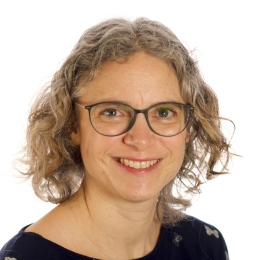
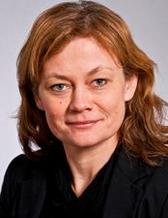
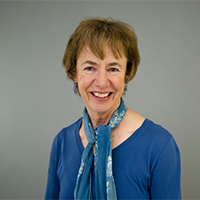
Isabel Maria Morales Gil is a University Professor in the Nursing Department at the University of Malaga . She teaches subjects such as Childhood and Adolescent Nursing and Final Degree Project within the Nursing Graduate program (2009 Plan). Her research focuses on pediatric nursing, adolescent psychosocial factors, eating disorders, midwifery, case management, and chronic patient care. Email: im_morales@uma.es Phone: 951952838 Her recent publications address challenges in pediatric nursing, psychosocial risks for eating disorders, midwife-led labor assessment, and socioeconomic disparities in nurse-led chronic care. She has also contributed to studies on post-traumatic stress after gestational loss and ethical end-of-life decision-making.
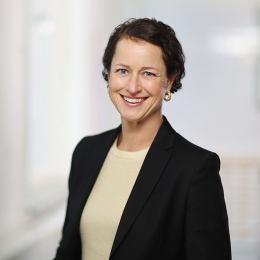
Constanze Leineweber is a Professor at the Department of Psychology, Stockholm University, and an active researcher in occupational health psychology. She leads the Swedish Longitudinal Occupational Survey of Health (SLOSH) and investigates work-life balance, organizational justice, and health outcomes in diverse employment contexts. Department of Psychology, Division for Epidemiology Focus on workplace stress, disability pensions, and precarious employment Teaches work and organizational psychology at undergraduate and graduate levels Her research spans longitudinal analyses of work environment impacts on mental health, retirement timing, and self-employment dynamics. Recent projects examine pandemic-era work transitions, telework consequences, and gender disparities in workplace decision-making. Current work explores intersections between flexible working hours, organizational fairness, and health preservation across career stages. She contributes to understanding how psychosocial resources mitigate physical work demands for older employees. Supervision includes PhD candidates Sophie Albrecht, Louise Bergman, and Andreas Sarling. Publications emphasize policy implications for sustainable working life and workplace health interventions.
Eva Insulander is a Senior Lecturer at the Department of Education, Stockholm University, specializing in designs for learning through social semiotics and multimodal analysis of educational communication, particularly in museum and history education contexts. She leads two major research projects: one funded by the Swedish Research Council (2022-2025) examining historical school-museum relationships (1880-1980) with David Thorsén, and another funded by the Swedish National Heritage Board (2023-2025) investigating digitization's impact on exhibition meaning-making with Fredrik Lindstrand. Her work bridges educational theory and museum studies through collaborative projects with institutions like Gothenburg Museums and Konstfack University of Arts. Department of Education, Stockholm University Senior Lecturer (Akademiens titel är "Senior Lecturer") Her research explores: Designs for Learning Social Semiotics in Educational Contexts Multimodal Analysis of Museum Communication Historical Evolution of School-Museum Relationships Digitalization's Impact on Exhibition Pedagogy Publications and projects demonstrate expertise in: Museum as Educational Arenas ( Designs for Research, Teaching and Learning ) Object-Based Pedagogy in Historical Contexts Cross-Institutional Collaborative Design Assessment of Multimodal Student Work Educational Representation of Medieval Themes She serves as associate editor for the peer-reviewed journal Designs for Learning and contributes to national teacher training literature through co-edited works like Att bli lärare .
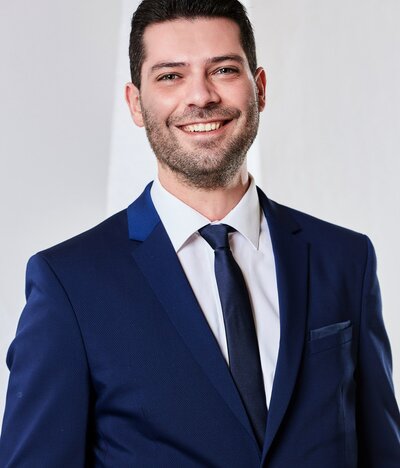
Konstantinos Tsilionis is an Assistant Professor in the Department of Industrial Engineering & Innovation Sciences at Eindhoven University of Technology (TU/e), where he conducts research at the intersection of agile software development, business-IT alignment, and enterprise architecture. His work focuses on reconciling agile software development practices at the operational level with strategic organizational intents, with applications particularly in healthcare and telecommunications sectors. His academic background includes: Bachelor's degree in Physics from Aristotle University of Thessaloniki, Greece Master's degree in Business Economics from KU Leuven, Belgium Master's degree in Business Administration (MBA) with specialization in Business Information Management from KU Leuven, Belgium Ph.D. from the Research Center for Information Systems Engineering at KU Leuven, Belgium Tsilionis' research interests span multiple interconnected domains in software engineering and business-IT alignment. He investigates modeling-oriented approaches to drive feature-oriented development processes that deliver value to both end-users and strategic organizational layers. His work explores how agile methodologies can be scaled effectively in large software development projects while maintaining business-IT alignment. He has made significant contributions to understanding the complementarity between different modeling techniques like CMMN and iStar for complex domain problems. Additionally, his research examines diversity-driven power dynamics in software engineering environments, particularly focusing on gender and racial diversity impacts on workplace behaviors. His recent publications demonstrate a strong focus on the intersection of agile software development, enterprise architecture, and business-IT alignment. The research shows a progression from tactical agile implementation concerns toward strategic alignment considerations. Key themes include capability-based management, digital transformation in specific industries, scaling agility in large organizations, and the integration of different modeling approaches to address complex organizational challenges. Tsilionis actively contributes to the academic community through service activities: Program committee member for the International Conference on Business Informatics and ACM Symposium on Applied Computing Reviewer for high-impact journals including Information and Software Technology, IEEE Transactions on Services Computing, and IT Professional He teaches courses on Digitalization and Enterprise Systems and the Design of Business Information Systems at TU/e, connecting theoretical frameworks with practical applications for students. His educational background in both physics and business economics informs his interdisciplinary approach to software engineering research.
Ilmi Willbergh is Professor of Education at the University of Agder, Norway, serving within the Faculty of Humanities and Education, Department of Education. Since 2008 she has been leading the research group General Didactics and Educational Policy and is Editor-in-Chief of the Nordic Journal of Pedagogy and Critique . Education: PhD in Education, Norwegian University of Science and Technology (NTNU), 2008 – thesis: Mimesis, Didaktikk og digitale læremidler Master’s Degree in Media Science, University of Oslo Research interests revolve around general didactics / Allgemeine Didaktik and encompass empirical classroom research, curriculum theory, assessment and accountability, digital media in teaching, aesthetic education, and post-colonial perspectives on diverse classrooms. A unifying theme is the concept of Bildung as both aim and framework for teaching and teacher education. Across her recent publications (2022-2024) she investigates how cultural references in teaching can empower minority students, explores the aesthetic dimensions of teacher education, and examines the significance of teaching content from a Bildung-centered viewpoint. Her work is characterized by rigorous empirical studies, philosophical depth, and a commitment to democratic education. Scientific output & leadership Head of the research group General Didactics and Educational Policy Chief Editor, Nordic Journal of Pedagogy and Critique Study programme director for the PhD specialisation in pedagogy Principal investigator on national projects such as KLARAS (classroom communication) and InCom (cultural references) She supervises PhD students and teaches in the Bachelor’s, Master’s and PhD programmes, integrating theory and practice through aesthetic and digital approaches. Her leadership roles and editorial work further disseminate didactic research across the Nordic region.
Sabine Metzing is a Professor in Nursing Science with a focus on Children and Adolescents at the University of Witten/Herdecke's Faculty of Health. She leads the doctoral program in Nursing Science and the M.Sc. program in Nursing Science. Her research aligns with the faculty's IPGV focus, emphasizing integrative and person-centered healthcare for children and families. Research Interests : Children and adolescents in healthcare, family caregiving, chronic illness, home ventilation, migration and health. Teaching : Qualitative research methods (grounded theory), nursing theories for chronic illness, supervision of research colloquiums and doctoral theses. Leadership Roles : Head of the Nursing Science Doctoral Program, Chair of the Ph.D. Nursing Science Doctoral Committee. Committees : Member of Department Council, Faculty Council, Research Commission, and Ethics Committee at the University of Witten/Herdecke; German Society for Nursing Science; Editorial Board of QuPuG journal. Publications examine caregiving dynamics, mechanical ventilation, chronic disease management, and family-centered interventions. Her work often employs grounded theory and qualitative methods.
Anne Ingeborg Berg is an Associate Professor and Vice-Prefect in the Department of Psychology at the University of Gothenburg. She has been actively contributing to the field of gerontological psychology since earning her doctoral degree in 2008 with the thesis "Life satisfaction in late life." Currently, she serves as a Lecturer in the Section for Neuro, Cognitive and Developmental Psychology. Dr. Berg earned her license as a psychologist in 2002, completed her Phil. Lic. degree in 2006, and achieved Associate Professor status in Psychology in 2016. Her educational background has provided a strong foundation for her research and teaching career focused on aging populations. Her primary research interests center on psychological development during aging, with specific emphasis on well-being, depression, and suicidality in older adults. She investigates these issues through both population-based and clinical studies. Her teaching focuses on developmental psychology, life course theory, middle age and aging, clinical perspectives on aging, and mental health and ill health. Analysis of her recent publications reveals a consistent focus on retirement transitions, personality changes in aging, suicide prevention for older adults, and mental health assessment tools. Her work often employs longitudinal methodologies to track changes over time, with particular attention to gender differences and the role of individual resources in adaptation to aging-related life changes. Much of her research involves the Gothenburg H70 study cohort and other Swedish population-based studies. As Vice-Prefect, Dr. Berg holds an administrative leadership role within the department while maintaining an active research program and teaching responsibilities. Her collaborative work spans multiple institutions and involves interdisciplinary teams focused on gerontological research.
Céline Darnon is a Professor of Social Psychology at Université Clermont Auvergne (UCA) in France, where she has been a faculty member since 2006. She is a senior member of the prestigious Institut Universitaire de France and co-leads research team 2 of LAPSCO (Laboratoire de Psychologie Sociale et Cognitive, UMR6024), focusing on 'Comportements Sociaux et Dynamiques Collectives' (Social Behaviors and Collective Dynamics). Her research program centers on educational inequalities, meritocracy beliefs, and the psychological mechanisms that perpetuate or reduce achievement gaps. Professor Darnon examines how beliefs in school meritocracy influence students' motivation, performance, and psychological well-being, particularly among students from disadvantaged backgrounds. She has demonstrated that while belief in meritocracy can be motivating, it also tends to legitimize educational inequalities and may lead students to take full responsibility for their failures even when structural factors are at play. Professor Darnon's work has significant implications for educational policy, highlighting the need for structural changes alongside individual interventions to effectively address educational disparities. Her recent publications (2023-2025) focus on the psychological impacts of economic inequality in educational contexts, the role of teaching practices in reducing achievement gaps, and early mathematical interventions for kindergarten children. She is particularly interested in how beliefs about meritocracy affect support for educational reforms aimed at reducing inequalities. Senior Member, Institut Universitaire de France Co-leader, Research Team 2, LAPSCO Active contributor to public discourse through articles in The Conversation International collaborations with researchers from NYU, University of Sussex, and other institutions Her research methodology combines experimental approaches with large-scale surveys and field studies in educational settings. Professor Darnon is frequently consulted by educational policymakers in France and regularly translates her research for broader audiences through media contributions.
Kimberly Kaphingst is a Professor in the Department of Communication at the University of Utah, where she has been employed since 2014. She serves as Associate Chair in her department, Co-Leader for the Cancer Control and Population Sciences Program, Research Director of the Genetic Counseling Shared Resource, and Director of Cancer Communication Research at the Huntsman Cancer Institute. ScD in Health Communication (Harvard School of Public Health) ScM in Public Health (Harvard School of Public Health) Her research spans health communication , digital health , genetic literacy , and informed consent . She investigates patient responses to cancer genetic information, develops chatbots for genomic services, and implements consent strategies for clinical trials. Recent work examines social vulnerability in genetic testing, neighborhood health literacy impacts, and medication shortage disparities. Key article trends show expertise in digital health interventions for genetic services, cancer risk communication , health disparities , and AI-powered clinical tools . Her 2025 studies focus on chatbot efficacy for at-home COVID-19 testing and improving genetic service access through EHR integration. She teaches Health Communication courses and secures significant NIH funding for population-scale genetic screening and cancer prevention projects. Her work bridges communication theory , clinical implementation , and public health policy to address structural barriers in genomic medicine.
Patricia Boling is a Professor in the Department of Political Science at Purdue University's College of Liberal Arts. Her academic career spans several decades with significant contributions to political science, particularly in the areas of gender studies, family policy, and comparative politics. Dr. Boling earned her bachelor's degree in politics from the University of California, Santa Cruz, followed by her master's and Ph.D. in political science from the University of California, Berkeley. Her research trajectory has evolved from examining privacy rights in intimate life to comparative analysis of work-family policies across different national contexts. University of California, Santa Cruz - B.A. in Politics University of California, Berkeley - M.A. and Ph.D. in Political Science Professor Boling's research focuses on how issues rooted in private and intimate life become politicized. Her work bridges feminist theory, legal philosophy, and comparative policy analysis, with particular attention to Japan, France, Germany, and the United States. She has pioneered comparative approaches to food and agriculture policy, examining how personal dietary choices intersect with public policy concerns. Her scholarship consistently explores the tension between private autonomy and public responsibility, especially regarding gender, family, and reproductive matters. Analysis of her extensive publication record reveals a clear trajectory from theoretical work on privacy and intimate life toward increasingly comparative and policy-oriented research. Her scholarship demonstrates strong interdisciplinary connections between political theory, gender studies, and policy analysis, with growing emphasis on food systems and agricultural policy in recent years. Her comparative framework has expanded from primarily US-focused analysis to sophisticated cross-national studies of welfare states and family policies. Professor Boling has received significant recognition for her contributions to academia: College of Liberal Arts award for outstanding undergraduate teaching Induction into Purdue's Book of Great Teachers Her academic leadership extends beyond teaching excellence to substantial scholarly contributions that have shaped discourse in feminist political theory and comparative social policy. While specific grant information isn't detailed in the available materials, her extensive publication record spanning multiple countries and policy areas suggests successful research funding. Her work demonstrates sustained engagement with both theoretical questions in political science and practical policy implications across different national contexts. Though specific laboratory or research team information isn't provided in the available materials, Professor Boling's work shows evidence of collaborative research, particularly in her comparative international studies that would require cross-cultural research networks and partnerships.
Professor Michael Wenzel is a distinguished academic in the College of Education, Psychology and Social Work at Flinders University, where he has served as Professor of Psychology since 2005. He completed his PhD at the University of Münster, Germany in 1996, following earlier academic positions at the University of Jena (1997-99) and the Australian National University (2000-04). He co-directs the Psychology of Justice, Emotions and Motivations lab (PsychJEM) and is a Full Member of the Flinders University Institute for Mental Health and Wellbeing. Wenzel's research primarily focuses on social psychology, particularly justice and morality, with specific emphasis on moral repair and reconciliation following wrongdoing in interpersonal and intergroup contexts. His work addresses the implications of transgressions for victims and offenders, threats to social-moral needs and identities, and processes of repair, justice restoration, and reconciliation. He investigates forgiveness, self-forgiveness, restorative justice, and the role of social identity in collective action. Additionally, he explores prospection about the future, including utopian thinking, hope, and their motivational force for social change. His recent publications (2024-2025) demonstrate continued scholarly productivity across multiple journals, with particular focus on moral repair following transgressions, political psychology, climate action, and the psychological mechanisms underlying forgiveness and reconciliation. His work spans both theoretical contributions and applied research with implications for restorative justice practices and social policy. Fellow of the Society of Personality and Social Psychology (2018) Innovative Learning, Teaching, and Assessment Resource Prize of the Australian Learning and Teaching Council (2011) Heinz Heckhausen Award, German Psychological Society (1998) President of the International Society for Justice Research (2012-2014) Member of the Australian Research Council's College of Experts Wenzel has supervised numerous successful PhD students, many of whom have received prestigious awards including Vice-Chancellor's Awards for Doctoral Thesis Excellence. He has secured significant research funding through multiple ARC Discovery Projects investigating forgiveness, utopian thinking, and collective apologies. His laboratory, PsychJEM, serves as a hub for research on justice, emotions, and motivations in social contexts.
Eric Mosinger serves as an Assistant Professor in the Department of Political Science at Santa Clara University, where he teaches undergraduate and graduate courses in comparative politics and international relations. His office is located in Vari Hall, room 233, with contactable via university phone at 408-551-3411. The university context places him within a Jesuit research institution emphasizing social justice and global perspectives. His research program critically examines: Civil war dynamics and rebel fragmentation mechanisms Social movement strategies against authoritarian regimes Indigenous rights implementation in Central American statebuilding Historical framing in police violence and protest participation Authoritarian consolidation processes in Nicaragua Regional integration effects on democratic resilience Analysis of his publication trajectory (2012-2024) reveals sustained scholarly engagement with Latin American political conflicts, particularly Nicaragua's revolutionary legacy and Chile's protest movements. His work bridges theoretical frameworks in civil war studies with empirical investigations of historical framing, demonstrating methodological innovation through simulation-based pedagogy for complex conflict dynamics. The research consistently connects micro-level social movement actions with macro-level state formation processes. No scientific awards or major honors were documented in the provided source materials. Information regarding graduate student advising, external research grants, or laboratory affiliations was not available in the source documentation, though his simulation-based pedagogical work indicates active curriculum development within political science education.
Manuel Filipe Vieira Torres Santos is an Associate Professor with Habilitation at the School of Engineering of the University of Minho, Portugal. He serves as a Senior Researcher at Centro ALGORITMI (Associate Laboratory in Intelligent Systems) where he coordinates the Intelligent Data Systems research lab and the Information Systems and Technologies research group. His academic career combines teaching responsibilities with extensive research activities focused on data science applications in healthcare settings. Dr. Santos' research interests center on applying advanced computational techniques to healthcare challenges. His primary areas include Machine Learning, Knowledge Discovery from Databases, Data Mining, Agent-based Systems, and Intelligent Decision Support Systems. He has pioneered work in Pervasive and Adaptive Business Intelligence specifically tailored for healthcare environments. His research spans both theoretical advancements in data science methodologies and practical implementations in real-world medical settings, particularly in intensive care units, hospital management, and precision medicine applications. Analysis of his recent publications reveals a strong trend toward integrating emerging technologies like blockchain, Internet of Things, and openEHR standards into healthcare information systems. His work demonstrates a progression from foundational data mining techniques to increasingly sophisticated architectures that support real-time decision making, predictive analytics, and personalized patient care. The publications show particular emphasis on standardization efforts, interoperability challenges, and the development of maturity models for digital transformation in healthcare institutions. Coordinator of Intelligent Data Systems research lab Coordinator of Information Systems and Technologies research group Principal Investigator for multiple funded projects including: Intelligent hospitalization management (2021-present) Data Science applied to diabetes (2021-present) Intelligent Decision Support for response times optimization (2020-present) Intelligent Hospital Infection Control (2020-present) Dr. Santos has secured significant research funding for healthcare analytics projects, demonstrating the practical value of his work. His approach combines technical expertise in data science with deep understanding of healthcare workflows and challenges, resulting in solutions that address real clinical needs while advancing the state of the art in health informatics.
David Lynch is a Professor of Education at Southern Cross University's Faculty of Education, serving as Research Director for TeachLab on the Gold Coast Campus. With a $6M research portfolio, his work centers on Whole School Teaching Improvement , particularly in mathematics education and school leadership . A former primary teacher and school principal, he brings practical insights to academic roles including head of school and campus leadership. Specializes in teacher education , blended learning , and rural education Key publications: Creating the Outstanding School (2015) and Preparing Teachers in Times of Change (2012) Recipient of Southern Cross University's Inspiring Researcher Award (2022, 2024) His research explores teacher readiness , leadership decision-making , and mathematics identity , with recent works addressing online communities, adaptive solutions, and stakeholder perceptions in school-university partnerships. Awards include recognition for research excellence and leadership in educational innovation.
Hoi Vo serves as a Vice-Chancellor Senior Research Fellow within the Faculty of Education at Southern Cross University, Australia, where she contributes to the TeachLab research group. Holding a PhD from Queensland University of Technology and a Master's in TESOL from Victoria University of Wellington, her work bridges educational assessment, classroom innovation, and teacher development initiatives across Australasian and international contexts. Her educational background includes: Doctor of Philosophy (2017-2021) from Queensland University of Technology Master Degree in TESOL (2014-2015) from Victoria University of Wellington Vo's research specializes in quantitative analysis of student engagement dynamics, teacher professional learning models, and school improvement frameworks. She employs advanced methodologies including structural equation modelling, Rasch modelling, and multilevel analysis to examine longitudinal educational datasets, with particular focus on second language learning environments and technology-enhanced pedagogy. Her work consistently addresses practical classroom applications while maintaining rigorous psychometric standards. Recent publications (2022-2025) reveal concentrated exploration of engagement trajectories in digital and language learning contexts, with increasing emphasis on teacher resilience frameworks and whole-school improvement models. The corpus demonstrates methodological sophistication through multi-method designs and theoretical integration of expectancy-value models with classroom practice. Her scientific recognition includes: SAGE HDR Student Publication Award from Queensland University of Technology (2021) Hong Kong RGC Postdoctoral Award from Hong Kong Polytechnic University (2023) As an active academic referee for journals including Computers & Education and TESOL Quarterly , Vo contributes to scholarly discourse while advancing research through the TeachLab group's collaborative framework. The group focuses on evidence-based teaching innovations and large-scale educational improvement initiatives.