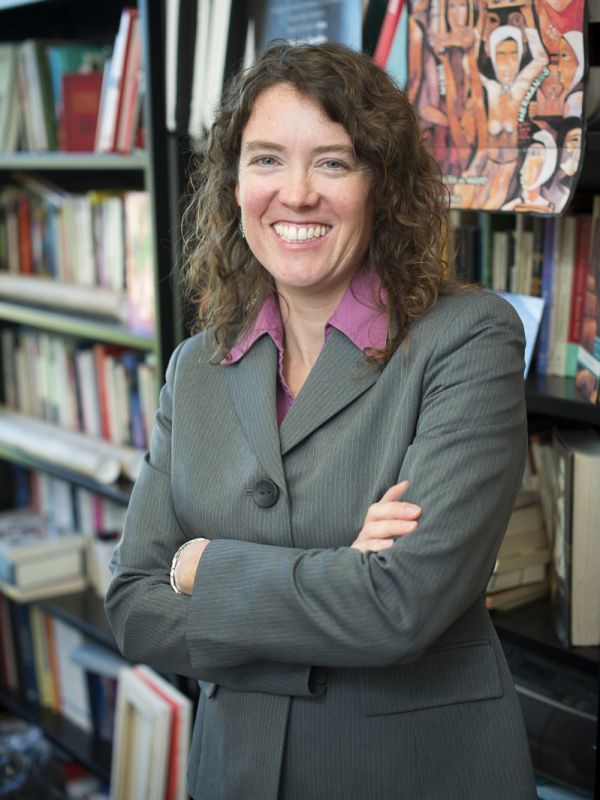
Traci Roberts-Camps serves as Professor at the University of the Pacific in Stockton, California, where she maintains an office in Room 248 of the Wendell Phillips Center Annex. Her academic profile reflects deep engagement with Spanish language pedagogy and Latin American cultural studies through both teaching and scholarly production. Her educational foundation includes a PhD and MA in Latin American Literature from the University of California, Riverside (awarded in 2004 and 2001 respectively), and a BA from Willamette University (1999). These credentials underpin her specialized focus on Ibero-American cultural production. Professor Roberts-Camps' research explores Latin American Women Filmmakers , Latin American Cinema , and Contemporary Mexican Novel through frameworks of intersectionality and cultural representation . Her work consistently examines how gender, indigenous identity, and social class converge in cinematic narratives, with particular attention to Ecuadorian and Argentine women directors. She approaches literature and film as vital sites for understanding marginalized voices and political resistance. Analysis of her recent publications reveals sustained scholarly engagement with representations of youth, indigenous communities, and bodily politics across Latin American cinema. Her work demonstrates methodological diversity—from affect theory to feminist criticism—while maintaining focus on filmmakers like Viviana Cordero and Tania Hermida. The 2025 publication Contemporary Trends in Latin American Cinema synthesizes key developments in the field, indicating her role as a synthesizer of emerging cinematic movements. No scientific awards were documented in the available materials. While specific grant details remain unreported, her extensive publication record suggests active research funding support. Her teaching philosophy emphasizes student-centered learning where Spanish language classrooms become spaces for personal expression and cultural exploration, with individualized author recommendations in literature courses fostering student autonomy. Current research trajectories indicate continued exploration of transnational filmmaking practices and evolving representations of social identity, though no formal lab structures or team-based research initiatives were specified in the source materials.