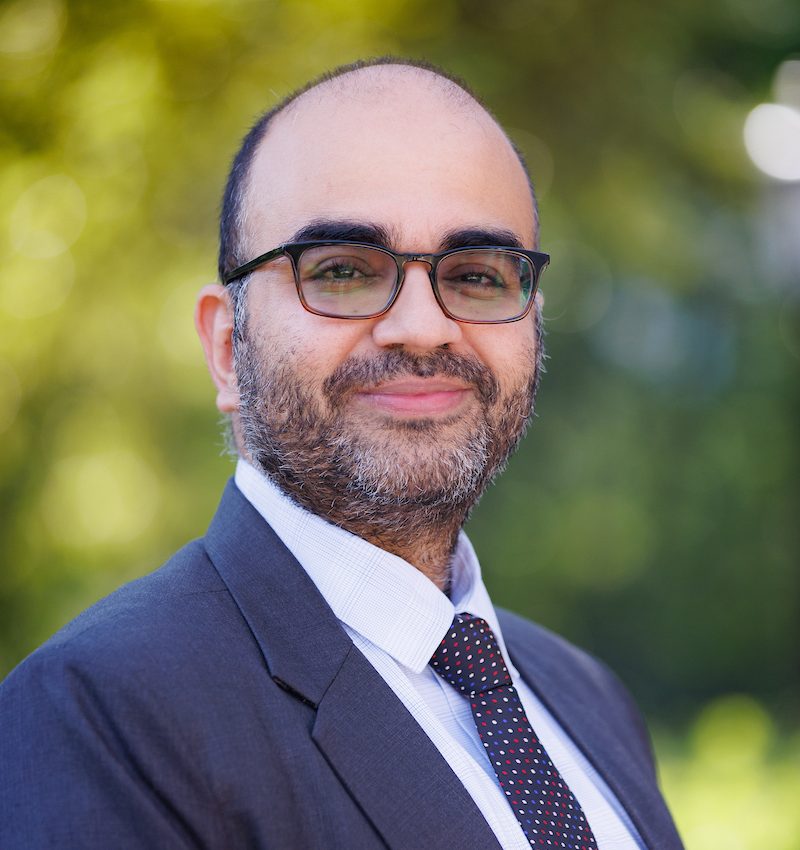
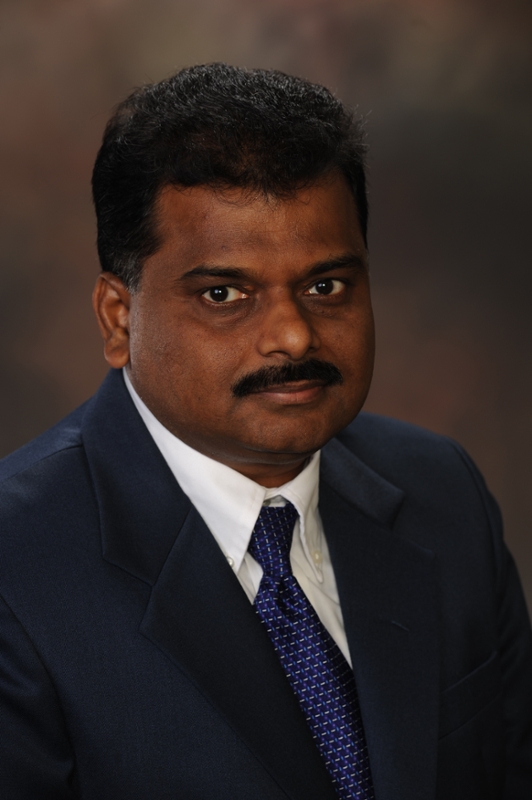
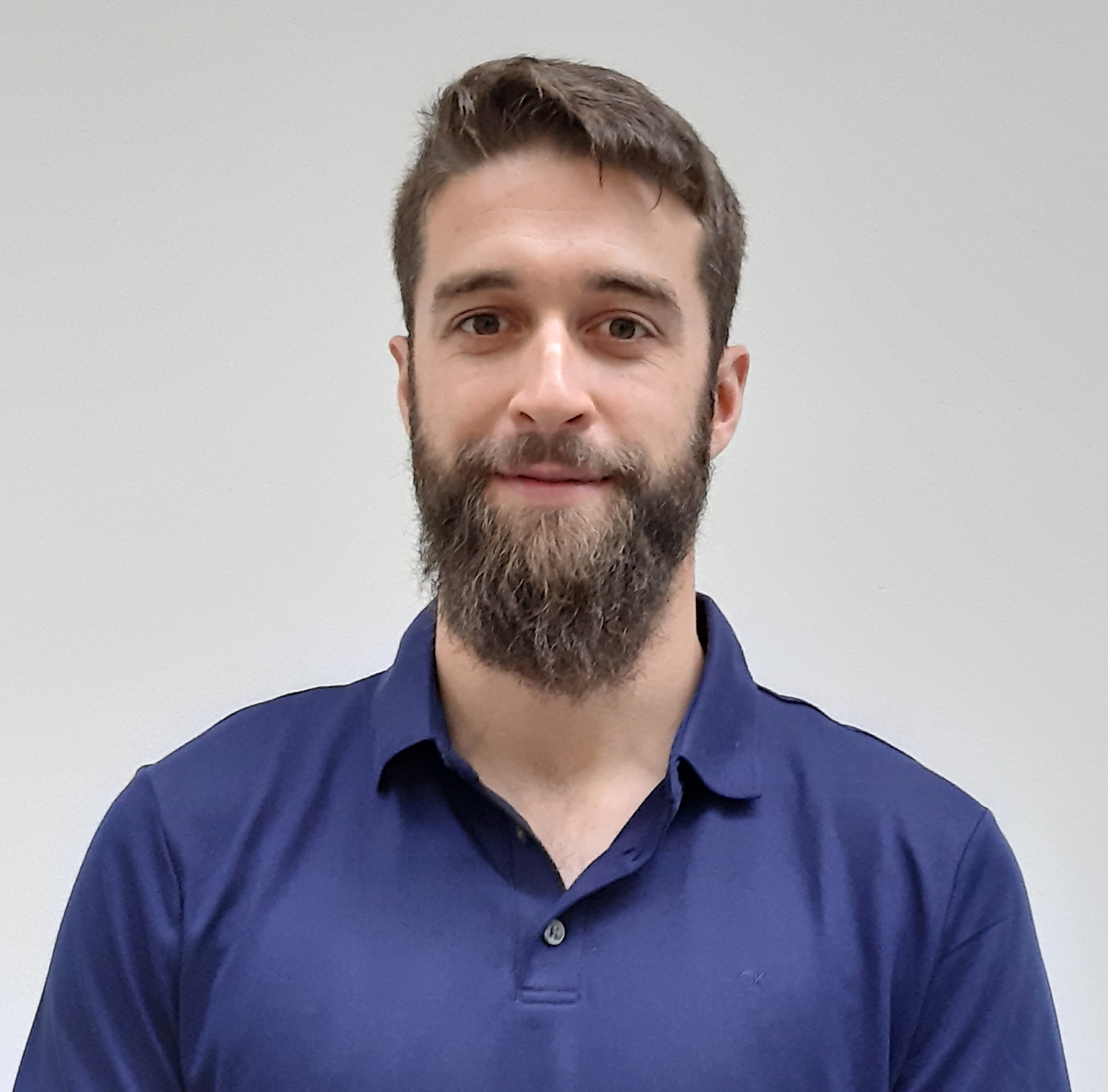
Professor Paolo Rapisarda is a faculty member at the University of Southampton , holding the position of Professor of Electronics and Computer Science. His academic journey began with a Ph.D. in Mathematical Systems and Control Theory at the University of Groningen, Netherlands, under the guidance of Prof. Jan C. Willems and Prof. H.L. Trentelman.
Neil White is Professor of Intelligent Sensor Systems at the University of Southampton's Electronics and Computer Science (ECS) school and serves as Director of the ECS Centre for Healthcare. He has held various leadership positions including Head of Electronics and Computer Science from 2011 to 2015 and has been instrumental in establishing research initiatives in sensor technology and energy harvesting. His research interests focus on medical sensors , intelligent sensor systems , and energy harvesting technologies. Professor White's work bridges the gap between engineering and healthcare applications, with significant contributions to wearable medical devices, particularly respiratory monitoring systems. His research integrates micro-electromechanical systems (MEMS), energy harvesting techniques, and smart textiles to create innovative healthcare solutions. Analysis of his recent publications reveals a strong focus on energy harvesting technologies, medical sensor applications, and e-textile development. His work spans multiple disciplines including biomedical engineering, electrical engineering, and materials science, with applications in healthcare monitoring, environmental sensing, and transportation systems. The research demonstrates a consistent theme of creating self-powered, intelligent sensor systems for practical applications. Professor White has received notable recognition including the Callendar silver Medal (2009) from the Institute of Measurement and Control and the 1989 Educational Prize from the International Society for Hybrid Microelectronics. Principal Investigator on NIHR i4i project developing low-cost wearable respiration sensors Former Director and co-founder of Perpetuum Ltd., specializing in vibration energy harvesting Current collaborations with clinicians at University Hospital Southampton Extensive funding from EPSRC, European Union, and industry partners Professor White leads research within the Smart Electronic Materials and Systems group, the Institute for Life Sciences, and the Centre for Health Technologies. His work in the Interdisciplinary Musculoskeletal Health and Digital Health research areas demonstrates his commitment to cross-disciplinary collaboration to address complex healthcare challenges through engineering solutions.
Vishesh Vikas is an Associate Professor in the Department of Mechanical Engineering at the University of Alabama, College of Engineering. He is based in the South Engineering Research Center (SERC) and leads the Agile Robotics Laboratory (ARL@UA), which focuses on bio-inspired, soft, and tensegrity robotics, as well as inertial sensing and estimation. Education: PhD, Mechanical Engineering, University of Florida, 2011 MS, Mechanical Engineering, 2008 B.Tech., IIT Guwahati, 2005 His research spans autonomous systems, wearable technologies, biomedical devices, guidance and control, intelligent systems, space robotics, and engineering education . The lab’s work integrates mechanical design, sensing, and advanced control to create agile, adaptive robotic systems for unstructured environments. The recent publications highlight a strong trend in soft and tensegrity robotics , with focus on gait synthesis, locomotion planning, shape and joint estimation, and dexterous manipulation. These works combine modeling, data-driven control, and sensor fusion, often using accelerometers, IMUs, and vision for real-time feedback. The research is published in top robotics venues such as IEEE TRO, RA-L, and ASME journals. Scientific Awards: No awards explicitly mentioned in the text. Vishesh Vikas actively advises graduate students, including PhD and Master’s candidates, and has successfully guided several to thesis and dissertation completion. His lab is affiliated with multiple research centers including the Alabama Center for the Advancement of AI, Center for Advanced Manufacturing, and Center for Advanced Public Safety. He is involved in outreach and education, including mechatronics workshops and seminar hosting. Current projects include exosuits for spine support and robotic systems for mobility in extreme environments. Laboratory and Team: The Agile Robotics Lab (ARL@UA) fosters interdisciplinary research in nature-inspired robotics, combining principles from biology, mechanics, and control. The team has hosted eminent scholars and is featured in university and college news for its innovative work on wearable robotics and soft manipulators.
Sanjeev Baskiyar is a Professor in the Department of Computer Science and Software Engineering at Auburn University's College of Engineering. He has been actively involved in research, teaching, and academic leadership, with a strong focus on computer systems, real-time and embedded computing, scheduling, cloud and fog computing, and energy-aware architectures. Education: Ph.D., Electrical and Computer Engineering, University of Minnesota M.S., Electrical and Computer Engineering, University of Minnesota B.S., Electronics and Communications, Indian Institute of Science, Bangalore B.S., Physics (with honors), and distinction in Mathematics Dr. Baskiyar’s research interests span scheduling, real-time and embedded systems, computer architecture, fog/cloud computing, thermal/energy-aware computing, and STEM education. His recent work explores machine learning applications in scheduling and quantum computing for fake news detection. He has supervised over 25 graduate students, many of whom now hold academic and industry positions. His recent publications emphasize fog computing simulation, service placement, quantum-inspired fake news detection, and adaptive scheduling using machine learning. These works reflect a trend towards intelligent, scalable, and energy-efficient computing systems, particularly in distributed and edge environments. Scientific Awards and Honors: Walker Teaching Excellence Award, Auburn University, 2020 Summer Faculty Fellow, Air Force Research Labs, 2020 Nominated Best Teaching Assistant, University of Minnesota, 1992 Multiples Merit and State-merit Scholarships Honors in Physics and Distinction in Mathematics Dr. Baskiyar has successfully advised numerous MS and PhD students and secured over $2 million in research funding as Principal Investigator from the National Science Foundation, DARPA, NASA, and industry partners like Wind River Systems and Mentor Graphics. His grants focus on parallel computing education, real-time micro-architectures, and embedded systems. He has also served on editorial boards, program committees, and as a reviewer for NSF and IEEE journals. He has held leadership roles including Senator in the University Faculty Senate and Chair of the E-day Committee. Labs and Research Groups: While not explicitly named, Dr. Baskiyar leads a research group focused on computer systems, scheduling, and embedded computing, as evidenced by his long list of graduate student supervision and funded projects in fog, cloud, and real-time systems.
John Joseph is a Professor of Strategy and Entrepreneurship at the Paul Merage School of Business, University of California, Irvine. His research and teaching focus on organizational design, strategic decision-making, innovation, and the integration of artificial intelligence in business strategy. He is actively involved in editorial leadership as Senior Editor at Organization Science and former editor of the Journal of Organization Design . PhD, Kellogg School of Management, Northwestern University MBA, Wharton School, University of Pennsylvania John Joseph's research centers on how organizations can be designed to enhance innovation, strategic planning, and decision-making. His work explores the role of attention, feedback mechanisms, and AI in shaping strategic outcomes. He investigates organizational structures in technology and healthcare sectors, with a focus on platform ecosystems and community-driven innovation. His recent publications and research projects examine AI-enabled organizational transformation, mobile industry innovation, and healthcare system design. The body of work shows a strong trend toward behavioral strategy, integrating cognitive and structural perspectives to understand how firms adapt and grow. 2017 Ralph Gomory Award, Industry Studies Association John Joseph has advised numerous organizations including General Electric, Samsung Electronics, Molina Healthcare, and UC Irvine. He has received multiple teaching awards and has taught in full-time, part-time, and executive education programs at Kellogg, Duke, and UC Irvine. He serves as Chair of the Behavioral Strategy Interest Group of the Strategic Management Society. His research is supported by engagements with centers such as the Center for Health Care Management and Policy and the Beall Center for Innovation and Entrepreneurship at UCI.
Professor Nir Oren is a faculty member at the School of Natural and Computing Sciences , University of Aberdeen. His research focuses on multi-agent systems , formal argumentation , computational trust theory , and norm-based reasoning . He currently supervises PhD students in Computing Science and serves as Dean for Research Performance. Research Specialisms: Artificial Intelligence, Operational Research Contact: n.oren@abdn.ac.uk Research Trends (2022–2025): Nir Oren's publications span argumentation theory , BDI agent modeling , resilience in autonomous systems , and human-machine collaboration . His recent work addresses responsibility-aware AI , medical explainability , and environmental sensor networks . Key methods include probabilistic reasoning , game theory , and logical formalisms .
Dr. Jose Luis SANCHEZ LOPEZ is a Research Scientist at the Interdisciplinary Centre for Security, Reliability and Trust (SnT) of the University of Luxembourg, leading the Aerial Robotics Lab (AeRoLab) within the Automation & Robotics Research Group (ARG). He joined SnT in 2017 as a Postdoc Research Associate, promoted to Research Scientist in 2021. His research focuses on autonomous robotics, particularly aerial systems, emphasizing situational awareness, SLAM, and trajectory planning. Education: Ph.D. in Robotics (2017), M.Sc. in Automation & Robotics (2012), and Engineering degree in Industrial Engineering (2010), all from the Technical University of Madrid. Visiting Research: Arizona State University (2012), LAAS-CNRS (2014–2016). Research Interests: Multi-agent robotic systems, sensor fusion, localization/mapping, computer vision, machine learning, and trajectory control. He has authored over 56 peer-reviewed publications, with an h-index of 18. Projects: Leads projects like DEUS (PI), NEDA, ÄerdFly (PI), and RoboSAUR. Contributions span European, Luxembourg, and Spain-funded initiatives, focusing on autonomous systems, 5G integration, and construction-site robotics. Teaching: Lectured in MICS, BiCS, BING (Uni.lu) and GITI (UPM). Actively involved in academic service as a reviewer, editor, and competition participant (e.g., IMAV, IARC). Outreach: National Coordinator for Luxembourg’s Robotics European Week, promotes robotics education in schools and public events.
Prof. Dr. Julius Schöning is a Professor at the Faculty of Engineering and Computer Science , Osnabrück University of Applied Sciences. His research focuses on Artificial Intelligence , Human-Computer Interaction , and Computer Vision within agricultural contexts. 2019–Present: Professor, Hochschule Osnabrück 2018–2019: System Architect, ZF Friedrichshafen AG 2014–2018: Researcher, University of Osnabrück 2009–2013: Project Lead/System Engineer, CLAAS Harsewinkel Education: M.Sc. in Intelligent Embedded Microsystems (Freiburg), B.Eng. in Mechatronics (DHBW Stuttgart) His research spans smart agriculture , quantum NLP , and explainable AI systems , with recent work on vibrotactile warning systems, AI compliance frameworks, and hybrid dataset applications in farming. Publications emphasize interdisciplinary approaches bridging technology and agricultural practice . Scientific honors include: DAAD Stipendium for conference participation Best Paper Award (2018) IEEE GHTC Student Paper Contest Winner (2016) Sonderpreis für gute Lehre (2017) Finalist/Falling Walls Lab (2015)
Tim Baarslag is a Senior Researcher and group leader of the Intelligent and Autonomous Systems group at CWI (The Dutch research institute for Mathematics and Computer Science). He holds the title of Professor of Mathematics of Cooperative AI at Eindhoven University of Technology and serves as a Visiting Associate Professor at Nagoya University of Technology, Visiting Fellow at the University of Southampton, and Visiting Scholar at MIT. His research focuses on automated negotiation systems for collaborative decision-making in smart energy trading, IoT, autonomous vehicles, and digital privacy. Education : MSc (cum laude) and BSc (cum laude) from Utrecht University; PhD (cum laude) from Delft University of Technology Tim pioneered the COMBINE project (NWO Vidi grant) for coordinating multi-deal negotiations and developed the widely-used Genius negotiation environment. His work appears in prestigious venues like Science Magazine , Artificial Intelligence , and MIT Technology Review . He also leads the International Automated Negotiating Agent Competition and contributes to policy through memberships in The Young Academy and Netherlands Academy of Engineering . Recent research trends emphasize multi-deal negotiation protocols (2024), preference uncertainty modeling in privacy negotiations (2022), and scalable algorithms for handling outcome spaces as large as 10²⁵⁰ possibilities. His 2023 work on search algorithms for large negotiation domains has applications in energy trading and supply chain management. Scientific Awards : Cor Baayen Young Researcher Award (2017), Springer Theses Award (2016), multiple Best Paper Awards (AAMAS 2022, WI-IAT 2015, IJCAI 2014), and recognitions as Science Talent (2018), Academic Pioneer (2020), and Young Talent (2019) As a grant recipient , Tim leads NWO Vidi project COMBINE and previously held a Veni grant for preference uncertainty research. He mentors through organizing competitions, serving on conference PCs (AAAI, IJCAI), and reviewing in top journals like Artificial Intelligence . His work bridges theory and practice through the Genius framework and real-world implementations in smart grid and vehicular platooning.
Andrew Pavlo is a Professor in the Computer Science Department at Carnegie Mellon University's School of Computer Science. His research focuses on database management systems, particularly in the areas of transaction processing, in-memory databases, and self-driving database systems. He leads a productive research group that has published extensively in top database venues including VLDB, SIGMOD, and CIDR. Pavlo's research interests span database management systems, transaction processing, in-memory databases, non-volatile memory databases, and self-driving database systems. His work often bridges theoretical database concepts with practical system implementation, focusing on performance optimization, query processing, and system architecture. Recent work has explored machine learning applications for database tuning, novel storage techniques, and innovative approaches to transaction processing. An analysis of his recent publications reveals a strong focus on self-driving database systems, with significant work on the Database Gym framework for training machine learning models to optimize database performance. His research also examines columnar storage formats, transaction scheduling, and novel approaches to user-defined function optimization. The work demonstrates a consistent trajectory toward making database systems more autonomous and efficient through a combination of systems techniques and machine learning. Pavlo has been instrumental in mentoring numerous PhD students who have become active contributors to the database research community. His research has been supported by significant grants that have enabled the development of innovative database technologies and frameworks. His research group operates within CMU's vibrant database ecosystem, collaborating with other researchers on projects related to database systems, storage engines, and query processing frameworks. The group maintains close connections with industry partners to ensure practical relevance of their research contributions.
Abderrahim Benslimane is a Full Professor of Computer Science at the University of Avignon, France, where he serves as Vice Dean of International Relations at the UFR STS (Unité de Formation et de Recherche en Sciences et Technologies). He is also Head of the master degree SICOM (Systèmes Informatiques Communicants: réseaux, services et sécurité) program at the university. His extensive academic career spans several decades with significant contributions to computer science, particularly in networking and security domains. Professor Benslimane holds a HDR (Title to supervise researches) from the University of Cergy-Pontoise, a Ph.D. from the University of Franche-Comté, along with M.S. and B.S. degrees in Computer Science from the same institution and the University of Nancy respectively. His research interests primarily focus on distributed computing, networking and communication protocols, with particular emphasis on modeling, describing and implementing secure communication protocols and multimedia applications in heterogeneous network architectures. He combines engineering and theoretical approaches using graphs, distributed algorithms, transition systems, and performance evaluation models. Benslimane's scholarly work demonstrates a strong trend toward addressing security and privacy challenges in emerging technologies. His recent publications focus on cybersecurity applications for wireless sensor networks, Internet of Things, blockchain implementations, UAV communications, and vehicular networks. He has pioneered research in energy attack mitigation, trust management systems, and secure group communications, often employing game theory and novel cryptographic approaches. His work bridges theoretical foundations with practical implementations in next-generation networking technologies. IEEE VTS Distinguished Lecturer (2020-2022) Best Paper award at IEEE ICC 2019 Multiple Prime d'Encadrement et de Recherche Doctorale awards (1998-2021) Prime d'Excellence Scientifique (2011-2015) IEEE Senior Member As an academic leader, Benslimane has served as Editor in Chief of Multimedia Intelligence and Security Inderscience Journal, Area Editor of IEEE Internet of Things Journal, and Associate Editor for multiple prestigious publications including IEEE Transactions on Multimedia and IEEE Wireless Communication Magazine. He has founded and led research centers including the Informatics Research center (CRI) at the French University in Egypt and the Multimedia and networking team (RAM) at the Laboratoire d'Informatique d'Avignon (LIA). His laboratory research focuses on security, communication protocols, graphs and distributed algorithms, with applications in ad hoc networks, sensor networks, vehicular networks, and IoT.
Prof. Dr.-Ing. Dieter Moormann is affiliated with the Institute of Flight System Dynamics at RWTH Aachen University, a leading institution in engineering research. His work focuses on aerospace systems, specifically flight mechanics and control technologies. Research Interests include: Flight system dynamics and control Autonomous flight systems Aerodynamics and avionics Contact: moormann@fsd.rwth-aachen.de
Professor Kaspar Althoefer is a Professor of Robotics Engineering at the School of Engineering and Materials Science , Queen Mary University of London. He leads the Centre for Advanced Robotics @ Queen Mary (ARQ) and serves as Programme Director for BEng/MEng Robotics Engineering. His research focuses on robot autonomy, soft robotics , and tactile sensing with applications in healthcare, nuclear engineering, and manufacturing. Research Highlights: Soft Robotics, Tactile Sensing, Haptic Perception, Minimally Invasive Surgery, Human-Robot Interaction Key Collaborations: St Thomas Hospital London, EU Horizon Europe, EPSRC, Innovate UK Accomplishments: £10M+ as Principal Investigator, 500+ peer-reviewed papers, 7 patent applications His work spans robot autonomy , soft robotics , and machine learning , particularly in modeling tool-environment interactions and developing tactile sensors for surgical and nuclear applications. Recent projects include intelligent endoscopic microsurgery robots and eversion robots for radiation mapping . Scientific Awards: Senior Member, IEEE He supervises a team of 6 PhD students and postdoctoral researchers, with completed projects in soft robotic gloves , pneumatic actuators , and eversion robot navigation .
Albert S. Berahas is an Assistant Professor in the Department of Industrial and Operations Engineering at the University of Michigan's College of Engineering. He joined the university in 2020 after completing postdoctoral positions at Lehigh University (2018-2020) and Northwestern University (2018). He holds a PhD in Engineering Sciences and Applied Mathematics from Northwestern University (2018), an MS in Applied Mathematics from Northwestern (2012), and a BSE in Operations Research and Industrial Engineering from Cornell University (2009). His research focuses on designing, developing, analyzing, and implementing algorithms for solving large-scale nonlinear optimization problems. His work spans multiple sub-fields including constrained optimization, optimization for machine learning, stochastic optimization, derivative-free optimization, and decentralized optimization. He is affiliated with the Michigan Institute for Data Science (MIDAS), the Michigan Institute for Computational Discovery and Engineering (MICDE), and the Michigan Center for Applied and Interdisciplinary Mathematics (MCAIM). Berahas has received numerous honors including the Charles Broyden Prize (2025), the Air Force Office of Scientific Research Young Investigator Program award (2025), the IISE Operations Research Division Teaching Award (2024), and the North Campus Dean's MLK Spirit Award for Community Building & Impact (2024). His recent publications demonstrate strong activity in developing novel optimization frameworks with theoretical guarantees for challenging problem settings. His research has been supported by significant grants including from the Office of Naval Research (ONR) and the Air Force Office of Scientific Research. He actively mentors PhD students and has successfully advised Jiahao Shi, who defended his dissertation in March 2025 and joined Amazon. Berahas is also engaged in community outreach, particularly through initiatives like Engage Detroit that aim to empower Detroit's next generation of engineers.
Dr.-Ing. Thomas Wild serves as an Academic Director at the Technical University of Munich (TUM), working within the TUM School of Computation, Information and Technology at the Chair of Integrated Systems. He maintains an active research and teaching role at the institution, with his office located in Building N1 (Theresienstr. 90), Room N2136 in Munich, Germany. Dr. Wild's research focuses on advanced computing architectures, with particular emphasis on manycore system on chip (SoC) architectures, network processor (NPU) architectures, on-chip communication architectures including networks on chip (NoC), and system level design methodologies. His work bridges theoretical research with practical implementation, often exploring design space exploration techniques to optimize system performance. The evolution of his research over two decades demonstrates a consistent focus on improving communication architectures and system-level design for embedded and high-performance computing platforms. His recent publications (2023-2025) reveal a growing integration of machine learning techniques with traditional hardware design, particularly in optimizing power-performance tradeoffs in embedded systems. There's a clear trend toward hardware-software co-design approaches, with significant work on SmartNICs, Linux system optimization, and network processing acceleration. His research shows strong interdisciplinary connections between computer architecture, networking, and machine learning. EUROPRACTICE representative for TUM city campus, facilitating access to commercial EDA tools for academic purposes Active collaborator with Professor Andreas Herkersdorf and other researchers at TUM Focus on practical implementations with FPGA-based prototyping and real system modifications Dr. Wild teaches several hardware design courses including VHDL Lab, SystemC Lab, and HW/SW Codesign, contributing to the education of next-generation computer engineers. His teaching directly complements his research in system design and hardware acceleration, providing students with hands-on experience in cutting-edge technologies.