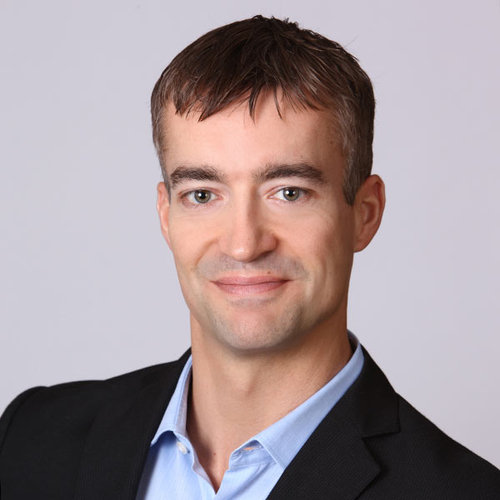
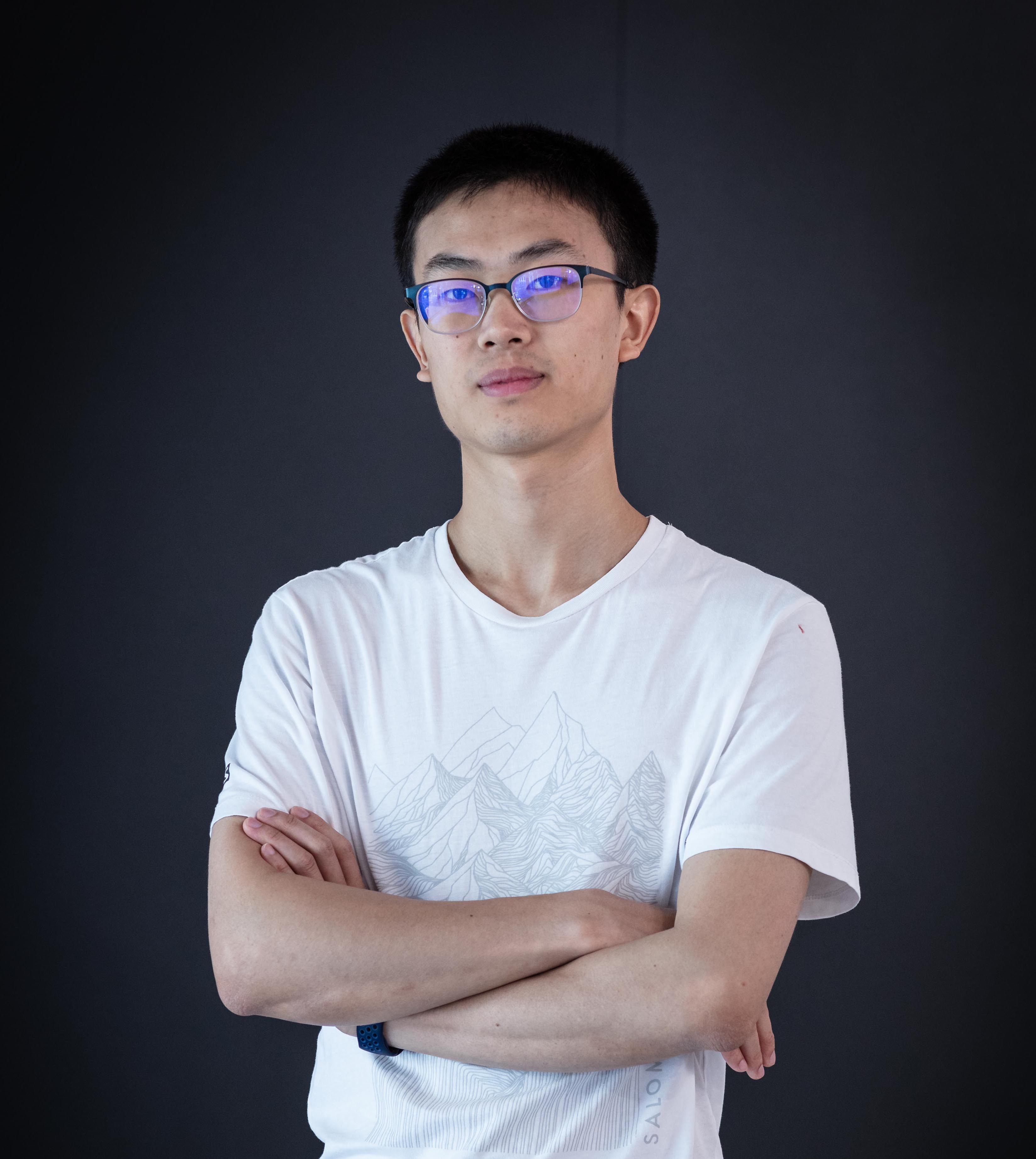
Annette Stahl is a Professor at the Department of Engineering Cybernetics, NTNU, and an Onsager Fellow. She leads the Robot Vision Group and oversees the AILARON project, funded by the Research Council of Norway. Her expertise spans robotic vision, control theory, and autonomous systems. She holds a PhD in Applied Mathematics (Computer Vision) from Heidelberg University. Her research focuses on underwater robotics, autonomous vehicles, and aquaculture monitoring, with applications in fish health analysis and marine environmental sensing. Stahl has supervised numerous PhD and master’s students, including projects on autonomous ships (SFI AutoShip), underwater SLAM (AROS), and plankton identification. She collaborates with industry partners like Zebop AS and SINTEF Ocean. Notable projects include the robotic microplankton sniffer-dog and AI-driven fish welfare monitoring. Her work is published in top journals/conferences like IEEE Access and MIC Journal. She actively contributes to datasets like the VAROS Synthetic Underwater Data Set.
Jonas Sjöberg is a Full Professor of Mechatronics at Chalmers University of Technology, where he leads the Mechatronic research group in the College of Engineering. His research spans multiple aspects of mechatronic systems with a strong focus on automotive applications. Sjöberg holds leadership roles in numerous research projects related to autonomous vehicles, vehicle control systems, and transportation safety. His research interests encompass a broad spectrum of mechatronics applications, with particular emphasis on model-based methods, signal processing, control systems, system identification, and optimization for design and product development of mechatronic systems. Sjöberg's work bridges theoretical control engineering with practical automotive applications, especially in the domains of Automotive Active Safety and Hybrid Electric Vehicles. Analysis of Sjöberg's recent publications reveals a strong research trajectory focused on autonomous vehicle technologies, with particular attention to vehicle dynamics control, intersection safety, road surface condition estimation, and optimization of vehicle maneuvers. His work demonstrates a consistent approach of applying advanced control theory to solve real-world transportation challenges, with increasing emphasis on machine learning techniques integrated with traditional control systems. Sjöberg actively supervises research and education at both undergraduate and graduate levels while leading multiple research projects funded by VINNOVA, the European Commission, and other organizations. His research group collaborates extensively with both academic institutions and industry partners in the automotive sector. His laboratory work focuses on mechatronic systems development, particularly for automotive applications including autonomous bicycles, bus docking systems, and vehicle control algorithms. The research group maintains strong connections with the automotive industry, particularly in Sweden's robust vehicle technology ecosystem.
Dr. Paulo Santos is a Senior Lecturer at Flinders University's College of Science and Engineering, specializing in Artificial Intelligence with a focus on explainable AI systems. He holds a PhD from Imperial College London (2003) and has over 20 years of research experience in spatial reasoning, machine learning, and robotics. His work bridges knowledge representation with deep learning to enhance transparency in AI decision-making. Dr. Santos has led research groups in Brazil, collaborated internationally, and secured funding from organizations like the British Council and EU. His expertise spans robotics, computer vision, and cognitive science. Notable achievements include the British Computer Science Machine Intelligence Prize (2004) and the Santander Prize for Science and Innovation (2006). Research interests include reinforcement learning for autonomous underwater vehicles (AUVs), scene graph generation in computer vision, and spatial reasoning for multi-robot systems. Recent work emphasizes sim-to-real transfer learning and fault recovery in underwater robotics.
Professor Hakan Temeltaş is affiliated with Istanbul Technical University , where he serves in the Department of Control and Automation Engineering . His research focuses on robotics, control systems, and autonomous technologies. He has contributed to advancements in motion planning, localization, and deep reinforcement learning for robotic systems. Research Interests: Robotics, Autonomous Systems, Control Engineering, Machine Learning Current Projects: Deep reinforcement learning for quadrupedal robots, localization frameworks, multi-agent systems His recent work includes autonomous exploration strategies using Rapidly-Exploring Random Trees (RRT), multi-stage localization for mobile robots, and quaternion-based orientation estimation in robot manipulators. He supervises projects involving adversarial attack mitigation and self-recovery mechanisms in quadrupedal robots. Publications highlight applications of deep reinforcement learning in robotics, with a focus on dynamic stability, sensor fusion, and simulation environments. His research outputs span conferences like IEEE RAAI and journals such as Robotica and Unmanned Systems . Scientific Awards : None explicitly mentioned in the provided data. As a principal investigator, he leads projects on ground reaction force balancing, autonomous navigation, and swarm robotics. His collaborations extend to simulation frameworks and real-time control systems for mobile robots.
Thor I. Fossen is a Professor of Guidance, Navigation, and Control at the Norwegian University of Science and Technology (NTNU), Department of Engineering Cybernetics. He holds a PhD in Engineering Cybernetics and an MSc in Marine Technology. His research focuses on marine craft hydrodynamics, autonomous systems, inertial navigation, and cybersecurity of control systems. He is an IEEE Fellow and has authored influential textbooks such as the Handbook of Marine Craft Hydrodynamics and Motion Control . **Education**: PhD Eng. Cybernetics, MSc Marine Technology. **Research Interests**: Development of guidance, navigation, and control (GNC) systems for marine and aerial vehicles; cybersecurity for autonomous systems; inertial navigation algorithms; and robotics. Notable contributions include the Marine Systems Simulator (MSS), a widely used MATLAB/Simulink toolbox for vehicle control design. **Recent Trends in Publications**: Focus on autonomous surface/underwater vehicles, adaptive guidance laws, cyber-resilient navigation, and sensor fusion techniques. His work bridges theory and practice, with experimental validations on real systems. **Awards**: Automatica Prize Paper Award (2002), Arch T. Colwell Merit Paper Award (2008), IEEE Fellow (2020+). **Grants & Labs**: Co-founder of Marine Cybernetics AS and ScoutDI AS. Lead developer of MSS software. Active in collaborative projects involving dynamic positioning, wave filters, and cyber-physical systems security.
Dr. Daniel G. MacDonald is a Professor and Co-Chairperson of Civil & Environmental Engineering at the University of Massachusetts Dartmouth, affiliated with the School for Marine Science & Technology (SMAST). He holds a PhD from the MIT/Woods Hole Oceanographic Institute Joint Program in Oceanographic Engineering, an MS from Cornell University, and a BS from the University of New Hampshire. His research focuses on environmental fluid mechanics, turbulence, river plume dynamics, and marine renewable energy, leveraging autonomous underwater vehicles (AUVs) for data collection. He leads the Coastal Engineering & Fluid Mechanics Lab, investigating coastal physics, renewable energy systems, and environmental monitoring. Key research activities include studying river plume front evolution, developing wave energy converters like the MADWEC, and salt marsh elevation surveys. He has secured grants from agencies such as the Office of Naval Research and the Buzzards Bay National Estuary Program. Dr. MacDonald is a member of the American Society of Civil Engineers and the American Geophysical Union. His teaching includes courses on pollutant transport and environmental fluid mechanics. He collaborates widely, with projects involving UMaine, UConn, and industry partners like EOM OFFSHORE.
Greg Scherrer, PhD is an Associate Professor at the University of North Carolina at Chapel Hill , holding appointments in the Cell Biology & Physiology and Pharmacology departments. As a member of the UNC Neuroscience Center , his research focuses on the neurobiological mechanisms underlying pain perception and opioid action. Research Interests: Elucidating genetic, molecular, and circuit-level mechanisms of pain experience Investigating opioid receptor localization, trafficking, and signaling to dissociate analgesia from side effects Developing mouse models to study endogenous opioid systems Addressing the opioid epidemic through novel non-addictive drug targets Recent Research Trends: His work spans opioid receptor dynamics in neural circuits, microglial-neuronal interactions in pain, and chemogenetic approaches to peripheral drug action. Publications highlight the role of delta and mu opioid receptors in pain pathways, placebo pain relief mechanisms, and neuroimmune contributions to chronic pain. Lab Affiliation: The Scherrer Lab employs interdisciplinary techniques including mouse genetics, in vivo imaging, and computational modeling to advance pain therapeutics.
Abdurrahman Yılmaz is an Assistant Professor at Istanbul Technical University's Department of Control and Automation Engineering within the College of Electrical-Electronics. His career spans academic and industrial roles, including a Research Assistant position at Istanbul Technical University (2018-2022) and Test Rig Design Engineer at ASELSAN INC. (2014). Education: PhD in Control and Automation Engineering (Istanbul Technical University, 2014-2022) MSc in Mechatronics Engineering (Yildiz Technical University, 2014-2017) BSc in Electronics Engineering (Istanbul Technical University, 2009-2014) Double Major in Control and Automation Engineering (Istanbul Technical University, 2011-2014) Research Interests focus on Robotics, Autonomous System Design, and Control Theory. His work includes localization frameworks for autonomous mobile robots, adaptive control algorithms for quadcopters, and soft haptic sensing technologies. Recent research explores digital twin simulators and quadruped robot dynamics. Scientific Output trends highlight advancements in mobile robot navigation, industrial automation, and autonomous systems. Publications span journals like Journal of Field Robotics and conferences including TAROS and RoboSoft. Awards: The Most Successful Doctoral Thesis Award of 2022 (University, 2023) 1st Water Management Awards (Ministry of Forestry and Water Affairs, 2019) Collaborations extend to international researchers in robotics and control systems. He serves as PI for the project "Development of a Design-Aiding Analysis Tool for Four-Legged Robots" (2023-2024).
Sabrina Corpino is a Full Professor in the Department of Mechanical and Aerospace Engineering at the Polytechnic University of Turin. She serves as a Member of the PhotoNext Interdepartmental Center for Applied Photonics and holds scientific advisory roles with the Partnership Agreement with ALTEC, the International Astronautical Federation (IAF), and NEREUS. Research Interests: Aerospace design, systems engineering, CubeSat missions, and space propulsion. Key Projects: Scientific Manager for PNRR NODES Spoke 1, SINAV, Hera Mission Phase B/C/D/E1, and RAMSES CubeSat-1 Development. Teaching: Lecturer for 'Aerospace Systems' in multiple academic years and collaborator in interdisciplinary courses. Students: Supervises PhD candidates including Nicola Di Gruttola Giardino, Serena Campioli, and Antonio D'Ortona. Awards: Recipient of the 2018 ICAS Casimiro Montenegro Filho Award for Innovation in Aeronautics.
Jonas Sjoberg is a Professor of Mechatronics at Chalmers University of Technology and leader of the Mechatronics research group. His work spans over 30 years with 143 publications and leadership in 29 research projects. His current research focuses on autonomous vehicle systems, vehicle dynamics, and traffic safety applications. Dr. Sjoberg's research interests center on mechatronic systems for transportation applications. His work bridges theoretical control systems with practical automotive implementations, particularly in autonomous vehicle technology. His research group investigates vehicle dynamics, path planning, intersection management, and safety systems, with growing emphasis on micromobility applications including autonomous bicycles and pedestrian interaction. Recent work demonstrates strong focus on real-world applications of control theory to improve vehicle safety and performance. His publication record shows consistent output with 15+ papers annually, demonstrating sustained research activity. The work spans fundamental control theory (system identification, nonlinear control) to applied transportation problems (intersection management, road surface estimation, autonomous docking). Recent publications show increasing focus on micromobility applications, particularly autonomous bicycles, and integration of machine learning techniques with traditional control approaches. Dr. Sjoberg leads multiple significant research projects including MicroSIM (2026-2027), Mintox (2025-2026), and MicroITS, with funding from VINNOVA, EU, and industry partners. His projects address critical challenges in autonomous vehicle safety, micromobility integration, and traffic management. As leader of the Mechatronics research group, Dr. Sjoberg oversees research on vehicle control systems, autonomous driving technologies, and safety applications. His laboratory work focuses on practical implementation of theoretical control concepts, with recent emphasis on bicycle dynamics and micromobility safety systems.
Rafael Vazquez Valenzuela is a University Professor in the Department of Aerospace Engineering and Fluid Mechanics at the Higher Technical School of Engineering, University of Seville. His research focuses on control systems for aerospace applications, particularly in spacecraft dynamics, orbital mechanics, and partial differential equation (PDE) control systems. Professor Vazquez Valenzuela's research spans several key areas in aerospace engineering and control theory. His primary interests include spacecraft guidance and navigation, particularly for asteroid exploration and rendezvous operations. He has made significant contributions to the field of backstepping control for PDE systems, with applications ranging from fluid dynamics to spacecraft control. His work also extends to stochastic analysis of aircraft performance, thermoacoustic instability control, and the development of advanced algorithms for unmanned aerial vehicles. Notably, his research bridges theoretical control theory with practical aerospace applications, resulting in numerous high-impact publications in top journals. His publication record shows a clear trend toward increasingly sophisticated control algorithms for complex aerospace systems. Recent work focuses on predictive control for spacecraft operations near asteroids, chance-constrained optimization for halo orbit rendezvous, and prescribed-time control methods. His research consistently addresses the challenging intersection of theoretical control design and practical implementation constraints in aerospace applications. Professor Vazquez Valenzuela has been involved in numerous research projects, including "APPLICATION OF LEADING TECHNOLOGY TO UNMANNED AERIAL VEHICLES FOR RESEARCH AND DEVELOPMENT IN ATM (ATLANTIDA)" "Diseño de Algoritmos de Guiado y Control Innovadores para Aplicaciones Avanzadas de Rendezvous: Órbitas Halo y Exploración de Asteroides" "SESAR WP-E ComplexWorld Network" These projects highlight his expertise in both theoretical control systems and practical aerospace applications. He is affiliated with the INGENIERÍA AEROESPACIAL (GIA) research group at the University of Seville, where he collaborates with researchers on advanced control and navigation systems for autonomous aerospace vehicles.
Dr. Annette Stahl is a Professor at the Department of Engineering Cybernetics, Norwegian University of Science and Technology (NTNU). She is an Onsager Fellow and leads the Robot Vision Group, overseeing the AILARON project funded by the Research Council of Norway. Her roles include affiliation with NTNU AMOS and the SFI AutoShip Centre for Research-based Innovation. Stahl holds a PhD in Applied Mathematics (Computer Vision) from Heidelberg University. Affiliations: NTNU AMOS, SFI AutoShip, and AILARON project leadership Research Focus: Robotic vision, autonomous systems, underwater exploration, and aquaculture monitoring Education: PhD in Applied Mathematics (Computer Vision) – Heidelberg University Research Interests: Her work spans robotic and computer vision, control theory, autonomous vehicles, mathematical image analysis, and machine learning applications in aquaculture and maritime systems. Key focus areas include underwater SLAM, sensor fusion for autonomous ships, and plankton detection using AI. Articles: Recent publications emphasize underwater robotic systems, sensor fusion for autonomous navigation, and AI-driven aquaculture monitoring. Key themes include 3D reconstruction, visual SLAM, and maritime tracking algorithms. Grants & Projects: AILARON (FRINATEK/IKTPLUSS) AUTOSIGHT (IKTPLUSS) AROS (IKTPLUSS) SFI AutoShip (SFI) Advising: Main supervisor for 10+ PhD candidates (e.g., Trym Nygård, Mauhing Yip) Co-advisor for projects like INDISAL (fish identification) Labs/Teams: Robot Vision Group at NTNU Collaborations with SINTEF Ocean and Zebop AS
Dr Euan W McGookin is a Senior Lecturer in Autonomous Systems & Connectivity at the University of Glasgow, based in the Aerospace Sciences division of the James Watt Building South. He coordinates Glasgow-delivered aerospace degree programmes in Singapore and serves on the IFAC Technical Committee on Marine Systems, underlining his sustained engagement with both local and international academic activities. Education: 1st Class Honours Master of Engineering in Avionics, University of Glasgow PhD in Optimisation of Sliding Mode Controllers for Marine Applications, University of Glasgow (1997) Research Interests Dr McGookin’s core expertise lies in the design, simulation, control and physical realisation of autonomous robotic systems. His work spans Autonomous Underwater Vehicles (AUVs) , Unmanned Aerial Vehicles (UAVs) , Planetary & Terrestrial Rovers , and Biomimetic Robotics . He is particularly recognised for applying biologically inspired principles to robotic locomotion, navigation and control. Complementary themes include advanced control methodologies—Sliding Mode Control, H-infinity, Inverse Model Control—optimisation heuristics, guidance & navigation, fault detection & isolation (FDI), and system health monitoring for both terrestrial and space applications. Publication Trends Across 80 publications from 1995 to 2025, his work has evolved from early genetic-algorithm-based controller optimisation for marine vessels to cutting-edge multi-rover mission planning and health monitoring for planetary exploration. Recent outputs (2022–2025) concentrate on micro-rover coordination, friction modelling for planetary soils, reinforcement-learning-driven sensor fusion, and robust health-monitoring architectures, reflecting a strategic pivot toward space robotics while retaining strong roots in control theory and autonomous systems. Scientific Awards & Fellowships Member, IFAC Technical Committee on Marine Systems Grant & Advising Narrative While specific grant values are not disclosed, his continuous funding stream is evidenced by sustained publication output, international conference leadership, and ongoing supervision of postgraduate projects. Dr McGookin advises a steady cohort of PhD and MSc students whose theses align with his research themes—ranging from rover fault diagnosis to biomimetic AUV coordination—thereby fostering the next generation of control and robotics engineers. Laboratory & Team Dr McGookin heads research activities within the James Watt Building South, leveraging interdisciplinary laboratories that integrate simulation suites, rapid-prototyping facilities for AUV and UAV subsystems, and dedicated test rigs for biomimetic propulsion and rover mobility studies. Collaborative networks extend across the University of Glasgow’s Aerospace Engineering group, Singapore Institute of Technology partners, and international consortia such as ESA and IFAC.
Pedro Arroz Correia Bonifácio Serra is a researcher in the Department of Electrical and Computer Engineering at Universidade Lusófona, specializing in Guidance, Navigation, and Control (GNC) systems for aerospace and robotic applications. His work is closely aligned with European Space Agency (ESA) missions such as e.Deorbit, COMRADE, GUIBEAR, and HERACLES, focusing on active debris removal, on-orbit servicing, and autonomous spacecraft operations. Research Interests: His primary research areas include Guidance, Navigation and Control (GNC), space robotics, autonomous systems, image-based visual servo control, fault-tolerant control, and nonlinear control systems. He has made significant contributions to the development and validation of control architectures for capturing tumbling satellites and enabling autonomous landing of UAVs and spacecraft. The most recent publications reflect a strong emphasis on space safety, debris removal technologies, and computational GNC for complex space missions. His work bridges theoretical control design with practical ground validation, particularly in the context of ESA-led projects. The recurring themes across his publications include autonomous rendezvous, manipulator control for space robots, and robust GNC under uncertain conditions. Scientific Contributions: Key contributor to ESA's e.Deorbit mission studies, focusing on capture and deorbiting of defunct satellites like Envisat. Developed and tested GNC systems for the HERACLES lunar ascent element. Involved in the COMRADE project for combined control of robotic spacecraft and manipulators. Worked on GUIBEAR project for bearings-only rendezvous navigation. Advising and Grants: While no formal students are listed, his research is supported by major European space initiatives, likely involving collaborative grants from ESA and industrial partners such as Airbus. His work involves experimental validation and prototype development, indicating access to advanced research funding and facilities. Labs and Teams: Although specific lab affiliations are not mentioned, his involvement in projects like WMS LEMUR and e.Deorbit suggests collaboration with ESA’s GNC teams and space robotics laboratories focused on on-orbit servicing and debris removal technologies.
Yang Chen is a postdoctoral researcher at the Laboratory of Intelligent Systems (LIS) under the School of Engineering (STI) at École polytechnique fédérale de Lausanne (EPFL) . He obtained his Ph.D. in Human Informatics from the University of Tsukuba in 2023 and has held research positions at University of Tsukuba, ETH Zurich, and CNRS-AIST JRL. Research Interests: Aerial robotics, human augmentation, shared control, assistive technology, SLAM, and wearable devices. Awards: JST SPRING Fellowship (Class 1), JSPS Research Fellow DC2, Toyota Mobility Unlimited Challenge Finalist. Projects: Symbiotic aerial swarms, smart stroller control, standing mobility vehicle interfaces, and docking support systems. Email: yang.chen@epfl.ch


/prod01/production-cdn-pxl/media/umassdartmouth/profiles/smast/20160830-daniel-macdonald-dac-002.jpg)