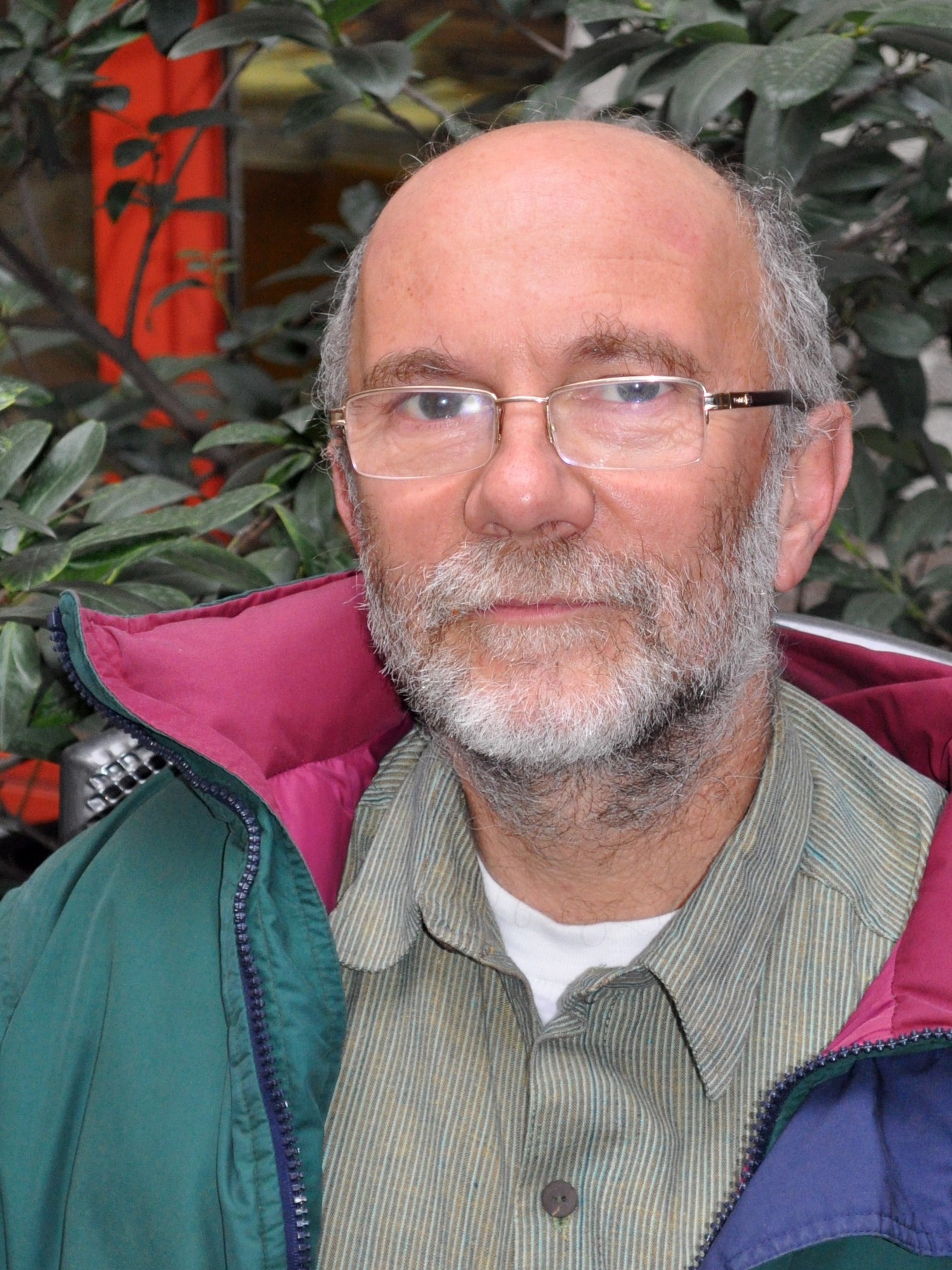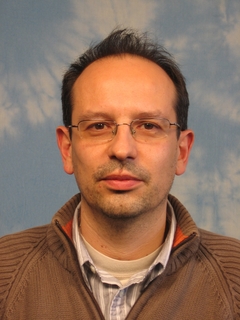
Prof. Philippe Michel is a Professor in the Mathematics Institute at the École Polytechnique Fédérale de Lausanne (EPFL), where he leads research in the Number Theory group (TAN). His office is located at MA C3 634, Station 8, 1015 Lausanne, Switzerland. Michel received his education at ENS Cachan and obtained his PhD from Université Paris XI in 1995 under the supervision of E. Fouvry. His academic career includes positions as maître de conférence at Université Paris XI (1995-1998), full professor at Université Montpellier II (until 2008), before joining EPFL. Prof. Michel's research spans across analytic number theory and related fields. His work integrates diverse mathematical techniques including arithmetic geometry, exponential sums, sieve methods, automorphic forms and representations, L-functions, and more recently, ergodic theory. His research has significant implications for understanding the distribution of prime numbers, properties of L-functions, and connections between number theory and other mathematical disciplines. Michel has made substantial contributions to the study of Kloosterman sums, trace functions, and the analytic properties of families of L-functions. Peccot-Vimont prize Member of the Institut Universitaire de France Invited speaker at the 2006 International Congress of Mathematicians Member of the Academia Europaea (Academy of Europe) since 2011 Fellow of the American Mathematical Society since 2012 Prof. Michel serves on the editorial boards of several prestigious mathematical journals including Archiv der Mathematik, Journal of Algebra and Number Theory, Journal of the European Math. Society, and Journal of Number Theory. His research has been consistently funded by major mathematical institutions, supporting his work on analytic number theory and its applications. At EPFL, Prof. Michel leads the Number Theory group (TAN) within the Mathematics Institute, fostering research collaborations and mentoring young mathematicians. His team focuses on cutting-edge problems in analytic number theory, connecting with broader mathematical fields and maintaining strong international collaborations.