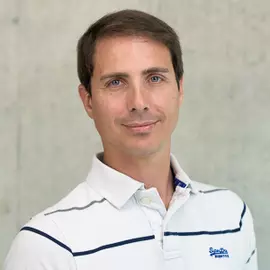
Prof. Dr. Alexandre de Spindler is a Professor of Information Systems at the Zurich University of Applied Sciences (ZHAW) within the School of Management and Law . He co-leads the Center for Information Systems and Technologies and focuses on application development frameworks for conversational interactions with information systems, leveraging multimodal foundation models while enhancing their controllability and reliability. His work extends to improving social skills in digital interactions and teaching agile requirements engineering. University: Zurich University of Applied Sciences School: School of Management and Law Department: Institute of Business Information Technology Academic Rank: Professor His research explores conversational systems , generative AI , and stateful prompt orchestration for complex interactions, particularly in healthcare and financial sectors. Recent work includes frameworks like PROMISE for model-driven prompt management and Science Fiction Prototyping for responsible AI innovation. Teaching contributions span data science programs (BSc, MSc, CAS) covering machine learning, generative AI, and full-stack application validation. He collaborates across disciplines including gerontology and forensic phonetics, with a focus on applying AI to societal challenges.
Michael D. Smith is the John H. Finley, Jr. Professor of Engineering and Applied Sciences and Distinguished Service Professor at Harvard University. He previously served as Dean of the Faculty of Arts and Sciences (FAS) for 11 years, leading Harvard's largest school with a focus on undergraduate education, faculty development, and interdisciplinary research. He holds a Ph.D. from Stanford University (1993), a Master’s from Worcester Polytechnic Institute, and a Bachelor’s from Princeton University. His academic career is complemented by industry experience, including co-founding Liquid Machines (acquired by Check Point in 2010), and advisory roles with venture capital firms like 1984 Ventures and GSV Ventures. Research interests span computer science education innovation, technology’s societal impact, and hardware/software systems. He pioneered work on voltage noise mitigation in processors, cybersecurity solutions, and online education platforms like edX. Awards include the NSF Young Investigator Award (1993), Alpha Iota Teaching Prize, and W.E.B. Du Bois Medal. Currently, he advises startups and educational initiatives such as CS Forward and Kira Learning, while developing new in-person and online courses. His leadership roles include Board member at The Peddie School and former edX Board member (2012–2018).
Dr. Frederico Martins is a Senior Research Fellow and solid-state physicist specializing in quantum computing with spin qubits. He currently leads the Spin Qubit team at QuantrolOx, a University of Oxford spinout developing machine-learning-based software for quantum processor automation. Previously, he led the Quantum Information team at Hitachi Cambridge Laboratory (University of Cambridge). His work bridges quantum hardware and intelligent software to address scalability and reliability in quantum architectures. Research interests include spin qubit control in semiconductor nanostructures, machine learning integration for device calibration, and overcoming challenges in multi-dot systems such as charge sensing and Pauli spin blockade detection. He focuses on high-fidelity spin manipulation, readout, and scaling to enable robust quantum computing platforms. His articles demonstrate expertise in silicon spin qubits, quantum dot characterization, and noise mitigation. Collaborations with industry and academia aim to advance scalable quantum technologies. Current projects emphasize automating quantum device control through AI-driven algorithms.
Saad Mubeen is a Full Professor of Computer Science at Mälardalen University, Sweden, affiliated with the School of Innovation, Design and Engineering and the Division of Networked and Embedded Systems. He holds a Master's in Electrical Engineering (Embedded Systems) and a PhD in Computer Science and Engineering from Mälardalen University (2014), with a Docent title (2018) focused on vehicular embedded systems. His research emphasizes predictable embedded systems, timing analysis for real-time communication, and component-based software design. Key areas include model-driven development for automotive systems, integration of TSN/5G networks, and fault-tolerant industrial architectures. He has led projects on end-to-end timing analysis in distributed systems, ROS 2 verification, and cognitive edge-cloud scheduling. Publications span 2021–2025, focusing on real-time systems, network protocols (TSN, AVB, 5G), and industrial automation. Notable work includes frameworks for TSN configuration, fault diagnosis tools using NETCONF, and scheduling algorithms for heterogeneous edge-cloud environments. His contributions address critical challenges in timing predictability, security, and resource optimization for cyber-physical systems. Education contributions include problem-based learning modules for vehicular software engineering. He is actively involved in bridging academia and industry through collaborative research on next-generation automotive and industrial systems.
Eva LAGUNAS is an Assistant Professor and Deputy-Head of the SIGCOM research group at the Interdisciplinary Centre for Security, Reliability and Trust (SnT) , University of Luxembourg. Her expertise lies in Non-Terrestrial Communication Systems , focusing on radio resource management and wireless networks optimization. She holds a Ph.D. and M.Sc. in Telecommunications Engineering from the Polytechnic University of Catalonia (UPC), Barcelona. Key Affiliations & Roles: Principal Investigator (PI) of the FNR CORE project VARRAY-5G (Vehicular Phase Array Antennas for 5G) PI of the CHIST-ERA project SHIELD (Secure Distributed Learning & Smart Contract Ecosystems) Co-PI in the ESA ARTES-funded NeuroSat project (Neuromorphic Processors for SatCom) Deputy-Head of SIGCOM group and active contributor to the TelecomAI-Lab (AI-driven satellite communication) Event organizer: Special Session on ML for NTN at IEEE ICMLCN 2025, Track Chair at EUCNC 2025 Research Interests: Non-Terrestrial Networks (NTN), 6G integration, satellite-ground network convergence, AI-driven optimization, reconfigurable intelligent surfaces (RIS), and neuromorphic computing for onboard processing. She also leads efforts in vehicular communications and energy-efficient satellite payloads. Recent Achievements: 2025: Elected to the EURASIP Board of Directors 2024: Listed in the 100 Brilliant and Inspiring Women in 6G list 2023: Co-authored NeuroSat project's IEEE publication on neuromorphic computing for SatCom Labs & Projects: TelecomAI-Lab : Developing neuromorphic hardware (e.g., Intel Loihi2, BrainChip AKIDA) for satellite applications ESA NeuroSat : Pioneering neuromorphic processors for onboard SatCom resource management Grants & Funding: Secured Luxembourg National Research Fund (FNR) and CHIST-ERA grants for projects like VARRAY-5G and SHIELD, totaling over €2M in research investment.
Lim Mei Kuan is a Senior Lecturer at the School of Information Technology, Monash University Malaysia. She holds a PhD in Computer Vision from Universiti Malaya and has conducted post-doctoral research in Artificial Intelligence. Her career includes roles as a researcher at MIMOS Berhad (2004-2007) and visiting researcher at Kingston University (2012-2013). Education: BSc (First Class Honours) in Computer Science, Universiti Malaysia Sarawak (2007) PhD in Computer Vision, Universiti Malaya (2015) Research Interests: Her work spans computer vision, machine learning, and their applications in smart manufacturing and digital health. Current projects include social media analytics for mental health monitoring, anomaly detection in manufacturing, and collaboration on clinical teletherapy systems. She actively explores swarm intelligence and deepfake detection technologies. Grants & Collaborations: DELTA: Inclusive Teletherapy (2022-2024) ADSM: Anomaly Detection for Smart Manufacturing (2022-2023) Sense-ED: Eating Disorder Relapse Detection (2021-2022) Awards: ITEX 2022 Silver Award for Self-Mind mental health app Labs & Teams: Active contributor to interdisciplinary projects with industry partners, focusing on AI-driven solutions for healthcare and manufacturing sectors.
Dr. Israat Haque is an Associate Professor in the Faculty of Computer Science at Dalhousie University, Halifax, where she leads the Programmable and Intelligent Networking (PINet) research group. She also holds an adjunct professorship in the Department of Computing Science at the University of Alberta. PhD in Computer Science, University of Alberta NSERC Postdoctoral Fellow, University of California, Riverside MSc in Computer Science, Concordia University Her research focuses on developing high-performance, secure, and dependable distributed and emerging networking systems, with key interests in Software-Defined Networking (SDN), Cyber-physical Systems (CPS), Internet of Things (IoT), 5G/6G technologies, and AI/ML applications in networking. She applies data-driven approaches to solve real-world problems in network programmability, stream processing, and edge/cloud computing. The 15 most recent publications highlight a strong trend in in-network computing, IoT security, AI-driven network reliability, and stream processing. Her work spans from theoretical surveys to practical system implementations, often leveraging programmable data planes (P4), machine learning, and hardware acceleration to address challenges in performance, security, and fairness in distributed systems. Dr. Haque has received numerous prestigious recognitions: IEEE/ACM N2Women Rising Star Award (2021) ACM FAccT Best Paper Award (2023) IEEE WICE Outstanding Mentoring Award (2025) University of Alberta Alumni Honour Award (2024) Digital Nova Scotia Thinking Forward Award (2022) Intel Fast Forward Initiative Winner (2022) President’s Research Excellence Award, Dalhousie (2021) She actively mentors PhD and MSc students and leads externally funded research projects, including a Canada First Research Excellence Fund (CFREF)-supported initiative on Securing Smart Environments. She has served on editorial boards of IEEE Transactions on Vehicular Technology and IEEE Communications Magazine, and on program committees of top conferences such as IEEE ICNP, IEEE NetSoft, and ACM SIGCOMM. Her lab, PINet, fosters innovation in networking systems and produces high-impact research with real-world applicability. Dr. Haque leads the PINet research group, which includes current PhD and MSc students working on cutting-edge topics like post-quantum cryptography, network programmability for security, and large ML model security. The group collaborates with institutions such as the University of Alberta, Laval University, and Concordia, and has strong industry ties with Intel, Meta, Amazon, and Facebook.
Professor Chike F. Oduoza is a distinguished academic in Process and Manufacturing Engineering at the University of Wolverhampton, Faculty of Science and Engineering, Department of Chemical Engineering. He holds the rank of Professor and serves as the academic lead for chemical engineering, with extensive leadership in research, teaching, and professional service. His educational background includes a PhD in Instrumentation and Control from UMIST (University of Manchester), an MBA from the University of Exeter, and multiple postgraduate qualifications in management, teaching, and chemical engineering. He is a Chartered Engineer, Fellow of the Institution of Chemical Engineers, and Senior Fellow of the Higher Education Academy. His research interests span chemical and manufacturing engineering, with a focus on electroplating, corrosion protection, reactor design, sustainability, life cycle engineering, oil and gas processing, and risk management in industrial and construction sectors. He has developed innovative models for SMEs, particularly in risk assessment and lean-excellence business management. The recent publications reflect a strong trend in sustainable energy systems, risk and safety management, digital transformation in manufacturing and oil & gas, and advanced materials. His work integrates computational modelling, experimental validation, and practical application across industries. Chartered Engineer (CEng), 1996 Fellow, Institution of Chemical Engineers, 2006 Senior Fellow, Higher Education Academy, 2020 Winner, West Midlands Construction Excellence Award (Innovation, 2017) Professor Oduoza has supervised over 30 PhD students and secured significant research funding from EPSRC, EU (FP7, Horizon 2020), and industry. He is currently leading the FLAREMANAGER and PROCEDURE consortia, focusing on flare gas utilization and future process design. His editorial roles include guest editor for Robotics and Computer Integrated Manufacturing and International Journal of Advanced Manufacturing Technology . He has chaired major conferences such as FAIM 2015 and the Electrochemistry and Sustainability Conference (2010). He leads the RiMaCon project, a €1M EU FP7 initiative that developed a risk management software system for SMEs in construction, which won a regional innovation award. His professional memberships include the Engineering Professors Council, SCI Electrochemical and Energy Groups, and the UK Royal Academy of Engineering Ethics Committee.
Dr. Markus Borg is a Senior Researcher and Adjunct Lecturer at Lund University, Sweden, specializing in the intersection of software engineering and applied artificial intelligence. He is a Principal Researcher at CodeScene and contributes to editorial boards for Empirical Software Engineering and IEEE Software . His work bridges academic research with industrial practice through collaborations with Ericsson and contributions to open-source tools like SMIRK. Markus's research focuses on empirical software engineering , technical debt , safety engineering , and requirements engineering for AI-integrated systems. He explores two key directions: AI4SE (applying machine learning to software engineering challenges like defect management and technical debt remediation) and SE4AI (ensuring quality assurance for ML components in safety-critical domains such as automotive systems). His work aligns with regulatory frameworks like the EU AI Act and industry standards for automotive safety. 2025 Contributions : Gamify Track: Two papers on gamification in software maintainability ICSE Journal-First: Longitudinal study on automated bug assignment at Ericsson IDE Track: Trust calibration in AI-assisted refactoring TechDebt Technical Papers: ACE tool for LLM-based technical debt remediation 2024 Contributions : PROFES: AI Act compliance in requirements engineering MO2RE: Code quality specifications TechDebt: Maintainable code ROI analysis Programming with AI: CodeScene platform demonstration 2023 Contributions : CAIN: ML testing in automotive perception systems EASE: Code ownership and defect resolution Mutation Track: Safety-critical mutation testing validation His recent publications emphasize automated defect management , LLM-driven refactoring , and safety validation for ML components , particularly in automotive contexts. Tools like SMIRK and ACE demonstrate practical applications of his research. Markus actively participates in program committees for ICSE, TechDebt, and ICSME, with a focus on bridging academic research with industrial AI/SE challenges.
Furat Al-Obaidy is a Lecturer in the Department of Electrical and Computer Engineering at the University of Michigan-Dearborn's College of Engineering and Computer Science. His expertise spans machine learning, intelligent systems, VLSI circuits, multi-core systems, FPGA architecture, and deep learning applications. PhD in Electrical & Computer Engineering from Ryerson University (2021) MSc in Electrical & Computer Engineering from Ryerson University (2016) MSc in Control & Instrumentation Engineering from University of Technology, Baghdad (1999) BSc in Control & Systems Engineering from University of Technology, Baghdad (1996) His research focuses on power-aware computing systems, thermal imaging for IC testing, hybrid cache architectures, and AI-driven network optimization. He has published extensively on topics including GPGPU power management, 3D NoC routing, and wireless sensor networks. His recent publications highlight applications of neural networks in cache optimization, FPGA architecture, and thermal imaging for hardware diagnostics. Earlier work includes control system simulations for wind turbines and power factor analysis in electrical circuits. Ryerson Graduate Development Award (2021) Ontario Graduate Scholarship Award (OGS) (2020) Ryerson Graduate Fellowship (2018) Graduate Research Excellence Award (2017) Queen Elizabeth II Graduate Scholarship in Science and Technology (2017)
Caroline Lemieux is an Assistant Professor at the University of British Columbia, specializing in automated software testing and reliability. Her research develops methods for testing, debugging, and improving software correctness through techniques like fuzz testing and program synthesis. She holds a Ph.D. from UC Berkeley advised by Koushik Sen and a B.Sc. in Computer Science and Mathematics from UBC. Research Interests: Dr. Lemieux's work focuses on: Fuzz testing for vulnerability detection Program synthesis using AI/ML approaches Property-based testing frameworks Automated debugging and specification mining Applications of reinforcement learning in test generation Publication Trends: Her recent papers explore large language models for test generation, fuzzing strategies in CI/CD environments, and neural-backed program synthesis. Work consistently bridges theoretical computer science with practical software engineering challenges. Awards: ACM SIGSOFT Distinguished Paper Award Google PhD Fellowship Best Paper Award (Industry Track) Berkeley Fellowship for Graduate Study
Dr. Karol Tylmann is an Assistant Professor in the Department of Geomorphology and Quaternary Geology at the University of Gdańsk's Faculty of Oceanography and Geography. He leads research at the Laboratory of Geomorphological Reconstructions, focusing on the dynamics of Pleistocene ice sheets and landscape evolution in Northern Europe. His research integrates glacial geomorphology , Quaternary stratigraphy , and geochronological methods (e.g., cosmogenic nuclide dating, gamma-ray spectrometry) to reconstruct deglaciation patterns, ice-marginal processes, and sedimentary environments across Poland and the Baltic region. Key themes include: Ice sheet behavior during the Last Glacial Maximum and Younger Dryas Subglacial deformation mechanisms Coastal and fluvial responses to climatic shifts Geoheritage conservation in postglacial landscapes Recent publications (2018–2023) demonstrate a methodological emphasis on high-resolution geospatial analysis (LiDAR, object-based image processing), advanced dating techniques (10Be exposure, Bayesian modeling), and sedimentological diagnostics . Predominant research clusters include glacial landform mapping, deglaciation chronology, and geomorphic responses to paleoenvironmental change. Dr. Tylmann contributes to geotourism initiatives by evaluating the educational value of Poland's glacial landscapes. He maintains no listed research grants, awards, or supervised students in the available data.
Gerard Cramer, DVM, DVSc is a Professor in the Department of Veterinary Population Medicine (VPM) at the University of Minnesota , affiliated with the Fetrow Dairy Education Center . His research focuses on dairy cattle health, particularly lameness, hoof disorders, and metabolic diseases. Education: DVM and DVSc from the Ontario Veterinary College, University of Guelph. Research Interests include: Hoof health and lameness prevention Hyperketonemia and metabolic profiling Digital dermatitis and infectious hoof diseases Animal behavior and productivity metrics Precision livestock farming tools Recent Publications emphasize camera-based monitoring systems, hoof trimming efficacy, and metabolic disorder impacts on reproduction. He contributes to international standards via the ICAR Claw Health Atlas initiative. Email: gcramer@umn.edu
Martin Marie Hubert Choux is an Associate Professor at the Department of Engineering Sciences , University of Agder, Norway. He holds dual M.Sc. degrees in Mechatronic Engineering from École Nationale Supérieure d'Art et Métiers (France) and University of Queensland (Australia), and a Ph.D. in Automatic Control from Technical University of Denmark (2011). Education: M.Sc. in Mechatronic Engineering, École Nationale Supérieure d'Art et Métiers, Paris, 2006 M.Sc. in Mechatronic Engineering, University of Queensland, Brisbane, 2006 Ph.D. in Automatic Control, Technical University of Denmark, Copenhagen, 2011 His research focuses on mechatronics , robotics , and battery recycling , with over 15 recent publications (2024–2019) on: Automated Disassembly of lithium-ion batteries Fault Diagnosis in motor drives using structural analysis and neural networks Efficiency Optimization of electric drivetrains in offshore applications Comparative Studies of hydraulic vs. electric actuation systems AI and Robotics for EV battery recycling Control Algorithms for mechanical systems His work spans robotics , automatic control , and sustainable engineering , contributing to electric vehicle and offshore technology advancements.
Joshua Barbour is a Professor in the Department of Communication at the University of Illinois Urbana-Champaign. He directs the Automation Policy and Research Organizing Network (APRON) Lab, founded in 2018, which focuses on data-intensive automated work systems and communication strategies. His research explores how institutional structures shape organizational communication and collaborative efforts, emphasizing macromorphic perspectives that bridge micro-level practices and macro-level frameworks. Barbour’s work spans health communication, risk management, and digital innovation, with a focus on communication design logics and institutional moorings. Education details are not explicitly listed, but his career demonstrates advanced academic qualifications in communication studies. His research interests include automation policy, organizational analytics, and conflict of interest frameworks in biomedical research. He has published extensively on topics like emergency communication infrastructure, temporal dominance in workplace cycles, and interdisciplinary collaboration in healthcare settings. Barbour’s APRON Lab collaborates across disciplines to address future-of-work challenges, particularly in healthcare and organizational resilience. His work emphasizes practical solutions for navigating regulatory constraints and fostering reliable communication systems in dynamic institutional environments. Grants and advising details are not explicitly mentioned, but his role as a professor and lab director suggests involvement in academic mentorship and funded research initiatives. The APRON Lab serves as a hub for interdisciplinary projects addressing automation and organizational communication challenges.