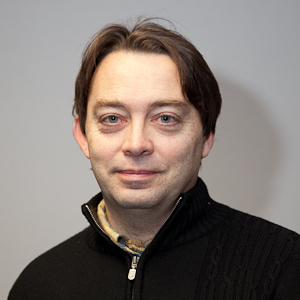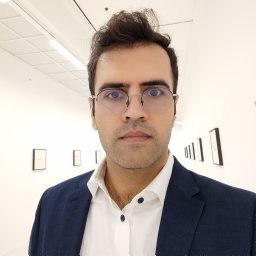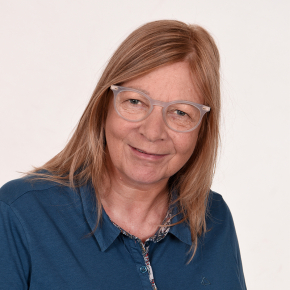
Béatrice Daille is a Professor at the University of Nantes and member of LS2N (Laboratory of Digital Sciences of Nantes), where she currently serves as coordinator of the 'signals, images, sounds, languages' research pole. She leads the preGDR (pre-Groupement de Recherche) on Automatic Language Processing (TAL), created in January 2018, which aims to unify various language processing communities including written language, oral language, and information retrieval specialists. Her research spans the evolving landscape of Natural Language Processing with particular focus on neural learning methodologies, deep learning applications, and multimodal interaction systems. She investigates critical challenges including model explainability, data bias mitigation, language preservation for endangered languages, and robustness of AI systems across different contexts. Her work bridges computational approaches with linguistic theory to address societal implications of language technologies. Professor Daille has been instrumental in structuring the French TAL community through the preGDR initiative, organizing events at major conferences including CORIA and TALN in 2019. She has submitted proposals for a summer school on new language interfaces scheduled for July 2020 and is planning community events on multilingualism and information retrieval. Her leadership follows 15 years heading a language processing research team and previous editorial work with the TAL journal. Co-editor of TAL journal during its transition to electronic format Former member of scholarly associations in computational linguistics Active organizer of community-building initiatives for NLP researchers Her research vision emphasizes the convergence of methods across language modalities, recognizing that future applications must handle written, spoken, and signed language forms. She advocates for interdisciplinary collaboration between field linguists and computer scientists to preserve endangered languages through digital means, noting that 'a non-digitized language is a language that will die.'