Ido Dagan is a Professor at the Department of Computer Science at Bar-Ilan University , Israel, and founder of the Natural Language Processing (NLP) Lab . He is a Fellow of the Association for Computational Linguistics and served as ACL President (2010) and Executive Committee member (2008–2011), leading the establishment of Transactions of the Association for Computational Linguistics . Dagan’s research focuses on applied semantic processing , including textual entailment , natural semantic representation , multi-text information consolidation , and interactive text summarization . His recent work addresses attributable text generation , summary-source alignment , and cross-sentence argument detection , with applications to fact verification and hallucination detection. Key trends in his publications include cross-document coreference resolution , question-answering systems , semantic parsing , and interactive summarization . Notable collaborative projects involve UI trajectory analysis and long-context QA with Arman Cohan and Jacob Goldberger. Scientific Awards Fellow, Association for Computational Linguistics (ACL) President, ACL (2010) Executive Committee, ACL (2008–2011) Advising & Collaborations Dagan has supervised numerous PhD, MSc, and postdoctoral students since 1997, including Shachar Mirkin and Shmuel Amar . He collaborates with researchers like Ori Ernst , Avi Caciularu , and Aviv Slobodkin , with grants from institutions like IBM Haifa Scientific Center and AT&T Bell Laboratories .
Matthew Lease is a Professor at the School of Information, University of Texas at Austin, where he serves as Director of Doctoral Studies and Assistant Graduate Advisor. He is a Distinguished Member of the Association for Computing Machinery (ACM), a Senior Member of the Association for the Advancement of Artificial Intelligence (AAAI), and an Amazon Scholar. Lease co-directs the $20M NSF-Simons AI Institute for Cosmic Origins (CosmicAI) and is a faculty founder and leader of UT's Good Systems, an eight-year, $20M university-wide Grand Challenge aimed at designing responsible AI technologies. In 2023-2024, he was invited four times to address the Texas Legislature on responsible AI. Ph.D. Computer Science, Brown University, 2010 M.Sc. Computer Science, Brown University, 2004 B.Sc. Computer Science, University of Washington, 1999 Lease directs the UT Austin Laboratory for Artificial Intelligence and Human-Centered Computing (AI&HCC), where his research spans artificial intelligence modeling and human-computer interaction design. His work focuses on creating novel datasets, building AI models, and evaluating both model performance and their impact on end-users. When automated AI falls short, his team designs human-in-the-loop approaches, leveraging AI model explanations and creative user interfaces. To promote fair AI, they focus on better annotation techniques to avoid bias and develop modeling strategies to mitigate dataset biases. Their work tackles real-world problems as part of UT Austin's Good Systems Grand Challenge, with an ongoing emphasis on content moderation—exploring automated, human-in-the-loop, and human-safe practices to combat disinformation, hate speech, and online polarization. Lease's recent publications (2021-2024) demonstrate a strong focus on human-centered AI, particularly in the areas of fair and explainable AI, content moderation, fact-checking, and crowdsourcing. His research integrates technical AI development with human factors considerations, emphasizing the importance of designing AI systems that work effectively with human users. The publications reveal a consistent theme of addressing bias in AI systems, improving human-AI collaboration, and developing methods to ensure the ethical deployment of AI technologies in sensitive domains like content moderation and misinformation detection. His work shows progression from foundational techniques in crowdsourcing and human computation toward more sophisticated approaches that consider psychological impacts and ethical implications. 2024 Test of Time Paper Award, AAAI Conference on Human Computation and Crowdsourcing (HCOMP) 2024 Most Influential Paper Award, IEEE/ACM International Conference on Automated Software Engineering (ASE) 2024 Best Paper Honorable Mention, ACM Conference on Computer Supported Cooperative Work (CSCW) 2022 Best Student Paper, Conference on Information Systems and Technology (CIST) 2020 Conference Award Track, Journal of Artificial Intelligence Research (JAIR) 2019 Best Student Paper, European Conference for Information Retrieval (ECIR) Early Career awards from DARPA, NSF, and IMLS Lease has secured significant funding for his research, including the $20M NSF-Simons AI Institute for Cosmic Origins and the $20M Good Systems Grand Challenge. His lab, AI&HCC, has developed numerous tools and methodologies for human-AI collaboration, particularly in the context of content moderation and fact-checking. He has advised numerous students who have gone on to publish in top-tier conferences and journals in AI, HCI, and NLP. Lease actively collaborates with industry partners including Amazon, where he serves as an Amazon Scholar, and has served on advisory boards for JASIS&T, Texas Advanced Computing Center (TACC), and UT Austin-Amazon Science Hub. His research has led to practical tools like SQUARE for aggregating crowd responses and methods for transparent AI evaluation. Lease leads the UT Austin Laboratory for Artificial Intelligence and Human-Centered Computing (AI&HCC), which has developed innovative approaches to human-AI collaboration. The lab's work on content moderation addresses critical challenges in online safety, including the psychological well-being of content moderators who face traumatic material. Their research on fair and explainable AI has produced methods for detecting toxic speech while maintaining accuracy across demographic groups. The lab actively collaborates with fact-checking organizations through co-design processes to create tools that meet real-world needs. As part of UT Austin's Good Systems initiative, the lab is developing AI technologies that prioritize human values and social responsibility from the outset of the design process.
Dr Felix M. Simon is a Postdoctoral Research Fellow in AI and Digital News at the Reuters Institute for the Study of Journalism , University of Oxford, and a Research Associate at the Oxford Internet Institute (OII) . He was previously a Knight News Innovation Fellow at Columbia University’s Tow Center for Digital Journalism (2021-2024) and holds affiliations with the Center for Information, Technology, and Public Life (CITAP) at the University of North Carolina at Chapel Hill. His research focuses on AI’s impact on News production and distribution Democratic discourse Political economy of technology-media power dynamics Misinformation and disinformation with a particular emphasis on generative AI applications and election-related information integrity. Recent publications include studies on AI chatbot responses during UK and European elections, misinformation trends, and news innovation strategies. He received the Hans Bausch Media Prize (2023) and has secured grants from the Leverhulme Trust, Minderoo-Oxford Challenge Fund, and Balliol College. Simon holds a DPhil in Communication (OII, with distinction) MSc in Social Science of the Internet (OII) BA in Film and Media Studies (Goethe-University Frankfurt) and advises media organizations and NGOs on AI, journalism, and democracy-related issues.
Mark Cieliebak is a Professor for Speech and Text Processing at the Zurich University of Applied Sciences (ZHAW), School of Engineering, where he leads the Natural Language Processing (NLP) research group at the Centre for Artificial Intelligence. He has held this position since December 2018, following prior roles as a lecturer at ZHAW (2012-2018). His educational background includes a Dr. sc. techn. in Computer Science from ETH Zürich (1999-2003) and a Diplom in Computer Science from Universität Dortmund (1990-1999). His research focuses on Natural Language Processing , Text and Speech Analysis , and Machine Learning applications . Primary domains include dialogue systems evaluation, low-resource speech recognition (particularly Swiss German), automated text generation assessment, and NLP for social media analysis. He also explores educational applications through flipped classroom methodologies and machine learning operations. Cieliebak's publications (2020-2024) demonstrate strong emphasis on NLP evaluation frameworks, speech corpus development for dialects, and generative AI validation. Recurring themes include robustness testing, bias mitigation in automated metrics, and multilingual processing challenges. His work frequently involves large-scale dataset creation and ensemble learning techniques. Scientific Awards: SwissNLP Award 2023 Best Paper Award - Honorable Mention at EMNLP 2020 ZHAW Teaching Award 2015 He leads numerous research projects including: Unified Model for Text Generation Evaluation End-to-End Swiss German Speech Translation Holistic Analysis of Misinformation in Social Networks Automated News Processing (AutoNews) Chatbot Development for Language Learners He co-founded SpinningBytes AG (2015-present) and maintains extensive industry collaborations. As head of the NLP research group, he oversees doctoral candidates and master's students, though specific advisee names aren't listed.
Zain Muhammad Mujahid is a PhD Fellow at the Department of Computer Science , University of Copenhagen (UCPH). His research focuses on Natural Language Processing with emphasis on Large Language Models (LLMs), bias detection, and fact-checking methodologies. Research Interests Factuality and bias prediction in news media LLM evaluation and error analysis Cross-lingual fact-checking systems Arabic-centric language modeling Evidence attribution in summarization AI safety in multilingual contexts Publications Zain's recent work addresses critical challenges in trustworthy AI, including automating error detection in NLG systems, developing cross-lingual bias detection frameworks (SAFARI), and creating benchmarks like Factcheck-Bench for evaluating automatic fact-checkers. His research also explores bilingual safety evaluation in Kazakh-Russian contexts and cultural adaptation of LLMs for Arabic language processing.
Patrick Johnson is an Assistant Professor of Journalism at Marquette University's Diederich College of Communication , specializing in News Literacy, Media Ethics, and Journalism Education . He holds a Ph.D. in Mass Communication from the University of Iowa and degrees from Marquette University. His research focuses on equitable media literacy, LGBTQ+ journalism, and the ethical boundaries of journalism. He has received numerous awards, including the AEJMC Promising Professor Award and Davis Ethics Outstanding Dissertation Award . Dr. Johnson's work bridges academia and practice, emphasizing inclusive pedagogy and community engagement . He directs Marquette's student media programs and collaborates with organizations like Trusting News and National Association for Media Literacy Education . His recent publications include studies on automated fact-checking, queer media ethics, and frameworks for equitable media literacy education. Education: Ph.D. (University of Iowa), M.A. & B.S. (Marquette University) Affiliations: AEJMC, ICA, NLGJA, SPJ Key Projects: Mapping Impactful Media Literacy, Center for Journalism Ethics (UW-Madison) He teaches courses on media ethics, journalism fundamentals, and digital media strategy, advocating for social responsibility in journalism practice.
Jaeung Sim is an Assistant Professor at the University of Connecticut's School of Business, Department of Operations and Information Management. His research focuses on understanding consumer interactions with information technology, digital platforms, and energy systems, with emphasis on sustainable operations and policy implications. He holds a Ph.D. in Management Engineering from KAIST and a B.S. in Industrial & Management Engineering (Summa Cum Laude) from POSTECH. Prior to academia, he served in the Republic of Korea Army as a sergeant and published data analytics work on music streaming trends. Research interests include: Online platform governance and consumer behavior Digital marketing strategies Energy economics and policy analysis Econometric field experiments Data-driven decision-making in operations Recent work explores topics like AI ethics in knowledge sharing, autocomplete impact on search behavior, smart metering effectiveness, and racial disparities in energy burdens. His music analytics research examines pandemic effects on streaming consumption and live-streaming economies. Teaching includes courses on data mining/business intelligence (OPIM 5671) and Python-based data science (OPIM 5512). Active in UConn's Stamford campus, he contributes to initiatives like decentralized AI education programs.
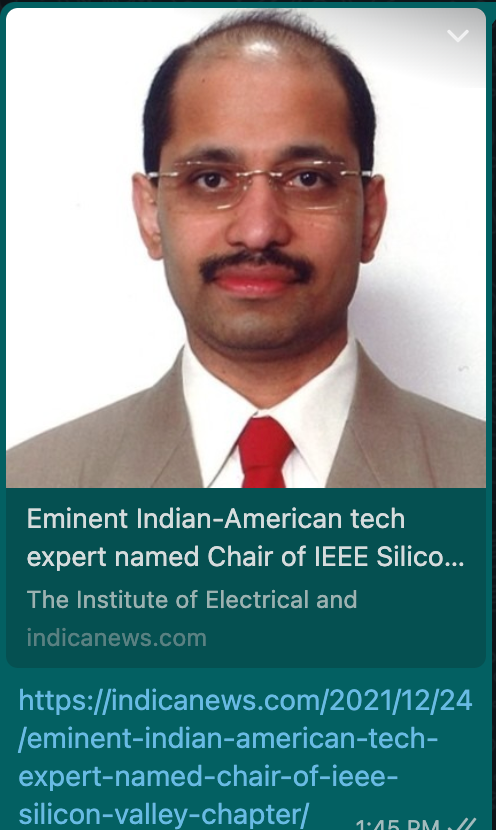
Professor Vishnu Pendyala is a tenured faculty member at San José State University (SJSU), serving as a Senator in the Academic Senate and Chair of the IEEE Computer Society, Santa Clara Valley Chapter. His academic roles include teaching graduate courses in Machine Learning (DATA 245), Big Data Technologies (DATA 228), and Data Warehousing (DATA 226). He holds dual expertise in Computer Engineering and Data Analytics, straddling the College of Engineering and the Data Science programs. His research focuses on AI ethics, misinformation detection, and sustainable AI , with over 100 publications and keynote addresses at IEEE, ACM, and Springer conferences. Notable contributions include frameworks for combating misinformation, quantifying AI's environmental impact, and promoting equitable AI development. Pendyala is a IEEE Distinguished Contributor and ACM Distinguished Speaker , emphasizing interdisciplinary collaboration in his work. Recent trends in his articles reflect growing attention to AI's societal implications, such as ethical governance, environmental sustainability, and policy reforms. He actively engages with media (Newsweek, The Hill) and policymakers to translate technical insights into public discourse. Pendyala’s service roles include leadership in academic senate committees and global IEEE chapters, advocating for equitable educational and research practices. Education: PhD, MS, BS in Computer Engineering and MBA in Finance. His work bridges technical innovation with societal responsibility, addressing challenges such as AI-driven democracy, ecological footprint mitigation, and global data governance.
Dr. Jieyu (Jade) Featherstone is a researcher in the Department of Communication at the University of California, Davis. Her work focuses on science communication, particularly addressing vaccine misinformation, public perception of biotechnologies like CRISPR and gene editing, and cross-cultural communication dynamics around health and agricultural advancements. She employs computational methods such as sentiment analysis, semantic network analysis, and machine learning to study social media discourse. Her research explores how fact-checking interventions impact vaccination attitudes, the role of influential users in health advocacy communities, and the ethical implications of emerging technologies. She has conducted comparative studies between the U.S. and China regarding public engagement with genetic engineering and GM food rumors. Featherstone’s publications since 2019 demonstrate a strong focus on designing effective communication strategies for combating misinformation and improving public understanding of complex scientific issues. Her work bridges computational methods with traditional social science research, offering actionable insights for policymakers, health communicators, and technology platforms.
Prof. Sören Auer is the Director of the German National Library of Science and Technology (TIB) and Professor of Data Science and Digital Libraries at Leibniz Universität Hannover's Faculty of Electrical Engineering and Computer Science . With academic positions at Dresden, Yekaterinburg, Leipzig, Pennsylvania, Bonn, and Fraunhofer Society, his career focuses on semantic technologies , knowledge engineering , and Artificial Intelligence Research Data Management Open Science Knowledge Graphs . He leads the Open Research Knowledge Graph (ORKG) initiative and co-founded DBpedia and eccenca.com . His research spans data science , AI-driven knowledge representation , and digital library systems . He has supervised numerous PhD theses and final-year theses while offering courses on Knowledge Engineering Semantic Web Technologies Data Integration Scientific Data Management . The technical focus includes semantic data interlinking , neuro-symbolic AI , and contextual metadata frameworks . As a recipient of prestigious awards including ERC Consolidator Grant SWSA Ten-Year Award ESWC 7-Year Best Paper Award OpenCourseware Innovation Award , Prof. Auer has led major projects like BigDataEurope and contributes to standards in W3C , NFDI , and EOSC . His recent publications demonstrate advancements in ontology alignment , LLM-driven schema discovery , and hybrid AI systems for scholarly knowledge organization.
Professor Monica Attard OAM is Co-Director of the Centre for Media Transition at the University of Technology Sydney (UTS), Faculty of Arts and Social Sciences, where she also served as Head of Journalism. With a career spanning over 35 years in journalism, she has transitioned into academia, focusing on media policy, public interest journalism, and the impact of digital technologies on news media. She is actively engaged in research, leadership, and policy consultation. Her educational background includes a Bachelor of Arts from the University of Sydney and a Bachelor of Laws from the University of New South Wales. Monica Attard’s research interests center on journalism sustainability, media regulation, disinformation, generative AI in newsrooms, and regional news media. Her work investigates how journalism adapts to digital platforms, regulatory frameworks, and technological disruption. She explores models for sustaining public interest journalism and the implications of AI on news production and credibility. Her recent publications reflect a strong focus on media policy, particularly Australia’s News Media Bargaining Code, generative AI, and regional journalism. The articles show a consistent trajectory toward understanding how journalism can survive and thrive in the digital age, with attention to equity, transparency, and public accountability. Gold Walkley Award for Excellence in Journalism (1991) Walkley Award for Best International Report (all Media) (1991) Walkley Award for Best Coverage of a Current Story (Radio) (1991) Walkley Award for Broadcast Interviewing (2002) Walkley Award for Broadcast Interviewing (2005) Medal of the Order of Australia (OAM) (1992) for services to journalism She supervises research students and leads multiple funded research projects, including investigations into generative AI and public interest journalism, regional media sustainability, and disinformation. She is a member of the Board of Media Diversity Australia and the Advisory Board of the Affinity Intercultural Foundation, contributing to media equity and inclusion. Her work often involves collaboration with government bodies and digital platforms. She co-leads the Centre for Media Transition, a cross-disciplinary research hub exploring journalism best practice, regulatory adaptation, and trustworthy digital society. The center conducts policy submissions, produces reports, and engages with national and international stakeholders on media transformation.
Michael Sejr Schlichtkrull is a Lecturer at the School of Electronic Engineering and Computer Science , Queen Mary University of London. His research focuses on automated reasoning using large language models (LLMs) and NLP systems for fact-checking and handling complex epistemological challenges, with a focus on integrating structured data sources like knowledge graphs, tables, and parse trees into verification workflows. His academic journey includes a PhD in Natural Language Processing from the University of Amsterdam (2021) and postdoctoral research at the University of Cambridge and Fitzwilliam College , where he developed automated fact verification systems under Andreas Vlachos. Research trends include cross-format verification (tables/web evidence), GNN interpretation , and improving question answering systems through unified knowledge representations. Recent work explores claim decontextualisation and diversity evaluation in NLP generation. Scientific Awards : Best student research paper at ESWC, 2018 Best paper at CogInfoCom, 2015
Juraj Vladika is a Research Associate at the Chair of Software Engineering for Business Information Systems (sebis) at the Technical University of Munich , affiliated with the School of Computation, Information and Technology and the Department of Computer Science . His research focuses on Natural Language Processing , with applications spanning Medicine and Healthcare , Automated Fact-Checking , Information Retrieval , Question Answering , and Legal Tech . Education: Bachelor's and Master's in Computer Science from University of Zagreb Exchange semesters at Technical University of Vienna and Pontificial University Comillas Research Projects: Juraj contributes to AI-driven medical knowledge systems (e.g., Aidvice for cancer care), scientific claim verification ( VeriSci ), and Legal Tech exploration ( NLawP ). Teaching: Lecture Advisor for Natural Language Processing and Software Engineering courses (2022–2025) Organizer for SEBA Lab Courses and Conversational AI Workshops Publications (2022–2025) emphasize LLM evaluation, medical fact-checking, legal NLP applications, and privacy-preserving AI. He also provides Guided Research opportunities in his expertise areas.
Ivan Kolev Koichev is a Professor at the Department of Software Technologies within the Faculty of Mathematics and Informatics at Sofia University 'St Kliment Ohridski'. He serves as the Director of the MSc program in Information Retrieval and Knowledge Discovery and Head of the Department of Software Technologies Education. His research spans Artificial Intelligence, Machine Learning, Natural Language Processing, and Information Retrieval. MSc in Applied Mathematics (1988), Sofia University PhD in Computer Science (1998), Bulgarian Academy of Sciences Postdoc Fellowships at GMD Germany (1999-2002) and Robert Gordon University UK (2002-2005) His work focuses on adaptive learning systems, fact-checking, author obfuscation, and community question-answering frameworks. Key publications address concept drift adaptation, political debate analysis, image claim verification, and credible news detection. He collaborates extensively with researchers like Preslav Nakov and Momchil Hardalov. He has contributed to SemEval-2016 Task 3 and developed the LEAF multiple-choice question generation system. His research integrates linguistic analysis, credibility assessment, and algorithmic innovation across multidisciplinary domains.
David Murungi is an Associate Professor in the Department of Computer Information Systems at Bentley University. His expertise spans Health Information Systems, Social Implications of Technology, and IS Project Management. He holds a Ph.D. and MPA from Louisiana State University, and a BA from Williams College. His teaching focuses on Business Process Management and ERP Configuration, while his research explores healthcare IT governance, technology adoption in organizational settings, and IS sensemaking. Professional memberships include the New England Association of Information Systems, Academy of Management, and Association for Information Systems. He has actively contributed to the KPMG Ph.D. Project since 2007. Dr. Murungi’s work bridges theoretical and practical challenges in IT projects, with recent attention to AI-driven competitiveness and fake news dynamics. His research emphasizes argumentation frameworks, emotional labor in project management, and healthcare provider-patient dynamics in urgent care settings. Awards and honors are listed but specific details are not provided. His advising roles and grants are not explicitly documented here, though his extensive publication record reflects active engagement in interdisciplinary research. He is affiliated with Bentley’s Smith Technology Center and maintains a focus on real-world IT challenges through case studies and practitioner collaboration.








-1.jpeg)