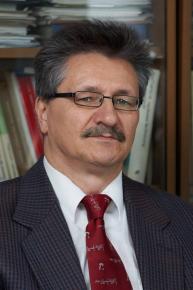
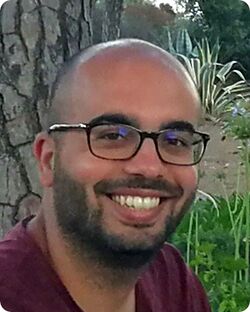
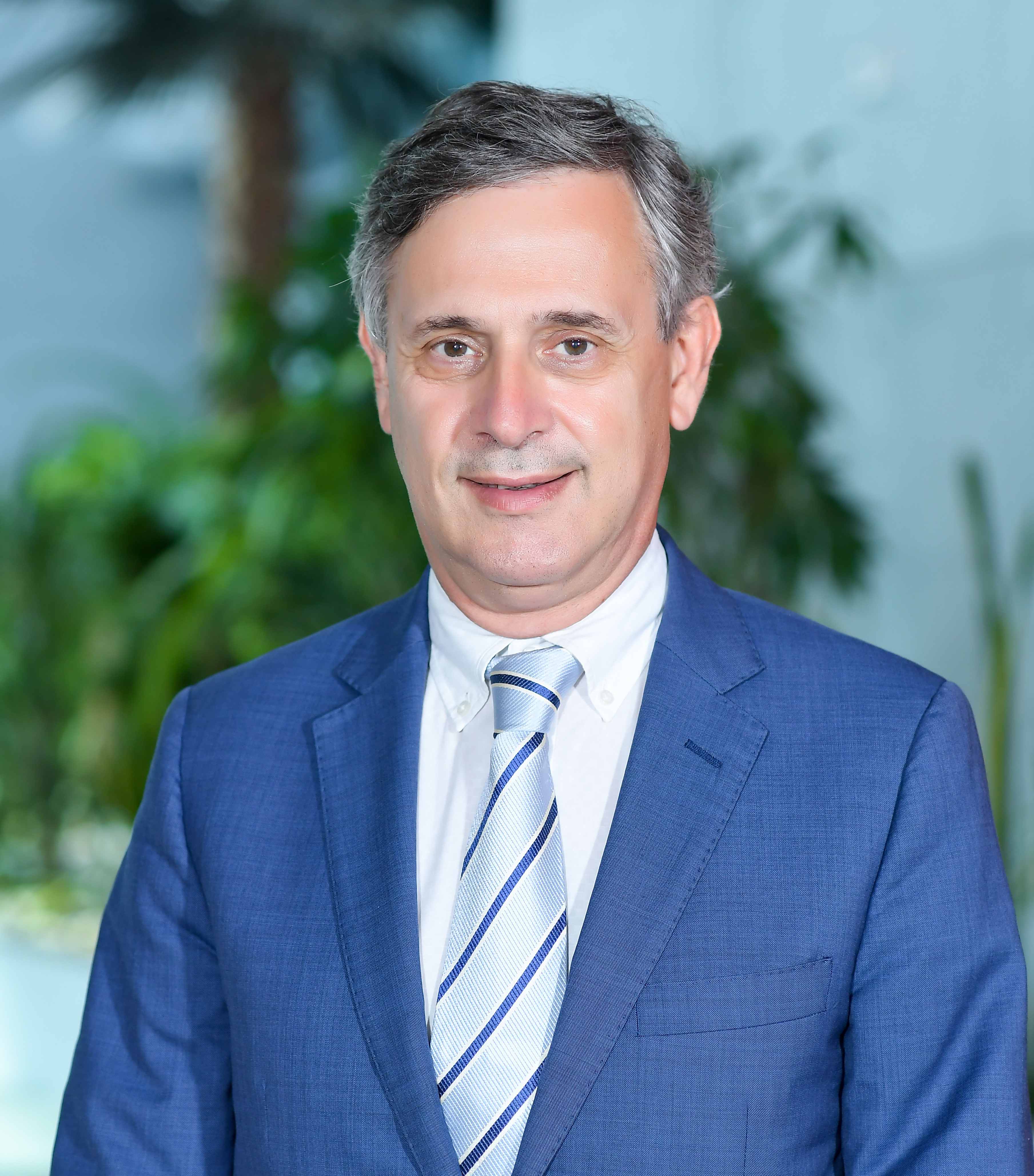
Krzysztof Mianowski is an Adjunct Assistant Professor at the Warsaw University of Technology , affiliated with the Faculty of Power and Aeronautical Engineering and the Division of Theory of Machines and Robots . He holds a Ph.D. in Mechanical Engineering and specializes in robotics, parallel manipulators, and medical robotics applications. His research focuses on the design of robotic systems for medical applications, including spine rehabilitation devices, surgical manipulators, and humanoid robots like ROMAN. He has authored numerous publications on parallel manipulators, gripper systems, and biomechanical modeling. His work spans fields such as rehabilitation engineering, control systems for robots, and advanced actuator technologies. Notable contributions include the development of elastic-fingered grippers, compliant robotic legs (e.g., CARL), and rehabilitation stations for spinal injury treatment. He is also involved in educational activities, teaching courses like Constructing Robots , Robot Drives , and Parallel Manipulators . Mianowski has secured patents for devices such as spine correction systems and robotic actuators, reflecting his emphasis on translating theoretical research into practical medical and industrial solutions.
Martin Klapez is an Assistant Professor at the University of Modena and Reggio Emilia, affiliated with the Department of Engineering Enzo Ferrari. He holds an M.S. in Theoretical Computer Science from the University of Bologna and a Ph.D. in Information and Communication Technologies (ICT) from the University of Modena and Reggio Emilia. His primary research focuses on computer networking, particularly safety-related V2X communications, public safety networks, and energy-efficient 5G architectures. He leads the UNIMORE Networking Lab and is involved in experimental evaluations of protocols like IEEE 802.11p for vehicular networks, TCP performance optimization over wireless, and green 5G design. Key research contributions include studies on TCP congestion control algorithms, energy footprint analysis of multi-RAT cellular systems, and field trials for safety-critical applications. His work bridges theoretical networking principles with practical implementations, including experiments in data visualization and smart infrastructure testing. Klapez has taught advanced courses on SDN, network emulation, and ns-3 tool usage at the university. He collaborates actively with international conferences and publishes widely in IEEE journals and forums. His technical expertise spans network softwarization, resource pooling in SDN, and middleware development for mission-critical networks. Current projects include LTE-V2X field tests for vulnerable road user safety and optimizing TCP modules like BBR and Small Queues for wireless environments. He contributes to standardization efforts through practical validation tools like Earthcloud for IoT seismic alerts.
Jordan Blair Woods is a Professor of Law and Interim Associate Dean for Academic Affairs at the University of Arizona College of Law. He specializes in criminal law, law & sexuality, family law, and legal ethics. Woods co-directs the Family and Juvenile Law Certificate Program, focusing on LGBTQ+ populations and youth legal regulation. His research critiques policing practices, LGBTQ+ legal protections, and child welfare policies. Education: Ph.D. and M.Phil. in Criminology, University of Cambridge (Gates Scholar) J.D., UCLA School of Law A.B., Harvard College Research Focus: Woods examines the intersection of law enforcement, LGBTQ+ rights, and youth justice. He challenges systemic biases in criminal justice and advocates for equitable policies. Notable works include critiques of traffic policing, religious exemptions in child welfare, and LGBTQ+ visibility in legal systems. Awards & Recognition: Two-time Dukeminier Award (2017, 2018) American Bar Foundation Fellow (2021) Harry Krause Emerging Family Law Scholar (2019) Leadership & Grants: Woods previously directed the Richard B. Atkinson LGBTQ Law & Policy Program at the University of Arkansas School of Law and held a fellowship at UCLA’s Williams Institute. His work has been featured in major media outlets like The New York Times and NPR . Labs/Teams: Active in interdisciplinary collaborations on policing reform, LGBTQ+ legal advocacy, and child welfare policy through his academic and leadership roles.
Jorge Dias is a Full Professor at Khalifa University (Abu Dhabi, UAE) specializing in Robotics and Artificial Intelligence, with a focus on Artificial Perception. He coordinates the Khalifa University Center of Autonomous Robotic Systems (KUCARS) and has contributed to robotics advancements since 1984. Habilitation/Doctor of Science (2011) & PhD (1994) in Electrical Engineering from University of Coimbra, Portugal His research spans Robotics for Sustainability , Computer Vision , and Social Robots , with over 300 publications. Recent work emphasizes autonomous navigation, underwater robotics, and neuromorphic computing. He has led international projects like the ECOBOTICS.sea RISE Marie Curie initiative and coordinated European consortia for elderly-inclusive robotics ("Social Robot", "GrowMeUP"). Current teaching includes courses in Algorithmic Robotics , Autonomous Systems , and Robotic Perception .
Jacopo Buongiorno is the Battelle Energy Alliance Professor of Nuclear Science and Engineering at MIT, serving as Director of the Center for Advanced Nuclear Energy Systems (CANES) and Director of Science and Technology at the MIT Nuclear Reactor Laboratory. His affiliations include MIT's School of Engineering and the Department of Nuclear Science and Engineering. He is a member of the U.S. National Academy of Engineering (2024) and a Fellow of the American Nuclear Society (ANS). His research focuses on advanced nuclear reactor design, reactor thermal-hydraulics, and safety. Notable projects include developing offshore floating nuclear power plants, nuclear batteries, and the Future of Nuclear Energy in a Carbon-Constrained World study. Buongiorno has published over 110 journal articles and holds patents in nuclear applications, including nanofluids and ultra-low thermal-conductivity materials for diving suits. He teaches courses in thermo-fluids and nuclear reactor engineering, receiving awards like the MIT MacVicar Faculty Fellowship (2014) and ANS Landis Award (2011). His advisory roles include the U.S. Secretary of Energy's Space Working Group and the Naval Studies Board. Key collaborations involve Core Power, Idaho National Laboratory, and projects like Taiwan’s Innovative Green Economy Roadmap (TIGER). Buongiorno’s work emphasizes nuclear innovation for decarbonization, with contributions to hydrogen production, microreactors, and nuclear energy policy. His labs and teams, such as CANES, drive transformative technologies for global energy challenges.
Prof. Günther Prokop is the Chair of Automobile Engineering at the Friedrich List Faculty of Transport and Traffic Sciences, Technische Universität Dresden, since 2010. He received the FISITA Academy of Technical Leadership Award 2022, which recognizes global automotive engineering excellence. His research focuses on vehicle dynamics, tire and suspension modeling, ADAS development, and automated driving systems. Affiliation: TU Dresden, Chair of Automobile Engineering Awards: FISITA Technical Leadership Award and Honorary Membership (2022) His recent work explores shock absorber friction , longitudinal dynamics metrics , and AI-enhanced suspension modeling . He contributes to virtual validation techniques , Monte Carlo safety assessments , and digital twin technologies for automotive powertrains. Key collaborations include international working groups under FISITA, aiming to advance carbon-neutral mobility and circular economy practices in the automotive sector. Scientific Awards: FISITA Academy of Technical Leadership Award 2022 Honorary Membership, FISITA Academy of Technical Leadership
Miguel Meléndez Useros is a PhD Candidate in Mechanical Engineering at the Universidad Carlos III de Madrid (UC3M), affiliated with the Advanced Vehicle Dynamics and Mechatronic Systems (VEDYMEC) research group. His work focuses on control systems for vehicles, particularly in areas like fault detection, active/semi-active suspension systems, autonomous platoons, and H-infinity control methodologies. He is involved in projects such as the EU-funded EcoMobility initiative (2023–2026), aimed at advancing electrical mobility solutions, and collaborations with institutions like the Tashkent State Technical University. His research bridges theoretical control approaches with practical applications in vehicle dynamics, emphasizing robustness and real-time adaptability. Key research interests include: Vehicle platoons and heterogeneous systems control Fault-tolerant mechanisms for sensors/actuators IoT-driven estimation architectures for vehicle stability Magnetorheological dampers for semi-active suspensions Publications highlight innovations in: robust output feedback control, adaptive platoon management, and optimal braking strategies based on road conditions. Recent work addresses challenges like mass uncertainty in platoons and disturbance compensation in autonomous systems. No scientific awards are explicitly mentioned, though his work shows strong engagement with peer-reviewed journals (e.g., IEEE Transactions on Reliability, Sensors) and conference contributions. Grants/Projects: Leading roles in EU-funded EcoMobility (€ funding) Collaborations with the Institute of Biomechanics of Valencia International exchanges with Uzbekistan's Tashkent State Technical University Labs/Teams: Core member of VEDYMEC, specializing in advanced vehicle dynamics research with applications in mechatronics and autonomous systems.
Ciaran Eising is an Associate Professor in the Department of Electronics & Computer Engineering at the University of Limerick. His research focuses on computer vision, machine learning, and their applications in intelligent transportation systems, particularly autonomous driving and driver assistance systems. He is a member of the Centre for Sustainable Digital (Re)Manufacturing, Data-Driven Computer Engineering Research Centre, and Lero – the SFI Research Centre for Software. Education: PhD from the National University of Ireland Galway (2010), BE (2003). External roles include Senior Expert at Valeo Vision Systems (2009–2020) and Adjunct Lecturer at NUI Galway (2016–present). His expertise spans automotive vision systems, embedded systems, and sensor fusion. Research Interests: Driver Assistance Systems, Autonomous Driving, Object Detection, Motion Segmentation, and Sensor Fusion. Over 94 publications since 2007, with recent work on BEV perception, multimodal fusion, and DDoS mitigation in healthcare IoT. Grants/Advising: Accepting PhD students; collaborations include industry partnerships and cross-disciplinary research. Labs/Teams: Active in Lero and other university research centers, contributing to UN SDGs via sustainable transportation innovations.
Elena Orlova is a Researcher at the Connecticut Transportation Safety Research Center (CTSRC), part of the University of Connecticut. She holds a degree from the School of Transportation Sciences at Hasselt University in Belgium. Her research focuses on transportation safety, driver behavior, and the implementation of intelligent solutions in public transportation systems. Notable projects include studies on driver confidence in autonomous systems, behavioral interventions for safe driving habits, and a mobile app concept for professional drivers. She contributed to a driving simulator study at CTI in 2021, investigating driver reactions to autopilot disengagement. Since November 2022, she has been a regular team member at CTI. Her work integrates behavioral science principles, such as the Fogg model, to enhance交通安全 and promote positive driving practices. She actively participates in advancing technologies for modern mobility solutions.
Prof. Gerald Ackner is a Professor at the University of Applied Sciences Furtwangen, based at the Tuttlingen campus. His research focuses on human factors in automated driving systems, driver behavior analysis, and human-machine interaction (HMI) design. He specializes in optimizing driver assistance systems, collision warning strategies, and visual attention management in automotive interfaces. His work bridges cognitive science and engineering, with a strong emphasis on improving road safety through better understanding of driver-system interactions. Key research interests include: Design and evaluation of proactive voice assistance systems in automated vehicles Reduction of unnecessary collision alarms through adaptive assistance strategies Analysis of non-driving task engagement in highly automated environments Development of LED-based visual attention guidance systems His publications from 2016-2025 consistently address challenges in automated driving safety, with a thematic focus on: Driver-vehicle interface design Collision avoidance system efficacy Driver behavior under automation Human perception vs. system perception discrepancies He participated in the interdisciplinary UR:BAN-MV research project, contributing to urban mobility HMI design and driver behavior prediction. His work reflects a commitment to both theoretical and applied research in automotive human factors.
Professor Mehrdad Dianati is a faculty member at Queen's University of Belfast in the School of Electronics, Electrical Engineering and Computer Science. His research focuses on Connected and Autonomous Systems, Autonomous Vehicles, Artificial Intelligence, Future Networks (5G/6G), and Future Transport Systems. He actively supervises PhD students in these areas and has collaborated with institutions like the University of Surrey and University of Waterloo. His work emphasizes cybersecurity in autonomous systems, cooperative perception for driving applications, and advanced communication protocols for vehicular networks. Key contributions include publications on anomaly detection in autonomous vehicles, motion planning using fluid dynamics, and simulation techniques for sensor data. Research Interests: Autonomous Vehicle Cybersecurity 3D Object Detection in Driving Scenarios Cooperative Perception and V2X Communication Deep Learning for Trajectory Prediction Recent Articles: Focus on cybersecurity, motion planning algorithms, and sensor simulation for autonomous systems Exploration of future networks (6G) and metaverse integration
Xavier Ferrás Hernández is a Professor at the Department of Operations, Innovation and Data Sciences within the Esade School of Business Administration and Management, part of Ramon Llull University. He is actively affiliated with the Institute for Innovation and Knowledge Management (IIK), where he contributes to research on digital transformation, artificial intelligence, and sustainable innovation. His research focuses on the convergence of Artificial Intelligence , Open Innovation , and Organizational Change . He explores how AI transforms decision-making and corporate structures, how open innovation drives value creation, and how deep tech startups can accelerate sustainable transitions. His work spans sectors including energy, education, and public governance. The most recent articles highlight a strong trend toward understanding AI's organizational implications , trust in AI-generated knowledge , and innovation methodologies for startups . His publications frequently appear in high-quality venues such as the Oxford Handbook of Open Innovation and Research Technology Management , and cover interdisciplinary themes at the intersection of technology, management, and strategy. He is actively involved in externally funded research projects, including: CyLH2Valley : Developing a clean hydrogen economy in Castilla y León. Good4Business : Implementing sustainable business models in large corporations. IIK Research Group : Advancing innovation management practices. Methodology for accelerating deep tech startups in the energy sector, where he serves as Principal Investigator. His advising activities are not explicitly detailed, but his leadership in research projects suggests mentorship of junior researchers and collaboration across multidisciplinary teams. He has secured grants from national agencies such as the Agencia Estatal de Investigación and AGAUR, indicating strong research funding capacity. Xavier Ferrás Hernández is embedded in a vibrant research ecosystem, working with international collaborators from institutions like Oxford University and Aarhus University, and contributing to both theoretical and applied dimensions of innovation and digital transformation.
Professor Patrick Langdon serves as Director of the Transport Research Institute at Edinburgh Napier University's School of Computing Engineering and the Built Environment (SEBE). He holds the position of Professor of Engineering Design, Transportation, and Inclusion and leads Ethics and Integrity initiatives for both SEBE and the School of Computing. With over 20 years of experience as an Experimental Psychologist, Langdon has established himself as a leading researcher at the intersection of cognitive science, artificial intelligence, and transportation engineering. Langdon's research spans multiple interconnected domains focused on human-centered design in transportation systems. His work centers on inclusive design principles for autonomous vehicle interfaces, human-machine interaction in complex environments, and the application of cognitive science to transportation challenges. Key research themes include designing for diverse user populations, predicting driver intent using Bayesian methods, enhancing situation awareness in multitasking scenarios, and developing ethical frameworks for human participation in technology research. His multidisciplinary approach bridges engineering, psychology, and computer science to address real-world transportation challenges. Analysis of Langdon's publication record reveals a consistent focus on human factors in automated transportation systems, with increasing emphasis on sustainable and inclusive mobility solutions. His work shows progression from foundational research in inclusive design to cutting-edge applications in autonomous vehicles and hydrogen-electric aviation. The publications demonstrate strong methodological diversity, incorporating experimental studies, theoretical frameworks, and real-world implementation projects that address both technical and social dimensions of transportation technology adoption. Langdon's research activities are supported by significant funding from diverse sources including Innovate UK, Engineering and Physical Sciences Research Council, European Commission, and industry partners. His leadership extends to major collaborative projects such as the HEART (Hydrogen Electric and Automated Regional Transportation) initiative, CAVForth automated bus service expansion, and research on inclusive kerb design for urban environments. These projects demonstrate his ability to translate theoretical research into practical transportation solutions with real-world impact. As Director of the Transport Research Institute, Langdon oversees a multidisciplinary team working at the forefront of transportation innovation. His research group focuses on the integration of cognitive science, artificial intelligence, and engineering design to create transportation systems that accommodate diverse user needs while advancing sustainable mobility solutions. The institute serves as a hub for collaboration between academia, industry, and government agencies working to shape the future of transportation.
Dr Fadi Assad is a Lecturer in Smart, Clean and Green Manufacturing at Cranfield University's Sustainable Manufacturing Systems Centre. His research focuses on integrating digital technologies with sustainable manufacturing practices to address energy efficiency and environmental challenges in industrial settings. With expertise spanning digital twinning, industrial automation, and sustainable manufacturing systems, he contributes to both academic research and practical industrial applications. His educational background includes: PhD in Sustainable Intelligent Manufacturing from the University of Warwick (United Kingdom) MSc in Production Engineering BSc in Industrial Engineering (Mechanical Engineering) Dr Assad's research interests center on the intersection of digital transformation and sustainability in manufacturing. He specializes in developing and implementing digital twin technologies for manufacturing systems to enhance energy efficiency and environmental performance. His work explores how Industry 4.0 and emerging Industry 5.0 concepts can drive sustainable manufacturing practices through intelligent systems design, energy flexibility approaches, and lifecycle management strategies. He investigates the application of virtual engineering and commissioning techniques to optimize manufacturing processes while reducing environmental impact. His publication record demonstrates strong focus on digital twin applications for sustainable manufacturing, with recent work examining energy management in cyber-physical systems, virtual engineering for assembly lines, and predictive maintenance approaches. His research shows a clear progression from fundamental energy optimization techniques toward more comprehensive digital solutions that integrate sustainability metrics throughout the manufacturing lifecycle. The work consistently bridges theoretical concepts with practical industrial applications. Dr Assad currently supervises PhD research with two open positions focusing on Sustainability-oriented Digital Lifecycle Management in Manufacturing-as-a-Service and Utilisation of Generative Artificial Intelligence to Advance Manufacturing Sustainability. His research activities are closely aligned with industrial applications through collaborations with manufacturing companies seeking to implement sustainable digital transformation. As part of the Sustainable Manufacturing Systems Centre at Cranfield University, Dr Assad contributes to a multidisciplinary team focused on developing innovative solutions for sustainable industrial practices. His work integrates with broader research initiatives examining the relationship between digital technologies and environmental sustainability in manufacturing contexts.
Gökhan Alcan is a Visiting Professor at Aalto University, affiliated with the Department of Electrical Engineering and Automation and the Intelligent Robotics research group. His work spans robotics, computer science, and engineering, focusing on autonomous systems , trajectory planning , and reinforcement learning . University: Aalto University Department: Electrical Engineering and Automation Academic Rank: Visiting Professor Alcan’s research interests include: Autonomous Driving Trajectory and Path Planning for Robotics Reinforcement Learning and Feature Selection Robotic Arm Manipulation His recent publications (2022–2025) highlight advancements in: Reinforcement learning algorithms for reward model transparency Dynamic programming with safety constraints for robotic manipulation Benchmarking sim-to-real gaps in cloth manipulation Optimization of quasi-static and dynamic robotic primitives Control systems for magnetic capsule manipulation Notable scientific recognition includes the Best Robotics Paper Award (2022). He has also contributed to open science initiatives, including a dataset for cloth manipulation benchmarking (2024) and media outreach on robotics research.