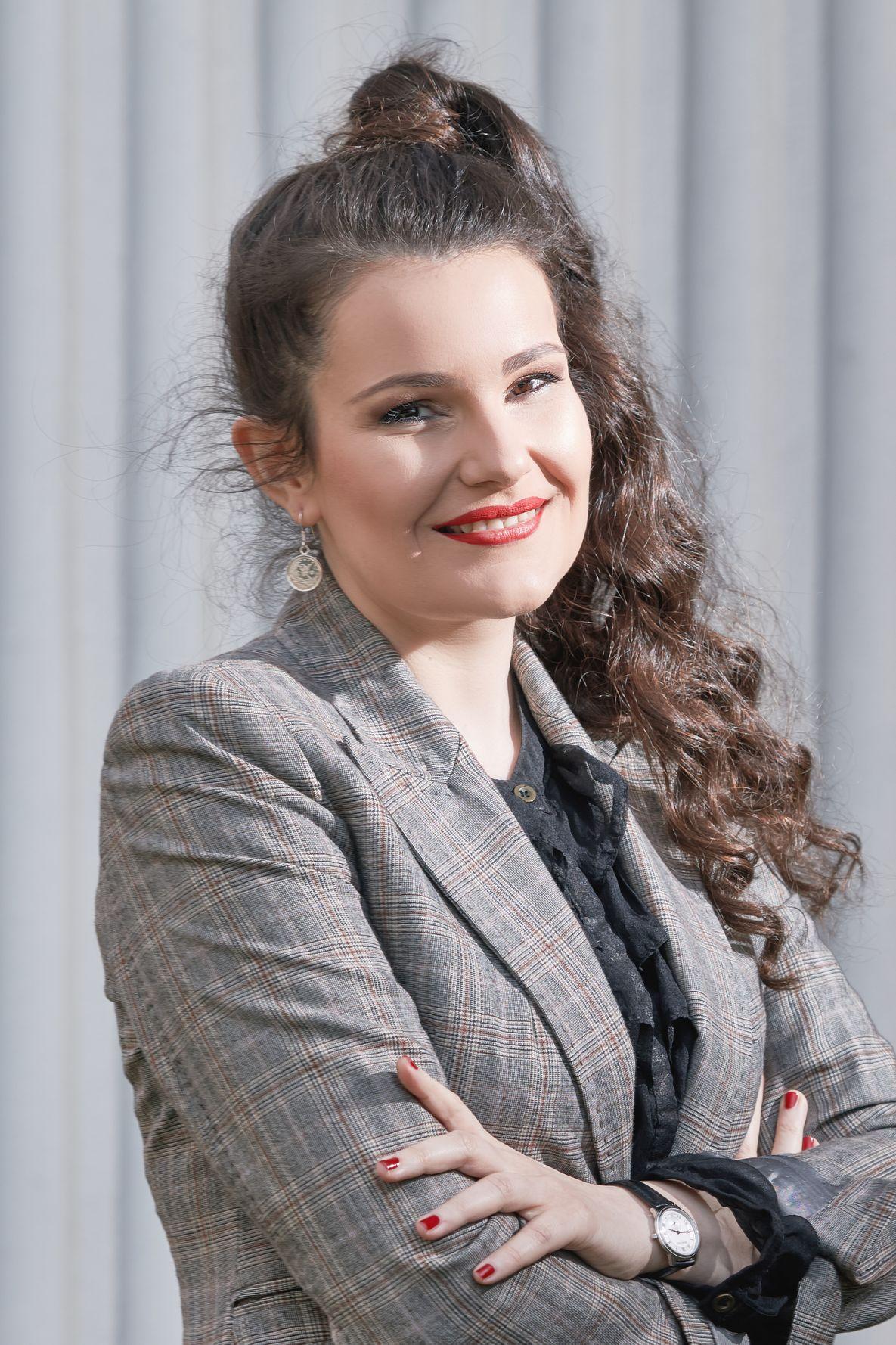
Dr hab. Anna Maziarczyk is a Professor at the Department of Romance Languages, Faculty of Languages, Literatures and Cultures, Maria Curie-Skłodowska University. She serves as Chair of the Quality Assurance Team for Romance and Italian Studies and leads editorial committees for Lublin Studies in Modern Languages and Literature . PhD studies at UMCS Specialized training at École de Hautes Études Commerciales (Lille, France) Her research focuses on: Contemporary French & Francophone literature Narrative structures & unreliable narration Ecocritical fiction Intermediality & intertextuality War trauma in literary representation Ludic elements in modern novels Her recent publications analyze narrative strategies in works by Éric Chevillard, Éric Laurrent, Ahmadou Kourouma, Alain Mabanckou, and Gilles Rozier. Key themes include ecological storytelling, childhood perspectives in conflict zones, and metafictional techniques. She has received multiple Rector's Awards for high-impact publications and coordinates the implementation of specialized French business language programs developed with École de Hautes Études Commerciales du Nord. 2018: National Education Commission Medal 2018, 2020 (twice), 2022: UMCS Rector's Awards for scientific articles Active in international collaboration through Erasmus and specialized training programs with French institutions.
Dr Gregory Leplatre serves as a Lecturer at Edinburgh Napier University's School of Computing Engineering and the Built Environment. He is actively involved with two major research groups: the Centre for Interaction Design and the Centre for Algorithms, Visualisation and Evolving Systems. His work spans across multiple interdisciplinary domains where technology meets human experience. Leplatre's research interests focus on the intersection of sound, visualization, and human interaction. He has made significant contributions to audio-visual interface design, particularly in developing tools that translate sound into visual representations through cymatics. His work extends to therapeutic applications, especially in using real-time 3D graphics to enhance music therapy sessions for individuals on the autism spectrum. Leplatre also investigates speech articulation, soundscape mapping, and multimodal interfaces that create natural cross-modal mappings between visual inputs and sound synthesis. His publication record reveals a consistent trajectory exploring how visual representations of sound can enhance user experience and therapeutic outcomes. Over the past decade, his research has increasingly focused on therapeutic applications for autism spectrum disorder, while maintaining strong foundations in sound synthesis techniques and interface design principles. The work demonstrates a progression from theoretical exploration of audio-visual correspondences to practical implementations with real-world impact. As an academic supervisor, Leplatre has directed or co-supervised numerous doctoral projects, including research on sketching interfaces for sound synthesis, real-time 3D graphic augmentation of music therapy, and emotion recognition in conversational agents. His grant portfolio includes projects like 'Micro-phonics' funded by the Scottish Funding Council and 'Personalisation and the ATM' funded by Innovate UK, demonstrating his ability to secure research funding across different domains. Within the Centre for Interaction Design and the Centre for Algorithms, Visualisation and Evolving Systems, Leplatre contributes to a vibrant research ecosystem focused on creating meaningful human-computer interactions through innovative visualization and sound techniques. His work bridges artistic expression with technical innovation, creating tools that make sound visible and tangible for both therapeutic and creative purposes.
Dr. Tim Lindgren is a Senior Lecturer in the Fashion program at the School of Design, Faculty of Creative Industries, Education & Social Justice, Queensland University of Technology (QUT). With over thirty years of experience as a commercial fashion designer in Australia and China, he brings extensive industry expertise into his academic role. He is the study area coordinator for the fashion program and actively contributes to curriculum development, including the implementation of mid-year entry. He also serves as the Academic Integrity Officer and Equity Representative for the School of Design. PhD, Queensland University of Technology Master of Global Competition and Consumer Law, University of Melbourne Master of International Business (Hons), Griffith University Graduate Certificate of Research Commercialisation, QUT Tim’s research focuses on fashion in China, fashion consumption, wearable technology, policy and legal frameworks in fashion, and principles of the circular economy. His methodologies are primarily qualitative, involving field-based primary data collection. His teaching spans both practical and theoretical domains, including fashion studios, product development, and wearable technology. His recent publications (2010–2021) explore the evolving role of Chinese fashion designers, the Shanghai fashion system, branding in China, and the integration of industry experience into academia. These works reflect a consistent engagement with global fashion systems, cultural legitimacy, and sustainable innovation. Award-winning fashion label (specific awards not named) Tim supervises postgraduate research and is an expert witness in legal fashion matters. He contributes to Standards Australia and the International Standards Organization. He is also recognized for integrating equity, integrity, and sustainability into his pedagogical practice, preparing students to be ethical leaders in the global fashion industry. He leads research on the future of fashion and market failures, and his work emphasizes sustainable practices and systemic change within the fashion industry.
Dr. Shaun Aghili serves as an Assistant Professor in the Faculty of Management at Concordia University of Edmonton (CUE), bringing extensive industry experience from the financial services sector. His academic focus centers on internal audit, fraud prevention, and information systems assurance within financial institutions. His educational credentials include: D.B.A. from Argosy University, USA (2003) M.Sc. in Financial Planning and Wealth Management from College for Financial Planning, USA (1999) B.A. from The Catholic University of America, USA (1985) Dr. Aghili's research integrates Risk Management , Cybersecurity , and Financial Services through frameworks like COBIT 5 and Lean Six Sigma. His work develops methodologies for fraud detection using data analytics, improves information systems audit protocols, and addresses security challenges in cloud computing and biometric authentication systems. Notable contributions include operational audit frameworks and corporate forensics governance models. His publication trend (2009-2014) reveals a strategic shift toward interdisciplinary solutions combining information security standards with financial risk management. This evolution demonstrates increasing focus on automated forensic approaches, e-government security models, and cloud computing SLA evaluations within financial contexts. Award recognitions include: IMA Certificate of merit for advancing management accounting literature 2009 IMA merit award for Lean Six Sigma audit framework research As a doctoral advisor, Dr. Aghili has successfully guided three PhD candidates through dissertation research on leadership dynamics in Taiwanese hospitality, workers' compensation fraud patterns, and RFID privacy implications in identification systems. His professional certifications—including CISSP, CISA, and CIA—enhance his industry-relevant research approach within the ISSAM Research Cluster. He actively contributes to CUE's ISSAM (Information Systems Security and Assurance Management) Research Cluster, focusing on cybersecurity risk mitigation strategies for financial institutions through collaborative framework development.
Professor Donna Marshall is a Full Professor and Vice-Principal for Research & Innovation at the College of Business, University College Dublin (UCD). She serves as the Executive Director of the UCD Earth Institute: People, Work, Society initiative and is a multi-award-winning Sustainable Supply Chain scholar. Professor Marshall is ranked among the top supply chain researchers globally, with over one hundred research outputs in prestigious journals including MIT Sloan Management Review, Journal of Business Ethics, and Production and Operations Management. Her educational background includes a BSc and PhD from the University of Bath, UK. Professor Marshall has extensive experience in academic leadership, having served as Head (Vice Principal) of Research, Innovation and Impact for the UCD College of Business from September 2018 to June 2021. Professor Marshall's research focuses on sustainable supply chains, with particular emphasis on climate crisis response, ethical sourcing, supply chain transparency, and the bio-circular economy. She is passionate about bringing systemic change to broken supply chains and addressing the world's biggest crises of climate chaos and exploitation of people and planet. Her current research projects include sustainable supply chains in fashion with Fashion's Responsible Supply Chain Hub (FReSCH), sustainable bio-circular economy initiatives, and transparency in complex supply chains including controversial industries. She has secured research funding with multiple national and international teams amounting to over €30 million. Her recent publications reveal a strong trend toward examining power dynamics, justice issues, and transparency in supply chains, particularly in the fashion industry. She has also made significant contributions to understanding issue-washing (including greenwashing and biowashing) and developing frameworks for sustainable biocircularity. Her work increasingly focuses on just transitions and ensuring that sustainability efforts authentically address social and environmental challenges rather than merely creating the appearance of progress. Harold E. Fearon Award for Best Paper in Journal of Supply Chain Management (2014) Nevi Healthcare Best Paper Award Runner up at IPSERA Conference (2015) Multiple teaching awards for her innovative approaches to supply chain education Former President of the International Purchasing and Supply Education and Research Association (IPSERA) Professor Marshall has extensive teaching experience across undergraduate, Masters, and PhD levels. She created and directed the QS-world ranked UCD MSc in Supply Chain Management, which evolved into the MSc in Sustainable Supply Chain Management in 2023. She serves on the editorial boards of multiple high-ranking journals and provides pro bono advisory services to international organizations, companies, NGOs, and government bodies. Her teaching philosophy emphasizes individualized learning, inclusivity, and life-long learning, with a focus on creating safe, encouraging environments for her diverse international student body. She leads several research teams and initiatives including Fashion's Responsible Supply Chain Hub (FReSCH) and works closely with industry partners to translate research into practical applications for more sustainable and just supply chains.
Maggie Cao is the David G. Frey Associate Professor of Art History at the University of North Carolina at Chapel Hill. She specializes in 18th-19th century American art within global contexts, focusing on intersections of art with technology, natural science, and economics. Her work includes two monographs: The End of Landscape in Nineteenth-Century America (2018) and Painting US Empire (2025). B.A. and Ph.D. in Art History from Harvard University (2006, 2014) Postdoctoral work at Columbia University’s Society of Fellows Her research examines globalization and artistic responses to modernity, including ecological temporality through Arctic photographs, geological time in etchings, and nonhuman time in art materials. Selected publications and projects span trompe l’oeil still lifes, media theory, and cultural artifacts linked to colonial systems. She has received prestigious fellowships from the National Humanities Center, Terra Foundation, Smithsonian, and Getty Research Institute. Undergraduate courses: Introduction to American Art, Art and Money, Making Material Histories (Makerspace) Graduate courses: Art and Environments, Media and Materiality
Xin Wang is a Professor at Fudan University's School of Computer Science, specifically within the Department of Communication Science and Engineering and affiliated with the State Key Laboratory of ASIC and System in Shanghai, China. With 185 publications spanning two decades (2003-2025), Wang maintains an exceptionally active research profile, particularly evident in recent high-output years including 22 publications in 2019, 19 in 2021, and 13 in 2024. The research portfolio demonstrates deep collaboration networks, most notably with Yang Chen (45 co-authored papers), Yangfan Zhou, and Qingyuan Gong. Wang's research spans multiple critical areas in computer science, with significant contributions to networking systems (particularly CDN optimization, HTTP/3 implementation, and IPv6 infrastructure), software engineering (focusing on work rhythms, testing methodologies, and GUI analysis), mobile applications (including healthcare implementations and accessibility features), and security (especially account security and fraud detection in e-commerce). The interdisciplinary nature of the work is evident through applications in healthcare, e-commerce, campus safety, and IoT systems. Analysis of recent publications (2023-2025) reveals a strong trend toward practical system implementations addressing real-world challenges. The research demonstrates a consistent pattern of moving from theoretical foundations to deployable solutions, with particular emphasis on optimizing performance in networking systems, enhancing security in digital platforms, and improving user experience across diverse application domains. The work frequently incorporates machine learning techniques to solve complex system problems while maintaining practical applicability. While specific grant information isn't detailed in the publication records, the extensive collaboration network spanning multiple institutions in China and internationally suggests substantial research funding support. The consistent publication output across top venues including IEEE/ACM Transactions, INFOCOM, SIGCOMM, and ICSE indicates sustained research productivity and impact.
Dr. Stavros Shiaeles is an Associate Professor in Cybersecurity at the Faculty of Technology , University of Portsmouth, and Co-Director of the Portsmouth AI and Data Science Centre (PAIDS) . With over 130 publications and 3000+ citations, he specializes in cybersecurity, applied AI, and threat mitigation frameworks. Academic Qualifications : PhD in Electrical and Computer Engineering (Democritus University of Thrace, 2013), MEng in Electrical and Computer Engineering (Democritus University of Thrace, 2007), MBA in Human Resource Management (University of Plymouth, 2016), and PG Cert in Academic Practice (University of Plymouth, 2017). Research Interests span cybersecurity, malware detection, blockchain, 6G networks, AI/ML applications, digital forensics, and post-quantum cryptography. His work addresses threats in IoT, financial systems, and critical infrastructure while exploring SDG4 (Quality Education) through cybersecurity training. Recent publications emphasize AI-driven anomaly detection (e.g., ransomware behavior analysis, 6G traffic monitoring), deepfake forensics, synthetic image attribution, and hybrid blockchain/AI security architectures. He also curates datasets for malware analysis and synthetic media classification. Scientific Awards : IEEE SMC TCHS Outstanding Service Award (2021). Grant Funding : Over €18M secured in EU Horizon 2020 grants, including €8M as Principal Investigator for the ongoing XTRUST-6G project. Active in KTPs, consulting, and research commercialization opportunities.
Leslie K. John is the James E. Burke Professor of Business Administration at Harvard Business School , where she conducts behavioral science research on decision-making, privacy, and health behaviors. Her work bridges psychology, marketing, and public policy. Harvard Business School Behavioral Scientist Consumer Psychology Health Policy Consultant Research Interests include: Privacy Decision-Making: Understanding motivations for personal data sharing with firms and employers. Health Behavior: Designing psychological interventions for weight loss and reduced sugary drink consumption. Marketplace Irrationality: Exploring cognitive biases in organizational and consumer contexts. Publication Trends show interdisciplinary work spanning behavioral economics, psychology, and health policy with repeated collaborations across institutions. Key themes include incentive design, disclosure mechanics, and cognitive bias exploitation. Scientific Awards : Wired Innovation Fellow Association for Psychological Science awards Marketing Science Institute recognition Professional Activities include corporate consulting (Goldman Sachs, J.P. Morgan, Commonwealth Bank), keynote speaking on behavioral economics, and teaching material development for Harvard Business School cases.
Massimo Poncino is a Full Professor at the Department of Control and Computer Science (DAUIN) within the Faculty of Engineering at Politecnico di Torino. He serves as Scientific Advisor for the STMicroelectronics partnership and coordinates basic engineering subjects. A Senior Member of IEEE since 2012 and Fellow since 2012, he has served on editorial boards for IEEE Transactions on Computer-Aided Design, IEEE Design & Test of Computers, and ACM Transactions on Design Automation. Education: Laurea in Electronic Engineering (1989) and PhD in Computer and Systems Engineering (1993) from Politecnico di Torino Academic Career: Visiting Scientist University of Colorado (1993-1994), Researcher at Politecnico di Torino (1995-2001), Associate Professor at University of Verona (2001-2004), Full Professor at Politecnico di Torino (2006-present) His research focuses on energy-efficient digital systems , including design automation of SoCs, hardware-aware AI, battery management, cyber-physical systems, and embedded systems. Recent publications highlight advancements in digital twins for batteries , low-power neural network deployment , and IoT privacy . Scientific Awards: Recognition of Service Award - ACM (2013) Certificate of Appreciation - IEEE Circuits and Systems Society (2006, 2008, 2009) IEEE Fellow (2012-) Research Involvement: EU H2020, VI/VII Framework Programs evaluator Scientific Director for projects: Approxim@ction, EMBAI, DISLO-MAN, DAMASCO Member of EDA research group Teaching: Course director for Energy Management for IoT (2019-2025) Lecturer for Computer Science courses (2003-2025)
Dr Lee Davidson is a Senior Lecturer in the Museum & Heritage Studies programme at Victoria University of Wellington, New Zealand. She is actively engaged in interdisciplinary research and international academic collaboration, notably serving as a Visiting Professor at the Escuela Nacional de Conservación, Restauración y Museografía (ENCRyM) in Mexico for the past two years. Her research interests include visitor studies (theory and methods), intercultural museum practice, leisure and cultural tourism (history and contemporary practices). Her interdisciplinary work spans museum studies, anthropology, tourism, and heritage studies, with a strong focus on cross-cultural exchange, identity, and public engagement. The trends in her recent scholarly contributions reflect a deep engagement with intercultural heritage experiences, touring exhibitions, and the sociopolitical dimensions of museum practices. Her work explores how heritage is interpreted and experienced across borders, with particular attention to Indigenous representation, visitor meaning-making, and collaborative curation. Themes of cultural diplomacy, affect, and critical heritage theory recur throughout her publications and presentations. Senior Lecturer, Museum & Heritage Studies programme, Victoria University of Wellington Visiting Professor, International Course of Museology, ENCRyM, Mexico (2021–2023) Dr Davidson regularly presents at international conferences and delivers invited seminars, contributing to global academic discourse in museum and heritage studies. While specific grant and advising information is not available, her extensive participation in high-level academic forums suggests active research leadership and mentorship. She is involved in professional and academic networks centered on critical heritage studies, intercultural dialogue, and the role of museums in shaping historical consciousness and social change.
Aldijana Bunjak is an Associate Professor at the University of Stavanger, affiliated with the UiS School of Business and Law, Department of Innovation, Management and Marketing. She is actively engaged in research and academic collaboration, with multiple publications in 2024 across leading journals in management, psychology, and organizational behavior. Research Interests: Her work centers on leadership, identity, burnout, workplace well-being, digital innovation, and employee performance. She investigates how identity leadership, authentic leadership, and relational identification influence individual and organizational outcomes. Her research also explores the impact of technostress, job autonomy, and workplace bullying on burnout and turnover, with implications for modern digital work environments. Publication Trends: The recent articles highlight a strong focus on psychological and behavioral aspects of leadership and work life. Themes include identity processes, emotional regulation, digital stress, and innovation. Her work often employs longitudinal and cross-lagged designs, indicating rigorous empirical methodology. Collaborative authorship is common, especially with European scholars in organizational psychology and management. Scientific Awards: No awards mentioned in the provided text. Advising and Grants: There is no explicit mention of students supervised or research grants obtained. However, her active publication record suggests ongoing research projects and likely supervision of graduate students, though not listed. She presents at international conferences, indicating engagement with the scholarly community. Labs and Teams: No specific research labs or teams are mentioned. However, her collaborations with researchers across Europe (e.g., Černe, Balzano, Epitropaki, Van Dick) suggest participation in international research networks focused on leadership, identity, and organizational health.
Carmen Brandt is a Professor of Contemporary South Asian Studies at the University of Bonn, Germany, where she has been a faculty member since 2017, first as a Junior Professor and since 2023 as a W2-Professor. She is affiliated with the Department of South Asian Studies within the Faculty of Humanities. Her academic journey began at Martin-Luther-Universität Halle-Wittenberg, where she earned her Magistra Artium in 2006 and her doctorate in 2015 with a dissertation on the 'Bedes' of Bengal. She previously served as a research associate and lecturer at Halle before joining Bonn. W2-Professor, University of Bonn (2023–present) Junior Professor, University of Bonn (2017–2023) Research Associate, Martin-Luther-Universität Halle-Wittenberg (2007–2016) Lecturer in Bengali, Halle (2006–2007) Her research focuses on language and script politics, minority discourses, nation-building, and the cultural dynamics of Bengal and Bangladesh. She investigates how writing systems serve as tools of identity formation and political contestation, particularly among marginalized communities such as the 'Bedes' and Balti people. Her interdisciplinary approach draws from sociolinguistics, cultural anthropology, and postcolonial theory. The 15 most recent publications reflect a consistent engagement with themes of script identity, ethnic marginalization, and geopolitical belonging. Her work spans monographs, journal articles, and edited volumes, often analyzing how language policies and media representations shape national and subnational identities in South Asia. She frequently collaborates with scholars across institutions and countries, contributing to transnational academic discourse. Scientific and Professional Memberships: Editorial Team, ASIEN journal Chairperson, Bengal Link e.V. Chairperson, Deutsche Gesellschaft für Asienkunde (DGA) Spokesperson Council, Working Group “Modern South Asia” (DGA) Member, Literaturforum Indien e.V. Member, Association of Asian Studies She has advised and organized numerous academic events, including the German South Asia Days and workshops on Tibetanness and language politics. She has delivered invited lectures across South Asia, Europe, and North America, demonstrating her international scholarly reach. Her work bridges academic research and public engagement, particularly through journalistic contributions on South Asian socio-political issues. Laboratories and Research Teams: While not leading a formal lab, she actively organizes and participates in collaborative research networks, including the Working Group on Modern South Asia and the German South Asia Consortium. She has co-organized multiple international conferences and workshops, fostering interdisciplinary dialogue among early-career and established scholars.
Abiola Farinde-Wu is an Associate Professor and Graduate Program Director in the Department of Leadership in Education at the University of Massachusetts Boston, within the College of Education and Human Development. She teaches doctoral students in the Urban Education, Leadership, and Policy Studies program and is a leading scholar in urban education, teacher diversity, and equity. Her educational background includes a Ph.D. in Curriculum and Instruction from the University of North Carolina, an M.A. in Administration from Lamar University, and a B.A. in English from Texas A&M University. Dr. Farinde-Wu's research centers on social justice in education, with three key lines of inquiry: (1) the educational experiences and outcomes of students of color, (2) diversifying the U.S. teacher workforce—particularly Black women educators, and (3) preparing educators for culturally diverse populations. She employs critical theories such as Black feminism and intersectionality to analyze policies, pedagogies, and structures in urban schools. Her scholarly work, published in journals like Urban Education , Theory into Practice , and Teachers College Record , reflects a strong commitment to qualitative inquiry and equity. Her recent publications include co-edited volumes on Black female teachers and mentoring Black college students, highlighting her focus on representation, identity, and support systems in education. Early Career Award from AERA (Division-K) Dr. Farinde-Wu has secured research funding and editorial roles, serving on the boards of the American Educational Research Journal and Educational Researcher . She mentors doctoral students and contributes to national discourse on teacher diversity and urban education reform. Her work bridges research, policy, and practice to advance equity in education. She leads research initiatives focused on urban education and teacher preparation, contributing to academic teams and policy discussions aimed at transforming educational systems for marginalized communities.
Lillian Wang is a Lecturer at the School of Information Technology, Monash University Malaysia. She holds a PhD in IT from Multimedia University (2020), MEngSc from Multimedia University (2012), and BSc (Hons) in Software Engineering (2006). With 15+ years of experience, she has served as an educator, trainer in educational technologies (e.g., Google Education, Blended Learning), and reviewer for international journals/conferences. Research focuses on Cloud e-learning, IoT in wastewater treatment, and security/privacy in educational platforms. Contributions to UN SDGs: Education (4) and Clean Water & Sanitation (6). Active in IoT-based solutions for healthcare (medication dispensing), smart attendance systems, and environmental monitoring. Her work includes 19+ peer-reviewed publications and collaborations across multiple disciplines. She is currently accepting PhD students in VR in education and AI/ML in wastewater management.