
Martin Hinterberger is Professor of Byzantine and Modern Greek Studies at the University of Cyprus since 2002. He holds MA and PhD degrees from the University of Vienna and served as research fellow at the Austrian Academy of Sciences (1995-2001). He has taught at the University of Vienna, Freie Universitaet Berlin, and EHESS Paris. Specializes in emotions in Byzantine literature Expert in Byzantine hagiography and theoretical approaches Focus on language analysis (learned vs vernacular) Collaborator on the bibliography of the Byzantinische Zeitschrift His recent publications explore the synthetic perfect tense in Byzantine Greek, hagiographic metaphrasis, and emotional expressions in literature. He co-edited volumes on Byzantine-Latin intellectual history and serves as a leading voice in Byzantine philology.
جستجوی استاد راهنمای دانشگاهی
برای مسیر پژوهشیتان، استاد راهنما، استاد دانشگاه و پژوهشگر مناسب را پیدا کنید و با آنها ارتباط بگیرید.
نمایش ۱-۱۵ از ۱۶ استاد راهنما
اطلاعات پروفایلها از صفحات عمومی دانشگاهها گرفته شده و ممکن است بهروز نباشد.
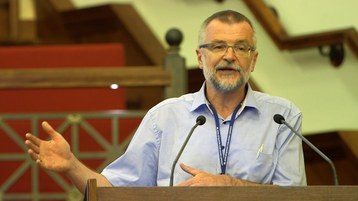
Professor Christian Mair is Chair of English Linguistics at the University of Freiburg, Germany, with a distinguished career spanning decades in linguistic research. He holds a prominent position in the Department of English Linguistics within the Faculty of Humanities and maintains an active research profile with regular publications and supervisory responsibilities. Professor Mair's scholarly work centers on corpus-based approaches to understanding language variation and change, with particular expertise in: World Englishes and their global development Corpus linguistics methodology and application Historical and contemporary grammatical changes in English Sociolinguistic aspects of language contact and variation Pidgin and creole languages in diaspora contexts English as a Lingua Franca in non-traditional English-speaking environments His recent research demonstrates sustained engagement with contemporary linguistic issues, particularly examining English in German-speaking contexts, migration's impact on language variation, and digital methodologies in linguistic analysis. Professor Mair frequently collaborates with international scholars on projects investigating English in diverse sociolinguistic settings across the globe. Professor Mair has received significant academic recognition: Member of the Heidelberg Academy of Sciences Corresponding Member of the Austrian Academy of Sciences in Vienna He leads multiple research initiatives including the DFG project "West African Englishes on the Move" and research on "New Forms of English as a Lingua Franca (ELF) in Germany." His research team comprises several associates and assistants working on various aspects of English linguistics, with regular visiting scholars from international institutions. Professor Mair maintains active collaborations worldwide, hosting researchers such as Dr. Azizeh Chalak and Dr. Hossein Heidari Tabrizi from Iran. His work bridges theoretical linguistics with practical applications in understanding how English functions in increasingly globalized and multilingual contexts, with particular attention to non-colonial English language environments.
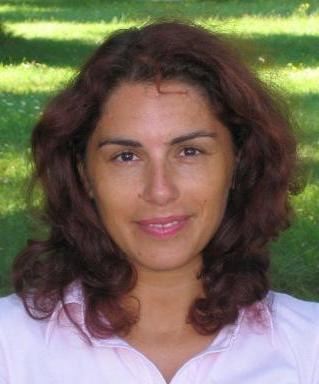
Dalina Kallulli is an Associate Professor at the University of Vienna , Department of Linguistics. Since 2012, she has been a leading figure in theoretical and comparative syntax, with a focus on Albanian and Balkan languages . Her work bridges syntax, semantics, and morphology, emphasizing interfaces and universals. Education: PhD in Theoretical Linguistics (University of Durham, 1999), Cand.Philol. in General Linguistics (University of Trondheim, 1995), MA in English (University of Tirana, 1991) Research Interests include grammar theory , comparative syntax , syntax-semantics interfaces , and language cognition . Her publications explore clitic doubling, voice systems, and cross-linguistic morphological phenomena. Notable fellowships include the Hertha Firnberg Fellowship (2004-2007) and APART Fellow (2008-2010). Recent Publications highlight diachronic aspects of voice systems, form copy in wh-dependencies, and the role of diminutives in suppressing root projections. She has been a visiting scholar at institutions like the University of Massachusetts at Amherst and New York University. Awards and Invitations: Hertha Firnberg Fellowship (FWF) APART Fellow (Austrian Academy of Sciences) W3 Professor (acting chair) at Ludwig Maximilian University of Munich Invited talks at major international conferences (GLOW, DGfS, NELS) Teaching encompasses courses in Theory of Grammar , Introductory Linguistics , and seminars on syntactic typology.
Univ.-Prof. Dr. Alexandra Lenz is a Professor of German Linguistics at the University of Vienna's Department of German Studies. Her research focuses on Austrian German dialects, lexical variation, and sociolinguistic dynamics, particularly through digital methods and corpus-based approaches. Key Research Areas: Austrian German dialects, lexical variation, sociolinguistic perception, and digital humanities. Projects: Leading contributions to the Special Research Programme 'German in Austria (DiÖ): Variation–Contact–Perception' and LexAT21 lexicon atlas. Methodology: Specializes in corpus linguistics, syntactic variation analysis, and experimental elicitation techniques. Recent Trends: Articles from 2025–2020 explore lexical responses to crises (e.g., pandemic language), grammaticalization pathways, and dialect syntax through comparative and interdisciplinary frameworks.
Alexandra N. Lenz is a Professor of German Linguistics at the University of Vienna and a Full Member of the Austrian Academy of Sciences. She serves as Director of the Austrian Centre for Digital Humanities and Cultural Heritage (ACDH-CH) and Spokesperson for the Collaborative Research Center 'German in Austria: Variation – Contact – Perception' (FWF F060). Her work spans dialectology, variationist linguistics, syntax, sociolinguistics, and digital humanities. Ph.D. in German Linguistics (University of Marburg, 2002) DFG Fellowship (1998–2001) Rosalind Franklin Fellowships (2005–2009) Her research focuses on Austrian German dialects, lexical variation, syntactic change, language contact, and the interplay between standard and non-standard varieties. She leads the LexAT21 project, analyzing 21st-century lexical variation in Austria, and explores diaglossic repertoires through corpus-based and experimental methods. Recent publications examine lexical dynamics in Austrian media during the pandemic, relativizer variation in Austria, and the evolution of possessive constructions. She has organized major conferences like ICLaVE12 and 'AI meets Humanities & Social Sciences' in 2025. Full Member, Austrian Academy of Sciences (2019) Elected Corresponding Member, Austrian Academy of Sciences (2013) Vidi-Grant (NWO, 2009) [unaccepted] Hugo-Moser-Prize (2009) Lenz mentors through networks like 'Sprachwissenschaftliche Dissertationsprojekte der Wiener Germanistik & Friends' and contributes to editorial boards of journals such as Zeitschrift für Dialektologie und Linguistik . Her leadership roles include chairing the ÖAW Research Department 'Linguistics' and co-founding initiatives like the 'Bairisch Across Borders' network. She directs labs and teams at ACDH-CH, focusing on digital humanities infrastructure and language variation corpora. Her work bridges traditional dialectology with computational methods, emphasizing Austria's unique linguistic landscape.

- German Linguistics
- Dialectology
- Sociolinguistics
- +۴ مورد دیگر
Stephan Elspaß serves as a University Professor of German Linguistics at the Faculty of Cultural Studies, University of Salzburg. He holds significant leadership roles including Chair of the Curricular Commission for Doctoral Studies and Member of the Doctoral Commission at the Faculty of Cultural Studies. Professor Elspaß is also Co-Speaker of the Collaborative Research Center F60 "German in Austria" (DiÖ), a major research initiative examining linguistic variation across Austria. His research focuses on German dialectology with particular emphasis on Austrian German variants, regional linguistic patterns, and language variation. Professor Elspaß leads several innovative projects including the "Atlas of everyday German language," the WEAVE project "Variant Pragmatics" (VariPrag), "Patterns and Structures of Regional Linguistic Reality" (MuSt), and the citizen science initiative "Wenker 2.0 – Citizens research their dialects," which was recognized as a Top Citizen Science Project. His methodological approach combines traditional dialectology with computational tools like GeoLing, a statistical software package he developed for geolinguistic data analysis. Professor Elspaß's scholarly output demonstrates consistent focus on linguistic variation across German-speaking regions, with particular attention to Austrian German. His recent work shows increasing integration of digital methods and citizen science approaches, reflecting broader trends in contemporary linguistics. The research spans theoretical linguistics, sociolinguistics, and practical applications of dialect documentation. As academic leadership, Professor Elspaß contributes significantly to doctoral education at the University of Salzburg through his role in the Curricular Commission. His collaborative projects span multiple institutions across German-speaking countries, particularly through the D-A-CH project "Variant Grammar" which connects researchers in Germany, Austria, and Switzerland.
Univ.-Prof. Dr. Luca Melchior serves as Head of the Institute of German Studies at Alpen-Adria-Universität Klagenfurt, where he holds a full professorship in German Studies. His academic roles include Deputy Head of Institute and leadership in subject didactics initiatives. Specializing in general linguistics, applied linguistics, and sociolinguistics, his research focuses on multilingualism, Romance studies, and language policy with particular emphasis on Friulian and Occitan dialects. His research priorities span lexicography, historical linguistics networks, and linguistic documentation. Notable projects include analyses of Hugo Schuchardt's correspondence networks and contributions to Friulian language standardization. He leads the Linguistics and Literature team alongside colleagues like Barbara Neymeyr and Sabrina Gardener, and coordinates the Austrian Forum for German Didactics (ÖFDD). Recent publications (2015–2019) explore multilingual urban dynamics, linguistic networks, and collaborative lexicography methods. His work bridges historical linguistic analysis with contemporary issues in minority language preservation and digital humanities applications. Teaching activities focus on German didactics methodologies and Romance philology. Professional activities include editorial roles for ide – information on German didactics and participation in literary conferences. Office hours are by appointment via email at N.1.55 campus location.
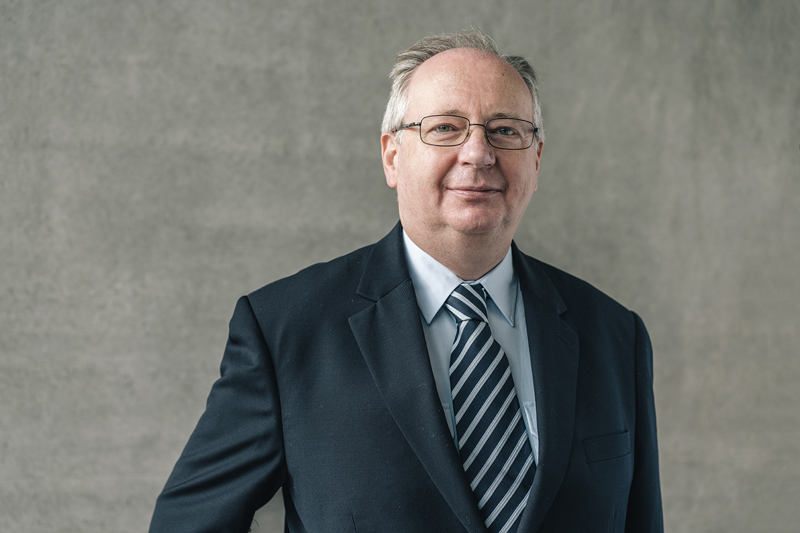
Csaba Földes is a Full Professor of German Linguistics (W3) at the University of Erfurt , leading the Institute of Linguistics within the Faculty of Humanities. Previously, he held similar professorships at the University of Pannonia in Veszprém, J. Selye University in Komárno, and guest positions at the University of Vienna, Ludwig Maximilian University in Munich, and University of Zurich. His research focuses on German linguistics, intercultural communication, and multilingualism. Full Professor (W3), University of Erfurt (2012–present) Full Professor, University of Pannonia (1996–2012) Visiting Professor, University of Vienna (2008–2012) His scholarly work examines language contact, phraseology, and the international role of German. Publications include monographs and edited volumes on transcultural linguistics and language politics. He received the Humboldt Research Fellowship and an honorary doctorate in Volgograd. The most recent publications analyze political discourse in German minority press, multilingualism in education, and phraseological adaptation in contact zones. Themes span sociolinguistic variation, intercultural competence, and corpus-based language studies. 2020: Ordinary member, Academia Europaea 2018: Herder Research Council membership 1996: Humboldt Research Fellowship As President of the Central European Society of German Studies (2010–2017), he promoted interdisciplinary research. His Habilitation (1997) and DSc (2008) solidified his expertise in linguistic theory and application.
- Semantics
- Syntax
- Linguistic Interfaces
- +۸ مورد دیگر
Prof. Dr. Remus Gergel is Chair of English Linguistics at Saarland University since 2016, following professorships at the University of Graz (2012-2016) and acting professorship at Göttingen (2010/11). With a Habilitation (2010) and PhD (2005) from Tübingen, he specializes in Semantics, Syntax, and their Interfaces with applications to language change, corpus linguistics, and theoretical modeling. His work spans Germanic/Romance comparative linguistics, language typology, and experimental approaches. Research Focus : Interface phenomena (semantics-syntax), diachronic processes, particle/adverb evolution Methodology : Corpus studies, computational simulations, experimental validation Recent publications examine pseudo-partitives , presuppositions , and decompositional adverbs across English, German, and Arabic dialects. Supervision includes 42 theses (2018-2025) on topics like African American English be , Turkish-English adverb trajectories, and social media discourse analysis. Contact: remus.gergel@uni-saarland.de

Peter Ernstمشاهده پروفایل
دانشیار
- Language History
- Dialectology
- Onomastics
- +۵ مورد دیگر
Peter Ernst is an Associate Professor at the Institute of German Studies, Faculty of Philology and Cultural Studies, University of Vienna. He serves as Honorary Professor at Pannonian University of Veszprém and has held visiting professorships at Leipzig and Graz universities. His research spans language history, dialectology, onomastics, phraseology, grammar, pragmatics, and discourse analysis. Education: Master's (1984), Doctorate (1987), Habilitation (1995) in German and History at University of Vienna Research Trends: Focuses on historical linguistics, German dialects, toponymic studies, and pragmatic evolution of language. Scientific Awards: Hugo-Moser-Preis (1993) Förderungspreis der Stadt Wien (2000) Theodor-Frings-Preis (2003) Teaching Award Nomination (2015) Key Teaching Roles: Offers courses on language history, linguistics, and German grammar. Has coordinated bachelor and master seminars, including topics on internet language usage and language discrimination. Projects: Led initiatives like the Wörterbuch zur österreichischen Phraseologie and contributed to international linguistic conferences. Served on the Rat für Deutsche Rechtschreibung (2016-2023).
Friedrich Neubarth is a lecturer at the University of Vienna, affiliated with the Department of German Studies and the Department of Philosophy. His work bridges theoretical linguistics and computational approaches to language processing. Research Focus: Speech synthesis for dialectal varieties, computational modeling of morphology/syntax, phonological representation primitives, and prosodic correlates of information structure. Key Projects: VSDS (Viennese Dialect Synthesis), MLT4MLV (Machine Learning for Language Varieties), LEGO Audio & Braille Building Instructions, and MAGNIFICENT (Multifaceted News Analysis). Academic Contributions: 15-year publication record (2008-2023) spanning speech technology, dialectal machine translation, crossmodal word learning, and formal syntactic theory. Notable collaborations with Brigitte Krenn, Harald Trost, and Michael Pucher. Teaching: Delivers courses in linguistics and grammar at the University of Vienna, including exercise courses and lecture+exercise combinations since at least 2003. Technical Expertise: Development of spoken dialogue systems incorporating Viennese dialect synthesis, creation of multimodal language learning frameworks, and construction of annotated linguistic corpora for research.
- Slavic Linguistics
- Syntax
- Generative Grammar
- +۶ مورد دیگر
Luka Szucsich is a Full Professor of East Slavic Languages at the Faculty of Linguistics and Literature, Humboldt University of Berlin. He specializes in Slavic syntax, generative grammar, and language contact phenomena, with a focus on Russian, Ukrainian, and Burgenland Croatian. As spokesperson for the DFG-funded SFB 1412 'Register' since 2024, his research investigates register variation and hybrid lects in multilingual contexts. Studied at University of Vienna (1987-1995) and University of Leipzig (1997-2000) Held research positions at Max Planck Institute and various European universities His research interests span syntax, word order, grammatical features, and theoretical frameworks like the Minimalist Program. He has conducted extensive comparative studies across Slavic languages, examining phenomena such as subjunctive mood, adverbial constructions, and heritage language structures. Recent publications analyze syntax in heritage Russian, VO/SVO typology, and clause-embedding predicates. Articles demonstrate his expertise in generative approaches to Slavic linguistics, with recurring themes of feature activation, morphological defaults, and cross-linguistic variation. DFG SFB 1412 Projects (2021-2027) Humboldt University Foundation Funding (2024) Austrian Research Foundation Grant (2007/2008) He supervises research assistants and collaborates with institutions including Adam Mickiewicz University, University of Poznań, and Novi Gorici University. His work bridges theoretical linguistics, historical language change, and computational corpus development through initiatives like the Digital Interdisciplinary Historical Corpus of Ukrainian (DiaUk).
Roman Gundacker is a Senior Research Associate at the Austrian Academy of Sciences and Lecturer in Egyptology at the University of Vienna. He holds a doctorate 'sub auspiciis praesidentis rei publicae' (2009/2010) and has been active in academia since 2005. Master's (2005): University of Vienna, thesis on early Fourth Dynasty chronology Doctorate (2010): University of Vienna, dissertation on Pyramid Texts linguistic stratification His research focuses on Egyptian linguistics , lexicography , language history , and chronology . He leads the ERC Starting Grant project Challenging Time(s): A New Approach to Written Sources for Ancient Egyptian Chronology (since 2018), which evaluates historical timekeeping through textual analysis. Recent publications highlight trends in Old Kingdom royal names , Pyramid Texts analysis , and linguistic evolution from the Dreisilbengesetz to Zweisilbengesetz . His work spans historical linguistics , onomastics , and funerary literature . Scientific Awards : APART fellowship (2014–2017), Doctorate 'sub auspiciis praesidentis rei publicae'

Peter Mauserمشاهده پروفایل
استادیار
Peter Mauser serves as an Assistant Professor in German Studies at Paris Lodron University of Salzburg. With academic credentials including Mag. Dr. and Ass.-Prof. titles, he has maintained an active research profile since the late 1990s with 40 publications documented in his academic record. His research primarily focuses on German dialectology in the Salzburg region, with special attention to the Lungau dialect area and everyday language patterns throughout the province. Mauser's scholarly interests encompass German Dialectology, Linguistics, Regional Language Varieties, Onomastics, Sociolinguistics, and Dialect Geography. Mauser has led significant research initiatives including the "Atlas of Salzburg's everyday language" (ASA) project (2020-2023) where he served as Project Management. He was also a key staff member for the "Perceptions of and attitudes towards varieties and languages at Austrian schools" (2016-2019) and "VAMUS: Linked Analysis of Multilingualisms Using the Example of the University of Salzburg" (2014) projects. 1st Prize of the 1998 Research Promotion Award of the State of Salzburg His publication record shows consistent scholarly output with recent works examining the Gastein Valley linguistic outlier (2024), subjunctive usage in Salzburg varieties (2022), and comprehensive documentation of the Lungau dialect (2021). Mauser actively engages with public discourse through media appearances discussing regional language patterns and participates in outreach events including the university's Open House Day 2024.
- Grapholinguistics
- Orthography
- Standardization
- +۷ مورد دیگر
Paul Rössler is Professor of German Linguistics at the University of Regensburg's Institute of German Studies within the Faculty of Languages, Literature and Cultural Studies. He has chaired the Department of German Linguistics since 2011 after serving as visiting professor (2009-2011) and holding academic positions at the University of Vienna, Janus Pannonius University in Pécs, and Charles University in Prague. PhD (1997) and Habilitation (2005) from University of Vienna FWF research projects on Austrian German written language development (1998-2001, 2002-2005) Numerous international research stays including MIT (2022), Tokyo (2017), and Bristol (2015) Rössler's research centers on historical aspects of German language structure with particular emphasis on grapholinguistics and punctuation systems. His work examines orthographic variation, standardization processes, and language change from the Early New High German period through contemporary usage. He investigates how writing systems reflect social, regional, and confessional identities while maintaining interest in morphological and syntactic developments across historical periods. His recent publications reveal consistent focus on diachronic punctuation studies, with particular attention to the 18th century as a critical period for orthographic standardization. The research demonstrates how typographic elements like the virgule evolved into modern comma usage, reflecting broader processes of linguistic codification and variation. His work bridges historical linguistics with sociolinguistic perspectives on language norms. Rössler actively supervises doctoral and master's students across diverse linguistic topics while teaching courses on historical linguistics, punctuation, and language variation. He leads the 'punctuation network' research consortium and participates in the FoMuR (Multilingualism and Regionality) forum.