Dr. Michel Chaaya is a Senior Lecturer in Civil Engineering at the University of Sydney, with expertise in project management, construction engineering, and sustainability. He holds a PhD from the University of Sydney and is a Fellow of the Institution of Engineers Australia and the College of Leadership and Management. His research focuses on innovative project management methodologies, sustainable construction practices, and BIM implementation. Education: BE, ME(Res), PhD in Project Management and IT from the University of Sydney. Research Interests: Enhancing project success through risk management, modular construction, and BIM adoption. He emphasizes communication, sustainability, and community wellbeing in construction projects. Recent projects include studies on net-zero steel production, BIM in SMEs, and NCC 2022 energy requirements. Awards: ARCHIBUS Excellence Awards (2017-2013), Best Residential Development Awards (2009-2010), and Australian Postgraduate Award (1997). Teaching: Courses include Project Planning, Professional Practice in Engineering Management, and Global Project Management. He has supervised over 250 theses since 2003. Industry Roles: Director of Business Development for multiple organizations, specializing in construction, IT systems, and real estate. He advises on complex project delivery and stakeholder management.
Mihye Won is an Associate Professor at Monash University’s Faculty of Education, specializing in innovative science education strategies. Her research integrates dialogic teaching, student-generated diagrams, immersive Virtual Reality (VR), and generative AI to enhance scientific understanding and creativity. She has secured Australian Research Council (ARC) funding for projects like Using Immersive Virtual Reality to Enhance Science Visualisation (2019–2025) and Drawing Science Diagrams to Enhance Scientific Creativity (2018–2025). Her work supports students, teachers, and early-career researchers, aligning with the UN Sustainable Development Goal for Education. PhD, University of Illinois at Urbana-Champaign: Inquiry-based science education via Dewey’s theory of inquiry Her research focuses on: Dialogic teaching to foster student reasoning Student-generated diagrams for conceptual understanding VR for visualizing complex science topics Generative AI in science learning Creative and critical thinking in science education Recent articles span VR applications, AI in physics education, collaborative drawing techniques, and curriculum-aligned creative pedagogy. Awards include the Most Valuable Paper Award 2024 for her work on enzyme-substrate interactions in VR. She serves on the advisory board for Chemistry Education Research and Practice and the editorial board of the International Journal of Science Education .
Suzanne Estaphan is a Senior Lecturer in Medical Science (Physiology and Clinical Pharmacology) at the Australian National University (ANU) School of Medicine and Psychology . She holds qualifications including a Doctorate of Physiology (2015) , MSc in Physiology (2012) , MBBCh (2005) , and Basic Certificate in Medical Education (2018) . Her academic roles span curriculum development, admissions, and assessment committees in the ANU Medical School. Senior Lecturer, ANU (2023–present) Academic Editor, PLOS ONE (2024–present) Review Editor, Frontiers in Physiology (2023–present) Dr. Estaphan's research bridges oxidative stress and inflammation in disease pathology with medical education innovation . Her work explores antioxidant interventions for organ damage and investigates AI/virtual reality applications in education. Recent projects include studying sleep dysfunction in eating disorders and diabetes medication effects on exercise capacity . Between 2023–2025, her 15 most recent publications span oxidative stress , medical education , and molecular pathophysiology . Themes include homeostasis , clinical reasoning , and metabolic disorders , with subfields like MMP-9 biology , pancreatic injury , and VR-based hypoxia training . Scientific accolades include the American Physiological Society Travel Award (2017) and recognition as Senior Fellow of the Higher Education Academy (2023) . She mentors medical students, contributes to national physiology curriculum consensus projects, and has secured approximately $200,000 in research funding .
Dr. Mary Wyer is an Associate Professor of Practice (Biocontainment) at the University of Sydney’s Susan Wakil School of Nursing and Midwifery, affiliated with the Sydney Infectious Diseases Institute and the NSW Biocontainment Centre. She holds a PhD in infection prevention and control (2017) and has extensive experience in biocontainment and qualitative research. Her roles are supported by the Western Sydney Local Health District. **Education**: PhD (2017), RN, MACN. Research interests include high-consequence infectious diseases (HCIDs), outbreak management, infection prevention, qualitative methods, and patient involvement in healthcare. She leads projects on biocontainment preparedness, using video-reflexive ethnography to improve clinical practices. **Current Projects**: Strengthening bio-preparedness via simulation and video-reflexive methods; 24-hour in situ simulations for biocontainment centre readiness; aged care infection control strategies; and establishing national infection control standards. She co-leads the Australian BioCOP network for HCID collaboration. **Key Contributions**: Authored/co-authored over 30 peer-reviewed publications, including a book on video-reflexive ethnography. Awards include the 2019 Best Poster Award (ACIPC) and recognition for innovation in infection control research. **Grants**: Secured $2.3M+ in funding for research projects, including NHMRC grants and partnerships with UTS and NSW Health.
Dr. Edoardo Bertone is a Senior Lecturer at Griffith University's School of Engineering and Built Environment - Architecture and Design. He holds a PhD in Water Resources Engineering from Griffith University and Bachelor/Master degrees in Civil Engineering from the Polytechnic University of Turin. His research focuses on data-driven modeling, Bayesian Networks, and System Dynamics applied to water resources management, climate change adaptation, and the water-energy nexus. He is affiliated with Griffith's Cities Research Institute and Australian Rivers Institute, collaborating on projects with water utilities, governments, and private entities. Dr. Bertone has received awards such as the 2024 PVC Science Excellence in Teaching and the JSPS Fellowship (2022). He supervises doctoral and master's students in areas like water quality management and climate change impacts. Education: PhD in Engineering (Griffith University, 2015); MEng and BEng in Civil Engineering (Polytechnic University of Turin, 2009-2011). Research Interests: Water quality modeling, drinking water optimization, data-driven prediction, climate change adaptation, and sustainable development goals. He leads over 25 funded research projects, including initiatives on reservoir water quality management in Thailand, real-time nutrient monitoring, and cyanobacteria bloom modeling. Dr. Bertone’s work integrates advanced sensors, machine learning, and Bayesian networks to address environmental challenges. Awards: Listing includes PVC Excellence Awards (2024, 2017), JSPS Fellowship, and recognition as a Rising Star in Queensland Science (2015). Grants & Supervision: Principal supervisor for 10+ doctoral candidates and collaborator on projects funded by Seqwater, CSIRO, and the Ian Potter Foundation. Key grants include $745k for biofertilizer combatting eutrophication and $269k for coagulation optimization models. Dr. Bertone’s contributions extend to urban sustainability, co-editing the book *SeaCities: Urban Tactics for Sea-Level Rise* and developing frameworks for integrating SDGs into architectural education.
Rowena Harper is a Professor and Deputy Vice-Chancellor (Education) at Edith Cowan University (ECU), where she leads educational strategy, including Library and the Centre for Learning and Teaching. Her portfolio encompasses curriculum innovation, learning technologies, and academic integrity initiatives. Prior roles include Director of ECU's Centre for Learning and Teaching and Associate Director of Curriculum Development at the University of South Australia. Harper holds a PhD, GradCertEd, and BA (Hons). Her research focuses on academic integrity, contract cheating, digital learning, and English language development. She co-founded the International Consortium of Academic Language and Learning Developers (ICALLD) and served as President of the Association for Academic Language and Learning (AALL). Key projects include leading the Learning Management System transition and City Campus Project at ECU. Her articles highlight innovative approaches to combating contract cheating, assessment reform, and digital clinical communication in health education. She emphasizes ethical pedagogy and institutional accountability in addressing academic misconduct.
Elleke Boehmer is Professor of World Literature in English at the University of Oxford's Faculty of English, and a Fellow of Wolfson College. She directs the Oxford Centre for Life Writing (OCLW) and holds honorary doctorates from Linnaeus University. Her research bridges postcolonial studies, world literatures, and life-writing, focusing on migration, identity, and sub-Saharan Africa/South Asia. Boehmer pioneered postcolonial literary studies, authoring influential works like *Indian Arrivals* (2015) and *Postcolonial Poetics* (2018). She leads the Accelerate Hub exploring narratives in African adolescent development and co-directs the *Writers Make Worlds* educational resource. Recent projects include *Southern Imagining*, a cultural history of southern hemisphere literatures. Her awards include the ESSE Prize for *Indian Arrivals* and Olive Schreiner Prize for fiction. Boehmer advises on global humanities initiatives, including TORCH and Mellon-funded *Humanities and Identities*. She regularly publishes in journals like *Textual Practice* and collaborates internationally on Dutch/English postcolonial comparisons.
Susan Hopkins is a Senior Lecturer in Education (Curriculum and Pedagogy) and Associate Dean (Learning and Teaching) at the School of Education and Tertiary Access , University of the Sunshine Coast , Queensland, Australia. She earned her PhD from Queensland University of Technology and has also served as a Lecturer in Communication at the University of Southern Queensland. Institution: University of the Sunshine Coast School: School of Education and Tertiary Access Rank: Senior Lecturer Leadership Role: Associate Dean (Learning and Teaching) Her research centers on curriculum and pedagogy , with strong interdisciplinary interests in gender studies, media, cultural studies, and feminist theory . She critically examines representations of women, motherhood, sexuality, and power in film and television, often linking popular narratives to broader social and ethical issues such as animal welfare, digital abuse, and environmentalism. Her work frequently appears in public-facing platforms like The Conversation , where she bridges academic insight with accessible commentary. The trends in her recent articles reflect a consistent focus on popular culture as a site of ideological struggle , particularly how gender, power, and identity are constructed and challenged in media. She analyzes genres ranging from horror and documentary to romantic comedy and animated features, often highlighting feminist and postfeminist themes. Her writing reveals a deep engagement with cinematic history, celebrity culture, and the emotional dimensions of storytelling. Susan Hopkins has not been publicly recognized with scientific awards based on available information. She is actively involved in research supervision, consulting, speaking engagements, and media collaborations . Her institutional roles suggest leadership in academic program development and pedagogical innovation. Though no formal lab or research team is mentioned, her public scholarship indicates an influential voice in education and cultural critique.
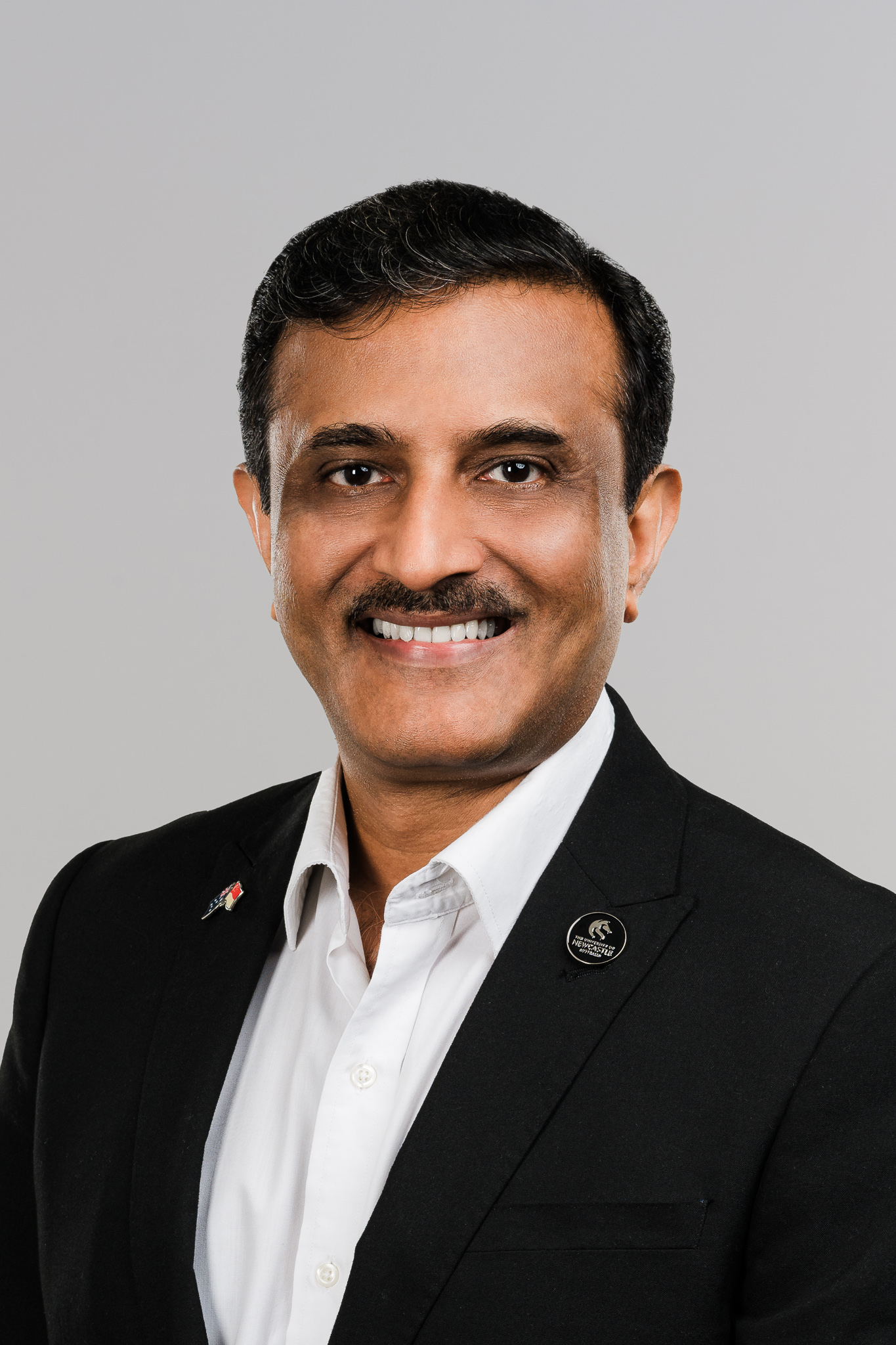
Professor Abhishek Singh Bhati is the Pro Vice-Chancellor and CEO at the Newcastle Australia Institute of Higher Education. He is a distinguished academic and administrator with a focus on tourism management and scholarship of learning and teaching. His research explores technology-driven tourism transformations, low-carbon tourism, and the alignment of tourism with United Nations Sustainable Development Goals (SDGs). Bhati’s work also emphasizes tourist behavior, resilience planning, and vandalism management in tourism settings. PhD (Tourism Management), James Cook University, Australia MBA (Marketing Management), Maastricht School of Management, Netherlands Bachelor of Arts (Economics), Bombay University, India Diploma in Adult and Continuous Education, Institute of Adult Learning, Singapore Graduate Certificate in Education (Tertiary Teaching), James Cook University, Singapore His research spans technology’s role in tourism, sustainable development, and educational innovation. Recent publications address energy-economic synergies, AI in tourism, and post-pandemic travel behavior. Bhati has secured grants from organizations like the World Wide Fund for Nature (WWF) and the Australian Government’s Office of Learning and Teaching (OLT). Scientific Honors: Fellow of the Higher Education Academy (FHEA)
Professor Mindy Blaise is a Vice Chancellor’s Research Fellow and Director of the Centre for People, Place and Planet at Edith Cowan University (ECU), Western Australia. Her transdisciplinary research focuses on feminist knowledge production, anticolonial practices, and pedagogies addressing environmental crises and social inequities. Blaise holds a Doctor of Education (1999) from the United States and has held academic positions at institutions including the University of Texas, Austin, and The Education University of Hong Kong. Her research interests include experimental pedagogies for the Anthropocene, queer theory, postdevelopmentalism, and multi-species ethnography. She leads major projects like the ARC Discovery Project on 'Understanding and Addressing Everyday Sexisms in Australian Universities' and collaborates internationally through collectives such as #FEAS (Feminist Educators Against Sexism), which won the 2023-2025 AARE award. Blaise’s recent articles explore topics like regenerative sustainability education, feminist postdevelopmental lexicons, and ecological grief in childhood. Her work often bridges early childhood education with environmental humanities, emphasizing ethical relations with non-human worlds. Grants include funding from the ARC, Healthway, and philanthropic foundations for projects on climate justice, Indigenous knowledge transfer, and anti-sexism initiatives. Professional associations: AARE, AERA, Gender and Education Association Research supervision: Over 15 completed PhD/MEd projects focusing on gender, ecology, and pedagogy Labs/teams: Director of ECU’s strategic research centre; co-founder of Common Worlds Research Collective and The Ediths
Professor David Taubman is a distinguished academic serving as Professor and Deputy Head of School (Research) at the School of Electrical Engineering and Telecommunications (EE&T) at the University of New South Wales (UNSW) in Sydney, Australia. He is also co-director of Kakadu Software Pty. Ltd. and its affiliates Kakadu R&D and Kakadu GPU. With a career spanning over three decades, Professor Taubman has made significant contributions to the field of image and video compression, most notably as the author of the EBCOT coding algorithm adopted in the JPEG2000 international standard. Professor Taubman earned his B.Sc. in Mathematics and Computer Science (1986) and B.E. (Medal) in Electrical Engineering (1988) from the University of Sydney, followed by an M.Sc. (1992) and Ph.D. (1994) in Electrical Engineering from the University of California at Berkeley. His professional journey includes engineering work at the Electricity Commission of N.S.W. (1988-1990), research positions at Hewlett-Packard Laboratories in Palo Alto (1994-1998), and an academic career at UNSW where he progressed from Senior Lecturer (1998-2003) to Associate Professor (2004-2009) and finally to Professor (2009-present). He has held various leadership roles including Head of the EE&T Telecommunications Research Group (2003-2014), Head of the EE&T Signal Processing Research Group (2014-present), Director of Research for the School of EE&T (2011-2016), and Deputy Head of School (Research) since 2017. Professor Taubman's research interests center on image and video compression, with particular expertise in JPEG2000 standards and implementations. His work spans signal processing, wavelet transforms, scalable video coding, motion modeling, and multimedia systems. He has pioneered numerous compression algorithms and frameworks, including the EBCOT coding algorithm that became central to the JPEG2000 standard. His recent research focuses on efficient motion modeling with cuboidal partitioning, learned lifting-based transform structures, and high-throughput implementations of JPEG2000 for video applications. His work bridges theoretical foundations with practical implementations, as evidenced by the commercially successful Kakadu Software tools that have garnered around 500 commercial licensees. Analysis of Professor Taubman's recent publications reveals a consistent focus on advancing compression technologies with particular emphasis on scalability, efficiency, and adaptability. His work spans traditional image compression (JPEG2000 extensions), video coding (cuboid-based partitioning for UHD/360-degree video), and emerging applications (nanopore sequencing data compression). A notable trend is the integration of machine learning techniques with traditional compression frameworks, as seen in his work on learned lifting-based transform structures. His research maintains strong connections to real-world applications across diverse domains including medical imaging, astronomical data processing, and genomic sequencing. IEEE Fellow Engineers Australia Fellow (by invitation) Professor Taubman has served as Associate Editor for the IEEE Transactions on Image Processing for two four-year appointments (2003-2005 and 2010-2013). He has been actively involved in numerous research grants focused on image and video compression technologies, particularly those related to the JPEG2000 standard and its extensions. His work has received significant industry support, reflected in his consultancy with various U.S., Japanese, and Australian corporations. He has also contributed to international standards development as a member of Standards Australia Technical Committee MS-065 (mirroring ISO TC42 on Digital Photography) and as a constitutional member of Standards Australia Technical Committee IT-029 (Coded Representation of Picture, Audio and Multimedia/Hypermedia Information). Professor Taubman co-directs Kakadu Software Pty. Ltd. and its research affiliates Kakadu R&D and Kakadu GPU, which have developed the commercially successful Kakadu Software tools for JPEG2000. His research group at UNSW focuses on advanced image and video compression techniques, with particular expertise in wavelet-based methods, scalable coding, and motion modeling. The group maintains strong industry connections and has contributed significantly to the development and standardization of image compression technologies worldwide.
Kristiina Kumpulainen is a Professor at the University of Helsinki's Faculty of Educational Sciences, leading the Learning, Culture & Interventions (LECI) research group. Currently on leave but actively engaged in research, she supervises doctoral students in both the Doctoral Program in Cognition, Learning, Teaching and Communication and the Doctoral Program in School, Education, Society and Culture. Her scholarly contributions include 270 research outputs and leadership of 27 research projects, with recent work focusing on children's digital experiences and early childhood education systems. Her research interests center on educational sciences with emphasis on early childhood education, digital literacy development, learning environments, and educational change processes. She examines how children interact with technology, develop ecological imagination, and build multiliteracy skills across different contexts. Her work bridges theoretical frameworks with practical educational interventions, particularly examining agency-structure dynamics in educational settings and the implementation of child-centric educational systems. Analysis of her recent publications reveals consistent focus on digital childhoods, educational interventions, and comparative early childhood education systems. Her work spans multiple methodologies including qualitative case studies, comparative analyses, and theoretical explorations of learning across contexts. The research demonstrates strong international collaboration, particularly within Nordic countries and global comparative studies. Member of the Finnish Academy of Science and Letters (2019) 2020 Editor's Choice Award from British Educational Research Association (2021) Nomination for Outstanding Publication Award from EARLI (2002) Nomination for best paper award at THE POWER OF MEDIA IN EDUCATION Conference (2007) Professor Kumpulainen has supervised numerous doctoral students and served on dissertation committees. Her research has been supported by significant grants including the Australian Research Council, Finnish Academy of Science, and Nordic research networks. She actively participates in academic service through editorial boards, peer review activities (over 90 manuscript reviews), and professional committees. She directs the Playful Learning Center research laboratory, which focuses on innovative approaches to children's learning through play and technology integration.
Megan Adams is an Associate Professor at the School of Curriculum Teaching and Inclusive Education, Monash University. Her work focuses on inclusion, diversity, and reducing educational inequalities for marginalized groups, with a particular emphasis on teacher education, early childhood education, and international education contexts. She has contributed to pedagogy and curriculum development through research projects and teaching roles. Recent research projects include collaborations with preservice teachers, studies on inclusive classrooms in preschools, and consultancy work on curriculum content for international development assistance. Her work aligns with the UN Sustainable Development Goals Inclusive education Pedagogy and curriculum development as key areas of impact. Her recent publications highlight trends in Gender studies and masculinity disruption through play Transitions in international education settings Online teaching during the pandemic Professional identity formation among immigrant educators LGBTIQ+ inclusive curriculum design Family-school dynamics in early childhood Scientific awards include Vice-Chancellor's Excellence Award (2024, nominated) Dean’s Equity and Inclusion Award (2024) ATEA Research Recognition (2019) Dean's Research Excellence Commendation (2019) Dean's Early Career Grant (2017) She actively engages in external academic events, peer review, and policy advisory roles, including contributions to the Australian Early Education Institute and Tasmanian Government preventative health strategy. Her teaching includes units on diversity, inclusive learning environments, and educational research projects.
A/Pr Steven Goh is an Associate Professor in Mechanical and Mechatronic Engineering at the University of Southern Queensland (USQ), affiliated with the School of Engineering. He holds advanced degrees including a DEng from USQ and is a Fellow of Engineers Australia. His research focuses on engineering education, practice, management, and biomedical engineering. He has received notable awards such as the 2015 Australian Government OLT Citation for Outstanding Contribution to Student Learning and multiple USQ accolades. Education: BEng(Hons) in Manufacturing & Materials (UQ), MBA (Deakin), MProfAcc (USQ), DEng (USQ), and a Diploma in Company Directorship (AICD). Research Interests: Engineering education innovation, sustainable energy systems, and biomedical applications. He actively contributes to professional bodies like the Australasian Association of Engineering Education and serves as Editor (Strategic) for the Australian Journal of Mechanical Engineering. Awards: Multiple teaching excellence awards from USQ (2008-2010) and the 2015 national OLT Citation. Advising/Grants: Not explicitly detailed in text; his roles include supervising students and leading research projects on engineering education and asset management. Labs/Teams: Associated with the Centre for Future Materials and Centre for Health Research at USQ.
Benjamin Day is a Senior Lecturer in the Department of International Relations at the Coral Bell School of Asia Pacific Affairs, Australian National University (ANU). His research focuses on leaders' roles in foreign policy decision-making, particularly how leaders drive policy change. He co-authored *Foreign Policy Analysis: Classic and Contemporary Theory* (3rd ed., 2019), a leading textbook in the field. His recent work explores leaders' 'thinking practices' about global order, informed by elite interviews with over 100 politicians and policymakers. Education: BA (University of Queensland) BEcon (University of Queensland) MIS (University of Queensland) PhD (ANU, 2018) Research Interests: Political Decision Making and Foreign Aid Leaders and World Order Aid Policy Dynamics Elite Influence in Policymaking Academia-Policymaker Bridging Affiliations and Fellowships: Partners around the Globe Fellow, NATO Defence College (2025) Visiting Fellow, University of Edinburgh (2023) Australian National Fellow, King’s College London (2019) Centre Associate, ANU Development Policy Centre (since 2016) Contributions: Regularly publishes in platforms like *The Strategist*, *Devpolicy Blog*, and *The Conversation*. Designs courses for diplomats and public servants via the ANU Diplomacy Forum. Previously worked in international development for a decade, including health sector reform in Papua New Guinea. Labs/Teams: Active in the ANU’s Development Policy Centre and collaborates with institutions globally to advance policy-relevant research on foreign aid and leadership.