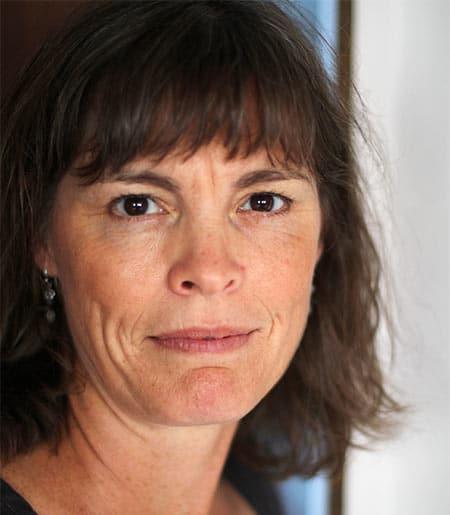
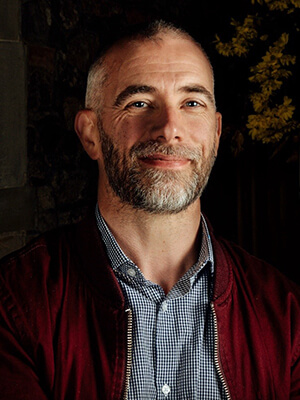
Rebecca Herissone is Professor of Musicology at the University of Manchester and a leading scholar in early modern English music. She co-edits the peer-reviewed journal Music & Letters and serves on editorial boards for the Purcell Society, Musica Britannica, and the Complete Works of John Eccles. Her research focuses on seventeenth-century creativity, material culture, and the ontological dimensions of music notation. Key research areas: Early Modern Music, Creativity, Source Study, Notation, Reception Major awards: Diana McVeagh Prize (2015), Westrup Prize (2007) Her recent work includes digital humanities projects on music preservation and critical editions of Purcell's operas. She has pioneered interdisciplinary approaches connecting musicology with drama, art, and literature, and currently leads research on Purcell's posthumous reception in the eighteenth and nineteenth centuries. Her teaching spans music historiography, performance practices, and advanced source analysis.
Professor Beth Williamson is a leading scholar of medieval culture, holding dual roles as Professor of Medieval Culture and Chair in the History of Art at the University of Bristol's Department of History of Art (Historical Studies), and as Academic Director (Research Impact & Translation Partnerships) within the Faculty of Social Sciences and Law. She earned her B.A. from Oxford University (Oxon), an M.A., and a Ph.D. from the University of London (Lond.). Her research focuses on visual, material, and aural dimensions of medieval religious practice, exploring how sensory experiences shaped devotional life. Key themes include sacred imagery (e.g., the Virgin Lactans and Madonna of Humility), liturgical spaces, and the intersection of art with music, time, and political power. Recent projects include studies of Westminster Abbey’s royal patronage and collaborations in interdisciplinary historical research. Her publications span over three decades, addressing topics from Italian Renaissance altarpieces to Irish medieval sculpture, with a strong emphasis on material culture and devotional practices. Despite her prolific output, no formal awards are listed, though her academic leadership roles reflect her scholarly impact. As a mentor, her supervisory activities are noted in her profile but lack specific student names. Her work bridges academic and public spheres, particularly through her role in translating research into societal impact initiatives. She is affiliated with the University of Bristol’s Senate House and contributes to institutional leadership.
Reyhan Durmaz is an Associate Professor of Religious Studies at the University of Pennsylvania, affiliated with the School of Arts & Sciences and multiple interdisciplinary programs. Her research focuses on Syriac Christianity, medieval religious dynamics, and the intersection of Christianity and Islam in late antiquity. She holds a Ph.D. from Brown University (2019) and has received prestigious fellowships such as the Dumbarton Oaks Junior Fellowship and the Charlotte Newcombe Dissertation Fellowship. Her seminal book Stories between Christianity and Islam (2022) examines the transmission of saints' stories between religious traditions, earning Honorable Mention from the Middle East Medievalists. Current projects include a study of rural Christianity in the medieval Middle East through soldier-monk narratives and an analysis of the 19th-century Arabic newspaper Kawkab America . She co-leads the Digital Photograph Archive project Visualizing Countryside , documenting medieval religious sites. Dr. Durmaz teaches courses on global Christianity, material culture, and late antiquity, and serves as co-chair of the Philadelphia Seminar on Christian Origins. Her work bridges historical analysis, textual scholarship, and digital humanities, addressing themes of religious identity, cultural exchange, and marginalized communities.
Matthew Santa serves as Professor of Music Theory and Chair of the Music Theory and Composition Area at Texas Tech University School of Music, with prior teaching appointments at Queens College and Hunter College. His leadership shapes curriculum development and academic initiatives within the department. Academic credentials include advanced degrees from Louisiana State University and The City University of New York, establishing foundational expertise in theoretical frameworks and analytical methodologies. Research focuses on post-tonal analysis , diatonic set theory , and parsimonious voice leading , bridging complex theoretical concepts with practical pedagogy. His work integrates popular music analysis and metrical studies, emphasizing accessibility for diverse learners through innovative teaching resources. Publications demonstrate evolving scholarly trends from late-20th century set theory toward contemporary applications in musical form and rhythm. Recent textbooks synthesize Rothstein, Krebs, and Mirka's theories into unified analytical approaches for undergraduate and graduate education. Scientific recognition includes: MTSNYS Young Scholar Award (1998) Mentorship encompasses graduate and undergraduate students across composition and theory disciplines, though specific advisees aren't documented in source materials. No grant funding details appear in available records. Collaborative projects include the Flute/Theory Workout series with Lisa Garner Santa and Thomas Hughes, blending performance technique with theoretical concepts through MIDI accompaniment systems.
Si Nae Park is an Associate Professor at Harvard University's Faculty of Arts and Sciences and Director of Graduate Studies for Regional Studies East Asia. Her research focuses on the interplay between cosmopolitan Literary Sinitic and vernacular Korean in premodern East Asia, examining genres like yadam (vernacular stories) and sosŏl ŏrokhae (fiction glossaries). Affiliation: Department of East Asian Languages and Civilizations, Harvard University Role: Director of Graduate Studies for Regional Studies East Asia Her work explores inscriptional ecologies, vernacular reading practices, and the materiality of texts in Chosŏn Korea. She has written on the Tongp’ae Naksong and the evolution of vocal reading practices. Publications include her monograph The Korean Vernacular Story (2020) and peer-reviewed articles on Confucian classics (2019), yadam heritage narratives (2021), and Chosŏn manuscript culture (2022). She co-organized a 2022 Harvard conference on Korean book history. Her current project, Within Earshot , investigates oral-aural dimensions of reading in Chosŏn Korea, analyzing how auditory practices shaped textual authority and literary production. She has contributed to translations of premodern Korean prose and Japanese studies on the Sinographic Cosmopolis.
Dominic Thibault is an Assistant Professor at the Faculty of Music, Université de Montréal . His research-creation explores human-machine interaction in musical contexts, focusing on embodied cognition through electroacoustic compositions, audiovisual performances, and musical software development. Co-director, Laboratoire Formes·Ondes Active member, CIRMMT (Centre for Interdisciplinary Research in Music Media and Technology) Research axis leader, Expanded Musical Practice (CIRMMT) Member, Québecor Millénium entrepreneurship committee Scientific committee member, ACFAS
Jennifer C. Hsieh is an Assistant Professor of Anthropology at the University of Michigan, affiliated with the Lieberthal-Rogel Center for Chinese Studies. Her research investigates sensory practices in institutional and technological settings, focusing on urban East Asia. She holds a PhD from Stanford University (2017), MA from Columbia University (2009), and BA from Harvard College (2007, magna cum laude). Her interdisciplinary work combines ethnography, history, and experimental methods (e.g., audio recordings, GIS) to explore multisensory social configurations. Her current book project, From Festival to Decibel: Making Noise in Urban Taiwan , examines how noise becomes a regulatory object entangled with citizenship and geopolitical belonging. She has held fellowships at institutions including the Max Planck Institute for the History of Science and Harvard’s Fairbank Center. Research interests include sensory studies, science/technology studies, urban environments, and East Asian cultural politics. She founded the Sensory & Technology Lab to explore creative anthropological methods, hosting events like the Voices of the Rainforest cinema concert with Steven Feld. Awards: SSRC International Dissertation Fellowship, Wenner-Gren Fieldwork Award Teaching: Courses on sound, music, and noise; emphasizes experimental methods and sensory ethnography. Lab: Sensory & Technology Lab fosters collaborative research in film, music, and media.
Jennifer Beavers, Ph.D. , is an Associate Professor of Music Theory at the University of Texas at San Antonio (UTSA) in the College of Liberal and Fine Arts. Her research intersects early twentieth-century music analysis, timbre/orchestration studies, and music theory pedagogy, with a focus on Maurice Ravel’s compositions and curriculum innovation. Awarded Faculty Mentor Award for Undergraduate Research (2019) Co-founder of UTSA Music Theory Club initiatives Active presenter at Society for Music Theory , American Musicological Society , and College Music Society conferences Research Themes : Analytical approaches to Ravel’s neurological decline, timbre as structural marker, flipped pedagogy, and interdisciplinary collaborations. Her publications span journals like Music Theory Online and Indiana Theory Review , emphasizing timbral transformations and pedagogical innovation. Scientific Awards : Faculty Mentor Award for Undergraduate Research (2019) Teaching Contributions : Courses include Aural Skills , Basic Skills , 20th-Century Analysis , and graduate Research Methods . Her pedagogical research addresses improvisation, pitch-matching, and AP curriculum alignment.
Univ.-Prof. Dr. rer. nat. Michael Vorländer is a full Professor and Chair of Technical Acoustics at the Institute of Technical Acoustics (ITA), Faculty of Electrical Engineering and Information Technology, RWTH Aachen University, Germany. He has been the head of the institute since 1996 and is a leading figure in acoustics research and academic leadership. His extensive service includes being President of the European Acoustics Association (EAA), the International Commission for Acoustics (ICA), the German Acoustical Society (DEGA), and elected President of the Acoustical Society of America (ASA) for 2024–2027. Education: Diplom-Physiker, RWTH Aachen (1984); Dr. rer. nat., RWTH Aachen (1989); Dr.-Ing. habil., TU Dresden (1995) Professional Leadership: Pro-Dean (2007) and Dean (2009) of Faculty of Electrical Engineering and Information Technology, RWTH Aachen; Spokesperson of Professors, RWTH Aachen (2012) Editorial Roles: Editor-in-Chief, Acta Acustica (1998–2003); Editorial Board, Applied Acoustics (since 1996) Michael Vorländer's primary research interests lie in the fields of auralization, room acoustics, building acoustics, psychoacoustics, acoustic measurement technology, and virtual acoustics . His work integrates physical acoustics with human perception, focusing on the simulation and reproduction of sound fields in virtual environments. He leads research in binaural technology, electroacoustics, and auditory scene analysis, with applications in noise research and interactive virtual environments. His group is involved in the Priority Program SPP2236 - AUDICTIVE, focusing on auditory cognition in interactive virtual settings. While specific recent publications are not listed, his research output is extensive, as indicated by links to filtered publications. His body of work consistently bridges theoretical modeling, experimental validation, and practical application in architectural and virtual acoustics, contributing to both engineering standards and perceptual understanding. Michael Vorländer has received numerous scientific awards recognizing his contributions to acoustics, including the prestigious RWB Stephens Medal, W.C. Sabine Medal, and Rayleigh Medal . He is a Fellow of the Acoustical Society of America and holds honorary memberships and awards from acoustical societies in Europe and beyond. He advises doctoral students and leads a multidisciplinary research team at the ITA, fostering collaboration in areas like acoustic virtual reality and spatial audio. His leadership in international societies and editorial boards highlights his role in shaping the global acoustics community. He has been instrumental in advancing research infrastructure and academic collaboration in technical acoustics. The research at his institute is organized into key areas: Acoustic Virtual Reality and Auralization, Binaural Technology and Spatial Audio, Auditory Scene Analysis, Psychoacoustics and Noise Research, Electroacoustics, and Room Acoustics. These labs and teams work on projects ranging from fundamental auditory perception to applied engineering solutions for noise control and virtual sound environments.
Wolfgang Mayer is a Professor for Performative Practice at the State Academy of Fine Arts Stuttgart , teaching collaborative artistic processes. He co-founded the art group Discoteca Flaming Star (DFS) in 1998 with Cristina Gómez Barrio, focusing on performative works that challenge memory and institutional frameworks. 1990–1995: Studied at Academy of Fine Arts Munich 1996–1997: DAAD scholarship at School of Visual Arts NYC 2005–2006: Whitney ISP participant Mayer’s research integrates performative practice , body theory , and collaborative art . His works interrogate memory , feminist narratives , and public space dynamics through sculptures , performances , and experimental music . Recent projects like Momentum:synthesize.r (2024) and Love Any Out of (90 Seconds) End (2023) explore temporal structures and emotional labor . Scientific honors include: 2013 Fundacion Estrenos Grant 2006–2007 Pollock-Krasner Scholarship 1993 Salzburg Summer Academy scholarship He emphasizes non-formalized artistic development through Sound & Body modules, public space interventions , and critical response protocols . Mayer’s DFS collective has shown globally at institutions like The Kitchen , Whitney Museum , and Tate Modern , often collaborating with figures like Rita McBride and Jeremiah Day.
Kim Haines-Eitzen is the Paul and Berthe Hendrix Memorial Professor of Ancient Mediterranean Religions at Cornell University's Department of Near Eastern Studies within the College of Arts and Sciences. She holds affiliations with multiple programs including Classics, Feminist Gender and Sexuality Studies, Jewish Studies, Medieval Studies, Religious Studies, and the Society for the Humanities. For the 2024-25 academic year, she is a Fellow at the National Humanities Center working on Earth, Wind, and Fire: A Field Guide to the Apocalypse . Her research interests focus on early Christianity, early Judaism, and religion in late antiquity with particular expertise in sound studies, desert monasticism, and the intersection of gender and text transmission. Her work combines traditional textual analysis with innovative field recordings of desert soundscapes to explore how acoustic environments shaped religious imagination in ancient contexts. She approaches her research through interdisciplinary frameworks including phenomenology, affect theory, sound studies, and ecocriticism. Haines-Eitzen's publications include three major monographs: Sonorous Desert: What Deep Listening Taught Early Christian Monks and What It Can Teach Us (2022), The Gendered Palimpsest: Women, Writing, and Representation in Early Christianity (2012), and Guardians of Letters: Literacy, Power and the Transmitters of Early Christian Literature (2000). Her scholarly articles span topics from female scribes in antiquity to the acoustic imagination in early Christian texts. Her scholarly recognition includes an Atkinson Center Faculty Fellowship, an American Academy of Religion Research Grant (2013-2014), and her current National Humanities Center Fellowship. Her work has gained significant public attention through media appearances including NPR's Academic Minute, The Conversation, The Commonweal Podcast, and the National Geographic Channel's 'The Story of God' with Morgan Freeman. Born in Jerusalem and raised in Nazareth, Haines-Eitzen divides her time between Cornell's Finger Lakes campus and the high desert of Southeastern Arizona, where her personal connection to desert landscapes informs her scholarly work. Her field research involves making environmental sound recordings in the Negev, Judaean deserts of Israel, and the American Southwest to illuminate the acoustic dimensions of ancient religious texts and practices.
Dr. Adeena Mey is a Research Fellow and Editor at the Afterall Research Centre and Central Saint Martins, University of the Arts London. Her work bridges scholarship, curation, and editorial practice, focusing on contemporary art, exhibition history, and Global South art practices. She holds a PhD in Film History from the University of Lausanne (2018) and has held postdoctoral roles at ECAL/University of Art and Design Lausanne. Mey’s research emphasizes non-Western epistemologies, artists’ film/video, and transnational art discourses. Education: PhD in Film History and Aesthetics, University of Lausanne (2011–2018) MA in Social Studies of Science and Technology, University of Lausanne (2000–2006) MA in Aural and Visual Cultures, Goldsmiths, University of London (2007–2008) Research Interests: Mey’s work explores intersections between contemporary art, exhibition practices, and decolonial frameworks. She examines artists from East/Southeast Asia, Africa, and the Middle East, emphasizing how non-Western epistemologies reshape global art discourse. Her curatorial projects include A Viewing Room (2021), Film Implosion (2018), and Neo Geography (2017), showcasing transnational art dialogues. Grants and Awards: British Academy Grant: 'Art Writing and Publishing in Southeast Asia: Collectivity and Land Issues' (2025) Joanna Drew Travel Bursary (2022) Cheongju Art Studio Residency (2015) Professional Activities: Mey has served as a jury member for the Jarman Award (2023), ARCOmadrid’s VIII Opening Award (2022), and curated panels at Art Basel Hong Kong (2023). She is a member of the Association for Art History and AICA–International Association of Art Critics. Labs and Collaborations: Mey co-edits Afterall Journal , a platform for global contemporary art discourse. She leads the Writing Modern and Contemporary Art in Southeast Asia project, fostering transnational academic networks.
Professor Samer Akkach is a prominent academic at the University of Adelaide's School of Architecture and Civil Engineering within the Faculty of Sciences, Engineering and Technology. He joined the university in 1993 after completing his Master of Architectural Design at UNSW (1985) and PhD at the University of Sydney (1992). As a leading scholar in architectural history, Islamic studies, and Middle Eastern urban history, he founded the Centre for Asian and Middle Eastern Architecture (CAMEA) in 1997 to address Eurocentric biases in architectural discourse. His research focuses on early modern Islamic intellectual history, urban secularism in Damascus, and pre- and post-Copernican Islamic cosmology. Key contributions include editing seminal works like Self, Place, and Imagination (1999) and De-Placing Difference (2002). CAMEA conferences such as the 2016 Ilm: Science, Religion, and Art in Islam reflect his commitment to cross-cultural architectural thinking. Akkach’s publications bridge architecture, philosophy, and cultural studies, emphasizing interdisciplinary approaches to urban form and sacred space. His work critiques conventional architectural education and advocates for inclusive, culturally sensitive design frameworks.
Dr Peter Batchelor is a Senior Lecturer in Music and Music Technology at De Montfort University, affiliated with the Leicester Media School and the Music, Technology and Innovation – Institute of Sonic Creativity (MTI²). He serves as Programme Leader for the BA Music Technology programme and is actively involved in research, teaching, and creative practice. Education: BMus, University of Wales, Bangor (1996) MPhil, University of Wales, Bangor (1997) PhD, University of Birmingham (2004) FHEA (2024) His research and creative work focuses on electroacoustic composition, multichannel sound installations, public art, and aural landscape construction. He explores sound spatialisation, immersion, theories of space and place, and audience engagement through large-scale sonic artworks. His practice integrates technical innovation with artistic inquiry, often using custom Max/MSP tools for spatial audio and generative systems. The 15 most recent publications reflect a consistent trajectory in immersive sound art, emphasizing environmental sonification, spatial perception, and public engagement. Key themes include multichannel deployment (up to 288 channels), interactive and solar-powered installations, and blending natural and synthetic soundscapes. Projects like Dendrophone and Contraption highlight his focus on accessibility, sustainability, and audience interaction in sonic environments. Scientific Awards and Recognitions: Finalist, Sounds Electric ’07 Competition Mention, Concours de Musique Electroacoustique de Bourges (2007, 1998, 1997) 2nd Prize, CIMESP'99, São Paulo Honourable Mention, CIMESP'97, São Paulo Prize, 'Residences' category, Bourges 1997 Peter Batchelor supervises several PhD students including Stefano Catena, Cristiana Palandri, and Michael Uwins. He has secured external funding as Co-Investigator on projects such as Interfaces (EU Culture Project, 2016–2019) and Sensing the Forest (AHRC Early Career Research Grant, 2023–2025). He has delivered keynote and invited talks internationally and serves as a reviewer for Organised Sound and for REF panels. His creative installations have been exhibited globally, from Helsinki to São Paulo, and he develops open-source Max/MSP tools like N-CHAN and CLATTER to support multichannel sound design. He leads the Dendrophone project, a solar-powered, DIY sound installation in Alice Holt Forest that sonifies environmental data (humidity, sunlight, CO2), offering both on-site and live-streamed access. This project exemplifies his commitment to public engagement, ecological awareness, and accessible sonic art.
John L. Drever is a Professor in the Department of Music at Goldsmiths, University of London, affiliated with the Unit for Sound Practice Research. His work bridges acoustic ecology, sound art, and interdisciplinary studies, emphasizing aural diversity and the intersection of sound with environment, culture, and human perception. His research explores urban soundscapes, field recording methodologies, and the ethical implications of sound design for vulnerable populations. Education: Ph.D. in Sound Practice Research (Phonographies: Practical and Theoretical Explorations into Composing with Disembodied Sound, 2001) from University of Plymouth. Research Interests: Drever’s work focuses on acoustic ecology, soundscape composition, noise pollution’s impact on health, and aural diversity—advocating for inclusive soundscapes that account for varied hearing experiences. He has pioneered studies on hand dryer noise effects and urban soundscape design. His articles and books, such as Aural Diversity (2022, co-edited) and contributions to The Oxford Handbook of Sound Art , reflect his interdisciplinary approach. Key projects include London Street Noises (2021) and Sounding Dartmoor (2002). He actively participates in international conferences and soundwalk initiatives, emphasizing sound’s role in environmental and cultural preservation.