معرفی
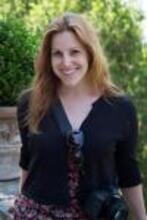
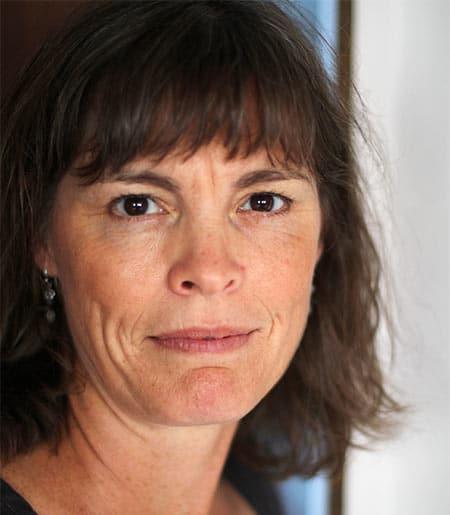
Kim Haines-Eitzen is the Paul and Berthe Hendrix Memorial Professor of Ancient Mediterranean Religions at Cornell University's Department of Near Eastern Studies within the College of Arts and Sciences. She holds affiliations with multiple programs including Classics, Feminist Gender and Sexuality Studies, Jewish Studies, Medieval Studies, Religious Studies, and the Society for the Humanities. For the 2024-25 academic year, she is a Fellow at the National Humanities Center working on Earth, Wind, and Fire: A Field Guide to the Apocalypse.
Her research interests focus on early Christianity, early Judaism, and religion in late antiquity with particular expertise in sound studies, desert monasticism, and the intersection of gender and text transmission. Her work combines traditional textual analysis with innovative field recordings of desert soundscapes to explore how acoustic environments shaped religious imagination in ancient contexts. She approaches her research through interdisciplinary frameworks including phenomenology, affect theory, sound studies, and ecocriticism.
Haines-Eitzen's publications include three major monographs: Sonorous Desert: What Deep Listening Taught Early Christian Monks and What It Can Teach Us (2022), The Gendered Palimpsest: Women, Writing, and Representation in Early Christianity (2012), and Guardians of Letters: Literacy, Power and the Transmitters of Early Christian Literature (2000). Her scholarly articles span topics from female scribes in antiquity to the acoustic imagination in early Christian texts.
Her scholarly recognition includes an Atkinson Center Faculty Fellowship, an American Academy of Religion Research Grant (2013-2014), and her current National Humanities Center Fellowship. Her work has gained significant public attention through media appearances including NPR's Academic Minute, The Conversation, The Commonweal Podcast, and the National Geographic Channel's 'The Story of God' with Morgan Freeman.
Born in Jerusalem and raised in Nazareth, Haines-Eitzen divides her time between Cornell's Finger Lakes campus and the high desert of Southeastern Arizona, where her personal connection to desert landscapes informs her scholarly work. Her field research involves making environmental sound recordings in the Negev, Judaean deserts of Israel, and the American Southwest to illuminate the acoustic dimensions of ancient religious texts and practices.