Prof. Dr. Seyhan ÖZTÜRK is an Associate Professor at Kafkas University's Faculty of Economics and Administrative Sciences, Department of Accounting. She has held full-time academic positions since 2010, progressing from Research Assistant to Associate Professor (2019–present). She also serves as the Head of the Accounting Department. Education: PhD in Accounting and Finance, Atatürk University (2011–2015) Master's in Business Administration, Istanbul University (2005–2011) Bachelor's in Business Administration, Istanbul University (2005–2009) Research Interests: Her work centers on Accounting Ethics, Forensic Accounting, and Internal Control, with applications in sustainability, corporate governance, and digital transformation. She explores ethical dilemmas in accounting, fraud detection methodologies, and the impact of regulatory frameworks on financial transparency. Publications: Her recent articles (2020–2025) emphasize sustainability accounting, financial performance analysis, and technology's role in accounting education. Themes include ESG metrics, bibliometric studies on climate accounting, and ethical challenges in SME financial reporting. Advising & Grants: She has supervised 16+ graduate students (PhD/Master’s) in topics like accounting ethics and financial modeling. She led a research project (2019–2021) testing bankruptcy prediction models on the Borsa Istanbul exchange.
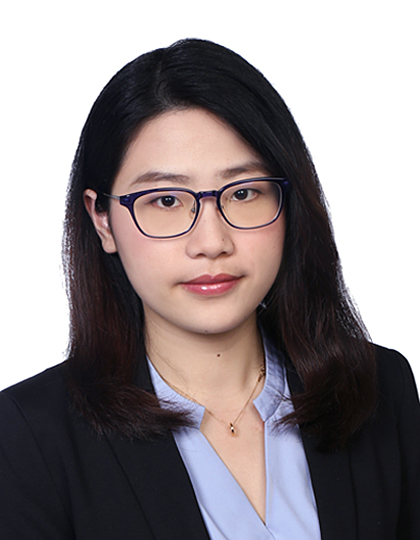
Yuan Tian is an Assistant Professor in the School of Computing at Queen's University, Faculty of Arts and Science. She holds a PhD in Information Systems from Singapore Management University (2017) and a B.Sc. in Computer Science from Zhejiang University (2012). Her research focuses on integrating heterogeneous data sources to enhance software engineering practices, including data mining, recommender systems, and social network analysis. Prior to Queen's, she was a data scientist at Living Analytics Research Centre (LARC), SMU. She has held visiting positions at Carnegie Mellon University, INRIA Paris, and SAIL Canada. Research Interests: Data Mining Software Engineering Social Network Analysis Information Retrieval Recommender Systems Computer Security Recent Research Trends: Her work emphasizes AI-driven solutions for software bug management, code translation, vulnerability detection, and developer behavior analysis. Notable contributions include leveraging LLMs for technical debt repayment and enhancing code vulnerability detection via Graph Neural Networks. Awards: SMU Presidential Doctoral Fellowship (2015-2016) Best Paper Award at SANER 2017 Grants & Advising: No formal advisees listed, but active in collaborative projects with industry and academic partners. Labs/Teams: Previously associated with SOAR Group at SMU and currently leads research in Queen's School of Computing.
Dr. Amy Damashek serves as Professor in the Department of Psychology at Western Michigan University, teaching undergraduate and graduate courses while mentoring Clinical Psychology doctoral students. She chairs the department's Diversity, Equity, and Inclusion Committee and maintains an active research program focused on vulnerable populations. Education: Ph.D. in Psychology, University of Missouri-Columbia (2007) Postdoctoral Fellowship, University of Oklahoma Health Sciences Center (2009) Research Focus: Her work centers on preventing child maltreatment and unintentional injuries among at-risk youth, with specialized expertise in infant sleep-related deaths and health disparities . She develops culturally responsive parenting interventions for low-income and Spanish-speaking families, emphasizing community-based solutions through home visiting programs. Publication Trends: Recent work (2020-2023) demonstrates consistent focus on pandemic adaptation of family services, safe sleep practices in marginalized communities, and digital intervention strategies. Her mixed-methods approach bridges clinical psychology with public health, prioritizing implementation in real-world settings. Scientific Recognition: Fellow of the American Psychological Association Former President of APA Division 37 (Society for Child and Family Policy and Practice) Grants & Mentoring: Secured federal funding for child injury prevention in underserved communities. Mentors Clinical Psychology doctoral students with emphasis on culturally competent practice, accepting new graduate students for Fall 2025. Her federally funded work directly informs evidence-based home visiting protocols. Research Ecosystem: Collaborates extensively with community health workers, home visiting agencies, and pediatric care providers to implement and evaluate interventions addressing structural barriers in family support systems.
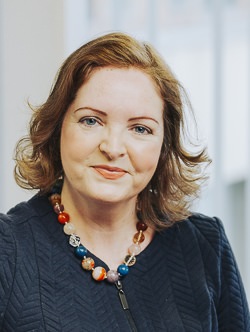
Dr Megan Evans is a Senior Lecturer in Public Sector Management at the School of Business, UNSW Canberra. She is an interdisciplinary social scientist focusing on environmental laws, policies, and tools, particularly in biodiversity and carbon offsetting frameworks. Education: PhD in environmental policy (Australian National University), BSc (Ecology) and BA (Mathematics) from The University of Queensland Her research drives policy impact in carbon offset integrity , biodiversity conservation , and environmental markets , including contributions to the Australian Government’s Biodiversity Offset Policy and the Queensland Land Restoration Fund . Her recent work examines biodiversity credits, carbon-negative technologies, and policy implementation challenges in human-induced regeneration projects. Key awards: Young Tall Poppy Award (2021) UQ Faculty of Science Rising Star Award (2018) ARC CEED scholarships (2014, 2017) She supervises five PhD students and has completed supervision of Dr Toiaba Binta Taher (PhD, with Professor Catherine Althaus). Her grants include an ARC DECRA Fellowship (2020–2023) and funding from the Department of Agriculture, Water and the Environment. Contact: megan.evans@unsw.edu.au
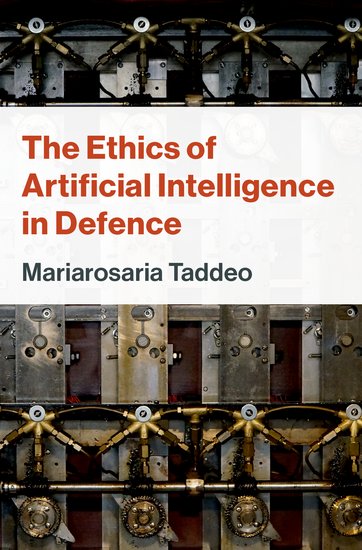
Mariarosaria Taddeo is Professor of Digital Ethics and Defence Technologies at the Oxford Internet Institute (University of Oxford) , where she also serves as DPhil Programme Director for Information, Communication and the Social Sciences. She is a Senior Research Fellow at the Alan Turing Institute and holds advisory roles at institutions including the Ministry of Defence (UK) Ethics Advisory Panel , the BRAID Programme , and the Leonardo Foundation . Education PhD (Doctor Europeus) in Philosophy from University of Padua Mariarosaria Taddeo’s research spans Digital Ethics, Philosophy of Technology, Cybersecurity Ethics, and AI Governance , with a focus on national defence applications. Her work addresses trust in AI , cyber conflict regulation , and ethical frameworks for autonomous weapons . She has published extensively in journals like Nature , Science , and Minds and Machines , including studies on data philanthropy , digital well-being , and quantum technology ethics . Scientific Awards 2010 Simon Award for Outstanding Research in Computing and Philosophy 2016 World Technology Award for Ethics 2018 InspiringFifty: Top 50 Italian women in technology ORBIT listings (2018, 2020) of top 100 women in AI Ethics 2020 Women’s Forum for Economy and Society: Outstanding Rising Talents ComputerWeekly Top 100 Influential Women in UK Technology (2020, 2023) Her projects include the UK MOD-funded AI Ethics Principles initiative, the NATO Cooperative Cyber Defence Centre of Excellence ethical guidance project, and contributions to the PETRAS IoT Research Hub . She advocates for ethical AI implementation in defence and digital governance, influencing EU policy through the CEPS Task Force on AI and Cybersecurity .
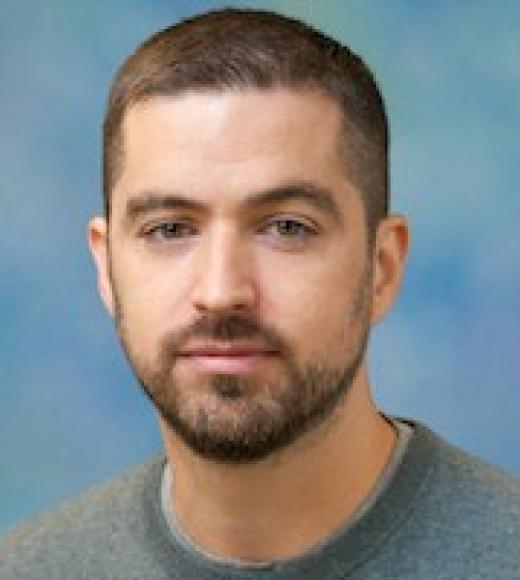
Santiago Barreda is an Associate Professor in the Department of Linguistics at the University of California, Davis, specializing in speech perception and phonetic analysis. His research examines how acoustic properties of speech convey speaker characteristics including age, gender, and physical attributes. Education: Ph.D. in Linguistics (Phonetics), University of Alberta, 2013 M.A. in Hispanic Studies (Language and Linguistics), University of Western Ontario, 2008 B.A. in Linguistics and Spanish Language and Literature, University of Western Ontario, 2006 Research Focus: Dr. Barreda employs behavioral experiments and statistical modeling to investigate perceptual mechanisms in speech recognition. His work bridges theoretical phonetics with practical applications, particularly in vowel normalization techniques and formant tracking algorithms. Key questions address how listeners extract speaker identity from acoustic cues and interpret social characteristics through vocal signals. Publication Trends: Recent publications (2020-2025) reveal three dominant themes: computational phonetic tools (FastTrack, phonTools), perception of social/physical speaker characteristics from children's voices, and interdisciplinary public health research on speech-related aerosol transmission. His work demonstrates strong methodological consistency in combining acoustic analysis with perceptual validation. Scientific Awards: No scientific awards were mentioned in the source material. Advising and Grants: The provided documentation does not specify graduate student advising roles or external grant funding. Technical Contributions: Dr. Barreda develops open-source phonetic analysis software including FastTrack (Praat-based formant tracking) and the phonTools R package, which have become standard resources in acoustic phonetic research.
Yoon Ju Kang is an Associate Professor of Accounting at the Isenberg School of Management, University of Massachusetts Amherst. She holds a PhD in Accountancy from the University of Illinois at Urbana-Champaign (2012), an MS in Accountancy (2006), and a BS in Mass Communication & Journalism with a double major in Business Administration from Ewha Womans University (2003). Her research focuses on auditing, corporate governance, and professional skepticism, with notable contributions to understanding audit committee dynamics and audit quality improvement. She is a Certified Public Accountant (Illinois) and has held academic roles at UMass Amherst (2014–present) and Lehigh University (2012–2014). Research & Awards : Kang has received prestigious recognitions including the KPMG Academic Research Program Grant (2021) and multiple teaching awards such as the College Outstanding Teaching Award (2020). Her work explores audit judgment rules, investor perspectives in auditing, and knowledge transfer in audit firm consultations. Recent studies include analyses of critical audit matters (CAMs) communication and audit committee oversight effectiveness. Teaching : She teaches Auditing and Financial Accounting courses, emphasizing practical application of theoretical frameworks. Her research and teaching intersect in areas like auditor skepticism and audit quality metrics. She has collaborated with institutions like the Center for Audit Quality and contributed to policy discussions on audit innovation.
Dr. Holly Doel-Mackaway is an Associate Professor at Macquarie Law School and a leading expert in children's rights, Indigenous studies, and international law. She co-leads the Children’s Rights, Participation and Protection Research Stream in Macquarie’s Faculty of Arts and serves as Co-Editor-In-Chief of the Australian Journal of Human Rights. Her interdisciplinary research focuses on advancing children’s rights globally, with a particular emphasis on Indigenous children’s participation in law and policy development. Dr. Doel-Mackaway holds a PhD in Law from Macquarie University and has extensive international experience with organizations like UNICEF and Save the Children. She teaches courses on Child and Elder Law, International Human Rights Law, and Research Methodologies. Recognized for her teaching excellence, she won the Vice-Chancellor's Learning & Teaching Award in 2021 and was nominated again in 2024. Her research includes groundbreaking work such as the 2022 book Indigenous Children's Right to Participate in Law and Policy Development , which provides a framework for involving Indigenous youth in policy decisions. She leads major grants like the 2024 ARC Linkage Grant on child-centered evidence for social change and collaborates with NGOs and governments across five continents. Key awards include the Macquarie University Executive Dean’s Higher Degree Research Excellence Award (2017) and the Erasmus+ Mobility Grant (2023). She actively participates in international committees like LAWASIA’s Human Rights Committee and advises on child rights in Australia, the Pacific, and beyond. Current research projects include exploring intergenerational policymaking, child protection in the Pacific, and the impact of the Voice to Parliament referendum on Indigenous rights.
Dr. Maria Cadiz Dyball is an Associate Professor in Accounting at the University of Sydney Business School. She holds a PhD and MCom (Honours) from UNSW Sydney and a BSc in Business Administration and Accountancy from the University of the Philippines. Her roles include Academic Director of the University of Sydney Accounting Foundation and Honours Coordinator for the Discipline of Accounting. Dr. Dyball is an active researcher, supervisor, and educator with expertise in audit practices, management controls, and professional ethics. She has served on editorial boards for journals like Abacus and Accounting History , and on professional panels for CIMA and AFAANZ. Her research focuses on accounting profession dynamics, audit skepticism, blockchain's impact on auditing, and sustainability in education. Notable awards include the 2007 Mary Parker Follett Award for outstanding research. Recent work explores blockchain's effects on accounting firm models and audit approaches, as well as historical studies of labor controls in colonial contexts. Dr. Dyball teaches courses on managerial accounting, corporate governance, and research methodology. Her grants include studies on modern slavery legislation operationalization, ethics education, and inter-organisational innovation controls. She has co-authored books like Sustainability in Accounting Education and led projects on non-profit accountability mechanisms and CEO stakeholder values. Her interdisciplinary research bridges historical accounting practices, modern technology adoption, and ethical frameworks. Current projects include professional skepticism in audits and disruptive technology's role in reshaping accounting professions.
John G. Lynch, Jr. is University of Colorado Distinguished Professor at the Leeds School of Business, University of Colorado-Boulder. He also serves as Inaugural Director of the Initiative for Global Business Impact and is affiliated with the Center for Research on Consumer Financial Decision Making. Previously, from 2022-2024, he served as Executive Director of the Marketing Science Institute, a nonprofit think tank bridging industry and academia. He has held prestigious faculty positions at University of Florida (1979-1996) as Graduate Research Professor and at Duke University's Fuqua School of Business (1996-2009) as Roy J. Bostock Professor of Marketing. Lynch received his BA in economics, MA in psychology, and PhD in psychology from the University of Illinois at Urbana-Champaign. His academic journey spans over four decades with significant contributions to consumer behavior research. He is the founding Director of the Center for Research on Consumer Financial Decision Making and founding co-chair of the Boulder Summer Conference on Consumer Financial Decision Making. He served on the Academic Research Council of the US Consumer Financial Protection Bureau from 2017-2020. Lynch's research focuses on the cognitive psychology of consumer decision-making, particularly consumer financial decision-making since joining CU in 2009. His work spans consumer financial decision making, financial knowledge and well-being, planning for money and time, and research methodology validity. His publications reveal a strong emphasis on financial education effectiveness, couples' financial responsibility division, retirement savings behavior, and methodological rigor in marketing research. The recent publications show increasing focus on financial education, privacy regulation, statistical methodology, and the intersection of financial and physical health. Lynch has received numerous prestigious awards including the 2025 American Marketing Association-Irwin-McGraw Hill Award for Distinguished Marketing Educator of the Year (the highest honor in academic marketing), Paul D. Converse Award for Outstanding Contributions to Marketing Science, and the Society for Consumer Psychology's Distinguished Scientific Achievement Award. He is a Fellow of the American Marketing Association, Association for Consumer Research, and American Psychological Association/Society for Consumer Psychology - one of only six scholars worldwide to achieve this triple distinction. As an educator, Lynch has taught undergraduate Principles of Marketing, Marketing Research, and Senior Seminar in Marketing at CU. He has also taught MBA electives on market intelligence and PhD courses on marketing strategy and experimental design. He has supervised or co-supervised 100 PhD dissertations, with former students now on faculties of leading business schools worldwide. His teaching excellence has been recognized with multiple awards including Leeds MBA Elective Teaching Excellence Awards in 2011 and 2013.
Ingrid Jeacle is a Professor of Accounting and Popular Culture at the University of Edinburgh Business School. With a PhD from the University of Limerick and a Master of Arts from Trinity College Dublin, she bridges interdisciplinary research with traditional accounting scholarship. A founding member of the Culture, Accounting & Society (CAS) Research Network, she explores how accounting practices permeate everyday life and popular culture. PhD, Accounting, University of Limerick (1999) MA, Economics and Business Studies, Trinity College Dublin (1989) Her research focuses on the intersection of accounting and popular culture, examining phenomena like calorie labeling, online reviews, and historical compensation systems. She employs methodologies such as netnography and actor-network theory to analyze how accountability systems shape societal norms. Recent publications include studies on cinematic portrayals of accountants (2024), calorie accounting in the UK food sector (2023), and historical valuations of human life in slavery abolition (2023). These works reflect her commitment to expanding accounting scholarship into cultural and social domains. AAAJ Hall of Fame Award (2019) Emerald Literati Highly Commended Awards (2015, 2017) Jeacle maintains leadership roles in editorial boards, including as Associate Editor for Accounting, Auditing & Accountability Journal and Financial Accountability & Management . She has served as Visiting Professor at South East Technological University (2022-2023) and guest-edited special issues across major journals.
Sarah E. Stein is an Associate Professor and Deloitte Foundation Faculty Fellow in the Department of Accounting and Information Systems at Virginia Polytechnic Institute and State University (Virginia Tech). She serves as Director of the Ph.D. Program within the Pamplin College of Business. Her academic journey includes a Ph.D. from the University of Missouri, a B.S. and M.S. in Accounting from Truman State University, and CPA licensure in Colorado. Prior to academia, she worked as an audit manager at Deloitte in Denver. Education: Ph.D., University of Missouri; B.S. and M.S., Truman State University; CPA (Colorado) Roles: Deloitte Foundation Faculty Fellow, Director of Ph.D. Program Dr. Stein’s research focuses on auditor expertise, corporate governance, auditing networks, and financial reporting challenges. Her work has been published in top journals like The Accounting Review and Auditing: A Journal of Practice & Theory . She received the 2019 Best Paper Award in Issues in Accounting Education and the 2020 Innovation in Auditing Education Award for her data visualization audit case. Her recent articles (2023–2025) highlight themes such as audit committee responsibilities, CFO-audit partner dynamics, and small accounting firm strategies. Her teaching includes graduate auditing courses and PhD seminars. Research trends in her articles emphasize audit quality, governance evaluation, and emerging technologies in auditing. She actively contributes to professional standards through commentaries on PCAOB releases. Awards: 2019 Best Paper Award, 2020 Innovation Award, Deloitte Doctoral Fellowship Dr. Stein advises the Ph.D. program and collaborates with industry on audit innovation. Her lab focuses on auditing education and case development, reflecting her commitment to bridging academic research and practical application.
Dr. Corey B. Jackson is an Assistant Professor in The Information School at the University of Wisconsin–Madison, affiliated with the Robert & Jean Holtz Center for Science and Technology Studies, Institute for Diversity Science, and Data Science Institute. His research bridges human-centered computing, CSCW, and design epistemologies, focusing on socio-technical systems for equitable participation in AI and citizen science. He teaches courses in Interaction Design, User Experience, and Digital Information. Education: Ph.D. Library & Information Science, Syracuse University, 2019 M.S. Library & Information Science, University of Illinois, Urbana-Champaign, 2012 B.A. Political Science, University of Illinois, Urbana-Champaign, 2010 Research Interests: Jackson’s work emphasizes designing systems for transparency, accountability, and democratic participation in technologies. He explores AI fairness, citizen science, and civic technology. His methodologies include mixed methods and socio-technical analysis. Key Awards: ACM CSCW 2020 Honorable Mention (Best Paper) NSF HCC Grant (2021–2024) Rockefeller Foundation Grant (2021) Chan Zuckerberg Initiative Grant (2022–2023) Advising & Grants: Jackson mentors Ph.D. students in HCI and citizen science. His grants total over $612k, supporting projects like AI audit tools and environmental justice initiatives. He co-directs the Collaborative Computing Group. Labs & Teams: Collaborative Computing Group at UW-Madison; affiliated with interdisciplinary institutes advancing data science and diversity in science.
Wen He is a Professor of Accounting at the Department of Accounting, Monash Business School, Monash University. He holds an MBA from Lancaster University and a PhD from National University of Singapore (NUS). Prior to joining Monash in 2020, he worked at UNSW and the University of Queensland. His research focuses on auditing, corporate governance, corporate social responsibility, dividends, financial reporting, and financial analysts. He has published in top journals such as Contemporary Accounting Research and Journal of Business Finance and Accounting , with recent works exploring regulatory cooperation, climate risk, and cross-border financial policies. Research Interests include: Auditing methodologies and regulatory enforcement Corporate governance in China Climate risk and financial flexibility Dividend policies and payout strategies Financial reporting transparency Recent articles highlight themes such as cross-border regulatory frameworks, auditor performance metrics, and shareholder dissent mechanisms in digital voting systems. His work contributes to UN Sustainable Development Goals through studies on corporate social responsibility and environmental accountability. He is actively supervising PhD students and accepting new candidates, particularly in auditing and governance contexts. He has held visiting positions at NUS and Xiamen University, fostering collaborative research networks in Asia. Labs/Teams: Impact Labs (Monash Business School).
Didar Zowghi is a Senior Principal Research Scientist and Science Team Leader at CSIRO Data61, Australia's national science agency. His work focuses on advancing ethical AI systems, data quality frameworks, and requirements engineering methodologies. He leads research initiatives addressing challenges in AI governance, diversity/inclusion in technology, and human-centered AI development. Research interests include AI ethics, data completeness in healthcare systems, and the application of machine learning in requirements engineering. His contributions span theoretical frameworks for responsible AI patterns, empirical studies on user perceptions of AI tools like M365 Copilot, and analysis of AI's role in global diplomatic practices. Zowghi has published extensively on topics ranging from blockchain in supply chains to pedagogical innovations in software engineering education. His work often bridges technical systems and societal impacts, emphasizing real-world implementation challenges through collaborative industry-academia projects. Notable outputs include the Responsible AI Pattern Catalogue and studies examining barriers to data quality in IoT platforms. He has pioneered frameworks linking innovation initiatives to occupational skill requirements and developed tools like Elica for dynamic requirements knowledge extraction in agile teams.