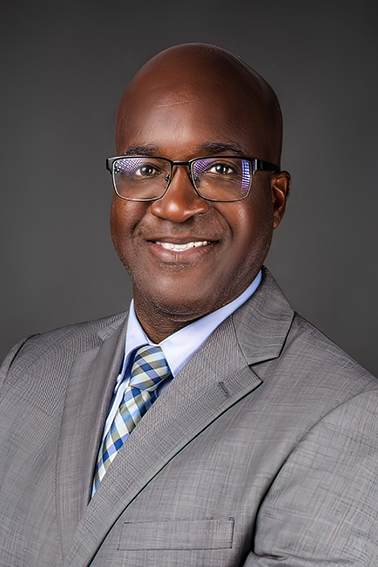
Michael E. Morrell is an Associate Professor in the Department of Political Science at the University of Connecticut. His work focuses on political theory , democratic theory , and political psychology . A graduate of Arizona State University (Ph.D., 1998), Morrell teaches courses ranging from Introduction to Political Theory to advanced seminars on Emotions and Political Theory. Ph.D., Arizona State University (1998) Specializations: Deliberative Democracy, Empathy in Politics, Democratic Mini-Publics His research examines deliberative democratic processes, particularly in mini-publics and online news comment platforms , with a focus on how empathy and emotions shape democratic engagement. Recent projects include studies on intellectual humility in public discourse funded by the John Templeton Foundation. Selected publications highlight his contributions to understanding deliberation , political efficacy , and democratic education . Morrell's work appears in journals like the Journal of Deliberative Democracy , Social Science Quarterly , and Public Opinion Quarterly , with a recurring emphasis on emotional dynamics and deliberative quality. Co-PI of $225,000 John Templeton Foundation grant For detailed information about his research, visit his Research Project Web Page .
Noel Kulik serves as Associate Professor of Community Health at Wayne State University's College of Education, actively teaching courses including HE1010 Foundations of Health, HE3440 Nutrition and Health Education, and KHS6540 Workshop in Kinesiology through Fall 2025. Holding a Ph.D. in Public Health from UNC Chapel Hill's Gillings School, Dr. Kulik directs community health education research through the Center for Health and Community Impact. Ph.D. in Public Health, Gillings School of Global Public Health, University of North Carolina at Chapel Hill Dr. Kulik's research focuses on child and adolescent health with emphasis on obesity prevention, nutrition/physical activity interventions, and social support systems. Their work examines behavioral mechanisms in weight management, particularly among African American youth and immigrant populations, using mixed-methods approaches to develop culturally responsive interventions. Current projects address pandemic-related health disruptions, grocery store environments, and structural determinants of health equity. Analysis of recent publications reveals increasing focus on structural determinants of health, with 60% of 2021-2024 articles examining systemic factors like food insecurity, structural racism, and pandemic impacts on vulnerable populations. Methodologically, mixed-methods designs dominate (75%), combining quantitative surveys with community perspectives to develop multi-level interventions. Recipient of $2.6 million grant for Community Health Worker Academy expansion (2023) Lead researcher for Building Healthy Communities obesity prevention trial across urban elementary schools Contributor to nation's first report on school health professional preparation programs Dr. Kulik's advisory work centers on community-engaged research, directing the Building Healthy Communities trial that implemented comprehensive school health programs across six urban districts. Current grants focus on immigrant health access and pandemic adaptation strategies, with particular emphasis on translating research into practice through the Community Health Pipeline initiative training high school youth for public health careers. Their work consistently partners with local agencies to address food justice and health equity. As Research Faculty for the Center for Health and Community Impact, Dr. Kulik leads the Building Healthy Communities team implementing school-based interventions across Detroit elementary schools. Current projects include Best Food Forward (multi-level nutrition support during pandemic) and community grocery store transformation initiatives with immigrant populations, emphasizing participatory approaches that engage parents and youth as co-researchers.
Joseph Siev is a postdoctoral fellow in Consumer Behavior at the Darden School of Business, University of Virginia. He holds a Ph.D. in Social Psychology from Ohio State University, where he was affiliated with the Attitudes & Persuasion Lab. His research explores intersections between political ideology, consumer behavior, and brand psychology. Education: Ph.D. in Social Psychology, Ohio State University Joe's work investigates how political identities shape consumer decisions, brand perceptions, and marketplace dynamics. He examines concepts like ambivalent attitudes, attitudinal extremity, and moral decoupling in political contexts. Recent research trends show his focus on brand political ideology, consumer judgment under uncertainty, and psychological mechanisms behind extreme actions. His work appears in journals like Science Advances , Psychological Science , and Journal of Consumer Psychology , often addressing polarization in marketing and public health domains.
Sunnie Lee Watson is a Professor of Learning Design and Technology at Purdue University’s College of Education and serves as the Assistant Dean for Engagement and Global Initiatives. Her work bridges attitudinal learning, critical systems thinking, and learner-centered pedagogy. Ph.D. in Educational Leadership and Policy Studies, Indiana University (2008) Ph.D. in Instructional Systems Technology, Indiana University (2008) M.Ed. in Instructional Systems Technology, Indiana University (2005) B.A. in Educational Technology, Ewha Woman’s University (2001) Dr. Watson’s research focuses on transforming educational paradigms through attitudinal learning and mindset change in formal and informal settings. She pioneers the integration of innovative educational technologies to foster learner-centered online instruction . Her recent publications emphasize MOOCs as tools for attitudinal change, analyzing self-regulated learning and social presence in digital environments. Themes include instructional design , educational psychology , and technology's role in equity . AERA AECT CIES
Dr. John Fife is an Associate Research Professor of STEM Education in the Department of Foundations of Education at Virginia Commonwealth University. His research focuses on building STEM identity and resilience among underserved youth, examining psychosocial implications of STEM inequity, and developing culturally relevant STEM ecosystems. He holds a Ph.D. in Counseling Psychology from VCU and completed postdoctoral training at the Medical College of Virginia. Education: Ph.D. in Counseling Psychology, Virginia Commonwealth University M.S. in Counseling Psychology, Virginia Commonwealth University B.S. in Psychology, University of Massachusetts at Boston B.S. in African American Studies, University of Massachusetts at Boston Fife has secured significant funding including NSF grants for Building Capacity in STEM Education Research ($346,000) and STEM learning ecosystems ($295,000). His publications explore academic resilience, equity in STEM, and culturally responsive interventions. Major Grants: Principal Investigator: NSF BCSER grant #2126016 ($346,000, 2021-2023) Principal Investigator: NSF MCA grant #2219175 ($295,000, 2022-2025) Principal Investigator: NSF HBCU-UP grant #1238757 ($349,000, 2010-2013) Honors: American Association of Blacks in Higher Education Leadership Fellow (2022) VSU/Massey Cancer Center Faculty Fellow (2021-2024) Harvard Management Development Program (2018)
Zeynel Hayran is an Associate Professor at the Department of Turkish and Social Sciences Education, Faculty of Education, Ahi Evran University. Holding a PhD in Fine Arts Education from Ankara University (2010) and an MSc in Curriculum and Instruction from Hacettepe University (2002), his research focuses on Turkish language education, educational technology, and cognitive development in children.
Professor Ann O'Shea, affiliated with the Department of Mathematics and Statistics at Maynooth University, is a leading expert in Mathematics Education. Her career spans both theoretical research in Several Complex Variables and transformative work in educational practices. PhD from University of Notre Dame (1991) Faculty of Science & Engineering, Maynooth University Focus on curriculum development and technology integration Research Interests : Task design for advanced mathematical thinking Technology's role in formative assessment Teacher professional development Mathematics support effectiveness Recent Publications (2023–2017) reveal consistent focus on: Transition challenges between school/university mathematics Impact of pandemic on higher education Comparative studies across cultural contexts Assessment reform and creative reasoning Practice Grants : IRC Postdoctoral Application (€93,830.79, 2019–2021) Collaborative Networks : Active involvement in European Society for Research in Mathematics Education (CERME) and International Network for Didactic Research in University Mathematics (INDRUM).
William R. Watson is a Professor and Director of the Purdue Center for Serious Games and Learning in Virtual Environments in the Department of Curriculum and Instruction at Purdue University. His work focuses on leveraging technology to transform education into a personalized learning paradigm. His educational background includes a Ph.D. in Instructional Systems Technology (2007), an M.S. in Information Science (2000), and a B.A. in English (1998), all from Indiana University. Dr. Watson's research centers on serious games, personalized learning, and digital badges as tools for educational transformation. He investigates how technology can shift the educational paradigm from knowledge delivery to learner-centered engagement, emphasizing attitudinal learning and systemic change. His work in video game-based learning and digital credentialing has been widely recognized. His recent publications reveal a consistent focus on attitudinal change, personalized instruction, and the role of technology in systemic educational reform. He has pioneered the use of digital badges for recognizing micro-achievements and has explored the application of serious games in diverse educational contexts. Dr. Watson has received numerous accolades including the Center for Digital Education’s Top 30 Technologists, Transformers, & Trailblazers (2015) and multiple Purdue University teaching fellowships. His awards highlight his innovative contributions to educational technology and instructional design. As the Director of the Purdue Center for Serious Games and Learning in Virtual Environments, he leads a team focused on developing and researching game-based learning environments. He has collaborated on significant projects such as the Passport digital badges platform, which has been featured in major media outlets. His work has influenced both academic research and practical applications in higher education.
Kym Simoncini is an Associate Professor at Queensland University of Technology (QUT), holding a Doctor of Philosophy from James Cook University. She serves as President of OMEP Australia and is affiliated with Early Childhood Australia, International Play Association, and Play Australia. Her teaching responsibilities include courses such as Investigating Curriculum and Pedagogy in Early Childhood , Early Childhood Mathematics , and English, Literacies and Language . Her research focuses on: Early childhood education methodologies, particularly play-based learning and mathematics/literacy development Culturally relevant pedagogy in cross-cultural contexts (especially Papua New Guinea) Teacher professional development using video and collaborative models Integration of STEM concepts in early education settings Publications (2017-2024) emphasize participatory approaches, educational resource development, and qualitative studies across Australian and Papua New Guinean contexts. Common themes include loose parts play, dual-language books, parental engagement via technology, and children's rights advocacy. No awards, grants, or supervised students are documented in the available information.
Karen S. Nulton is Teaching Professor of English and Director of Writing Assessment at Drexel University. Her scholarship examines writing assessment methodologies, work-integrated learning pedagogies, and reflective writing practices with social justice applications. Education includes PhD in American Literature from Rutgers University (1992), MA in English Literature and Composition from Rutgers (1988), and BA in English Literature from Bucknell University (1986). Research investigates: assessment-accreditation relationships in writing programs, interpersonal competency development through cooperative education, and academic-workplace learning connections. Fulbright-funded projects conducted in South Africa and Costa Rica explored social justice dimensions of writing instruction. Teaches across face-to-face, hybrid and online modalities in composition and writing studies.
Jessica Li serves as Professor in the Department of Educational Policy, Organization and Leadership within the College of Education at the University of Illinois, Urbana-Champaign. She holds additional affiliations with the Center for the Study of Global Gender Equity, Lemann Center for Brazilian Studies, Center for East Asian and Pacific Studies, and Siebel Center for Design. Her research focuses on unleashing human potential through innovative human resource development strategies amid globalization and technological change. Key interests include: AI integration in workplace learning systems Mobile learning readiness across generations Corporate university development and talent management Cross-cultural comparisons of work values in BRIC countries Generational differences in Chinese workplace attitudes Recent publications demonstrate strong emphasis on pandemic-era workplace adaptation, AI-human collaboration, and mobile learning technologies. Her work consistently bridges academic research with practical HRD applications across global contexts. Notable awards include dual AHRD Excellence in Scholarly Practice Awards (2020, 2022) and Emerald Literati's Outstanding Paper recognition. Her editorial leadership spans multiple journals including Journal of Chinese Human Resource Management. Professor Li actively contributes to faculty development initiatives and maintains strong connections with international research communities through BRIC country collaborations and China-focused studies. Her industry background with Motorola, Raytheon, and Nokia informs her practical approach to organizational development.
Univ.-Prof. Dr. Ursula Kessels (Freie Universität Berlin) is a leading professor in education research focusing on heterogeneity and education. Her work bridges basic and applied research in school and classroom contexts, drawing on educational psychology, social psychology, and developmental psychology. Research methodology emphasizes experimental designs, complemented by correlational and evaluation studies. She investigates motivational, identity-related, and attitudinal predictors of school learning , equity in education systems (especially gender, ethnicity, and socioeconomic disparities), and developed the Interests as Identity Regulation Model (IIRM) to map interactions between academic interest/achievement and identity development. Key research areas: Gender stereotypes in education, STEM engagement, feedback bias, school burnout, and shifting standards in evaluating stereotyped groups Recent projects: DFG-funded studies on performance feedback to learners with migration backgrounds and boys' educational disparities Collaborations span planetary sciences, health sciences, and international networks Her 15 most recent publications (2021–2024) focus on gendered/ethnic biases in education , shifting standards theory, and identity dynamics in STEM. Topics include prosocial behavior backlash in classrooms, math career aspirations, and feedback inflation for minority students. Methodologically, she combines experimental designs , implicit association measures, and cross-national comparisons. Key grants include DFG projects (2013–2022) and Jacobs Foundation funding (2008). She contributes to policy discussions through invited lectures at institutions like Ghent University and University of Wuppertal.
Dr. Yanqin Lu serves as Associate Professor at Bowling Green State University's School of Media & Communication, where his research investigates political communication dynamics within evolving digital media ecosystems. His scholarly focus centers on how emerging platforms reshape political cognition, discourse, and participatory behaviors. His academic credentials include: Ph.D. from Indiana University M.A. from Indiana University Lu's research program critically examines social media's role in political polarization , with particular emphasis on Facebook-mediated interactions. His work reveals how incidental exposure to cross-cutting political content triggers complex emotional and cognitive responses that influence engagement patterns. Methodologically, he combines national survey data with experimental approaches to dissect mechanisms linking platform architecture to attitude formation, demonstrating how news consumption habits and tie heterogeneity moderate polarization effects in digital public spheres. His publication trajectory in premier journals like New Media & Society and Journalism & Mass Communication Quarterly establishes a coherent research arc exploring social media's dual capacity for both bridging ideological divides and reinforcing affective polarization through emotional contagion mechanisms. Dr. Lu currently contributes to academic discourse as editorial board member for Mass Communication & Society , Online Information Review , and The Social Science Journal , shaping contemporary scholarship on digital political communication.
Ai Taniguchi is an Assistant Professor (Teaching Stream) in the Department of Language Studies at the University of Toronto Mississauga, specializing in English Language Linguistics and Online Teaching. Her academic journey includes a PhD in Linguistics from Michigan State University, where she worked under Marcin Morzycki, an MA in Linguistics from the same institution, and a BA (Highest Honours) in Linguistics and French from the University of Georgia. Her research expertise spans formal semantics and pragmatics, with particular focus on non-at-issue meaning, social meaning, and dynamic semantics. She explores what kinds of meaning exist in language beyond literal, at-issue meanings and how they can be formally modeled. Her work includes investigations of Japanese linguistic phenomena such as sentence-final particles, role language ( yakuwarigo ), and pejorative language use. Taniguchi's pedagogical work is equally innovative, combining linguistics with visual arts to create accessible educational content. She uses comics and other visual media to communicate complex linguistic concepts to broader audiences through her LingComics projects. Her teaching interests include equity, diversity, inclusion, and decolonization in linguistics education, public outreach, and innovative online teaching methods for large introductory courses. Her publications and research demonstrate a consistent pattern connecting formal linguistic theory with practical applications in education and public communication. She has co-authored Essentials of Linguistics (2nd edition), an open educational resource that makes linguistics accessible to wider audiences, reflecting her commitment to public linguistics and educational equity. LSA 2019: 5-Minute Linguist (winner) University of Toronto International Student Experience Fund (2022-2023) eCampusOntario Virtual Learning Strategy grant (2021-2022) As a teaching-focused faculty member, Taniguchi has developed numerous courses including LIN204 (English Grammar I), LIN205 (English Grammar II), LIN337 (Lexical Semantics), LIN338 (Pragmatics), and LIN452 (Communicating English Language Linguistics). Her pedagogical approach emphasizes authentic assessment, justice-centered curriculum development, and the integration of visual arts into linguistic instruction. Taniguchi maintains an active presence in both academic and public spheres, with media appearances, public lectures, and high school outreach programs in the Greater Toronto Area. Her work bridges the gap between specialized linguistic research and public understanding through creative communication methods.
Helena Titheridge is a Professor of Mobility and Sustainable Transport at the Department of Civil, Environmental and Geomatic Engineering, University College London (UCL) . With appointments at UCL since 1997, she has held roles in the Bartlett School of Planning and the Transport Studies Group at the University of Westminster (2003). Her research focuses on sustainable transport systems, social exclusion, GIS-T applications, and the interplay between transport, land-use, and environmental policies. She collaborates with organizations such as Transport for London, RPS Group, and Ipsos MORI. Education : PhD (Open University, 2005), MSc (Middlesex University, 1993), BSc (University of Leeds, 1991), Postgraduate Certificate in Learning and Teaching (University of Westminster, 2006). Research Interests encompass: Sustainable transport and mobility systems Social exclusion and equity in urban transport GIS-T for policy analysis Decision support tools for local authorities Deep learning in urban ecoacoustic assessment Informal settlement modeling (e.g., predictSLUMS) Professional Activities include: Associate Editor, Journal of Transport Geography (2016–present) Editorial roles in Transportation Planning and Technology and Journal of Transport and Land Use Conference organizer (Universities Transport Studies Group, 2008–2009) External examiner and grant reviewer Teaching spans postgraduate and undergraduate levels, with directorship of the MSc Transport and Mobility Systems , EngD Urban Sustainability and Resilience , and EngD Environmental Engineering Science programs. She teaches courses on transport-environment interactions, interdisciplinary urban sustainability, and engineering impact assessment.