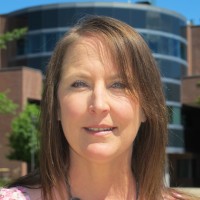
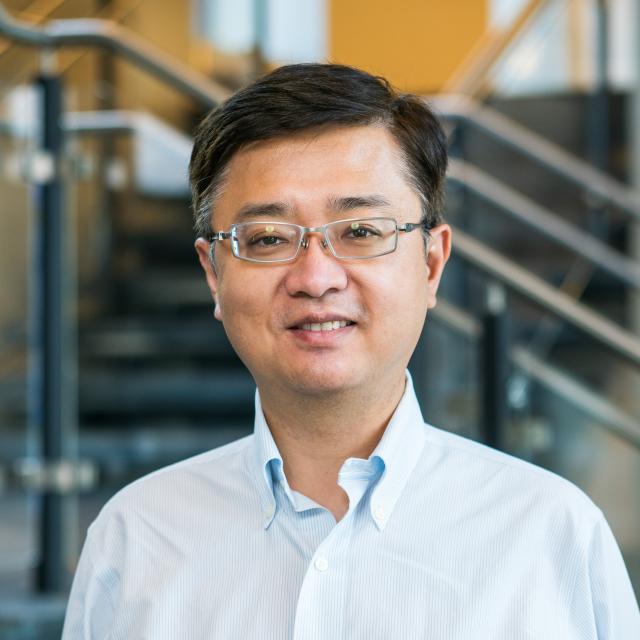
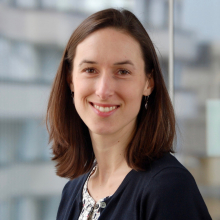
Dr. Alexandra Piotrowski-Daspit is an Assistant Professor in the Biomedical Engineering department and Internal Medicine – Pulmonary and Critical Care Medicine at the University of Michigan Medical School. She is a chemical/biological engineer with expertise in polymeric biomaterials for gene therapies, focusing on in vivo behavior of delivery vehicles and strategies to optimize biodistribution. Education: Ph.D. in Chemical/Biological Engineering Her research bridges polymer chemistry, gene delivery, and translational medicine, emphasizing in utero interventions and pulmonary targeting. Key areas include nanoparticle surface engineering, macrophage decoys, and computational pharmacokinetic modeling. Recent publications highlight systemic in utero gene editing for cystic fibrosis, poly(amine-co-ester) nanoparticle tunability, and mucosal vaccination platforms. She also explores miRNA therapies for congenital diaphragmatic hernia and triplex-forming PNAs for CFTR correction. PhRMA Foundation Awardee (2024) Her work involves interdisciplinary collaborations, DEI initiatives, and translational projects from postdoc foundations in W. Mark Saltzman’s lab. Labs like Saltzman and SCGE teams support her research.
James Lawler is a Professor in the Seidenberg School of Computer Science and Information Systems at Pace University, focusing on Information Technology. He has dedicated his career to advancing Disability Studies and STEM technologies for individuals with developmental and intellectual disabilities (IDD), while also contributing to e-Business strategies and social entrepreneurship. His work bridges technology and inclusivity, with a strong emphasis on community engagement and equity. Education: DPS, School of Computer Science and Information Systems, Pace University (2002) MBA, Graduate School of Business, Pace University (1974) BBA, Business Administration, Saint Francis College (1971) APC in Computer Applications (Audited), New York University (1979) Research Focus: Professor Lawler's research spans Customer Relationship Management (CRM) technologies, service-oriented architecture, and web services. He has pioneered initiatives for neurodiverse students in STEM, developed multisensory environments using virtual reality, and created programs like the Disability Film Festival to promote inclusion. His work often involves partnerships with AHRC New York City and other organizations. Awards: National Jefferson Award for Community Service (2024) Pace University Golden Graduates Reunion 50th Year of Service (2024) SEINFORMS Certificate of Recognition (2021) ISECON Meritorious Paper Award (2013) Grants & Professional Contributions: He has secured multiple grants for projects like the Disability Film Festival, robotics for elderly people with disabilities, and mobile app development for food waste reduction. His professional service includes roles with AHRC NYC, IEEE Education Society, and editorial boards for academic journals. He also teaches courses on design thinking, information systems, and e-commerce strategies.
Rachelle Hole is a Professor at the School of Social Work, Faculty of Health and Social Development, University of British Columbia Okanagan. She serves as the Director of the Canadian Institute for Inclusion and Citizenship (CIIC) and leads the Social Inclusion and Equity Research Cluster at the Institute for Community Engaged Research. As an Associated Health Researcher with CREST.BD, she bridges mental health and disability studies through community-based participatory research. UBC Tier 1 Principal's Research Chair in Critical Disability Studies Director, Canadian Institute for Inclusion and Citizenship Social Inclusion and Equity Research Cluster Leader Associated Health Researcher, Collaborative RESearch Team (CREST.BD) Her research integrates critical disability studies with community-based participatory methodologies to advance social inclusion for marginalized populations, particularly focusing on individuals with intellectual/developmental disabilities, Indigenous communities, and bipolar disorder patients. She explores employment equity, self-advocacy, and digital health tools like the PolarUs app for mental health. Her work emphasizes ethical participatory theatre and policy-informing research. Recent publications and grants (2018–2025) include multi-million-dollar partnerships with Canadian Institutes for Health Research, Social Sciences and Humanities Research Council, MITACS, and Vancouver Foundation. Key projects: Tide Project (youth employment), Impact 2.0 (summer employment), and Evidence to Inform Policy (community living sector). Her 15 most recent Google Scholar articles span employment barriers, digital health, research-based theatre, and policy analysis. Scientific awards include UBC Okanagan Health Researcher of the Year (2019). She has supervised numerous graduate students and collaborated with institutions like Community Living British Columbia, Aspire, and CREST.BD.
Malin Broberg is a Professor in Psychology and the current Vice-Chancellor (since 2023) and President of the University of Gothenburg. She was previously Dean of the Faculty of Social Sciences at the same institution. Educated at Umeå University, she is a licensed psychologist with a clinical background in child and youth habilitation. Her research focuses on: Welfare systems for families with disabled children Stress coping mechanisms Neurodevelopmental impacts of brain damage in children Augmentative and Alternative Communication (AAC) Parental well-being and resilience Recent publications (2024-2023) highlight her work in neuropsychology, health-promoting learning environments, and AAC interventions for children with profound disabilities. She has collaborated with researchers in Sweden and the USA, and her work appears in journals like Child Neuropsychology and Disability and Rehabilitation-Assistive Technology . Malin Broberg has supervised doctoral and Master’s theses in developmental psychology and disability research. She has also served as General Secretary of the International Association for the Scientific Study of Intellectual and Developmental Disabilities (IASSIDD).
Jenn Brophy is an Assistant Professor of Bioengineering at Stanford University, developing technologies for genetic engineering of plants and microbes to address environmental stress resilience and agricultural sustainability. Her lab focuses on synthetic genetic circuits for plant root reprogramming and stress response optimization. B.S. in Bioengineering, UC Berkeley (2010) Ph.D. in Biological Engineering, MIT (2016) Postdoctoral Fellow, Stanford University (Biology) Research spans synthetic biology, plant genetics, and microbiome engineering, emphasizing climate adaptation and sustainable biotechnology. Current projects include: Plant-microbe interaction engineering Stress-responsive biosensors High-throughput genetic tool development Plant cell atlas integration Sustainable laboratory practices Her recent publications highlight advances in recombinase circuits, root architecture engineering, and plant cell mapping, with applications in climate resilience and microbiome design. Collaborators include José Dinneny (Stanford) in plant synthetic biology research.
Ju Lu serves as an Assistant Professor at Lehigh University with office location in Iacocca Hall (room 0111), contactable via phone (610.758-3687) and email (jul724@lehigh.edu). Her academic position reflects active engagement in neuroscience research and education within the university's life sciences framework. Education Background: Ph.D. in Neurobiology from Harvard University (2008) B.Eng. in Microelectronics from Tsinghua University (2002) Research Focus: Dr. Lu's work pioneers investigations into neural circuit dynamics and synaptic plasticity mechanisms using advanced optical imaging technologies. Her research spans: Cortical circuit reorganization during motor skill acquisition across species Stress-induced synaptic alterations mediated by microglia in prefrontal circuits Therapeutic applications of psychedelic compounds for neural circuit restoration Development of three-photon microscopy for deep-brain imaging Genetically-encoded neurotransmitter sensors for in vivo studies This multidisciplinary approach bridges molecular neuroscience, systems-level circuit analysis, and translational mental health applications. Publication Trends: Analysis of Dr. Lu's 15 most recent publications (2016-2023) reveals an evolving trajectory from foundational studies on dendritic spine plasticity toward translational neuroscience. Early work emphasized optical imaging methodology and basic plasticity mechanisms, while her 2021-2023 publications increasingly focus on stress-related circuit disruptions and psychedelic therapeutics. A consistent thread involves combining high-resolution in vivo imaging with behavioral models to establish causal links between neural circuit dynamics and cognitive functions. Honors and Awards: No scientific awards or fellowships were documented in the provided materials. Mentorship and Funding: While specific student mentees and grant funding details are not specified in the source text, her extensive collaborative publication record indicates active supervision of research personnel and successful acquisition of research support. Research Infrastructure: Her methodological expertise in advanced microscopy suggests utilization of specialized imaging facilities, though no dedicated laboratory or research team is explicitly identified in the available documentation.
Dr. Ara J. Schmitt is a Professor of School Psychology and Associate Dean for Research and Faculty Advancement at Duquesne University's School of Education. He holds a Ph.D. from Illinois State University (2001) and a B.S. from the University of Illinois at Urbana-Champaign (1996). His research focuses on neuropsychological assessment, evidence-based interventions for learning disabilities, school-based chronic illness management, and bullying dynamics. Dr. Schmitt has authored numerous peer-reviewed articles, book chapters, and textbooks, including Patterns of Learning Disorders (2006) and Theory and Cases in School-Based Consultation (2020). Education: Ph.D., School Psychology, Illinois State University (2001); B.S., Psychology, University of Illinois (1996) Professional Roles: Associate Dean for Research, School Psychology Program Director, Adjunct Faculty Collaborator His research interests emphasize applied interventions in schools, including neurocognitive assessments, concussion management, and bullying prevention. He has pioneered studies on Taped Problems Intervention adaptations for remote learning and explored cognitive predictors of bullying behavior in adolescents. Recent work addresses socially responsive evaluation practices in health psychology and disparities in concussion awareness among athletes and parents. Dr. Schmitt has advised over 20 graduate students and contributed to national initiatives like the CCTC 2020 guidelines for health psychology training. His work bridges clinical practice and education, particularly in supporting students with chronic illnesses and neurodiverse needs.
Jill Thorson serves as Assistant Professor in the Department of Communication Sciences and Disorders within the College of Health and Human Services. Recognized with the 2024 Excellence in Teaching Award, she demonstrates exceptional commitment to student-centered pedagogy across undergraduate and graduate curricula, particularly in courses like Language Acquisition and Clinical Phonetics where she transforms complex concepts into accessible learning experiences through active strategies and technological integration. Her research investigates prosodic mechanisms in child language development, with emphasis on naturalistic caregiver-child interactions, autism spectrum communication patterns, and clinical assessment methodologies. She examines how pitch contours, intonation, and rhythmic patterns facilitate language acquisition in diverse populations, employing acoustic analysis of museum visits, classroom settings, and spontaneous speech to uncover links between prosody and cognitive processing. Recent publications (2020-2025) reveal consistent focus on prosodic assessment innovations, cross-linguistic autism studies, and the role of intonation in attentional guidance. Key trends include statistical learning networks, referent processing through pitch variation, and clinical applications for minimally verbal children, demonstrating her commitment to bridging theoretical linguistics with therapeutic practice. Scientific Awards: Excellence in Teaching Award, College of Health and Human Services (2024) Dr. Thorson maintains an active research laboratory mentoring undergraduate and graduate students in hands-on projects, with advisees consistently crediting her one-on-one consultations and collaborative environment for their professional development as clinicians. While specific grant details aren't provided, her extensive publication record indicates sustained research funding supporting naturalistic methodology development. Her laboratory specializes in acoustic analysis of real-world communication, conducting studies in preschool classrooms and museum settings to document prosodic patterns in typically developing children and those with autism spectrum disorders, with current work advancing assessment tools for clinical speech pathology applications.
Professor Isabel Dziobek is a distinguished academic at Humboldt University of Berlin, holding a W3 Professorship in Clinical Psychology of Social Interaction within the Institute of Psychology, Faculty of Life Sciences. She serves as Head of the University Outpatient Clinic for Psychotherapy and Psychodiagnostics and leads the Special Outpatient Clinic for Social Interaction. As Academic Director of the Center for Psychotherapy at Humboldt University and Principal Investigator at the German Center for Mental Health, she plays a pivotal role in shaping mental health research and clinical practice in Germany. Her educational background includes a Diploma in Psychology from Ruhr University Bochum (2000), a Dr. rer. nat. summa cum laude from University of Bielefeld (2006), and Habilitation in Psychology from Free University of Berlin (2014). She obtained her license to practice as a psychological psychotherapist in 2015. Professor Dziobek's research focuses on bio-psycho-social mechanisms of social interaction disorders across autism spectrum disorders, social anxiety disorders, and personality disorders. Her work integrates neurobiological approaches (fMRI, EEG, psychophysiology, eye-tracking, neuromodulation) with the development of diagnostic and intervention procedures including cognitive behavioral therapy, e-mental health, and social robotics. She has pioneered research on therapeutic mechanisms through focused short-term programs involving movement synchronization, social competence training, and brain stimulation augmentation. Analysis of her recent publications reveals a strong emphasis on empathy assessment in autism and personality disorders, development of innovative assessment tools like the Simulated Interaction Task for Children (Kids-SIT), and exploration of novel therapeutic approaches including psychedelic-assisted therapy. Her work increasingly incorporates participatory research methods and cross-cultural validation of assessment tools, reflecting a commitment to making research clinically relevant and accessible. 2016: Teaching Award of the Faculty of Life Sciences, Humboldt University of Berlin 2016: Antistigma-Preis der Deutschen Gesellschaft für Psychiatrie und Psychotherapie 2014: Charlotte- und Karl-Bühler-Preis, Deutsche Gesellschaft für Psychologie 2011: 2nd Place in Brain-Art Competition 2011 2007: Dissertation Award of University of Bielefeld 2007: 1st Prize at Canadian Film Festival "Picture This" Professor Dziobek serves in numerous leadership roles including Spokesperson for Charité Mental Health, Fellow of the Max Planck School of Cognition, and Board Member of Charité Mental Health. She directs the DZPG-funded research group and participates in the Cluster of Excellence Neurocure III. Her lab, the Dziobek Lab (dziobek-lab.org), focuses on developing and evaluating interventions for social interaction disorders while maintaining strong clinical connections through the University Outpatient Clinic.
Joel Krueger is a Lecturer in Philosophy at the University of Exeter, affiliated with the Department of Sociology and Philosophy and Egenis, the Centre for the Study of Life Sciences. He specializes in phenomenology, philosophy of mind, and cognitive science, with a focus on embodied cognition, emotions, social cognition, psychopathology, and human-AI interactions. His research also encompasses Asian and comparative philosophy, philosophy of music, and pragmatism. Education: PhD in Philosophy from Purdue University (2010), MA in Philosophy from San Francisco State University (2006), and BA in Philosophy from the University of California, Davis (2003). Research Interests: Krueger’s work bridges philosophy and cognitive science, addressing topics such as loneliness, psychiatric disorders, AI ethics, and the role of music in affective scaffolding. He explores how technologies like AI chatbots influence grief and social interactions, and how embodied cognition shapes mental health and sociality. Editorial Roles: Associate Editor of Phenomenology and the Cognitive Sciences and Passion: Journal of the European Philosophical Society for the Study of Emotion . Labs/Teams: Active in Egenis (Mind, Body, and Culture), contributing to interdisciplinary studies on life sciences and their societal implications.
Jack Peltz, PhD, serves as an Assistant Professor in the Department of Psychology, Philosophy, and Neuroscience Programs at the State University of New York at Brockport. His academic career focuses on the intersection of developmental psychopathology, sleep science, and family systems dynamics, with particular emphasis on adolescent and college-age populations. His educational background includes: PhD in Clinical Psychology (Concentration: Developmental Psychopathology; Certificate: Quantitative Methods), University of Rochester, 2013 MA in Clinical Psychology, University of Rochester, 2010 MA in Child Development (Concentration: Clinical and Developmental Psychology), Tufts University, 2007 BA in Japanese, Middlebury College, 1996 Dr. Peltz's research program centers on developmental psychopathology and sleep regulation , investigating bidirectional relationships between sleep disturbances and family functioning. As a clinical psychologist specializing in behavioral sleep health for children and families, he develops community-based interventions to promote sleep hygiene. His work uniquely bridges quantitative methodology with clinical applications, examining how economic stressors, social media influences, and developmental transitions impact sleep-wake patterns. Analysis of his recent publications (2023-2025) reveals three dominant research trajectories: (1) sleep as a mediator between adverse childhood experiences and psychological outcomes, (2) technology-mediated sleep disruptions (including wearable devices and social media), and (3) developmental transitions (puberty, college entry) affecting sleep-family dynamics. His methodological approach combines longitudinal designs, ambulatory EEG, and mixed-methods analysis to capture real-time sleep-family interactions across diverse populations including youth with visual impairments.
George Henderson is a Professor at the Texas Tech University Health Sciences Center in the Department of Pharmacology & Neuroscience . His research focuses on the neurotoxic effects of ethanol and environmental toxins during development, particularly mechanisms of apoptosis and oxidative stress in the brain and placenta. Primary Affiliation: Texas Tech University Health Sciences Center Research Areas: Developmental neuroscience, neurotoxicity, oxidative stress, fetal alcohol spectrum disorder, nanoparticle drug delivery Research Trends: His publications from 1972–2023 show sustained expertise in ethanol-induced developmental damage, placental drug transport mechanisms, and antioxidant therapeutic strategies. Recent work (2023) explores chlorogenic acid as a neuroprotective agent via NFATc4/CSE pathways. Key Collaborations: Institute for One Health Innovation and translational neuroscience teams at TTUHSC.
Martijn Van Heel is an Assistant Professor in Psychology at Brussels University, affiliated with the Consultation Center. He specializes in adolescent mental health, focusing on parenting practices, emotion regulation, and non-suicidal self-injury. His work integrates cross-cultural comparisons and digital media's impact on youth development. He leads and co-leads several projects, including the PRISM network (Psychology, Research, and Innovations for Mental Health) and the SMARTS initiative (Strengthening Mental health and Resilience Through Schools). He also contributed to the 'Good Game' project promoting mental health in esports and research on online communication's effects on adolescents. Van Heel’s research emphasizes cultural differences in parenting, the role of digital platforms in mental health, and developing school-based interventions. His recent studies include benchmarking mindfulness therapies, analyzing emotion regulation across Belgium and Iran, and evaluating the Psychological Referral Optimization (PRO) app for adolescent mental health screening. He collaborates extensively with researchers in Iran, Vietnam, Tanzania, and South Africa, exploring topics like aggression norms, attachment styles, and pandemic impacts on self-injury. His work is disseminated through peer-reviewed journals and international conferences, with notable contributions to Current Psychology and Cognitive Therapy and Research .
Christine Tardif is an Assistant Professor in the Department of Biomedical Engineering and the Department of Neurology and Neurosurgery at McGill University. As head of the McConnell Brain Imaging Centre lab at the Montreal Neurological Institute, she develops advanced MRI techniques for in-vivo brain imaging, focusing on quantitative mapping of myelin and cortical microstructure. Her work spans methodological innovation (e.g., multi-modal biophysical modeling) and translational applications across preclinical (7 Tesla) and clinical (3 and 7 Tesla) systems. Undergraduate: B.Eng. in Computer Engineering, McGill University (2004) Master's: M.Sc. in Bioengineering, Imperial College London (2006) PhD: Biomedical Engineering, McGill University (2011) Her research explores myelin dynamics in health and disease, emphasizing its role in neural conduction, brain plasticity, and cognitive functions. The lab investigates dysmyelination in psychiatric disorders (e.g., bipolar disorder) and neurodegenerative conditions (e.g., multiple sclerosis) using relaxometry , magnetization transfer , and diffusion-weighted imaging . Recent methodological work includes 3D MERMAID sequences for motion-insensitive diffusion imaging and optimization of magnetization transfer saturation maps. Current projects integrate ultra-high field MRI with histological validation in preclinical models (e.g., marmoset brain sections), aiming to bridge microstructural metrics with macro-scale brain function. Applications span Alzheimer's disease risk assessment via white matter alterations, synaptic density mapping in psychosis, and cortical laminar differentiation studies.
Dr. Sheng-Jian Ji is a Tenured Associate Professor at the School of Life Sciences, Department of Neuroscience at Southern University of Science and Technology (SUSTech) in Shenzhen, China. He also serves as the Academic Vice President of Shude Academy and was previously the first Deputy Director of Research and Graduate Affairs in the Department of Biology at SUSTech (2016-2018). As a leading neuroscientist specializing in RNA modification and neural development, Dr. Ji has established an internationally recognized research program. Dr. Ji's educational background includes: 2003-2007: Postdoctoral Fellow, Johns Hopkins University School of Medicine, Neurobiology 1998-2003: PhD in Biochemistry and Molecular Biology, Peking University School of Life Sciences 1994-1998: Bachelor's Degree in Biochemistry, Yantai University Department of Biochemistry Dr. Ji's research primarily focuses on developmental neurobiology, with particular emphasis on post-transcriptional regulation mechanisms including RNA modification and local translation of mRNA in axons. His laboratory is recognized as one of the leading international groups studying how mRNA modification (particularly m6A and m5C) regulates neural development and function. Through innovative approaches combining molecular biology, cell biology, and microfluidic technologies, his team has revealed important insights into axon growth, dendrite maintenance, cortical neurogenesis, and retinal development. His publication record shows a clear trajectory from fundamental mechanisms of RNA modification to applications in understanding neurological disorders and aging. Recent work has expanded into aging-related neural decline, cognitive functions, and potential therapeutic targets for neurological conditions. Dr. Ji has received numerous prestigious awards: 2020, 2016: SUSTech Excellent College Mentor 2020: SUSTech Biology Department Outstanding Service Award 2019: Guangdong Province Talent Youyue Card A 2017: Guangdong Provincial Professor of Neurobiology 2013: Jiangsu Distinguished Professor (Nanjing University) 2011: National Natural Science Award Second Prize (third contributor) As an educator, Dr. Ji teaches undergraduate Neurobiology and graduate Cellular and Molecular Neurobiology courses. He actively mentors students, with recent master's graduates including Yuan Jiaxin and Zhang Pingrui. His laboratory recruits postdoctoral fellows (with salaries of 335,000+ RMB annually), research assistants, and graduate students, providing comprehensive training in molecular techniques, neuronal cell culture, microfluidics, and omics approaches. Dr. Ji leads a vibrant research team that collaborates both within SUSTech and internationally. His work continues to advance understanding of RNA modification in neural development, function, and aging, with recent progress highlighted in June 2025.