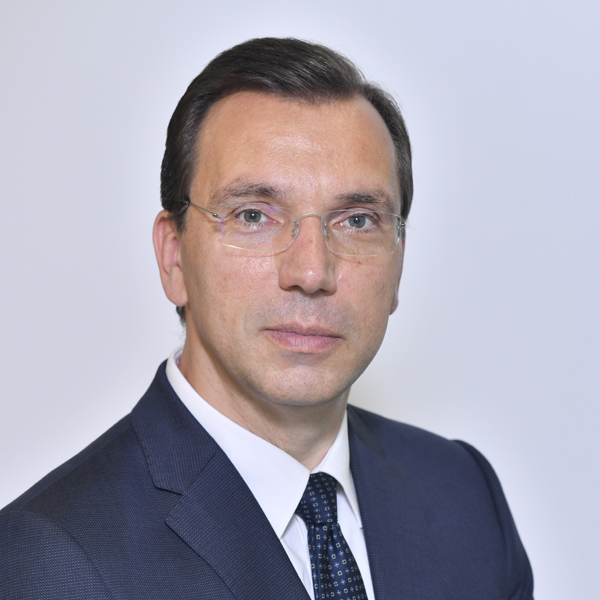
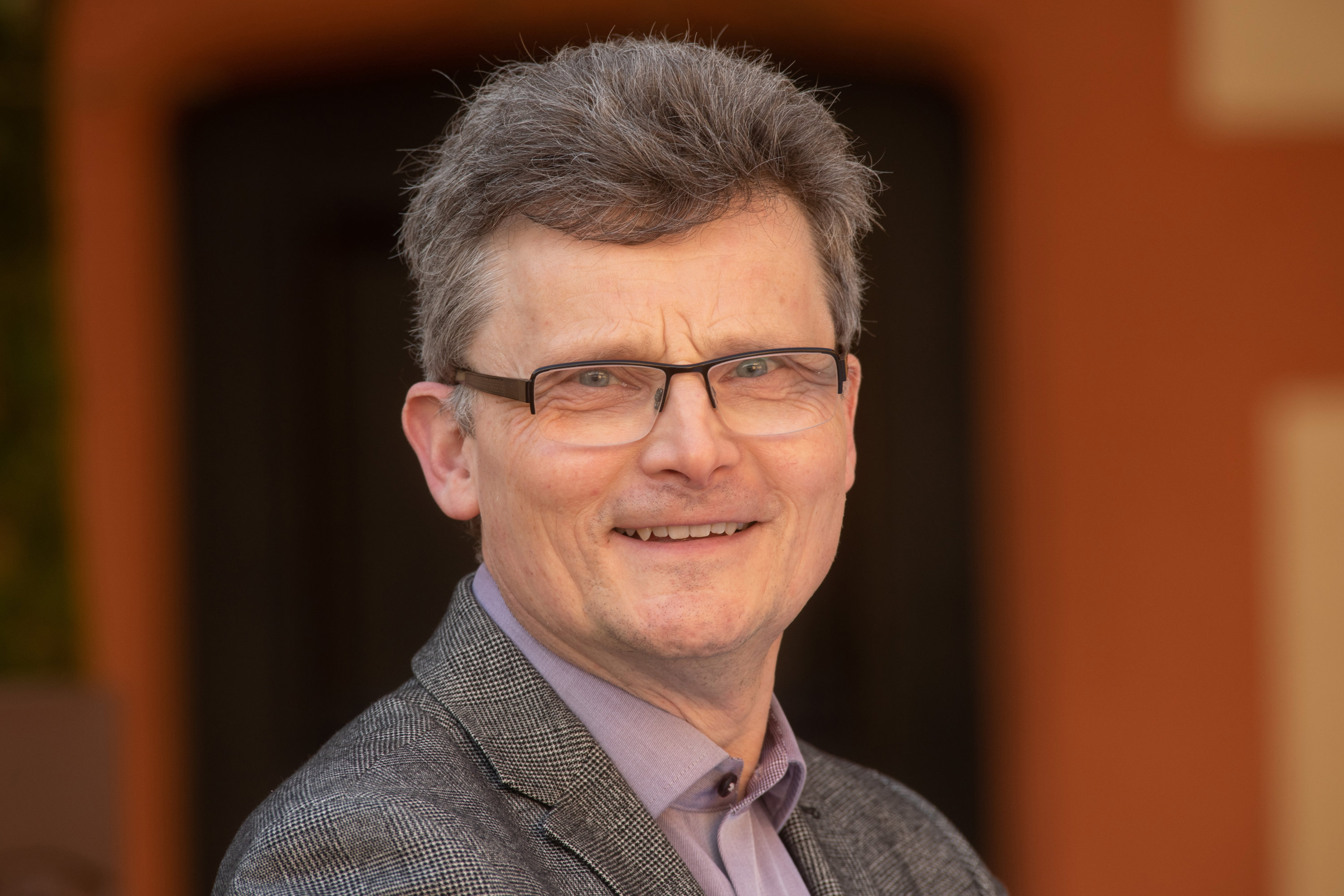
Viktor Manahov is a Reader in Finance at the University of York, specializing in FinTech, cryptocurrency markets, and machine learning applications in finance. His research examines high-frequency trading, market efficiency, and the economic impacts of cybersecurity events in digital asset markets. Recent publications investigate relationships between cryptocurrency prices and market sentiment, particularly following major security breaches. His work combines empirical analysis with computational methods to model market behaviors. Manahov teaches courses on FinTech and Advanced Investment Management, supervising PhD students researching cryptocurrency markets and algorithmic trading strategies.
Niloofar Abolfathi is a Full-Time Assistant Professor of Strategy & Entrepreneurship at Singapore Management University's Lee Kong Chian School of Business. She previously held positions at National University of Singapore (Visiting Assistant Professor, 2019-2023) and WU Vienna University of Economics and Business (Assistant Professor, Non-tenure track, 2017-2019). Ph.D. in Business Administration and Management, Bocconi University (2018) MSc. in Industrial Management, Allameh University (2010) BSc. in Industrial Engineering, K.N.Toosi University of Technology (2008) Her research focuses on competitive strategy and entrepreneurship from a demand-side perspective, particularly examining: Entrepreneurship training methodologies (demand vs resource approaches) Impact of customer switching costs on firm scope and profitability Digital transformation and platform strategies Market friction dynamics in telecommunications Gamification's role in industry disruption Her work has been published in top-tier journals including Strategic Management Journal , Management Science , and MIT Sloan Management Review . Key findings show demand-side training can double customer acquisition and increase revenues by 65% in entrepreneurship programs. Notable awards include: Best Paper Award, wISE Scholarship in Oceania (2023) Best Paper Prize Honorable Mention, SMS Annual Conference (2021) Glueck Best Paper Award, Strategic Management Division of AOM (2020) Her research explores platform competition dynamics (e.g., YouTube vs Twitch) and the role of customer complementary assets in technology adoption, with practical implications for digital business innovation.
Kambiz Raffiee serves as Associate Dean for Graduate Programs & Research and Director of MBA/Online Executive MBA programs at the University of Nevada, Reno's College of Business. A Foundation Professor Award recipient, he demonstrates exceptional leadership in academic administration while maintaining rigorous research and teaching standards in economics and business disciplines. His educational foundation includes: Ph.D. in Economics from University of Oregon M.S. in Economics from University of Oregon B.A. in Economics from Pahlavi University Raffiee's research program centers on econometric analysis of market volatility and uncertainty transmission mechanisms. He employs advanced time-frequency domain methodologies to investigate spillover effects between economic policy shocks and sector-specific outcomes, with particular expertise in transportation economics (airline industry), energy markets (crude oil/diesel pricing), and socio-economic determinants of public health. His work consistently bridges theoretical econometrics with real-world business applications. Recent publications (2017-2025) reveal a concentrated focus on economic policy uncertainty impacts across consumer goods industries, financial markets, and energy sectors. Using regime-switching models and cross-spectral analysis, his research identifies distinct volatility patterns during uncertainty shocks and quantifies transmission channels between US policy environments and global markets, particularly in Pacific Basin and Latin American economies. His scientific recognition includes: University of Nevada, Reno Foundation Professor Award for integrated excellence in research, teaching, and service As academic administrator, Raffiee oversees graduate business education strategy while maintaining active research supervision. His leadership in MBA/EMBA program development demonstrates commitment to integrating cutting-edge economic research into executive education curricula, though specific grant details and student mentorship records aren't publicly documented in available sources.
Maria Psyllaki is a Professor in the Department of Economics at the University of Piraeus, teaching undergraduate courses in Microeconomics, Money and Banking, and postgraduate courses in Financial Resources Management across multiple programs. She has held visiting positions at Rutgers University, University of Cyprus, and University of Nice-Sophia Antipolis, and serves as Collaborating Educational Staff for the Hellenic Academy of Sciences' Banking postgraduate program. Education: PhD in Finance, University of Nice Sophia Antipolis, France (1997) Master's in Finance, University of Nice Sophia Antipolis, France (1997) Research Focus: Professor Psyllaki specializes in applied microeconomics and banking with emphasis on financial sector dynamics. Her work investigates capital structure determinants, firm efficiency metrics, trade credit mechanisms, and banking regulation impacts, particularly within European and transition economies. She employs advanced econometric methods to analyze banking performance and credit market behaviors. Publication Trends: Her 15 most recent publications (2001-2017) demonstrate consistent focus on banking performance under regulatory frameworks (Basel III), SME financing challenges, and cross-country capital structure analysis. Key recurring themes include the interplay between firm efficiency and financial outcomes, credit risk assessment methodologies, and e-learning development in European higher education. Professional Engagement: She serves as referee for leading journals including Journal of Banking and Finance and European Journal of Operational Research. From 2009-2012, she held Vice Presidency at the Hellenic Association of Financial and Accounting Scientists (HFAA). Her research has been supported by European programs, Centre for Economic Policy Research (CEPR), and Economic and Social Research Council (ESRC).
Frank Fagan is an Associate Professor at South Texas College of Law Houston and a Research Associate at EDHEC Augmented Law Institute in France. His scholarly work bridges traditional legal scholarship with emerging computational methodologies, positioning him at the forefront of legal technology research. Professor Fagan's research program centers on the transformative impact of artificial intelligence on legal systems. His work spans multiple critical domains: Legal applications of large language models and AI systems Computational law and algorithmic governance frameworks Social media regulation and digital platform accountability Algorithmic decision-making in judicial and regulatory contexts Big data approaches to legal scholarship and practice His publication trajectory reveals an accelerating focus on AI-law intersections, with recent work examining benchmarking methodologies for legal reasoning in LLMs, ownership frameworks for autonomous AI, and the implications of language models for legal practice transformation. Fagan frequently collaborates with prominent scholars including Saul Levmore on projects exploring computational approaches to legal theory and practice. With 34 scholarly papers accumulating over 9,000 downloads and 28 citations, his research demonstrates significant scholarly impact. His work appears in leading venues including the University of Chicago Law Review, Southern California Law Review, and Virginia Journal of Law and Technology, reflecting both interdisciplinary reach and legal academic recognition.
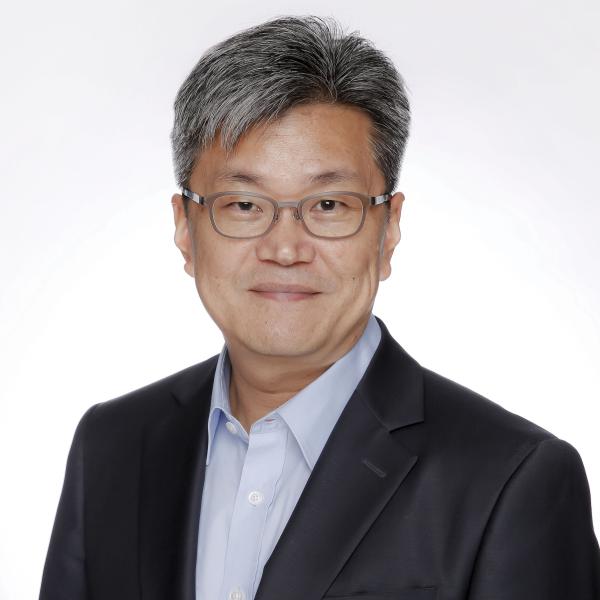
Professor Kee-Hong Bae serves as Professor of Finance and Bob Finlayson Chair in International Finance at York University's Schulich School of Business. Previously, he held faculty positions at City University of Hong Kong, Hong Kong University of Science and Technology, Korea University, and Queen's University. His academic credentials include a B.A. and M.A. from Korea University followed by a Ph.D. from Ohio State University. This educational foundation underpins his expertise in global financial systems and corporate governance structures. Bae's research centers on international finance with specialized focus on corporate governance, ESG factors, financial globalization, and home bias phenomena. His work critically examines how institutional frameworks shape executive compensation, board dynamics, and cross-border investment decisions. Recent investigations reveal how regulatory interventions in CEO pay often trigger unintended consequences like tunneling behavior in emerging markets. Analysis of his publication trajectory shows increasing emphasis on governance reforms, with 60% of recent articles examining board-CEO relationships, gender diversity mandates, and stock market concentration effects. His empirical approach leverages natural experiments across Asian and European contexts, particularly utilizing China's regulatory shifts and European gender quota implementations as research laboratories. Professor Bae actively contributes to academic discourse through editorial roles at Pacific Basin Finance Journal and International Review of Finance . His current projects investigate CEO compensation backfiring mechanisms, trust-induced governance failures, and gender quota effectiveness in breaking corporate glass ceilings.
Pierpaolo Ferrari is a Full Professor of Financial Markets and Institutions at Università di Brescia and an Affiliate Professor of Banking and Insurance at SDA Bocconi School of Management . Since 1996 he has collaborated with SDA Bocconi, directing the OSSFIN Observatory of financial intermediaries and teaching across programs in Private Banking, Financial Regulation, Asset Allocation, and Tax & Legal Planning. Education Ph.D. in Financial Markets and Institutions, Università di Siena (1998–1999) Laurea (4-year degree) in Business Administration, Università Bocconi (1993–1994) Research Interests Ferrari’s research centers on the intersection of asset management , performance measurement of financial institutions , capital management in banks and financial firms , and tax planning in private banking . His work bridges rigorous quantitative finance with practical implications for banks, asset managers, and high-net-worth individuals. He is particularly recognized for integrating sustainability criteria into portfolio optimization and for developing frameworks for evaluating the risk-return profiles of complex investment vehicles. Scholarly Output In 2024 alone Ferrari co-edited the second edition of Asset Management and Institutional Investors (Springer) and its Italian counterpart, while contributing multiple authoritative chapters on collective investment vehicles, sustainability integration, and performance evaluation. His recent empirical article in Corporate Social Responsibility and Environmental Management advances ESG-aware portfolio construction, reflecting a broader trend toward sustainable finance. Professional Service & Grants Director, OSSFIN Observatory on Financial Intermediaries, SDA Bocconi Research Division Member, ABF Committee (Arbitro Bancario e Finanziario), Bank of Italy, Milan Former Visiting Scholar, New York University Labs, Teams & Future Directions Through the OSSFIN Observatory, Ferrari leads multidisciplinary teams that analyze market developments, regulatory impacts, and innovation in financial intermediation. The group’s ongoing projects include studies on liquidity risk management post-Basel III, digital-asset integration in private banking, and climate-risk stress-testing for institutional portfolios.
Prof. Dr. Bryan T. Adey is a full Professor at the Swiss Federal Institute of Technology in Zurich (ETHZ) within the Department of Civil, Environmental and Geomatic Engineering . He directs the Institute for Construction and Infrastructure Management and leads the Masters Spatial Planning and Infrastructure Systems program. His research focuses on improving infrastructure management through process standardization, automation, and optimization for systems like road networks, rail networks, and water distribution networks. Specializes in infrastructure resilience and post-disaster recovery Active participant in European research projects (e.g., Destination Rail, Foresee) Editorial Board member of Journal of Infrastructure Asset Management and Journal of Infrastructure Systems His recent publications emphasize: Ensemble learning for water pipe failure prediction Simulation-based optimization for flood recovery Resilience quantification frameworks Cost-benefit analysis for urban mobility transitions He contributes to global infrastructure standards through: Leadership in VSS committee 4.3 Consultancy for major infrastructure owners Active reviewing for 20+ international journals
Dong Lou is a Professor of Finance at the London School of Economics (LSE), where he holds a position in the Department of Finance. He is currently on leave and serves as a CEPR Research Fellow. His office is located at MAR 8.09 on the LSE campus in London, UK. Professor Lou's research focuses on several interconnected areas of finance: Asset Pricing : Investigating market anomalies, return predictability, and factor-based investing strategies Investment Management : Analyzing portfolio optimization, institutional behavior, and quantitative strategies Behavioral Finance : Examining how psychological factors and investor attention impact market dynamics Market Microstructure : Studying trading patterns, information diffusion, and liquidity effects Corporate Finance : Exploring communication strategies and their market impacts His work consistently bridges theoretical frameworks with empirical market analysis. Professor Lou's publications demonstrate a strong focus on market efficiency anomalies, investor behavior quantification, and institutional trading patterns. His recent work (2020-2025) increasingly examines network effects in financial markets, retail trading impacts, and advisor-client dynamics, utilizing innovative empirical approaches to analyze large-scale datasets across global markets. Professor Lou has received numerous prestigious awards recognizing his research contributions: Three-time winner of the Crowell Memorial Award (2011, 2014, 2018) NASDAQ OMX Award for Best Paper on Asset Pricing (2011) Best Paper Awards at China International Conference in Finance (2019) and China Financial Research Conference (2016, 2019) INQUIRE Europe and Q Group research grants (2010-2013) Paul Woolley Center Academic Grant (2010) Multiple best paper prizes from CRSP Forum and Istanbul Stock Exchange He has secured several competitive research grants from institutions including INQUIRE UK, Europlace Institute of Finance, and the Quantitative Management Initiative. His research collaborations extend across global financial academia, with frequent co-authorships spanning multiple continents.
Associate Professor Baiding Hu is a faculty member at Lincoln University's Faculty of Agribusiness and Commerce, where he leads the Department of Global Value Chains and Trade. He holds key institutional roles, including membership on the University Disciplinary Committee (since 2017) and Head of Department (since 2021). His academic background includes a PhD from the University of Western Australia, an MSc from George Washington University, and a BCom from Jiangxi University of Finance and Economics. He is fluent in Mandarin. His research specializes in econometric methods applied to macroeconomic and energy-related challenges, with focus areas including: Econometric modeling of energy efficiency/rebound effects Macroeconomic impacts of capital flows and technological innovation Climate change adaptation in agricultural economies Governance in financial cooperatives Trade-value chain interactions Analysis of his 15 most recent publications reveals strong thematic coherence around three pillars: (1) Financial market dynamics and spillover effects in emerging economies, (2) Resource/environmental economics with emphasis on climate adaptation, and (3) Institutional governance in developing financial systems. His work consistently employs advanced econometric techniques across diverse Asian and Pacific contexts. He actively supervises postgraduate researchers, with 53 completed projects under his guidance. Topics include impacts of FTAs on trade, technological innovation on macroeconomics, and climate vulnerability. He contributes to academic peer review as a referee for leading journals including Energy Economics and Energy Policy .
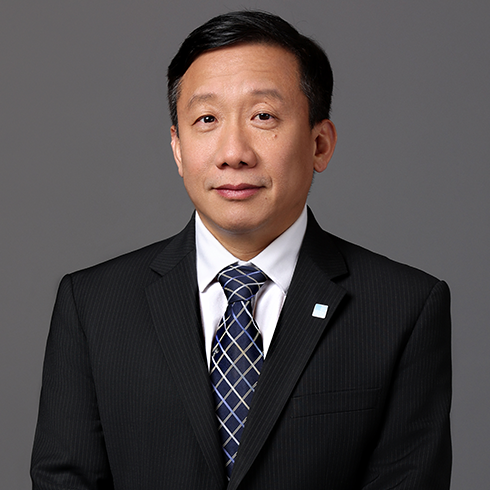
Li Haitao serves as Dean, Dean's Distinguished Chair Professor of Finance, and Director of the Family Business Research Center at Cheung Kong Graduate School of Business (CKGSB). Holding a PhD from Yale University, he previously held faculty positions at the University of Michigan's Stephen M. Ross School of Business and Cornell University's Johnson Graduate School of Management. His academic leadership extends to editorial roles at Management Science and the International Review of Finance . Education: PhD in Finance, Yale University Professor Li's research spans quantitative finance with emphasis on asset pricing anomalies, derivative securities valuation, and fixed income modeling. His work integrates advanced mathematical techniques including Lévy processes and Bayesian analysis to address complex market phenomena. Key contributions examine volatility smiles in interest rate caps, survival bias in equity returns, and nonparametric estimation of state-price densities. His expertise bridges theoretical finance with practical applications in hedge fund performance evaluation and corporate risk management. His publication record reveals consistent contributions to top finance journals including the Journal of Finance , Review of Financial Studies , and Journal of Financial Economics , with research evolving from foundational term structure modeling toward contemporary challenges in liquidity risk and machine learning applications in finance. Scientific Awards: Sanford R. Robertson Professorship, University of Michigan (2007-2008) NTT Research Fellowship, University of Michigan (2006-2007) Q-Group Research Grant (2004) Best Student Paper Award, Eastern Finance Association (1997) Trefftz Award, Western Finance Association (1996) Sterling Prize Fellowship, Yale University (1991-1993) Professor Li actively contributes to academic governance through editorial board service while directing CKGSB's Family Business Research Center. His current research agenda focuses on AI applications in financial markets and China's evolving role in global finance, evidenced by recent speaking engagements at the 2025 Summer Davos and Boao Forum for Asia. He serves on the editorial boards of Management Science (Finance Department) and the International Review of Finance . As Director of the Family Business Research Center, he leads initiatives examining succession planning in Chinese family enterprises and cross-border investment patterns, with recent projects analyzing Macau's casino industry leadership transitions and China-Africa economic relationships.
Jocelyn MARTEL is a Full Professor of Finance at ESSEC Business School in France, specializing in financial theory, firm valuation, bankruptcy, and corporate restructuring. He joined ESSEC on a full-time basis in 2009 after spending 13 years at the University of Cergy-Pontoise, where he served as Head of the Finance School and Founder of the International Master in Finance program. At ESSEC, he has held significant leadership roles including Head of the Finance Department (2012-2016), Assistant Academic Director of the Master in Financial Techniques, and creator of the MSc in Finance program. PhD in Economics, University of Montreal (1994) Authorization to direct research (HDR), Cergy-Pontoise University (2008) MSc in Economics, University of Montreal (1985) BA in Economics, Laval University (1984) Professor MARTEL's research focuses on corporate bankruptcy, financial reorganization, and more recently ESG factors in investment decisions. His work bridges finance and law & economics, examining how bankruptcy systems function in practice and their economic implications. He has published extensively in leading international journals including the Journal of Banking & Finance, International Review of Law and Economics, and Journal of Empirical Legal Studies. His research has influenced bankruptcy policy, as evidenced by his advisory roles for national governments on bankruptcy law reform. His recent publications show a clear evolution in research focus, beginning with foundational work on bankruptcy systems and financial reorganization in Canada and France, then expanding to include broader financial restructuring issues, and most recently exploring ESG factors in investment decision-making. His work consistently combines empirical analysis with practical implications for policymakers and practitioners. Top-3 Professeurs préférés des étudiants de l'ESSEC (2020) Top-5 Professeurs préférés des étudiants de l'ESSEC (2016) Top-10 Professeurs préférés par les étudiants de l'ESSEC (2014, 2013) Bourse de recherche du CERESSEC (2016, 2014) Post-doctoral fellowship from CIRANO (1994) Professor MARTEL has supervised numerous doctoral students across French universities and served on examination committees for PhD theses focused on bankruptcy mechanisms, financial reorganization, and corporate default processes. His consulting work has included significant projects for Industry Canada on bankruptcy reform impacts and international evaluations of insolvency frameworks. He currently directs the ESSEC-Amundi Chair in Asset & Risk Management and serves as Director of the European Financial Data Institute (EUROFIDAI), demonstrating his continued relevance in both academic and professional finance circles. As a member of the THEMA research unit and Fellow of the Institut Louis Bachelier, Professor MARTEL remains deeply embedded in France's academic finance community while maintaining international connections through his annual visiting position at the University of Sydney since 2007.
Andreas Fagereng is a Professor of Finance at BI Norwegian Business School and a Senior Researcher at Statistics Norway. He serves as Co-director of the Centre for Household Finance and Macroeconomic Research (HOFIMAR) and is a member of the Research Policy Network on Household Finance at the Center for Economic Policy Research (CEPR). His academic career spans prestigious institutions including Statistics Norway, Norges Bank, and the European University Institute. Dr. Fagereng earned his PhD in Economics from the European University Institute in 2012 and his MSc in Economics from the University of Oslo in 2007. His research focuses on household finance and macroeconomics, particularly examining wealth inequality, consumption behavior, and the relationship between household financial positions and economic outcomes. His work frequently utilizes detailed Norwegian administrative data to investigate asset allocation patterns, investor behavior, and household responses to economic shocks. His extensive publication record reveals consistent themes in analyzing how households respond to income fluctuations, the heterogeneity in returns to wealth across different population segments, and the intergenerational transmission of economic advantage. Dr. Fagereng's research employs sophisticated methodologies including natural experiments, panel data analysis, and structural modeling to address fundamental questions in household finance. Among his notable recognitions is the prestigious ERC Starting Grant for his project 'Inequality in 3D – Measurement and Implications for Macroeconomic Theory (3D-In-Macro)' (2020-2025), which supports his innovative work at the intersection of micro-level household data and macroeconomic theory. Dr. Fagereng's research has significant policy implications for understanding wealth distribution dynamics, designing effective economic stabilization policies, and improving macroeconomic models that incorporate household heterogeneity. His collaborations with leading researchers worldwide have positioned him at the forefront of the growing field examining the connections between household financial decisions and broader economic outcomes.
Professor Markus Rose serves as a full-time lecturer at the Deutsche Bundesbank University of Applied Sciences since April 2023. With extensive professional experience in banking and risk management, he teaches across key areas including Banking Supervision, Banking Management, Business Administration, Financial Mathematics, and Statistics. His educational background includes: Economics studies at Ruhr University Bochum (October 1988 - March 1994) Language studies at Yonsei University in Seoul, South Korea (March 1991 - June 1991) PhD in Economics from the Chair of International Economic Relations, Ruhr University Bochum (July 1994 - March 1997) Professor Rose's research focuses on critical banking regulation frameworks, particularly the Basel Capital Accord with emphasis on credit risk and operational risk. He investigates banking supervision mechanisms including SREP (Supervisory Review and Evaluation Process) and bank management concepts such as ICAAP (Internal Capital Adequacy Assessment Process) and ILAAP (Internal Liquidity Adequacy Assessment Process). His work consistently bridges theoretical frameworks with practical implementation challenges in financial regulation, providing valuable guidance for banking professionals navigating complex regulatory landscapes. His publications reveal a sustained focus on banking regulation and risk management, spanning from foundational Basel III concepts like the Leverage Ratio to practical applications of risk management processes and internal control frameworks. The publications demonstrate expertise across regulatory compliance, capital planning, and risk-bearing capacity assessment, reflecting his deep understanding of both theoretical frameworks and operational banking challenges. Professor Rose's professional experience includes: Partner at 1 PLUS i GmbH, Nuremberg (July 2016 - March 2023) Management Consultant at 1 PLUS i GmbH (January 2009 - June 2016) Head of Risk Controlling at Düsseldorfer Hypothekenbank AG (October 2002 - December 2008) Executive Assistant and Controlling Department employee at Rheinboden Hypothekenbank AG (June 1997 - September 2002)
Andrew Hutchinson is a Researcher at the School of Electrical and Electronic Engineering, University of Sheffield, specializing in energy storage systems and grid resilience. His work focuses on optimizing power systems to reduce carbon emissions, enhance renewable energy integration, and improve grid stability through advanced storage technologies like flywheels and batteries. He holds a Research Associate position and has contributed to over 20 peer-reviewed articles since 2020. Research Interests: Energy Storage System Design & Control Grid Decarbonization Strategies Renewable Energy Integration Challenges Frequency Response Services Techno-Economic Analysis Grid Resilience Assessment Recent Work Trends: His articles emphasize hybrid storage systems, flywheel applications for ancillary services, and economic feasibility studies for energy storage deployment. He explores how storage technologies can mitigate export limitations in wind and solar sites while enhancing grid resilience against climate change impacts. Advising & Grants: No formal advisee records or grant details provided in the text. Labs/Teams: Affiliated with the School's energy storage research groups, collaborating on projects funded by UK energy networks and academic partnerships.