Kathleen Cusickمشاهده پروفایل
استادیار
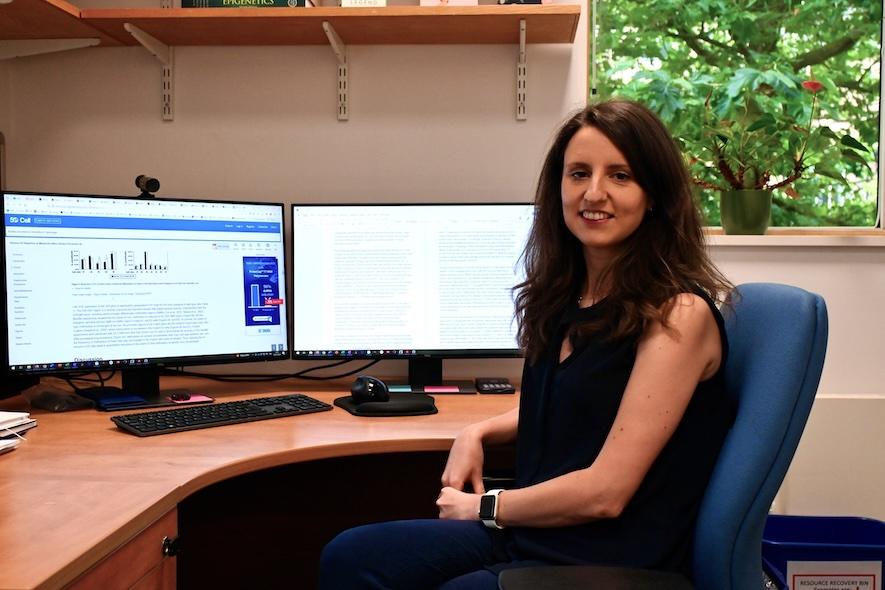
Kathleen Cusick is an Assistant Professor in the Department of Biological Sciences at the University of Maryland, Baltimore County (UMBC). Her research bridges microbiology and marine ecology, focusing on harmful algal blooms (HABs), microbial genomics, and environmental stress responses in marine bacteria. Education: Postdoc, Chemistry Division, US Naval Research Laboratory (2016) Postdoc, University of Tennessee (2013) PhD in Microbiology, University of Tennessee (2009) MS in Marine Biology, Florida Institute of Technology/Harbor Branch Oceanographic Institute (2000) BS, Dickinson College (1997) Her research integrates molecular biology, genomics, and ecotoxicology to study the ecology and evolution of toxic, bioluminescent dinoflagellates like Pyrodinium bahamense , and metal resistance mechanisms in marine bacteria such as Alteromonas macleodii . She investigates how environmental stressors like copper influence microbial adaptation, biofilm formation, and horizontal gene transfer. Her work spans fields including microbial genetics, environmental microbiology, and molecular ecology. Analysis of her recent publications reveals a strong focus on microbial responses to environmental stress, particularly copper exposure, and the genetic basis of bioluminescence and toxin production in HABs. Her studies employ advanced techniques such as qPCR, transcriptomics, and comparative genomics, often applied to marine systems with ecological and public health implications. Scientific Awards: Early Career Travel Grant, Association for the Sciences of Limnology and Oceanography (2011) Sigma Xi Grant-in-Aid (1998–1999) NASA Graduate Student Researchers Program Fellowship (2005–2008) National Academies Post-doctoral Fellowship (2013–2016) Summer Research Faculty Fellowship, UMBC (2018) Kathleen Cusick has secured significant funding from agencies including NASA, the National Academies, and UMBC. She actively mentors students and collaborates on projects related to genetic system development in Alteromonas , intracellular signaling, and HAB dynamics. Her research has implications for environmental monitoring, antifouling technologies, and understanding marine microbial resilience. She is involved in ongoing research projects including the development of a genetic system for Alteromonas , studies on intracellular signaling, and exploring the link between toxicity and bioluminescence in HABs.