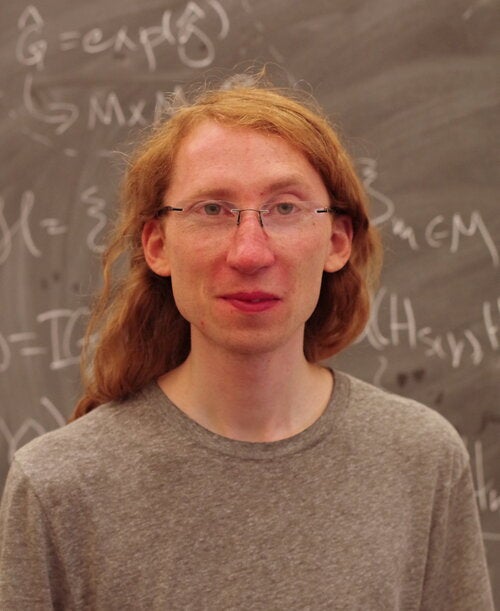
Felix Janda is an Assistant Professor in the Department of Mathematics at the University of Illinois Urbana-Champaign (UIUC), affiliated with the College of Liberal Arts & Sciences. His research focuses on algebraic geometry, particularly moduli spaces and their applications in Gromov-Witten theory, logarithmic geometry, and strata of holomorphic differentials. He has organized workshops such as the 2019 SCGP program on higher genus curve counting and the 2017 RTG Workshop on Witten's r-spin class. Education: Ph.D. in Mathematics from ETH Zurich under R. Pandharipande. His work has been supported by NSF grants DMS-1901748, DMS-2054830, and DMS-2239320. He has advised graduate students including Nawaz Sultani (now at Academia Sinica) and Ruoxi Li. Research interests span moduli spaces of curves, quasimap theory, and logarithmic gauged linear sigma models (log GLSM). Key contributions include foundational work on wall-crossing phenomena and tautological relations. His articles explore topics like universal equations for Gromov-Witten invariants, topological recursion relations, and structural formulae in log GLSM. Teaching roles include courses at UIUC (e.g., Abstract Algebra), the University of Notre Dame (Calculus I/II), and the University of Michigan (Linear Algebra, Topology).
Professor David Burns is a Professor of Pure Mathematics at King's College London's Department of Mathematics, part of the Faculty of Natural, Mathematical & Engineering Sciences. His research focuses on Number Theory, with particular emphasis on Iwasawa Theory, Stark's Conjecture, and L-functions. He previously studied and held a Junior Research Fellowship at the University of Cambridge before joining King's. He has held visiting positions at institutions including the Universities of Bordeaux, Paris, and Harvard. His research interests include the Tamagawa Number Conjecture of Bloch and Kato, non-commutative Iwasawa Theory, and epsilon constants. He has been recognized with prestigious awards such as the Berwick Prize (1999), a Leverhulme Fellowship (2005), and the Supervisory Excellence Award from King's (2008 and 2023). He has supervised numerous PhD students, many of whom have contributed to leading journals in the field. Education : Undergraduate and graduate studies at the University of Cambridge. Key Research Areas : Iwasawa Theory (including non-commutative aspects) Stark's Conjecture and refinements Euler, Kolyvagin, and Stark systems Algebraic K-theory and homological algebra His publications span over 60 peer-reviewed articles, including foundational work on the Equivariant Tamagawa Number Conjecture and geometric L-functions. Recent work explores p-adic families of special elements and derivatives of Euler systems. Collaborations include projects with leading researchers globally, contributing to areas like arithmetic geometry and non-abelian Iwasawa theory. Grants & Awards : Berwick Prize (London Mathematical Society, 1999) Leverhulme Fellowship (2005) Supervisory Excellence Awards (2008, 2023) He is part of King's Number Theory Group and actively engages in academic leadership, including organizing conferences and editorial roles. His research bridges algebraic geometry, number theory, and homological algebra, with ongoing projects exploring conjectures in arithmetic geometry and Galois module structures.
Dr. Svetlana Katok is a Professor of Mathematics at Penn State University’s Eberly College of Science, Department of Mathematics. She specializes in dynamical systems, hyperbolic geometry, and automorphic forms. Her research bridges symbolic dynamics, entropy theory, and applications to number theory. Ph.D. from University of Maryland (1983) Recipient of 2013 AMS Fellowship and 2004 AWM Emmy Noether Lecture Her work focuses on boundary maps for Fuchsian groups, entropy rigidity, and geometric flows. Key contributions include studies on (a,b)-continued fractions and their dynamical properties. She co-founded the Anatole Katok Center for Dynamical Systems and Geometry, honoring her late husband. Publications span entropy flexibility, measure-theoretic dynamics, and collaborations with leading mathematicians like Anatole Katok and Ilie Ugarcovici. Teaching includes advanced courses on p-adic analysis and Fuchsian groups. Her work impacts both pure and applied mathematics, with interdisciplinary ties to geometric analysis and number theory.
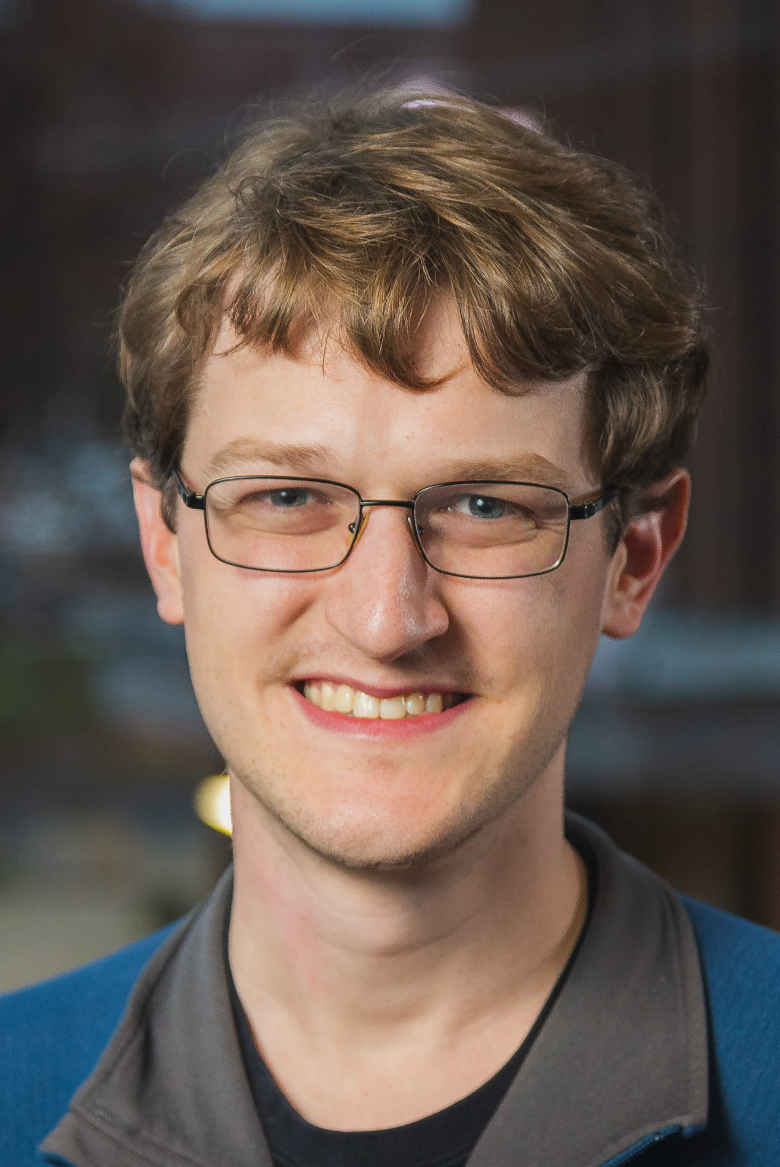
John Lesieutre is an Associate Professor in the Department of Mathematics at Pennsylvania State University, affiliated with the Eberly College of Science. His research focuses on algebraic geometry and algebraic dynamics, particularly automorphisms of higher-dimensional varieties, height and degree growth under rational maps, and classical algebraic geometry. He holds a PhD from MIT (2014) and a BA from Harvard (2009). He has been recognized with prestigious awards, including the NSF CAREER Award (2022–2027) and the Alfred P. Sloan Research Fellowship (2019–2023). His work has been supported by grants such as the NSF Algebra and Number Theory Grant (2017–2021). Lesieutre advises several PhD students and has organized conferences like the McKernan 60th Birthday Conference (2024) and the Workshop on Higher Codimension Cycles (2016). He teaches advanced mathematics courses, including Algebraic Geometry II and Linear Algebra, and has received teaching awards including the Charles and Holly Housman Award (MIT, 2013). His research spans topics like birational geometry, dynamics on algebraic varieties, and automorphism groups, with over 15 publications in journals such as Inventiones Math and the Journal of Modern Dynamics. He actively participates in academic seminars and colloquia globally, contributing to the broader mathematical community through organizing workshops and serving on thesis committees.
Amita Malik is an Assistant Professor in the Department of Mathematics at the Pennsylvania State University, affiliated with the Eberly College of Science. Her office is located at 331 McAllister Building. She specializes in advanced mathematical research with a focus on number theory and related fields. Dr. Malik's work often intersects with algebraic geometry, analytic number theory, and combinatorics. Her research interests include the study of elliptic curves, partition theory, modular forms, zeta functions, and geometric structures such as Apollonian gaskets and Ford circles. She explores topics like extremal primes, equidistribution of zeros, and divisibility properties of special number sequences. Her contributions bridge pure mathematics with applications in complex analysis and dynamical systems. Dr. Malik's recent publications (2014–2025) reflect her deep engagement with these areas, addressing questions about Riemann ξ-function zeros, mock theta functions, and spatial statistics of fractal geometries. Her work often employs tools from harmonic analysis and algebraic geometry, demonstrating a commitment to interdisciplinary approaches. No scientific awards or grants are explicitly noted in the provided materials. She does not have listed advisees or students, though her research may involve collaborations with graduate students or postdoctoral researchers not detailed here.
**M. Ram Murty** is a distinguished academic and researcher in the Department of Mathematics at Queen's University, Canada, where he holds the title of A. V. Douglas Distinguished University Professor and Queen's Research Chair. He earned his Ph.D. from the Massachusetts Institute of Technology (MIT) under Harold Stark. His primary research interests include number theory, zeta functions, sieve methods, modular forms, graph theory, and combinatorics, with notable contributions to the Langlands program and the theory of L-functions. Murty has authored over 150 publications and multiple influential books, including Problems in Analytic Number Theory , Transcendental Numbers , and Indian Philosophy: An Introduction . He has supervised numerous doctoral and master's students, guiding them in areas ranging from number theory to philosophical studies. His academic journey includes visiting professorships at institutions like the Tata Institute of Fundamental Research, Harish-Chandra Research Institute, and the Indian Institute of Technology. Professionally, Murty has been recognized with prestigious awards such as the Balaguer Prize (1996), Jeffery-Williams Prize (2003), and the CRM-Fields-PIMS Prize (2024). He is a Fellow of the Royal Society of Canada, the American Mathematical Society, and the Canadian Mathematical Society. His work bridges pure mathematics with interdisciplinary topics, including philosophical explorations of mathematics and its cultural significance.
Lance Edward Miller is Professor of Mathematics at the University of Arkansas, specializing in commutative algebra, arithmetic geometry, and algebraic geometry. He holds a Ph.D. in Mathematics and Computer Science from the University of Connecticut. His research explores F-singularities, Witt vectors, and arithmetic differential equations. Current projects include derived jet schemes and Frobenius closure computations. He advises PhD students in algebra and topology, emphasizing rigorous preparation through preliminary exams and research seminars. Miller organizes the Algebra Seminar and Curry Seminar series, covering topics from derived algebraic geometry to p-adic cohomology. He has served as conference chair for CATS (Commutative Algebra in The South) and AMS special sessions.
Dr. Ayla Gafni is an Assistant Professor of Mathematics at the University of Mississippi's Department of Mathematics, part of the College of Liberal Arts. Her expertise lies in Analytic Number Theory, Harmonic Analysis, and Combinatorics, with a focus on intersections between number theory and harmonic analysis, the Hardy-Littlewood circle method, and Diophantine approximation. She earned her Ph.D. in Mathematics from Pennsylvania State University in 2016 under Robert C. Vaughan, followed by postdoctoral roles at the University of Rochester and MSRI. Since joining the University of Mississippi faculty in 2019, she has been recognized with the 2020 ORAU Ralph E. Powe Junior Faculty Enhancement Award. Her research spans global collaborations and presentations at leading institutions like Oberwolfach, the Fields Institute, and the Hausdorff Institute of Mathematics. Dr. Gafni’s work bridges pure mathematics disciplines, with recent publications addressing number field bounds, geometric incidence theory, and partition functions. She actively engages in academic service, teaching courses such as Complex Analysis and Linear Algebra. Her research portfolio reflects a commitment to advancing analytic techniques in number theory through interdisciplinary approaches. Education: Ph.D. in Mathematics, Pennsylvania State University (2016) Awards: ORAU Ralph E. Powe Junior Faculty Enhancement Award (2020) Teaching: Math 263: Unified Calculus & Analytic Geometry III Math 319: Introduction to Linear Algebra Math 459: Introduction to Complex Analysis
Dr. Hui Xue is an Associate Professor in Clemson University's Department of Mathematical and Statistical Sciences. His research explores profound connections between number theory, modular forms, and L-functions, with special focus on distributional properties of mathematical objects. Xue's investigations frequently address the geometric properties of modular forms and their zeros, with applications to cryptographic systems and arithmetic structures over finite fields. His work establishes new connections between automorphic representations and classical number theory problems. Publications consistently demonstrate innovative approaches to period polynomials and eigenvalue distributions of Hecke operators. Recent advances include novel techniques for analyzing zeros of Eisenstein series and symmetric power L-functions. He mentors undergraduate researchers through Clemson's Number Theory REU program and organizes the SouthEast Regional Meeting On Numbers (SERMON).
Jeanine Van Order is a Professor in the Department of Mathematics at the Pontifical Catholic University of Rio de Janeiro (PUC-Rio). Her research focuses on number theory, particularly at the intersection of arithmetic geometry and the analytic theory of automorphic forms, with an emphasis on special values of L-functions. She holds a Ph.D. and has been affiliated with institutions such as PUC-Rio, where she currently leads research in these areas. Research interests include foundational questions in number theory, modern approaches to arithmetic geometry, and the application of automorphic forms to L-function studies. Her work bridges theoretical insights with analytical methods, contributing to advancements in algebraic number theory and related fields. No awards or grants are explicitly detailed in the provided text. For further details, her CV is available upon request.
Dr. Jesse Kass is an Assistant Professor in the Department of Mathematics at UC Santa Cruz specializing in algebraic geometry. His research focuses on abelian varieties, compactified Jacobians, and arithmetic aspects of curve counting. He maintains strong interest in historical studies of African-Americans in mathematics. His educational background includes extensive work with the Ross Mathematics Program for high school students. Dr. Kass directs seminars on vector bundles and moduli theory while organizing events like the 2019 commemoration of James Solomon's desegregation legacy. Current mathematical research explores extensions of the Torelli map to alternative compactifications and quadratically enriched curve counts. His historical scholarship documents pivotal figures in mathematics desegregation including Joseph Corbin and David Hunter. Advising experience includes doctoral candidates Candace Bethea (2020) and Mohammed Alabbood (2019), with research supported by NSA and Simons Foundation grants. Historical archives curated through the James Solomon Archive document desegregation in mathematics education.
Tewodros Amdeberhan is a Senior Professor of Practice in the Department of Mathematics at Tulane University's School of Science & Engineering. He also holds positions as a Permanent Member of DIMACS/Rutgers University since 2001 and has served as a Visiting Professor at Massachusetts Institute of Technology since 2007 and at Princeton University in 2005. Dr. Amdeberhan earned his Ph.D. in Mathematics from Temple University in Philadelphia in 1997. Prior to this, he completed both his M.S. and B.S. at Addis Ababa University in Ethiopia, with Mathematics as his major and Physics as his minor. Dr. Amdeberhan's research spans multiple areas of pure and applied mathematics. His primary interests include Combinatorics , where he investigates lattice paths, posets, and combinatorial identities; Number Theory , with focus on p-adic valuations, Fibonacci polynomials, and arithmetical properties; and Special Functions , where he has made significant contributions to understanding Ramanujan's master theorem and various integral formulas. His work in Computer Algebra and Algorithmic Proof Theory demonstrates his expertise in developing computational methods for mathematical proofs, while his research in Partial Differential Equations and Harmonic Analysis shows his breadth across mathematical disciplines. Dr. Amdeberhan has been an active participant in the mathematical community, regularly presenting at major conferences including the International Conference on Enumerative Combinatorics and Applications (2025), Algebra and Number Theory Seminars at various universities, and workshops at institutions like Banff International Research Station and MSRI. His research has resulted in numerous publications covering topics from multi-cores and lattice paths to p-adic valuations of special number sequences. As a Permanent Member of DIMACS since 2001, Dr. Amdeberhan has been involved in collaborative research initiatives that bridge theoretical mathematics with practical applications. His work with the Experimental Mathematics group, particularly building on techniques developed by his advisor Doron Zeilberger, has contributed to the advancement of algorithmic proof methods.
Angelos Koutsianas is an Assistant Professor in the Department of Mathematics at the School of Science, Aristotle University of Thessaloniki, where he has been employed since November 2021. His office is located in the Main Building of the Faculty of Sciences, 3rd Floor, Room 17, with contact via email akoutsianas@math.auth.gr and phone +302310997916. His academic background includes: Ph.D. in Mathematics from Warwick University (2016) with thesis "Applications of S-unit Equations to the Arithmetic of Elliptic Curves" supervised by Prof. John Cremona B.Sc. in Mathematics from Ethnikon & Kapodistriakon Panepistimion Athinon (2012) Diploma in Electrical and Computer Engineering from National Technical University of Athens (2009) Dr. Koutsianas specializes in the intersection of theoretical and computational mathematics, with core expertise in Arithmetic Geometry and Algebraic Number Theory. His research focuses on algorithmic approaches to classical problems: Elliptic curves and rational points Diophantine equations and modular forms Galois representations Cryptographic applications His recent publications reveal a consistent emphasis on computational methods for solving number-theoretic problems, particularly concerning elliptic curves and Diophantine equations. Key contributions include algorithms for computing elliptic curves over number fields, analysis of Picard curves, and solutions to specialized Diophantine problems using modular techniques. No scientific awards are listed in the provided information. Dr. Koutsianas has held postdoctoral positions at the University of British Columbia, University of Piraeus, and Universitat Ulm. His current research is funded by the Special Account for Research Funds AUTH. No student advisement information is provided. He actively contributes to the academic community as co-organizer of the 3nd Greek Number Theory Meeting (Patras, December 2025) and is a member of the Section of Algebra, Number Theory and Mathematical Logic.
Margaret A. Readdy is a Professor of Mathematics at the University of Kentucky, where she has been a faculty member since Fall 2000. She is a member of the Discrete Mathematics group within the Department of Mathematics. Her academic journey includes a PhD in Mathematics followed by a two-year postdoctoral fellowship at Laboratoire de Combinatoire et d'Informatique Mathématiques (LACIM) at Université du Québec à Montréal (UQAM), and a three-year Visiting Assistant Professorship at Cornell University. She has held numerous prestigious visiting positions including at the Institute for Advanced Study in Princeton (1998-1999 and 2010-2011), Stockholm University, MIT (2006-2007), and Princeton University (2014-2015). Professor Readdy's research focuses on algebraic combinatorics, particularly the interactions of combinatorics with algebra, topology, discrete geometry, and number theory. Her work explores the deep connections between combinatorial structures and other mathematical fields, with significant contributions to the study of polytopes, root systems, Coxeter groups, and flag enumeration. She has developed important insights into the cd-index, Eulerian posets, and combinatorial identities arising from representation theory. Her research is supported by NSF grant DMS-2247382, continuing her long-standing record of externally funded research. Analysis of Professor Readdy's recent publications (2016-2024) reveals a consistent focus on combinatorial structures with geometric interpretations. Her work often centers on polytopes (particularly the Legendre polytope), triangulations, and the combinatorial properties of Coxeter arrangements. She frequently collaborates with Richard Ehrenborg and other mathematicians, producing results that bridge discrete geometry, algebraic combinatorics, and topology. A notable theme in her recent work is the application of combinatorial methods to solve geometric problems, such as the n-dimensional pizza theorem, and the exploration of connections between different combinatorial structures through bijections and enumerative techniques. Involved with Women and Mathematics program that won the AMS 2019 Award for Mathematics Programs that Make a Difference Guest editor for March 2018 Notices of the AMS special issue for Women's History Month Featured on the cover of the March 2018 Notices of the AMS Professor Readdy actively mentors students, currently advising PhD students Will Gustafson and Ben Reese. She has received consistent research support from the National Science Foundation, including current grant DMS-2247382. She co-organizes the KOI Combinatorics Lectures (funded by NSF DMS 2435236), which brings together researchers from Kentucky, Ohio, and Indiana. She has organized the Discrete CATS Seminar since 2000 (with some interruptions), fostering a vibrant research community in combinatorics at the University of Kentucky. Professor Readdy is deeply involved in academic service and outreach. She has been a key participant in the Women and Mathematics (WAM) Program at the Institute for Advanced Study and Princeton University since 2017, serving as Academic Program Manager (2017-2019) and on the WAM Committee (2020-2022). She co-founded the Math Ambassadors program at the University of Kentucky and has organized multiple Julia Robinson Math Festivals. Her commitment to promoting mathematics extends to K-12 education through presentations at local schools and participation in the Kentucky American Water Science Fair.
Dr. M. Jason Hinek is an Associate Professor in the Teaching Stream and Associate Director of Recruitment/Outreach at Carleton University's School of Computer Science. He holds a PhD from the University of Waterloo (2007). His research focuses on cryptology, computer security, and computer science education, with earlier work in wood polymer studies via NMR analysis. He teaches courses such as Introduction to Computer Science, Discrete Structures, and Applied Cryptography. Dr. Hinek’s scholarly work emphasizes RSA cryptosystem variants, cryptanalysis techniques, and cryptographic protocol security. His publications explore vulnerabilities in multi-prime RSA, attribute-based encryption, and modular arithmetic optimizations. He has contributed to understanding key exposure attacks, encryption efficiency trade-offs, and lattice-based cryptographic attacks. His teaching responsibilities include foundational computer science courses at both undergraduate levels. No scientific awards are explicitly mentioned in his profile. His research spans theoretical cryptography with practical applications in security systems.