معرفی
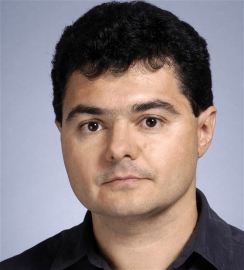
Professor David Burns is a Professor of Pure Mathematics at King's College London's Department of Mathematics, part of the Faculty of Natural, Mathematical & Engineering Sciences. His research focuses on Number Theory, with particular emphasis on Iwasawa Theory, Stark's Conjecture, and L-functions. He previously studied and held a Junior Research Fellowship at the University of Cambridge before joining King's. He has held visiting positions at institutions including the Universities of Bordeaux, Paris, and Harvard.
His research interests include the Tamagawa Number Conjecture of Bloch and Kato, non-commutative Iwasawa Theory, and epsilon constants. He has been recognized with prestigious awards such as the Berwick Prize (1999), a Leverhulme Fellowship (2005), and the Supervisory Excellence Award from King's (2008 and 2023). He has supervised numerous PhD students, many of whom have contributed to leading journals in the field.
- Education: Undergraduate and graduate studies at the University of Cambridge.
- Key Research Areas:
- Iwasawa Theory (including non-commutative aspects)
- Stark's Conjecture and refinements
- Euler, Kolyvagin, and Stark systems
- Algebraic K-theory and homological algebra
His publications span over 60 peer-reviewed articles, including foundational work on the Equivariant Tamagawa Number Conjecture and geometric L-functions. Recent work explores p-adic families of special elements and derivatives of Euler systems. Collaborations include projects with leading researchers globally, contributing to areas like arithmetic geometry and non-abelian Iwasawa theory.
- Grants & Awards:
- Berwick Prize (London Mathematical Society, 1999)
- Leverhulme Fellowship (2005)
- Supervisory Excellence Awards (2008, 2023)
He is part of King's Number Theory Group and actively engages in academic leadership, including organizing conferences and editorial roles. His research bridges algebraic geometry, number theory, and homological algebra, with ongoing projects exploring conjectures in arithmetic geometry and Galois module structures.