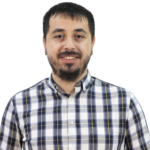
Professor Ernst Pernicka is a leading archaeometallurgist affiliated with the University of Heidelberg's Department of Geosciences and serves as Director of the Curt-Engelhorn-Zentrum Archäometrie in Mannheim. His research focuses on the scientific analysis of ancient metal artifacts, particularly from the Bronze Age, using advanced geochemical and isotopic techniques to determine provenance and understand ancient metallurgical practices. Professor Pernicka's research interests span archaeometallurgy, provenance studies, ancient copper and bronze metallurgy, and isotopic analysis of archaeological materials. His work primarily examines Bronze Age metal trade networks across Europe and the Mediterranean, with special expertise in oxhide ingots, the Nebra Sky Disk gold analysis, and regional metallurgical developments in Central Europe, the Balkans, and Anatolia. His methodological approach combines chemical composition analysis with archaeological context to reconstruct ancient technological practices and trade routes. His recent publications demonstrate a consistent focus on applying advanced analytical techniques to solve archaeological questions about metal provenance and trade. The research shows a progression from earlier work on meteorites and basic metallurgical analysis toward increasingly sophisticated provenance studies using isotopic methods. His work on the Nebra Sky Disk and oxhide ingots represents significant contributions to understanding Bronze Age European connectivity. DFG FOR 550 research project on the Nebra Sky Disk Europe-wide provenance studies of Bronze Age gold Geochemical analysis of oxhide ingots across Mediterranean and Central Europe Studies of Alpine copper deposits and their Bronze Age exploitation Research on ancient silver resources in Iberia Professor Pernicka's supervisory work involves mentoring researchers in archaeometallurgical techniques and leading international collaborations. His laboratory, the Curt-Engelhorn-Zentrum Archäometrie, serves as a major center for archaeological materials analysis in Germany. The center maintains extensive reference collections of archaeological metals and natural ore samples that support provenance research across Europe.