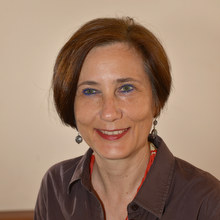
Lucia Avallone is an Associate Professor at the University of Bergamo, teaching Arabic language and literature. She holds a PhD in 'Near Eastern and Maghreb Studies. Cultural Specificities and Intercultural Relations' from the University of Naples 'L'Orientale' (2011) and graduated from the University of Turin (1989). National Scientific Qualification for Full Professor in Cultures of the Ancient Near East, Middle East, and Africa (2024-2035) Member of AIMA (International Association for the Study of Middle and Mixed Arabic) Advisor for Master's Degree in Modern Languages for International Communication and Cooperation (LM-38) Member of PhD programs in Philological and Linguistic Studies (Bergamo) and Linguistic Sciences (Bergamo-Pavia) Her research focuses on modern and contemporary Arabic language and literature , especially linguistic variation , code switching between standard and vernacular Arabic , and Arabic-European language contact . She analyzes political discourse and develops methodologies for Arabic language teaching, with particular attention to dialect-standard dynamics in literary and pedagogical contexts. Recent publications examine: Linguistic creativity in contemporary Egyptian fiction Sociolinguistic aspects of modern Arabic narratives Translation challenges between Arabic dialects and Standard Arabic Historical connections between Arabic and Mediterranean cultures She supervises master's theses and participates in doctoral committees, emphasizing: Intercultural communication Postcolonial Arabic literature Language pedagogy innovations
Gloria Samuela Pagani is an Associate Professor of Arabic Language and Literature at the University of Salento, Italy. She holds a PhD in Islamic Studies from the University of Naples 'L'Orientale' (2000) and has taught since 2005 at the Department of Humanities. Her expertise spans Arabic language pedagogy, classical and modern Arabic literature, and Middle Eastern cultural history. Education: Bachelor's in Islamic Studies (La Sapienza University, Rome, 1994) PhD in Islamic Studies (University of Naples 'L'Orientale', 2000) Research focuses on Islamic mysticism, Arabic literary traditions, and intercultural translation. She has conducted research in Damascus, Cairo, and Paris, and taught at universities including La Sapienza Rome and the Ecole des Hautes Études en Sciences Sociales (Paris). Teaching responsibilities include courses on Arabic literature, language instruction, and Middle Eastern cultural history. She co-organizes international conferences and collaborates with institutions like the Institut Français d'Archéologie Orientale and the University of Tübingen's Islamic Theology Center.
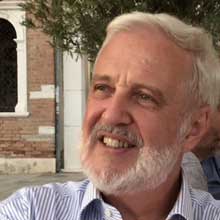
Patrick HEINRICH is a Full Professor in the Department of Asian and North African Studies at Ca' Foscari University of Venice , where he has served since 2014, advancing to Full Professor in 2021. His academic journey includes positions in Germany, Japan, and Italy, with significant contributions to sociolinguistics, endangered languages, and language policy. He holds a Dr. phil in Japanese Studies from Gerhard-Mercator-University Duisburg (2002) and completed his habilitation at Duisburg-Essen University (2005). Research Interests: His work spans sociolinguistics , linguistic ideology , endangered languages (especially Ryukyuan languages), urban communication , and language revitalization . He has pioneered the concept of welfare linguistics , emphasizing language use as a contributor to human well-being. His research integrates historical, political, and ecological perspectives on language. Publication Trends: His recent articles (2023–2025) reflect a strong focus on decolonizing methodologies , language reclamation , and urban linguistic landscapes . He frequently publishes in international handbooks and journals, contributing to debates on identity, ideology, and language policy in Japan and beyond. His editorial leadership in volumes on Arabic sociolinguistics and Japanese communication ideologies underscores his global scholarly impact. Scientific Awards: Honorary President, Ryukyuan Heritage Language Society (2020) Honorary member, Foundation for Endangered Languages (2014) Tokugawa Award, Japanese Association for Sociolinguistic Sciences (2010) Best Dissertation of the Year, Duisburg University Society (2002) Advising, Grants, and Collaboration: While specific students are not listed, he actively mentors research and collaborates globally. He has received fellowships from DAAD, JSPS, and Erasmus, and has been a visiting professor at institutions including Toulouse Jean-Jaurès, Duisburg-Essen, and the University of Lapland. His editorial roles in journals such as East Asian Pragmatics , Contemporary Japan , and Current Issues in Language Planning highlight his leadership in the field. Labs and Teams: Although no formal lab is mentioned, he leads research networks focused on language revitalization, urban sociolinguistics, and welfare linguistics. His projects often involve international collaboration, including co-edited volumes and joint publications with scholars across Europe, Asia, and beyond.
Stefano PELLO' is a Full Professor in the Department of Asian and North African Studies at Ca' Foscari University of Venice , where he specializes in Persian Language and Literature and the History of Iran in the Islamic Era. He also serves as the Director's Delegate for External Communications. His academic affiliations include long-term research positions at Columbia University and SOAS, University of London, reflecting his international scholarly reach. Education: PhD in Oriental Studies, Sapienza University of Rome (2006), thesis: 'Hindu Poets and Persian Intellectual Circles between Delhi and Lucknow (1680–1856).' Degree in Oriental Languages and Literatures, Ca' Foscari University of Venice (2001), with highest honors. High School Diploma, Classical Lyceum 'Carlo Alberto', Novara (1995). He holds advanced certificates in Persian (Dehkhoda Institute, Tehran) and Arabic (Damascus University, Cairo). Research Interests: PELLO' is a leading scholar in Indo-Persian literary culture, focusing on multilingualism, cosmopolitanism, and intercultural exchange in early modern South Asia. His work explores Persian poetry, Sufism, ethnography, and the philosophical dimensions of nature, language, and identity. He investigates how Persian functioned as a cosmopolitan medium across India, the Balkans, and the Mediterranean. Publications Trends: His recent articles analyze Mīrzā Bīdil’s poetics of nature and imagination, Persian literary representations of Varanasi, and the role of Persian in multilingual societies. The research reveals a consistent focus on textual identity, cross-cultural dialogue, and the philosophical underpinnings of Indo-Persian literary production. Scientific Contributions: Author of major monographs including Tutiyan-i Hind (2012) and Microcosmographies (2024). Translator of key Persian literary and mystical works into Italian (e.g., Hafez, Rumi, Motahhari). Editor of scholarly volumes such as Borders: Itineraries on the Edges of Iran (2016). Contributor to Encyclopaedia Iranica and Encyclopaedia of Islam . Advising and Grants: While no formal students are listed, PELLO' has directed PhD theses and mentored junior researchers. He has led international research initiatives, including workshops at the European University Institute and Ca' Foscari, often in collaboration with institutions like Columbia and SOAS. His work is supported by national and international academic networks. Labs and Teams: He has organized and convened international workshops such as 'Cultures of tahqiq from the Mughals to the Mediterranean' (2021) and 'Persian Literature in Multilingual India' (2008), fostering collaborative research on Persianate intellectual history.
Ida Zilio-Grandi is an Associate Professor in the Department of Asian and North African Studies at Ca' Foscari University of Venice, where she specializes in Arabic Language and Literature (SSD L/OR-12). She also holds teaching responsibilities in Islamic Thought and Theology (SSD L/OR-10) and has been actively involved in multiple interdisciplinary programs, including Master’s degrees in Interfaith Dialogue, Islamic Philosophy, and Mediterranean Studies. From 2019 to 2023, she served as Director of the Italian Cultural Institute in Abu Dhabi under the Ministry of Foreign Affairs, reflecting her deep engagement with cultural diplomacy. Education Graduated in Oriental Languages and Literatures (Arabic) from Ca' Foscari University of Venice. PhD in “Studies on the Middle East and the Maghreb from the founding of Islam to the Present day” at the University of Naples “L’Orientale”. Research Interests Her scholarly work centers on Quranic studies, Islamic ethics, and Arabic literature. She investigates religious figures in the Quran (e.g., Mary, Cain, Pharaoh, Jonah), Islamic moral concepts such as gratitude (šukr), patience (ṣabr), tolerance, and mercy, and the ethical dimensions of employment, speech, and hospitality. Her research draws on classical exegesis, adab literature, and contemporary Islamic thought, bridging historical analysis with modern applications. She also explores interfaith dialogue, particularly between Islam, Christianity, and Judaism, and cultural relations between the Islamic world and the West. Publication Trends Her recent publications (2020–2025) reflect a sustained focus on Islamic virtues, ethics, and Quranic interpretation. These include monographs on the moral life of Muslims, studies on Sufism in the UAE, Abraham’s legacy, and environmental ethics in Islam. Her work combines rigorous philological analysis with philosophical insight, often published in high-impact journals and academic volumes. Scientific Service and Recognition Member of the “Committee for Islam in Italy” at the Ministry of Interior (since 2015). Member of the Scientific Committee of the “Dialogue méditerranéen sur la modernité et le religieux” at Collège des Bernardins, Paris. Sits on the editorial boards of Annali di Ca’ Foscari , Islamo-Christiana , and L’opera Comune . Invited Researcher at the Pontificio Istituto di Studi Arabi e d’Islamistica (PISAI), Rome (since 2017). Advising, Grants, and Leadership She has coordinated several Master’s programs at Ca' Foscari, including the LM “Languages, Economies and Societies of Asia and Mediterranean Africa (LEISAAM)” and the international LM “MIM – Crossing the Mediterranean.” She is the Erasmus+ Coordinator for partnerships with the University of Jordan and Mohammed V University in Rabat. She led the research project The Languages of the Absolute (2011–2015), funded by Ca' Foscari University. Though no formal students are listed, her mentorship is evident through her academic leadership and editorial roles. Labs and Research Groups She is affiliated with several research centers, including the Ca' Foscari Center for Studies on Human Rights (CESTUDIR), the Center for Contemporary Middle East Studies (CEM), and the Religion, Law and Economy in the Mediterranean Area Center (REDESM). She is also a member of the Arab-Christian Research Group (GRAC) and the Lay Association for Biblical Culture “Biblia.”
Giancarlo Casale is a Full-time Professor and Head of the Department of History at the European University Institute (EUI) in Florence, Italy, a leading institution for advanced research in the social sciences and humanities. He is a specialist in the early modern Ottoman Empire and its global connections, particularly with Renaissance Europe, focusing on intellectual, diplomatic, and maritime history. His research interests include early modern history, Ottoman studies, intellectual history, cartography, cosmography, travel literature, ethnographic writing, maritime technology, and comparative empire studies. He is especially interested in the intersections between Ottoman intellectual life and Renaissance Italy, as well as the broader dynamics of global diplomacy and knowledge exchange in the early modern world. His work contributes significantly to decentering Eurocentric narratives in global history. His recent publications reveal a strong thematic focus on Ottoman intellectual practices (such as taḥqīq), cross-cultural scientific exchange, and innovative methodologies in historical research, including reflections on digital media and video games as tools for historical engagement. These works span disciplines including history of science, diplomatic history, and cultural history, with recurring sub-themes of spatial thinking, knowledge networks, and transcultural encounters. He serves on the editorial boards of several major journals, including Renaissance Quarterly , Medieval Encounters , and Arabic Humanities , and has been Executive Editor of the Journal of Early Modern History since 2011. He supervises a large cohort of PhD students, indicating an active and international research group. He is fluent in English, Italian, Turkish, French, Portuguese, and Arabic, underscoring his transnational scholarly profile. His leadership roles, editorial work, and ongoing research projects—such as the Working Group on Methods in Early Modern History and the Diplomatic/International History Working Group—highlight his central role in shaping contemporary historical scholarship.
Orwin Martin is an Associate Professor of Somali Language and Literature at the University of Naples 'L'Orientale', Department of Asia, Africa and Mediterranean. He holds a First Class Honors degree in Arabic and Amharic from SOAS (1986) and a PhD in Somali Phonology (1994). Previously, he served as Senior Lecturer at SOAS (2008–2020) and held various administrative roles including Head of Department (2011–2014). His research focuses on Somali poetry's linguistic and aesthetic dimensions, including meter analysis, Arabic influences, and literary translation. He has published extensively on Somali poets like Hadraawi and Weedhsame, and collaborates with international institutions like the Poetry Translation Centre. Teaching spans Somali language at all levels, comparative literature, and translation studies. He has organized conferences, including the 2018 Somali Studies Congress in Hargeysa, and contributed to academic roles such as editorial boards for African Languages and Cultures and the Journal of Somali Studies. Awards include a certificate from Hargeisa Youth Development Association for outreach work.
Simone Sibilio is an Associate Professor in the Department of Asian and North African Studies at Ca' Foscari University of Venice, where he teaches Arabic Language and Literature. He also holds teaching responsibilities at IULM University in Milan-Rome, delivering courses in Arabic language and translation. His academic engagement spans editorial leadership, research coordination, and international collaboration, particularly in the fields of modern and contemporary Arabic literature, Palestinian poetry, and translation studies. Education: PhD in Comparative Literature, University of Naples "L'Orientale", 2011 Advanced Training Course in Literary Translation from Arabic, SETL, 2005–2006 Advanced Training Course in History and Civilization of Islam, Istituto Italiano per gli Studi Filosofici, 2005–2006 Research Interests: Simone Sibilio's scholarship centers on contemporary Arabic literature, with a strong emphasis on Palestinian poetry, geopoetics, and the literary representation of memory and trauma. He explores themes such as exile, identity, resistance, and intercultural dialogue, particularly through the lens of postcolonial and translation studies. His work often bridges literary analysis with political and historical contexts, especially concerning the Nakba, the Arab Spring, and refugee narratives. He also investigates the role of media and digital platforms in shaping Arab cultural discourse. Publication Trends: His recent publications reveal a deepening engagement with Palestinian poetic voices, especially in times of crisis. He frequently publishes critical introductions, translations, and essays on poets like Mahmoud Darwish, Ghassan Zaqtan, and Najwan Darwish. His scholarly output combines monographic work, editorial projects, and interdisciplinary conference contributions, often focusing on memory, landscape, and poetic resistance in the Arab world. Scientific Engagement: Member of the Editorial Board, Quaderni di Studi Arabi Member of the Editorial Board, series The Great Books of Arabic Literature , Ca' Foscari Editions Member of the Editorial Board, series Translating Wor(l)ds , Ca' Foscari Editions Member of the Scientific Committee, Maydan journal Member of the Scientific Board, EURAMAL (European Association for Modern Arabic Literature) Peer reviewer for journals including Middle Eastern Literature Reviews , Oriente Moderno , and Neohelicon Advising and Grants: While no formal PhD or Master’s students are listed, Sibilio has supervised research projects and participated in evaluation committees for academic positions and research grants. He has been awarded Erasmus ICM grants for academic collaboration in Palestine, reflecting his international engagement and commitment to scholarly exchange in the region. Labs and Research Groups: He is an active member of the Centro Studi sul Medio Oriente Contemporaneo (CEM) at Ca' Foscari and part of the Laboratorio Didattica dell'Arabo in Ricerca (DAR), contributing to national and international research networks focused on Arabic studies and pedagogy.
Piera Rossetto is a Researcher at the Department of Asian and North African Studies, Ca' Foscari University of Venice. Her work bridges Jewish studies, migration, memory, and creative methodologies, with a focus on postcolonial North African and Middle Eastern Jewish communities, especially from Libya. She leads major research projects and teaches Hebrew language and social research methods. PhD in Languages and Civilizations of Asia and the Mediterranean Africa, Ca' Foscari University and EHESS Toulouse (2015) MA in South and Western Asia: Languages, Cultures, and Institutions, Ca' Foscari University (2011) Her research explores memory, identity, and belonging through narrative cartography and co-creative methods. She investigates Jewish Mediterranean migrations, particularly of Libyan Jews, using oral histories, literary sources, and digital tools. Her work emphasizes marginalized voices and interdisciplinary, artistic approaches to research. The recent articles highlight a strong trend in narrative and creative cartography, Jewish postcolonial memory, and interdisciplinary research-creation. Themes include the poetics of identity, mapping invisible migrations, and digital documentation of diasporic memories. Her publications span monographs, journal articles, book chapters, and multimedia outputs. Scientific awards and fellowships include: Rita Levi Montalcini Program for Young Researchers (Principal Investigator) FWF Hertha Firnberg Postdoctoral Fellowship Fondazione Rothschild Doctoral Fellowship Fondazione CDEC Research Fellow She has secured competitive grants, including the FWF-funded "Europe's (In)Visible Jewish Migrants" and the ongoing Rita Levi Montalcini project on gender, aging, and migration. She has advised collaborative, interdisciplinary research teams and supervised creative digital projects. Her work often involves partnerships across Europe and digital humanities platforms. She leads the research project "Genere, invecchiamento e migrazioni: memorie e mascolinità ebraiche del Nord Africa e del Medio Oriente" and previously led an FWF-funded project at the University of Graz. She also contributes to digital initiatives like the World Jewish Congress’s MENA Jewish legacy project and co-developed interactive visualizations and audio-documentaries.
Filippomaria Pontani is a Full Professor of Greek and Latin Philology at the Department of Humanities, Ca' Foscari University of Venice, where she serves on the Board of Directors. Her academic work spans classical philology, Byzantine studies, and the reception of ancient texts in later periods, with particular expertise in Homeric scholarship and textual criticism. Her research interests focus on Greek literature from antiquity to the modern period, Byzantine scholarship, and the transmission of classical texts. Pontani has made significant contributions to the understanding of Homeric scholia, Byzantine philological practices, and the Hellenistic poetic tradition. Her work often bridges philological precision with broader cultural analysis, examining how ancient texts were received and transformed across historical periods. Pontani's recent publications demonstrate continued scholarly productivity across multiple formats including journal articles, book translations, critical editions, and edited volumes. Her work spans diverse topics from ancient epigrams to modern Greek poetry, with particular attention to the intersections between classical texts and later cultural contexts. She has been especially active in publishing on Byzantine scholarship, Homeric reception, and modern Greek literary figures like Cavafy. As an educator, Pontani teaches courses on classical culture, classical philology, and the history of the classical tradition at both undergraduate and graduate levels. Her teaching spans multiple degree programs including Conservation and Management of Cultural Heritage, Letters, and Ancient Sciences: Archaeology, Literature and History.
Souadou Lagdaf is an Associate Professor of History of Islamic Countries at the Department of Humanities, University of Catania, where she also contributes to the PhD program in Heritage and Cultural Production Sciences. Since 2024, she has held a collaborative role at the Institute of Mediterranean Studies (ISMED) of the National Research Council (CNR). She previously served as Vice President of the Special Teaching Structure of Foreign Languages and Literatures of Ragusa (2020–2022) and has held research positions at the University of Catania since 2011. Education: Bachelor’s Degree in Political Science – International Politics, University of Catania, 2004 (110 cum laude) PhD in Contemporary History, Department of Analysis of Political, Social and Institutional Processes, University of Catania, 2008 National Scientific Qualification as Associate Professor (Sector 10/N1), 2018 Her research focuses on Western Sahara, the Sanusiyya brotherhood in Libya, the social anthropology of customs and religious commandments in Mauritanian society, gender studies, and immigration. She employs interdisciplinary methods combining historical analysis, oral history, and anthropological fieldwork. Her work emphasizes marginalized voices, particularly women in conflict zones and postcolonial societies. The trends in her recent publications reflect a sustained engagement with gender, decolonization, and religious interpretation in North Africa. She frequently analyzes how sacred texts are used to justify gender hierarchies and explores the socio-political dimensions of Islamic practices in postcolonial contexts. Her scholarship bridges historical inquiry with contemporary social issues, particularly in Libya, Western Sahara, and Mauritania. Scientific Memberships and Editorial Roles: Editorial Board, Meridiana (2024) Member, Centro Universitario de estudios sobre el Sahara Occidental (CESO), University of Santiago de Compostela (2022) Board of Directors, Sicilian Institute for the History of Contemporary Italy Carmelo Salanitro (ISSICO) (2018) Member, Western Sahara International Academic Observatory (OUISO) (2017) Co-Director, Editorial Series Intelligere: mediare tra identità e alterità , Agorà & Co, Lugano (2016) Lagdaf has secured multiple research grants and leads projects on gender, migration, and decolonization. She has advised students on topics such as Islamic pillars and has conducted extensive field research, including oral history collection in Sahrawi refugee camps (Algeria) and Mauritania. She actively organizes academic events, particularly on women’s issues in Islamic societies. Laboratories and Research Groups: Collaborative researcher at CNR-ISMed (Institute of Mediterranean Studies) Member of research teams on gender, migration, and postcolonial studies at the University of Catania Coordinator of the "Voci di Donne" conference series on women, peace, and subordination
Francesca Cupelloni is a Researcher in Italian Linguistics (LIFI-01/A) at the Department of Modern Literature and Culture , Sapienza University of Rome. Qualified as an Associate Professor in 2023, she graduated in History of the Italian Language (2017) and earned her PhD (2020) at Sapienza, supervised by Luca Serianni . She has held scholarships at Scuola Normale Superiore, Pisa, and been a visiting scholar at the University of Lausanne (2019). Her research focuses on Italian language history (early centuries), lexicography , and gastronomic vocabulary , particularly 14th-15th-century Florentine and Middle Latin/vernacular gastronomic terms. She contributes to projects like the digital Autographs of Italian Writers ( www.autografi.net ), editing Lorenzo de' Medici's autograph letters with linguistic commentary, and collaborated on the PRIN 2017 AtLiTeG project. Recent publications include articles in VoSLIG. Historical Vocabulary of the Italian Gastronomy Language (2024), studies on Antonio Pucci's Danteisms, Leopardi's lexical borrowings, and historical syntax in Lorenzo de' Medici's epistles. She serves on the scientific committees of journals Interpres and Dante , and collaborates with the Germanisms section of the Lessico Etimologico Italiano (LEI) .
Antonella GHERSETTI is a Full Professor of Arabic Language and Literature at the Department of Asian and North African Studies, Ca' Foscari University of Venice. She has held this position since 2017, following prior roles as Associate Professor (2007–2017) and Researcher (1996–2007) at the same institution. Her academic expertise lies in classical Arabic literature, philology, and the transmission of classical knowledge into the Arab world. Her research interests span Arabic philology, historical linguistics, adab literature, gender in Arabic texts, and the intellectual history of the medieval Muslim world . She has made significant contributions to the understanding of Arabic grammatical traditions in al-Andalus and Sicily, the portrayal of intelligence and virtue in classical Arabic biographical works, and the literary construction of identity. Her work often bridges linguistic analysis with cultural and intellectual history. The recent publications highlight a strong focus on classical Arabic ethical and biographical literature, with thematic trends including generosity, identity formation, linguistic tradition, and the role of women in intellectual life . Her scholarship combines philological rigor with cultural interpretation, often drawing from medieval Arabic sources such as Akhbār al-adhkiyāʾ and Ṭabaqāt literature. Her scientific recognition includes: Marie Curie Individual Fellowship (H2020), Project RASCIO Proposal 749180 She has played a major advisory and leadership role in the academic community. She is Co-Director of the School of Mamluk Studies and Scientific Co-Director of the DAR (Didactics of Arabic in Research) laboratory . She has secured research funding from the European Commission (Horizon 2020) and Ca' Foscari University. Her editorial leadership is extensive, serving on the boards of Journal of Arabic and Islamic Studies , al-Masāq , Library of Arabic Literature (NYU Press) , and as Editor of multiple book series including Oriental Series and I grandi libri della letteratura araba at Edizioni Ca' Foscari. She has organized and co-organized numerous international conferences, including multiple School of Mamluk Studies Conferences and events on Arabic linguistics and medieval literature. She is an active member of several scholarly associations, including the European Union of Arabists and Islamists (UEAI), where she served as National Representative for Italy and Deputy Secretary General.
Alba Rosa SURIANO is an Associate Professor of Arabic Language and Literature at the Department of Humanities, University of Catania, affiliated with the Special Teaching Structure of Ragusa. She holds her office at the Arabic School – S. Teresa and is actively engaged in research, teaching, and academic service. Her research interests focus on Modern and Contemporary Arab Theatre , Arabic Language and Literature , and Mediterranean Cultural Studies . She has contributed extensively to interdisciplinary projects such as 'Arab Modernities,' 'Romance and Oriental Middle Ages: Geocriticism and Interpretation of Alexander's Romances,' and 'Narrating the Environment between East and West.' Her work often bridges literary analysis with cultural and historical inquiry, particularly in the context of Egypt and the broader Arab world. She has participated in numerous national and international conferences including WOCMES, EURAMAL, UEAI, ISFNR, SESAMO, and ASAI, presenting on topics related to modern Arab theatre. Her academic contributions reflect a strong commitment to field research and primary source collection across transnational contexts. SURIANO earned her PhD in Mediterranean Languages and Cultures from the University of Florence, with a dissertation titled 'Independent Theatre in Egypt from 1990 to the Present Day: Birth, Evolution, and Perspectives.' She graduated in Literature (Oriental Studies) from the same university in 2005. From December 2011 to November 2019, she served as a Research Fellow in Arabic Languages and Literature before being promoted to Associate Professor. She is a member of several scholarly societies, including UEAI, EURAMAL, SESAMO, ASAI, and COSMICA, underscoring her active role in the international academic community. While no specific awards or students are listed in the provided text, her sustained research output and leadership in collaborative projects indicate significant scholarly impact. She advises undergraduate theses and provides detailed formal guidelines for thesis writing, emphasizing precision in formatting, citation, and language use. Her office hours are held on Tuesdays and Thursdays, with options for in-person or virtual meetings via Teams.
Alessandro Costantini is an Associate Professor at the Department of Comparative Linguistic and Cultural Studies, Ca' Foscari University of Venice, specializing in French Literature (SSD L-LIN/03). His academic career spans over three decades since joining Ca' Foscari in 1992, progressing from tenured researcher to his current position as Associate Professor of Francophone and French literatures and cultures. Department of Comparative Linguistic and Cultural Studies Editor-in-Chief of the journal "Il Tolomeo" Deputy Editor of "InterFrancophonies" journal Member of Scientific Committees for several academic journals Costantini's research focuses on Francophone literatures with particular emphasis on Haitian and Caribbean literature, French colonial literature, Francophone linguistics, and literary diglossia. His work explores the intersections of language, colonialism, and cultural identity, with special attention to creole-speaking regions and postcolonial contexts. His scholarship examines how language functions as both a tool of colonial power and a means of resistance and cultural expression. His recent publications reveal a consistent engagement with colonial religious texts, linguistic hybridity in postcolonial contexts, representations of indigenous peoples in colonial narratives, and the literary traditions of French-speaking Caribbean and North African communities. His work demonstrates sophisticated analysis of how language shapes cultural memory and identity formation in postcolonial societies, particularly examining the complex relationships between French and its colonial derivatives. Costantini has made significant editorial contributions to the field as Editor-in-Chief of "Il Tolomeo" since 2013 and Deputy Editor of "InterFrancophonies." His leadership in these journals has helped shape contemporary scholarship in postcolonial and Francophone studies. His academic service extends to membership on the Scientific Committees of several journals including "Interculturel/Francophonies," "Lingue e linguaggi," and "Regards croisés." His academic journey began with a degree in Foreign Languages and Literatures from Ca' Foscari, followed by extensive study at the École des Hautes Études en Sciences Sociales in Paris where he earned a Diplôme and DEA in semiotics. His early work focused on 17th century French literature and semiotic theory before shifting to his current specialization in Francophone Caribbean and postcolonial literature.