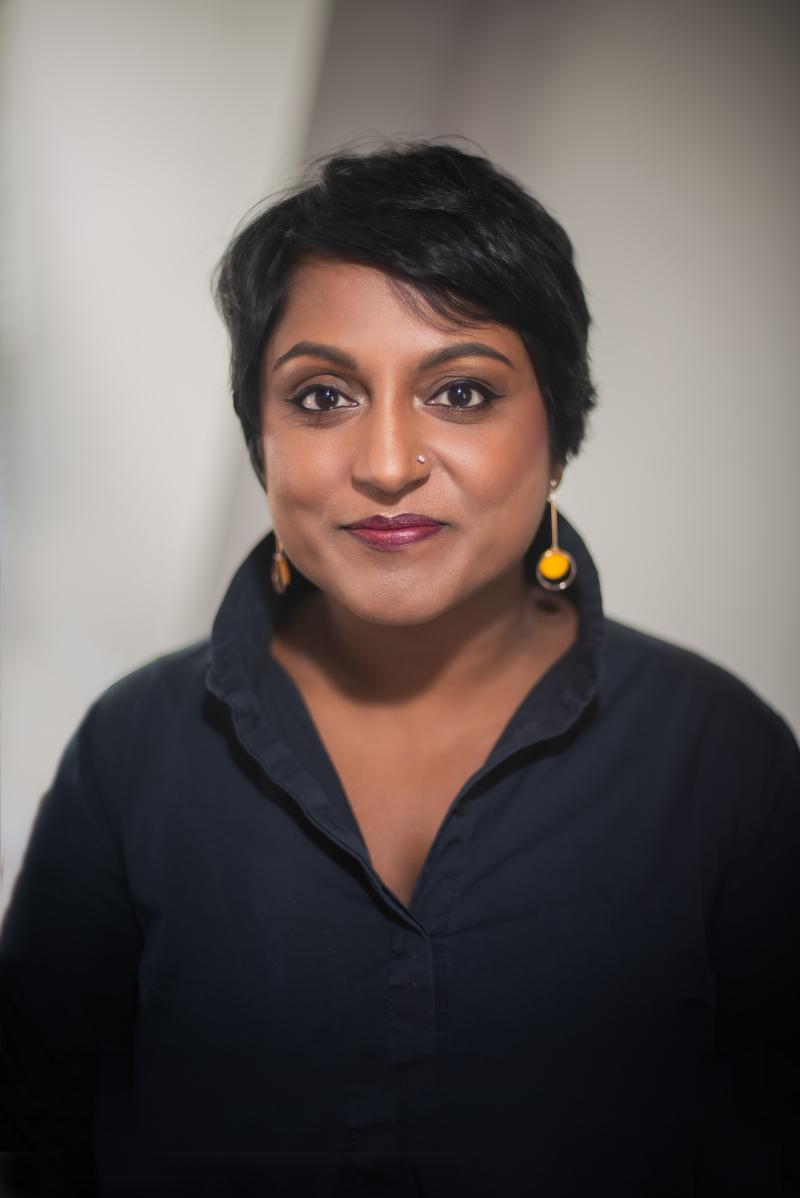
Linda J. Peake is a Professor at York University in the Faculty of Environmental and Urban Change. She previously served as Director of The City Institute (2013–2023) and is a leading feminist geographer specializing in urbanization, gendered urban insecurities, and marginalized communities in the global south, particularly Guyana. Her work intersects with mental health advocacy, co-chairing the AAG Affinity Group on Mental Health. Education : PhD in Political Geography, University of Reading BA (Honours) in Geography, University of Reading Research Interests : Focuses on feminist and anti-racist geographies, urban placemaking, mental health in academia, and global south urbanization. She co-leads the SSHRC-funded GenUrb project investigating gendered urbanization impacts in six global south cities. Recent Projects : GenUrb Partnership Grant (2017–2024) Summer Institute in Urban Studies (2022) China-Canada Initiative on Urbanization (2020–2021) Publications : Recent works include Urbanization in a Global Context (2nd ed., 2022) and A Feminist Urban Theory for Our Time (2021) . Her articles address feminist urban theory, pandemic impacts, and decolonial methodologies. Awards : Honors include the AAG Lifetime Achievement Award (2023), Fellow of the Royal Society of Canada (2022), and multiple research excellence awards from York University. Editorial Roles : Serves on editorial boards of Urban Geography and Signs: Journal of Women in Culture and Society .
Song-Chong Lee is an Associate Professor of Religious Studies and Philosophy at the University of Findlay, focusing on the intersection of race, religion, and pedagogy. His work addresses systemic inequities and explores innovative teaching methods in theological education. Affiliation: University of Findlay, College of Arts and Sciences, Department of Religious Studies Key Themes: Race matters in classrooms, social justice, trauma-informed teaching, online education challenges, and anti-racist strategies. In his October 2, 2014 blog post titled "In the Classroom, Race is More Than Race," Lee reflects on navigating racial homogeneity at his institution and the evolution of his pedagogical focus toward inclusion. He contributes to discussions on emotional labor in teaching, democratic classroom practices, and the adaptation of pedagogy during crises like the COVID-19 pandemic. Notable Collaborations: Wabash Center for Teaching and Learning in Theology and Religion Focus Areas: Decolonial practices, embodied learning, and addressing white privilege in education.
Nicholas Ng-A-Fook is a Full Professor in the Faculty of Education at the University of Ottawa, where he has served as former Associate Dean of Graduate Studies and Director of Teacher Education and Indigenous Teacher Education Programs. His work is deeply engaged with the Truth and Reconciliation Commission's 94 Calls to Action, working in partnership with Indigenous communities and school boards to disrupt colonialism, systemic racisms, and inequalities in educational curricula. Dr. Ng-A-Fook's educational background includes a Ph.D. in Curriculum and Instruction from Louisiana State University (2006), an M.A. in Education (Multicultural Education) from York University (2001), a Graduate Diploma in Education (Secondary Science and History) from the University of Western Sydney (1998), and a B.A. in Classical Studies from the University of Ottawa (1996). His research interests span Curriculum Studies, History of Education (particularly oral history), Life-writing research (autobiography and narrative inquiry), Critical Youth Studies (focusing on first-generation immigrant and Indigenous youth), Community-based research, and Contemporary perspectives in philosophy, science and technology including AI, genomic education, and anti-racist science education. Dr. Ng-A-Fook approaches his work as a curriculum theorist who draws on life writing research methodologies to co-create culturally responsive, relevant, and relational curriculum with educators. Dr. Ng-A-Fook's publications reveal a strong focus on reconciliation education, decolonizing curriculum, and addressing systemic racism in educational contexts. His work increasingly engages with digital technologies and artificial intelligence from a critical, decolonial perspective, examining how these technologies intersect with historical and ongoing colonial structures. His research shows a clear evolution toward more interdisciplinary work connecting curriculum studies with Indigenous knowledge systems, technology studies, and social justice movements. Among his notable honors are the 2024 Coutts Prize, the Ted T. Aoki Distinguished Service Award (2018), and the R.W.B. Jackson Award for an outstanding article in the Canadian Journal of Education. He also serves as Director of the EdCan Network and was Past-President of the Canadian Society for the Study of Education. As a supervisor, Dr. Ng-A-Fook currently mentors several graduate students including Melissa Daoust, Lisa Ambaye, Bahareh Samsamiardekani, and Madelaine McCracken. He created the FooknConversation podcast to address educational challenges with colleagues, community activists, artists, education leaders, teachers, and politicians, and maintains the Canadian Curriculum Theory Project website as a resource for his research.
Junaid Rana is an Associate Professor at the University of Illinois at Urbana-Champaign, holding appointments in Asian American Studies, Anthropology, and the Unit for Criticism and Interpretive Theory. His research interrogates global capitalism, racism, diaspora formations, and social justice movements with a focus on South Asian and Muslim communities. Primary Affiliations: Department of Anthropology, Center for South Asian and Middle Eastern Studies Secondary Affiliations: Unit for Criticism and Interpretive Theory Education: PhD in Social Anthropology from University of Texas (no specific year listed). His work critically examines racial formations in global contexts, particularly through studies of anti-Muslim racism, U.S. empire, and labor migration. Key publications include Terrifying Muslims: Race and Labor in the South Asian Diaspora (2011) and edited volumes on racialized state violence. Awards include the 2013 AAASS Book Award and multiple fellowships from institutions like the American Institute of Pakistan Studies and the Illinois Program for Research in the Humanities. His research bridges academia and activism, emphasizing multiracial solidarity and decolonial methodologies. Recent work focuses on white supremacy's structural embeddedness within academic disciplines and state apparatuses. He has contributed to critical debates about Palestine solidarity in Asian American studies and pioneered pedagogical frameworks addressing anti-Muslim racism in higher education.
Associate Professor Helen Adam is a leading academic in the School of Education at Edith Cowan University (ECU), specializing in culturally responsive pedagogy and the role of children’s literature in fostering equity and inclusion. She holds a PhD in Early Years Education (2019) and has extensive experience in primary education and literacy research. Her career includes roles as a teacher, researcher, and leader in teacher education, particularly in addressing systemic inequities through literature. She is Board President of the Primary English Teaching Association of Australia (PETAA) and actively contributes to national and international educational initiatives. Research interests focus on diverse children’s literature, social-emotional development, and dismantling prejudice through books. Notable projects include a Churchill Fellowship (2022) exploring global practices in children’s literature and equity-driven education. Her work has been recognized with awards such as the 2023 Churchill Fellowship and multiple ECU research accolades. Helen supervises postgraduate research in literacy and diversity, including projects on postmodern picturebooks and culturally diverse family representation. She collaborates with institutions like ECU’s Kurongkurl Katitjin Centre for Indigenous Education, emphasizing allyship and support for marginalized groups.
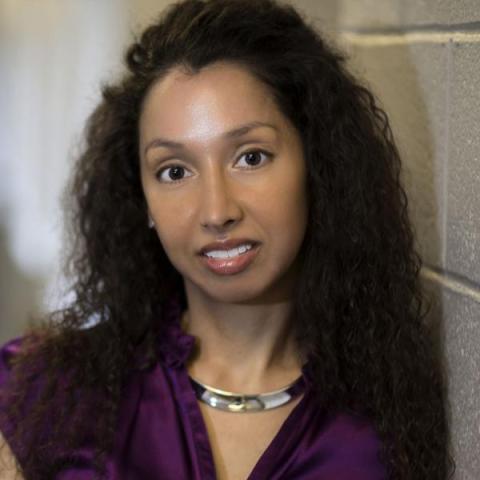
Chelsey R. Carter is an Assistant Professor of Public Health in the Department of Social and Behavioral Sciences at Yale School of Public Health with a secondary appointment in the Department of Anthropology. A Black feminist anthropologist of medicine, public health, and race from St. Louis, Missouri, Dr. Carter's interdisciplinary work bridges public health, anthropology, and critical race studies to address health inequities, particularly focusing on neurodegenerative diseases like ALS in Black communities. Dr. Carter received her BA in Anthropology from Emory University (2012), followed by an MPH and PhD from Washington University in St. Louis (2021), and completed a Presidential Postdoctoral Fellowship at Princeton University (2022). Her educational background reflects her commitment to both anthropological theory and public health practice. Her research examines the relationship between social determinants of health (particularly anti-Black racism, socioeconomic status, and gender) and neurodegenerative diseases such as amyotrophic lateral sclerosis (ALS) and motor neuron diseases. Dr. Carter employs ethnographic research and qualitative methodologies to investigate how embodied inequality impacts diagnosis, treatment, and engagement in clinical trials for Black individuals with ALS. She also leads research on precision medicine and genomic research in Black communities through The Black Genome Project and studies caregiving among persons impacted by ALS. Her scholarship has been funded by the National Science Foundation, the Andrew Mellon Foundation, and the Wenner Gren Foundation. Analysis of Dr. Carter's recent publication trends reveals a strong focus on health equity, particularly examining how systemic racism manifests in medical settings and contributes to health disparities. Her work spans multiple domains including neurodegenerative diseases, HIV/AIDS care, genomics, and mental health, with consistent attention to intersectional approaches that consider race, gender, and socioeconomic status. A notable pattern in her scholarship is the use of qualitative and mixed methods to center the lived experiences of marginalized communities, challenging dominant biomedical paradigms through a Black feminist lens. Principal's Development Fund Visiting Scholar (2024) Distinguished Teaching Award from Yale School of Public Health (2023) Funding from the National Science Foundation Support from the Andrew Mellon Foundation Wenner Gren Foundation grant Dr. Carter actively mentors students and has developed innovative teaching approaches, including her course 'Biomedical Justice: Public Health Critiques and Praxis,' which encourages students to bring their full selves into the classroom. Her research has been supported by significant grants that enable community-engaged work addressing health disparities. She emphasizes the importance of community partnerships in her research, ensuring that academic work serves and is accountable to the communities being studied. Dr. Carter is Founder and Director of The LEITH (Lived Experiences Igniting Transformations in Health) Lab, which addresses Black invisibility and misdiagnosis for rare neurodegenerative and genetic diseases. The lab brings together persons and caregivers impacted by rare diseases, researchers, clinical providers, educators, students, and activists to develop more humanizing and critical approaches in the rare neurodegenerative field. The LEITH Lab's vision centers on advancing anti-racist research, fostering awareness through education, creating palliative networks for support, and developing a pipeline of health equity scholars.
Gita Steiner-Khamsi is the William Heard Kilpatrick Professor of Comparative Education at Teachers College, Columbia University, where she chairs the Department of International and Transcultural Studies. She also holds a UNESCO Chair in Comparative Education Policy at the Geneva Graduate Institute of International and Development Studies. Her career spans over three decades with significant contributions to understanding how educational policies travel across national borders and are adapted in local contexts. Her educational background includes a Ph.D. in Social Psychology from the University of Zürich (1983) and an honorary doctoral degree from Mongolian State University of Education (2004). Prior to joining Columbia, she worked for ten years on multicultural and anti-racist education policies at the Ministry of Education in Zurich, Switzerland. Steiner-Khamsi's research focuses on policy borrowing and lending, globalization studies, comparative policy analysis, school reform, and teacher policy. She has pioneered system-theoretical approaches to understanding externalization, reception, and translation of educational policies across borders. Her work examines how international organizations govern education in the absence of coercive measures and how governments respond to global norm-setting. Her publication record shows consistent scholarly output with increasing focus on knowledge brokerage as a global governance tool, soft governance through international comparison, and transnational accreditation of public schools. Her most recent book (2025) explores the seven temporalities of global school reform, demonstrating her continued evolution in examining the time dimensions of policy transfer. William Heard Kilpatrick Professor of Comparative Education UNESCO Chair in Comparative Education Policy Dr. h.c. from Mongolian State University of Education Steiner-Khamsi has supervised over 60 doctoral students (PhDs and EdDs) and has led significant international projects including the USAID Teacher Education Project in Pakistan, which she describes as giving "ownership to Pakistanis" rather than having donors dictate implementation. Her research has been supported by various international organizations including UNICEF, where she investigated teacher shortages in Eastern Europe and Central Asia. She maintains active research projects examining public-private partnerships in education, global governance mechanisms, and transnational accreditation systems, continuing to shape the field of comparative education policy through both theoretical contributions and practical applications in diverse international contexts.
Associate Professor Samantha Schulz is a sociologist of education at The University of Adelaide's School of Education, within the Faculty of Arts, Business, Law and Economics. She specializes in educational justice, focusing on First Nations education, race critical theory, affect studies, and gender equity. Her work spans international contexts including Kenya, India, China, and Australia's APY Lands. She is co-convenor of the Pedagogies for Justice Research Group, affiliated with CRESI and the Fay Gale Centre for Research on Gender. As Program Director for the Master of Teaching program, she emphasizes socially engaged pedagogies. Recent research includes the ARC-funded 'Culturally Responsive Schooling' project (2022-24) and studies on gender-based violence in educational settings. Her publications explore decolonial methodologies, critical race theory, and the intersection of affect and pedagogy. Her grants include leadership roles in projects addressing Indigenous sovereignty in education, culturally responsive curriculum design, and restorative practices. Notable collaborations involve UniSA and Open University of Cyprus. She co-edits the Routledge 'Local Global Issues in Education' series and actively publishes on topics ranging from toxic masculinity in academia to anti-racist policy frameworks. Her advising focuses on fostering critical scholarship in Masters and PhD candidates, with research supervision emphasizing justice-oriented educational practices. She leads initiatives like 'Teaching in an era of digital influence' and has contributed to policy discussions on preventing violent extremism in schools. Her work bridges theoretical rigor with practical advocacy for marginalized communities in education systems globally.
Noelle Hurd is a Professor of Psychology at the University of Virginia and co-Director of Diversity, Equity, and Inclusion Initiatives (co-DDEI). She leads the Promoting Healthy Adolescent Development (PHAD) Lab, focusing on marginalized youth development through intergenerational relationships and systemic oppression disruption. Her research integrates clinical and community psychology to address adolescent development, racial discrimination, and mental health disparities. Key interests include natural mentoring as protective factor, anti-racist frameworks, and leveraging community strengths to counteract systemic barriers for Black and Latinx youth. Her work emphasizes youth agency in social justice movements and resilience through familial and community support networks. Recent publications (2023-2025) reveal concentrated exploration of natural mentoring dynamics across marginalized populations, with methodological diversity spanning qualitative analyses of immigrant youth experiences and longitudinal studies of college adjustment. Recurring themes include anti-immigration policy impacts, youth-led anti-racism initiatives, and the intersection of discrimination with mental health outcomes. Dr. Hurd's scientific contributions have earned significant recognition: William T. Grant Scholar and Spencer/National Academy of Education Postdoctoral Fellow Rising Star Award (Association for Psychological Science, 2015) Outstanding Professor Award (UVA Psychology, 2017) Faculty Excellence in Diversity, Inclusion, and Equity Award (2021) Fellowships in American Psychological Association and Society for Community Research and Action As PHAD Lab director, she mentors emerging researchers in community-engaged scholarship funded by NIH, NSF, William T. Grant Foundation, and Institute of Education Sciences. Her team examines mentoring relationships, discrimination mechanisms, and intervention development for youth thriving in oppressive contexts. The PHAD Lab operates as an interdisciplinary research collective developing evidence-based approaches to dismantle systemic barriers through youth-adult partnerships and natural mentoring frameworks.
Nenad Radakovic is an Associate Professor of STEM Education at Queen's University's Faculty of Education. His research focuses on transdisciplinary approaches in mathematics and STEM education, emphasizing how interdisciplinary integration can enhance learning across PK-12 and post-secondary contexts. He holds a PhD in Curriculum Studies and Teacher Development from the Ontario Institute for Studies in Education (OISE), University of Toronto, and has taught secondary mathematics in Croatia and Canada. Prior roles include Associate Professor at the College of Charleston and Sessional Lecturer at the University of Toronto, where he instructed courses on holistic mathematics pedagogy and curriculum design. Dr. Radakovic’s research interests span transdisciplinary curricula, risk education, mathematics teacher training, and the role of technology in education. He is a STaR Fellow with the Association of Mathematics Teacher Educators and contributes to professional organizations like NCTM and PMENA. His work explores how mathematics education can address societal challenges through critical pedagogy and inclusive practices. Key publications include edited volumes on transdisciplinarity in mathematics education and borders in teacher training. His recent articles address STEM curriculum innovation, inclusive pedagogical frameworks, and the application of feminist theory to educational research. Collaborations include transdisciplinary projects blending arts and mathematics, such as using 3D printing to explore cultural heritage through art.
Keffrelyn Brown is a Professor of Curriculum and Instruction at the University of Texas at Austin, with primary appointments in Cultural Studies in Education. She holds the prestigious Suzanne B. and John L. Adams Endowed Professorship in Education and is recognized as a Distinguished University Teaching Professor. Her academic affiliations extend across multiple departments and centers, including the Department of African and African Diaspora Studies, the John L. Warfield Center for African and African American Studies, and the Center for Women's and Gender Studies. Dr. Brown earned her Ph.D. in Curriculum & Instruction from the University of Wisconsin-Madison, an Ed.M in Learning and Teaching from Harvard Graduate School of Education, and a B.S. in Political Science and Psychology from the University of Houston. Her scholarly work centers on sociocultural knowledge of race in teaching and curriculum, critical multicultural teacher education, and the educational discourses related to African Americans. She co-founded and co-directs the Center for Innovation in Race, Teaching, and Curriculum with Dr. Anthony Brown. Her extensive publication record spans over 50 books, journal articles, and book chapters, with recent work focusing on antiblackness, racial literacy, Black joy, and humanizing pedagogies. Her research consistently addresses the complex intersections of race, curriculum, and teacher education, with particular attention to how educators develop critical sociocultural knowledge about race. Dr. Brown has received numerous prestigious awards including the Division K Mid-career Award from AERA (2017), the Kappa Delta Pi/Division K Early Career Research Award (2013), and the Regent's Outstanding Teaching Award (2012). She serves on editorial boards for prominent journals such as Teachers College Record, Race, Ethnicity and Education, Teaching and Teacher Education, and Urban Education. As a former elementary and middle school teacher, school administrator, and curriculum developer, Dr. Brown brings practical experience to her academic work. She is actively engaged in teacher education, offering courses such as AFR 352F: Sociocultural Influences on Learning and UGS 302: Teachers in Popular Culture, while continuing to influence educational policy and practice through her scholarship and community engagement.
Dr. Meera Sabaratnam is an Associate Professor of International Relations at the University of Oxford and a Tutorial Fellow in Politics at New College. She previously held positions at SOAS University of London, the University of Cambridge, and the London School of Economics (LSE), where she earned her MSc and PhD. Her work focuses on the colonial and postcolonial dimensions of world politics, challenging Eurocentric frameworks in International Relations (IR) theory and practice. Education MA in Philosophy, Politics, and Economics (PPE), Balliol College, University of Oxford MSc and PhD in International Relations, London School of Economics (LSE) Her research examines how imperial histories shape contemporary international order, with a particular focus on structural violence , epistemic justice , and anti-colonial resistance . She is currently writing a book titled Complex Indebtedness , analyzing material and moral debts in the liberal international order. Scientific Awards and Grants : Senior Fellowship of the Higher Education Academy Leverhulme Trust Research Fellowship RF-2021-235 Co-investigator for Czech Science Foundation grant (2025-2027) on postcolonial order Previous funding from the Economic and Social Research Council (ESRC) Dr. Sabaratnam co-founded the Colonial/Postcolonial/Decolonial Working Group at the British International Studies Association (BISA) and serves on editorial boards of International Studies Quarterly , Security Dialogue , and Cambridge Review of International Affairs . Her methodological innovations include contrapuntal analysis and histories from below , particularly in studying the Great War's impact on southeast Africa.
Michael T. Rizzo is an Assistant Professor in the Department of Psychology at the University of Illinois, Urbana-Champaign, within the College of Liberal Arts & Sciences. He directs the Developing Equitable Minds Lab (DEML Lab), which focuses on promoting social equity in childhood through research on children's developing conceptions of fairness and social biases. Dr. Rizzo earned his B.S. from the University of California, San Diego (mentor: Dr. David Liu), his Ph.D. from the University of Maryland, College Park (mentor: Dr. Melanie Killen), and completed a postdoctoral fellowship at New York University (mentor: Dr. Marjorie Rhodes). His research program examines three interrelated questions: (1) How do conceptions of equity develop? (2) How do social biases develop? (3) How can we promote concern for equity and disrupt social biases? Using a constructivist approach, his work investigates how children experience, interpret, and respond to the world around them. His primary research areas include conceptions of fairness, racism and racial bias, social status and structures, theory of mind, and unmoderated remote research with children. His work has been published in top journals including Proceedings of the National Academy of Sciences , American Psychologist , Child Development , and Developmental Psychology . Analysis of his recent publications reveals a strong focus on understanding the developmental origins of racial bias, particularly how children's beliefs about social norms and racial inequalities shape their developing racial attitudes. His work demonstrates how children distinguish between structural and individual causes of inequality, and how social status influences children's understanding of fairness and others' mental states. His research has increasingly incorporated innovative methodologies, including unmoderated remote research with children. Dr. Rizzo's work has been funded by prestigious organizations including the National Science Foundation (NSF), the Eunice Kennedy Shriver National Institute of Child Health and Human Development (NICHD), and Beyond Conflict. He is deeply committed to promoting equity, diversity, and inclusion through three primary pathways: transforming university spaces, advancing psychological research practices, and engaging with broader society. His lab partners with organizations like Embrace Race, Story Starters, and We Stories to develop anti-racist education programs and parenting materials. The DEML Lab has created a platform called Developing Minds Online (DMO) that allows for unmoderated remote research with children, enabling families to participate from anywhere.
Miriam Jorge is a Professor and the Dr. Allen B. and Helen S. Shopmaker Endowed Professor in Educator Preparation and Leadership at the University of Missouri–St. Louis. She holds a PhD and MA in Applied Linguistics. Previously, she served as Associate Dean for International Affairs at Universidade Federal de Minas Gerais (2014–2017) and worked with Brazil's Ministry of Education. She has been a visiting scholar at UCSB and UNCC, teaching courses on race relations and the African Diaspora in Brazil. Her research focuses on critical pedagogy, race and racism in education, multiculturalism, and internationalization in higher education. Key themes include academic literacies, teacher education, and social justice. Her work bridges applied linguistics with anti-racist and decolonial frameworks, particularly in language education contexts. Her publications analyze post-pandemic educational challenges, anti-racism in applied linguistics, and decolonial approaches to language teaching. No scientific awards are explicitly listed, but her contributions highlight impactful discourse in educational equity and global pedagogical practices.
Dr. Tajul Islam is a Lecturer in Islamic Studies at the School of Languages, Cultures and Societies , University of Leeds , where he has been a member of staff since 2009. He also holds a visiting position at the University of the Punjab, Lahore. His academic work bridges traditional Islamic scholarship and critical theory, and he is a co-founder of Critical Muslim Studies (CMS) at Leeds, a framework aimed at centering Muslim subjectivity and decolonizing knowledge production in higher education. Education: BA in Arabic and Islamic Studies — University of Leeds PhD in Arab and Islamic Studies — University of Exeter Dr. Islam’s research encompasses a wide range of fields, including Islamic Theology (kalam) , Qur’anic Studies , Hadith , Islamic Law , Islamic Philosophy , Islamism , Islamophobia , antisemitism , racism , Biblical Studies , and Madrasa studies . His teaching emphasizes inclusivity and sensitivity to contemporary issues of identity and prejudice. His recent publications reflect a strong interdisciplinary trend, combining religious studies with food ethics, digital humanities, and decolonial theory. Key themes include theological minimalism , racial justice in early Islam , Islamic reform , and cross-traditional dialogue . He frequently presents at international conferences and public events on topics such as decolonial imagination, fatwa borrowing, and Muslim identity. Scientific Contributions and Recognition: Co-authored a well-cited article on Hanafi fiqh and British Muslims’ views on cultured meat. Published on Qur’anic phonetics and automatic lexis extraction. Contributed to encyclopedias on Ibn Mujahid and the Bible’s use in Islamophobic discourse. Co-founded the Iqbal Centre for Critical Muslim Studies. Dr. Islam supervises a diverse cohort of PhD students on topics ranging from blasphemy laws and translation studies to female religious authority and Qur’anic coherence. He has successfully guided over 15 doctoral candidates to completion. He is also involved in collaborative research and international academic partnerships, particularly with institutions in Pakistan. Labs and Research Groups: Co-Director, Iqbal Centre for Critical Muslim Studies Member of research groups in Arabic Cultural Studies , Conflict , and History