Lucy Browne is a researcher affiliated with the School of Childhood and Social Care at the University of East London. Her work focuses on critical approaches to educational psychology, emphasizing anti-oppressive practices and decolonization in academic and professional contexts. She has contributed to foundational research on Foucauldian-informed methodologies and global ethical frameworks in educational psychology. Her research interests include: Anti-racist and decolonial approaches in professional training Power dynamics in educational systems Global implementation of anti-oppressive frameworks Critical analysis of institutional practices Recent publications explore the Power Threat Meaning Framework and its application to global educational psychology practice. Earlier work analyzed Foucauldian theory in educational research. Browne co-authored the 2020 Position Statement on Anti-Racism and Decolonisation for the UEL Professional Doctorate program. She has also edited volumes of the Educational Psychology Research and Practice journal, highlighting collaborative research and practice-based insights. No scientific awards are explicitly mentioned in the provided text.
Dr. Sheila Cote-Meek is a Professor and Director of the Indigenous Educational Studies Programs at Brock University's Faculty of Education. She holds a PhD from the Ontario Institute for Studies in Education (OISE) at the University of Toronto, an MBA, and a BScN from Laurentian University. Her work focuses on decolonizing and indigenizing education systems, equity initiatives, and Indigenous health and well-being. She is recognized nationally for leadership in advancing systemic change in higher education institutions. Research Interests: Indigenous experiences in higher education Transformative institutional change Decolonization and Indigenization strategies Anti-racism education Indigenous health equity Publications include four authored/edited books addressing Indigenous pedagogy, post-secondary education reform, and women's leadership in academia. Recent work examines cultural safety in dementia care for Indigenous communities and social media activism around MMIWG issues. Grants include major CIHR funding for Indigenous health projects ($1.4M+), leadership roles in the Indigenous Mentorship Network Program ($1M), and digital storytelling initiatives. She chairs Brock's Indigenous Advisory Circle and collaborates with national/international Indigenous education consortia. Labs/Teams: Active in Brock's Indigenous Educational Studies Programs, leading interdisciplinary teams in health equity, curriculum transformation, and community-engaged research.
Theresa Coble is the E. Desmond Lee Endowed Professor of Experiential and Family Education at the University of Missouri-St. Louis (UMSL), collaborating with Forest Park Forever. She previously held professorships at West Virginia University (1997-2002) and Stephen F. Austin State University (2003-2015). Her research focuses on visitor meanings, program effectiveness, and strategies to communicate complex science topics. She has worked closely with the National Park Service (NPS) since 1997, serving on national committees and developing educational programs like the M.S. in Resource Interpretation (MSRI) at SFASU. At UMSL, she co-launched an online doctoral program in Heritage Leadership for Sustainability, Social Justice, and Participatory Culture. Education: M.A. in Chinese and Ph.D. in Forest Resources from the University of Minnesota. Research Interests: Combining education with environmental and cultural heritage, focusing on visitor engagement, anti-racism in education, and Indigenous interpretation frameworks. She emphasizes professional development for educators and heritage practitioners. Key Achievements: 2010 Fulbright Fellowship at National Taiwan Normal University; co-developed Science and the Public Interface courses with NPS, NASA, and others; served on the National Association for Interpretation board. Her work bridges science communication and social justice, particularly in heritage sites. Grants/Advising: Collaborations with NPS, US Fish & Wildlife Service, and NASA. Advised the Heritage Leadership doctoral program enrolling students globally. Labs/Teams: Active in UMSL’s Education Sciences department and partnerships with Forest Park Forever, NPS, and international institutions.
Amanda L. Sanchez is an Assistant Professor in the Department of Psychology at George Mason University. Her work focuses on culturally responsive mental health care, reducing disparities for minoritized youth, and community-engaged implementation science. She holds a PhD in Clinical Science from Florida International University (2020), followed by postdoctoral training at the University of Pennsylvania and a clinical internship at the University of New Mexico. Her research examines structural barriers to mental healthcare equity, testing innovative service delivery models and culturally adaptive strategies. Key areas include leveraging cultural assessment frameworks to improve treatment outcomes and addressing systemic inequities through participatory approaches with frontline providers and communities. Dr. Sanchez leads the ACCESS Lab, which prioritizes stakeholder-informed solutions for equitable mental healthcare. Recent work includes developing telehealth interventions, culturally responsive tools for pediatric OCD, and HIV medication adherence programs. She is actively mentoring a new PhD student starting in Fall 2025.
Dr. Anjalie Dalal-Clayton is a Research Fellow at the University of the Arts London’s Decolonising Arts Institute, where she focuses on British artists of African and Asian descent, museums, and collecting practices. Her work addresses systemic biases in cultural heritage institutions and seeks to amplify marginalized voices in art history. Education: PhD in Art History, Liverpool John Moores University MA in Art History, School of Oriental and African Studies (SOAS) BA in Social Anthropology and African Studies, SOAS Research Interests: Decolonization of art collections and museology Exhibition histories of Black and Asian artists Racial representation in curatorial practices Reimagining national collections through ethical frameworks Key Projects: Co-Investigator on the TaNC-funded Transforming Collections project (2021–2024) Update of the Black Artists & Modernism audit Tate-led Provisional Semantics project (2020–2022) Co-creator of the Doing the Work workshop series on anti-racism in museums Grants: Provisional Semantics (UK Research and Innovation, 2020–2021) Curating Black British Art: Exhibition Cultures Since the 1980s (Paul Mellon Centre, 2018–2019) Supervision: Advises doctoral student Nicholas Brown on The Significance of Magazine Publishing for Black British Art since 1950 . Labs/Teams: Active in the Decolonising Arts Institute and collaborates with the Contemporary Art Society and Tate.
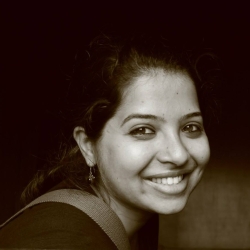
Dr. Shubhi Sachdeva is an Assistant Professor in the Department of Child & Adolescent Development at San Francisco State University (SFSU), part of the College of Health & Social Sciences. Her work focuses on early childhood education with an emphasis on social justice, particularly addressing systemic inequities affecting BIPOC children and families in learning environments. She holds a PhD in Curriculum and Instruction from The University of Texas at Austin, with a specialization in Early Childhood Education. Dr. Sachdeva previously served as a Research Assistant Professor at the University of Virginia’s School of Education and Human Development before joining SFSU. Her educational background includes a B.S. and M.S. in Child Development from Lady Irwin College, University of Delhi, India. Her research explores how power dynamics, oppression, and resistance shape educational experiences, advocating for anti-racist and culturally responsive practices in early childhood settings. In her scholarship, Dr. Sachdeva prioritizes actionable strategies for educators to foster inclusive classrooms, such as trauma-informed practices and conversations about race. She has published widely on topics like early childhood mental health consultation, social-emotional learning, and civic education for young children. Her work bridges theory and practice, emphasizing the intersection of policy, classroom dynamics, and community engagement. Dr. Sachdeva’s research often involves collaboration with educators, families, and policymakers to address systemic challenges in early childhood systems, such as high educator turnover and resource disparities. She advocates for scalable solutions while centering the voices of marginalized communities.
Dr. Betty Yu is a Professor in the Department of Speech, Language, and Hearing Sciences at San Francisco State University. Her work critically examines the intersections of race, language, disability, and institutional practices affecting multilingual children with autism and other neurodivergent identities. She holds certifications including the Certificate of Clinical Competence in Speech-Language Pathology and is a Hanen-certified speech-language pathologist. Yu serves on the advisory board of the Asian Pacific Islander Speech-Language-Hearing Caucus and co-edits the Journal of Critical Study of Communication and Disability . Education: Ph.D. Special Education, UC Berkeley/SFSU Joint Program (2009) M.A. Speech-Language Pathology, NYU (1999) B.A. Linguistics, UC Berkeley (1996) Her research focuses on linguistic disability justice, critiquing raciolinguistic discrimination and ableist systems in clinical practices. Key themes include bilingual child development, neurodiversity frameworks, and anti-racist pedagogy. Recent work challenges pathologization of language variation and promotes inclusive policies for multilingual autistic populations. Awards: 2013 Distinguished Achievement Award (CA Speech-Language-Hearing Association) 2008 Spencer Foundation Fellowship Recognized as SFSU's Distinguished Doctoral Student (2009) Yu's grants and collaborations emphasize community-based participatory research, particularly with Asian American and Pacific Islander communities. She has advised on media projects addressing heritage language preservation and autism advocacy, including NPR's Code Switch podcast episode Lost in Translation . Her lab integrates critical theory with clinical practice, developing culturally responsive assessment tools and decolonizing speech-language pathology education. Current projects explore neurodivergent communication through multimodal AAC systems and anti-ableist language policies in schools.
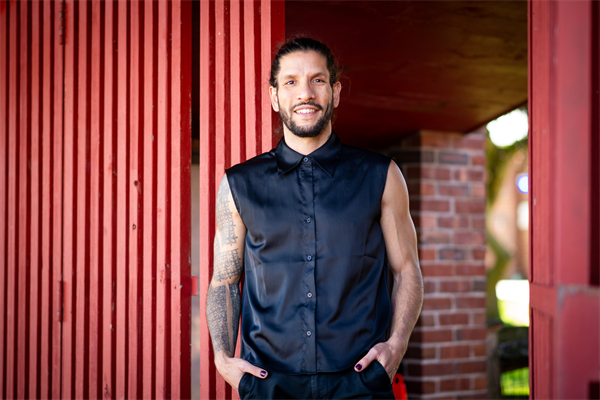
Fernando Salinas-Quiroz is an Assistant Professor in the Eliot-Pearson Department of Child Study & Human Development at Tufts University, School of Arts and Sciences. He holds a Ph.D. in Psychology from the National Autonomous University of Mexico (UNAM) and has extensive international academic experience, including tenure as a Full Professor at Mexico’s National Pedagogic University (UPN). His work focuses on challenging traditional gender binaries through research with transgender and nonbinary youth, advocating for inclusive educational policies, and co-creating participatory methodologies with marginalized communities. Education: Ph.D., Psychology, UNAM (2014) Postgraduate Diplomas in Psychotherapy and Parentality (2009–2011) B.A., Psychology, Universidad Iberoamericana (2008) Research interests include gender fluidity in childhood, anti-trans policies, and intersectional identities. He employs Youth Participatory Action Research (YPAR) and Reflexive Thematic Analysis (RTA) to center marginalized voices. Key contributions include establishing criteria for nonbinary gender identification in children and analyzing parental journeys supporting TNB youth. His global collaborations include work with Mocha Celis, the first transgender high school in Buenos Aires, and Trans Formative Schools in NYC. He serves on the Massachusetts Commission on LGBTQ Youth and co-leads the Abby & Anna SOGIE Lab, focusing on sexual orientation and gender identity expression research. Awarded membership in Mexico’s National System of Researchers, he has authored 51 peer-reviewed articles (h-index=20), 12 book chapters, and five books, including a widely downloaded free eBook on PhD challenges. He teaches courses like Gender Development: Deconstructing the Binary , emphasizing radical hope and transformative pedagogy.
Dr Josephine Gabi is an Associate Professor of Education at Manchester Metropolitan University's Faculty of Health and Education. A Senior Fellow of the Higher Education Academy (AdvanceHE) and Senior Advisor with UK Advising and Tutoring (UKAT), her work centers antiracist scholarship, Black feminist theory, and transformative pedagogies. She co-edited Who Are You Without Colonialism?: Pedagogies of Liberation and focuses on disrupting disembodied pedagogies through co-creation as a liberatory framework. Her research explores early childhood education, racial equity in higher education, and solidarity as resistance. Notable projects address the racial awarding gap, personal tutoring reforms, and the experiences of racially minoritized academics. Dr. Gabi’s work spans policy analysis, decolonial praxis, and intersectional frameworks for educational transformation. Professional roles include advising on equity initiatives and contributing to UK-based educational reforms. Her recent outputs highlight systemic barriers faced by minoritized scholars and students, advocating for institutional change through pedagogical innovation and antiracist frameworks.
Dr. Samuel Osborne is a Researcher at UniSA Education Futures , University of South Australia, with a focus on remote Aboriginal education systems. His work emphasizes the centrality of Anangu (Pitjantjatjara/Yankunytjatjara) community voices in shaping educational outcomes, particularly in the APY Lands of northern Australia. Osborne has contributed extensively to debates on educational policy, boarding school ethics, and culturally responsive pedagogy through numerous peer-reviewed publications. Research Themes : Decolonial education frameworks, First Nations agency in curriculum design, red dirt thinking, and remote workforce development. Policy Impact : Critiques of the Northern Territory’s Remote School Attendance Strategy and Australia’s broader Closing the Gap policy. Collaborations : Regularly partners with Batchelor Institute of Indigenous Tertiary Education and Ninti One Limited. Grants : Involved in projects funded by Australians Together and the Cooperative Research Centre for Remote Economic Participation. His 2015-2024 publications reveal a persistent commitment to Aboriginal language preservation , place-based learning , and transdisciplinary approaches to mental health and ecojustice in remote schools. Osborne’s methodological innovations include first-language narratives and consensual conversation frameworks.
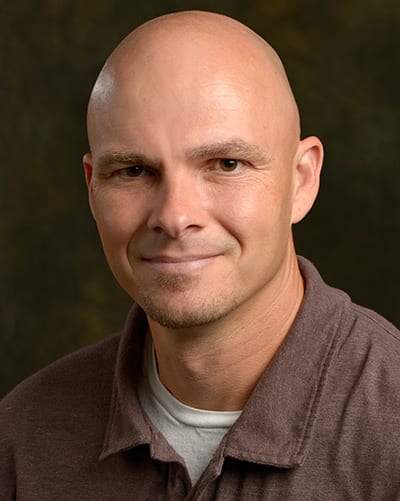
Dr. Scott Carter is a Professor of Sociology at the University of Central Florida's College of Sciences, Department of Sociology. He serves as Co-Editor of Sociological Inquiry . His research focuses on racial and gender inequality, attitudinal measurement, urban/suburban subcultures, race and politics, and educational inequality. He has authored/co-authored over 50 peer-reviewed articles and a book examining affirmative action debates. Key research themes include racial framing in policy debates, intersectionality in research methodologies, and the sociology of political correctness. His work frequently intersects with issues of structural racism, urban sociology, and the sociology of emotions. Notable publications include analyses of anti-political correctness sentiment, food insecurity in universities, and the role of capitalism in racial oppression. Dr. Carter’s work has been published in leading journals such as Annual Review of Sociology , Social Problems , and Sociology of Race and Ethnicity . He has received consistent funding for projects examining racial attitudes, urban sociology, and educational equity. His current research continues to explore framing effects in political discourse and the sociological implications of contemporary racial dynamics.
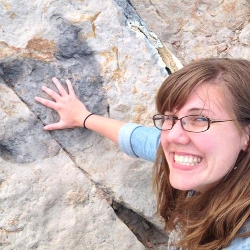
Sarah L. Sheffield is an Assistant Professor in the School of Geosciences at the University of South Florida, within the College of Arts and Sciences. Her research focuses on evolutionary relationships of Paleozoic echinoderms and fostering inclusive education in geosciences. She earned a Ph.D. from the University of Tennessee (2017), an M.S. from Auburn University (2013), and a B.S. from the University of North Carolina at Chapel Hill (2011). Dr. Sheffield’s research integrates morphological analysis of echinoderms with biogeographic and evolutionary studies. Key projects include interpreting skeletal homologies, determining phylogenetic relationships, and identifying new fossil localities. Her work also emphasizes DEI initiatives, such as diversifying STEM representation and improving accessibility in geoscience education. Her recent publications explore echinoderm phylogeny, biogeography, and education equity. Notable awards include the GSA Fellowship (2020) and the National GSA Biggs Teaching Award (2019). She advises graduate students like Stephen Hill and mentors undergraduates in projects ranging from fossil digitization to science communication. Dr. Sheffield actively engages in outreach via blogs (e.g., Time Scavengers), K-12 programs, and public lectures. Her lab group collaborates internationally and focuses on paleontological fieldwork in locations like Sardinia and North America.
Ifeoma Ebo is Assistant Professor at Spitzer School of Architecture, City College of New York, focusing on equitable urban transformation through design justice frameworks. Her practice and research center on community-driven spatial interventions that address systemic inequities in public spaces and housing systems. Notable contributions include developing the Safe Places, Active Spaces community playbook for NYC, co-authoring the BlackSpace Manifesto, and leading design initiatives for the NYC Mayor's Office of Criminal Justice. Her work bridges municipal policy with grassroots placemaking strategies. Current projects investigate creative urban alchemy approaches that leverage housing as catalysts for neighborhood revitalization and spatial justice. Professor Ebo maintains active practice through Creative Urban Alchemy LLC and serves on boards advancing equitable community design.
Alex H. Poole is an Associate Professor in the Department of Information Science at Drexel University's College of Computing & Informatics, where he conducts interdisciplinary research at the intersection of history, archives, and digital technologies. His work examines information practices, digital curation challenges, and community-based approaches to knowledge management across cultural heritage institutions. Poole's academic foundation includes: PhD in Library and Information Science from the University of North Carolina at Chapel Hill (dissertation: “Forging Our Cultural Commonwealth: the Importance of Digital Curation in the Digital Humanities”) MS in Library Science (Beta Phi Mu) from the University of North Carolina at Chapel Hill MA in History from Brown University BA in History (with highest honors) from Williams College His research investigates how individuals and communities interact with information systems, particularly in archival contexts, with strong emphasis on ethical digital curation and historical perspectives. Recent projects analyze the preservation of dynamic web content like online advertisements, the role of archives in social justice movements including Black community-based librarianship, and the integration of diversity, equity, and inclusion principles in archival education. Poole examines how information poverty manifests historically and how community-driven approaches can transform library and archival practice. Analysis of Poole's recent publications reveals consistent focus on contemporary challenges in archival science, including workforce sustainability for archivists, feminist history in information science, and human-centered approaches to data management. His work bridges theoretical frameworks with practical applications in digital humanities, museum studies, and community engagement, demonstrating how information practices evolve in response to technological and social changes. Key thematic threads include the ethics of preserving commercial web content, historical analysis of professional identity formation, and structural barriers to equity in information professions. Poole's scholarly contributions have earned significant recognition: ALISE/Bohdan H. Wynar Research Paper Award Donald G. Davis Award from the American Library Association Justin Winsor Prize from the ALA Jesse H. Shera Award for Distinguished Published Research from the ALA Bob Williams Research Paper Award from ASIS&T Arline Custer Memorial Award for Best Article from MARAC Theodore Calvin Pease Award from the Society of American Archivists Runner-up for Best Short Paper at the iConference Best Long Paper at the ASIS&T Annual Meeting His research has been funded by the Institute of Museum and Library Services (IMLS) and Drexel University Provost’s Office, supporting collaborative projects addressing real-world information challenges. Poole serves on editorial boards for The Library Quarterly, Information & Culture, Journal of Education for Library and Information Science, and The Electronic Library, shaping scholarly discourse across information science. While specific student advisees aren't documented in available sources, his work influences graduate archival education through curriculum development and professional standards advocacy. Within Drexel's College of Computing & Informatics, Poole collaborates with interdisciplinary teams on digital curation initiatives and community-based information projects. His research partnerships extend to libraries, archives, and cultural heritage institutions nationwide, focusing on sustainable preservation practices, ethical data management, and inclusive approaches to knowledge organization. Current work emphasizes community-driven digital humanities projects that center marginalized voices while addressing technical challenges of preserving dynamic web content.
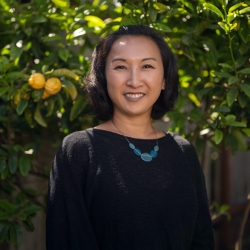
Dr. Xin Zhao is a Principal Academic in Media and Communication at Bournemouth University's Faculty of Media and Communication. She holds a PhD in Media from Bangor University (2017) and has extensive experience in transnational education, having taught media programs in joint international initiatives between Swansea University-Heilongjiang University and Beijing Normal University-Hong Kong Baptist University. Education: PhD Media, Bangor University (2017) M.Sc. Molecular Chemistry, Université Pierre et Marie Curie (2010) B.Sc. Physical Chemistry, École Normale Supérieure de Cachan (2008) Her research examines media representations, audience engagement, and journalism practices in constructing social justice narratives, with recent focus on anti-Asian racism through media interventions. Current projects explore TikTok's role in community advocacy and COVID-19's impact on digital discrimination against East/Southeast Asian communities. Publications demonstrate consistent focus on journalism practices during crises, health communication strategies, and digital activism. Recent work analyzes pandemic reporting patterns, social media advocacy for health issues, and solutions journalism's psychological impact. Scientific Recognition: Fellow of the Higher Education Academy UKCGE Recognised Associate Supervisor Award (2023) Research Leadership: Principal Investigator: 'Fight against racism towards East/Southeast Asian community: Leveraging TikTok' (BA/Leverhulme Grant) Co-Investigator: 'Racism, Digital Discrimination and Mental Health During/After COVID-19' (Morgan Institute) Advises PhD candidates on gendered racism and media representation studies. Serves on Bournemouth University's Research Ethics Committee and previously led the MA Media and Communication program.