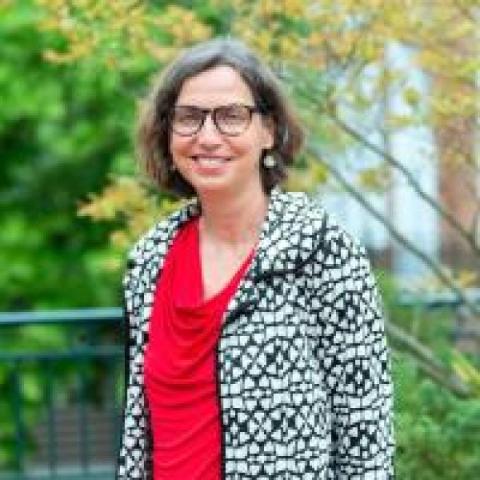
Kate MacDuffie, MA, PhD, is an Assistant Professor in the Division of Bioethics & Palliative Care at the University of Washington School of Medicine and Associate Director of Research at the Treuman Katz Center for Pediatric Bioethics and Palliative Care, Seattle Children's Research Institute. Her work bridges bioethics, neuroethics, and pediatric research ethics. Duke University - PhD in Clinical Psychology University of Washington - MA in Bioethics University of Michigan–Ann Arbor - BS Dr. MacDuffie's research examines ethical and social implications of neuroscience advancements for children and families affected by neurodevelopmental disorders. Current projects include: Brain organoid research ethics and donor engagement Autism prediction in infancy Genomic diagnosis equity in neonatal care Open science practices in Down syndrome research Her publications analyze data sharing in open science, stakeholder engagement in neurotechnology, and institutional racism in clinical ethics. She leads a grant-funded project (NIMH 2022-2025) on human subjects' experiences in brain organoid research. The MacDuffie Lab collaborates with the UW Neuroethics Research Group and SeqFirst, focusing on equitable access to genetic diagnostics and neuroimaging ethics. Contact: neuroethics@seattlechildrens.org or 206-884-8406.
Mike Kilgore is a Professor in the Department of Forest Resources at the University of Minnesota, with 45 active and completed projects and 93 research outputs since 1984. His recent work focuses on the intersection of forest policy, landowner incentives, and climate adaptation in forestry operations. Key Research Areas : Forest management, carbon sequestration, timber sales, landowner incentive programs Active Projects : Assessing technical service providers for family forest landowners (2024-2027), Minnesota's forest property tax program impacts on carbon storage (2023-2026) Research Trends : His recent publications (2024-2025) analyze climate adaptation strategies in northern Minnesota forests, economic impacts of forest certification on timber harvesting, and policy effectiveness in carbon storage initiatives. Keywords include Minnesota forestry, landowner decisions, and sustainable forest management. Media Engagement : In 2020, he provided expert commentary on the UMN Forest Resources Department's response to anti-racism initiatives in STEM fields.
Nicole Dillard is an Assistant Professor in the Human Resource Development and Organizational Leadership Policy and Development departments at the University of Minnesota. Her research focuses on workplace oppression, anti-oppressive practices, and systemic inequities faced by marginalized groups, particularly Black mothers, in organizational contexts. Key Research Areas: Workplace oppression, reproductive justice, algorithmic management critique, and anti-oppressive frameworks in human resource development. Collaborations: Active collaborations with scholars like Cavallo, T., Zhang, P., and Walker, C. M. on topics spanning sociotechnical systems, workplace equity, and transformative practices. Nicole Dillard’s work aligns with the UN Sustainable Development Goals (SDGs) , particularly those addressing gender equality and reduced inequality. Her recent publications explore: Quiet quitting as a humanistic workplace strategy Algorithmic management limitations and employee well-being Organizational advocacy for reproductive justice Her methodological approach includes qualitative interviews, multilevel analysis, and interdisciplinary frameworks combining critical theory with human resource development practices.
Dorothe Bach serves as Associate Director and Professor within the University of Virginia's Center for Teaching Excellence (CTE), a university-wide unit reporting directly to the Provost. She holds a PhD in German Literature from UVA and an MA from Albert-Ludwigs-Universität Freiburg, having joined CTE full-time in 2002 after being born and raised in Germany. Her research spans contemplative pedagogy, equitable teaching practices, and faculty development. Key programmatic interests include course design, student-faculty partnerships, faculty learning communities, and program assessment. Current pedagogical focuses emphasize embodied cognition and nature-connected learning, particularly through her undergraduate course Restoring our Relationships with Nature in UVA's Environmental Thought and Practice Program. Her publications in journals like To Improve the Academy and Journal of Research in Innovative Teaching & Learning reveal consistent themes: expanding learning taxonomies to include ecological dimensions, developing relational imagination through radical listening, and creating anti-racist educational frameworks. This work demonstrates an evolution from foundational faculty development toward transformative, justice-oriented pedagogy with environmental consciousness. 2014 POD Network Innovation Award (with colleagues for syllabus rubric) Multiple international workshop invitations across four continents Recognition for educational development innovations Bach actively consults with faculty and departments while directing programs including the Ignite Program, Student-Faculty Partnership Initiative, and Course Design Institute. Her Teaching Hub collections—such as Reflective Teaching and Introduction to Contemplative Pedagogy —showcase her leadership in developing resources for embodied teaching and trauma-informed practices. She also teaches undergraduate courses including Spiritual Journeys in Young Adult Fiction and Mindfulness and Prosociality , alongside the graduate seminar Teaching and Learning in Higher Education .
Cindy Crusto is a Professor of Psychiatry at Yale University School of Medicine with extensive experience in developing, implementing, and evaluating preventive interventions. She previously served as Associate Dean for Gender Equity and Director of the Office for Women in Medicine and Science at Yale. Her academic appointments include roles in Social and Behavioral Sciences, Global Health Studies, the GROW Initiative Leadership, MORE Program for Biomedical Ethics, Psychology Section, Yale Center for Health & Learning Games, Yale Global Mental Health Program, Yale Ventures, and the Yale-UPR Integrated HIV Basic and Clinical Sciences Initiative. Dr. Crusto earned her B.A. in psychology from Vassar College (1991), M.A. in clinical-community psychology from the University of North Carolina at Charlotte (1996), and Ph.D. in clinical-community psychology from the University of South Carolina (2000). She completed pre-doctoral and postdoctoral fellowships in clinical-community psychology at Yale University School of Medicine, Department of Psychiatry. Her research focuses on culturally relevant interventions for children from racial/ethnic minority and low-income backgrounds, school-based behavioral health services, the impact of family violence on children, and ecological influences on child and family well-being. She conducts rigorous evaluations of community-based initiatives involving substance use and violence prevention, and the promotion of school readiness. Her work often examines the intersection of racial discrimination, trauma, mental health, and physical health outcomes, particularly among African American populations. Dr. Crusto's recent publications (2022-2025) demonstrate a consistent focus on health disparities, particularly examining how discrimination, trauma, and social determinants impact mental and physical health outcomes among Black/African American populations. Her InterGEN study research has produced numerous publications analyzing the connections between discrimination, trauma, DNA methylation, blood pressure, and mental health outcomes among Black women and mothers. She also has significant work in leadership development, diversity initiatives, and anti-racism training programs. Her scientific awards include the Healthcare Executive Diversity and Inclusion Certificate (HEDIC) Program (2023), the 2022 Outstanding Contributions for Mentorship in Racial Justice Award, being named a Fellow of the Hedwig van Ameringen Executive Leadership in Academic Medicine (ELAM) program (2021), the Award for Distinguished Contribution to Diversity in Psychology (2020), and being named a Fellow of the American Psychological Association, Society for Community Research and Action (Division 27) (2019). Dr. Crusto has been actively involved in numerous research collaborations, particularly through the InterGEN study, which examines the intergenerational impact of genetic and psychological factors on blood pressure. She has received significant recognition for her work in diversity, equity, and inclusion, and has developed innovative programs like the GROW (Getting Racism Out of Our Work) initiative to increase multicultural competence among psychology supervisors. Her work bridges clinical-community psychology, public health, and social justice, with a strong emphasis on translating research into practical interventions for underserved populations.
Jessica Bennett is a Gamilaroi yinarr and active Lecturer at the University of Newcastle's College of Health, Medicine and Wellbeing . With a Master of Clinical Nursing from the University of Tasmania, she combines clinical expertise as a Neonatal Registered Nurse with 10 years of experience at John Hunter Children Hospital. Her academic roles include Course Coordinator for INDH2000/INDH2510 and teaching in Aboriginal and Torres Strait Islander nursing and midwifery courses. Aboriginal and Torres Strait Islander Health Anti-Racism Cultural Safety Neonatal Nursing Paediatrics Prematurity Qualitative Research Dr. Bennett's research focuses on culturally safe healthcare for Indigenous families in neonatal settings. She leads the 2025 Winangali: Breastfeeding in NICU project funded by HMRI and contributes to the national Gulibaa (Coolamon) Project (2023-2025) addressing smoking cessation in Indigenous pregnancies. Her work challenges Euro-Western research methodologies through sovereign Indigenous knowledge systems. Scientific Recognition : 2024: Best New Presenter, Australian College of Neonatal Nurses 2020: Values Award, University of Newcastle As an investigator on multiple grants totaling $2,285,026 , she develops culturally responsive interventions like the MAMA-EMPOWER App for Indigenous maternal health. Her publications examine systemic barriers in healthcare, Indigenous family experiences in NICUs, and tobacco control strategies.
Sylvain Crepon is a Lecturer in Political Science at the University of Tours, Faculty of Law, Economics and Social Sciences, Department of Public Law and Political Science, and a researcher at the Interdisciplinary Legal Research Institute (IRJI - EA 7496). He teaches undergraduate courses in Contemporary Political Life, Sociology of Organizations, and Sociology of Integration and Discrimination, alongside Master's-level courses in Contemporary Political Problems and Political Journalism. His research centers on: Political and religious mobilizations : Analyzing intersections between faith-based movements and political strategy in France. Nationalism and racism : Tracing ideological evolution of the National Front/Rally from 1972 to present. Secularism and discrimination : Critiquing laïcité policies and their impact on marginalized communities. Crepon's 12 recent publications (2010-2020) reveal consistent scholarly engagement with French far-right transformation, emphasizing strategic adaptation during political crises. His work combines historical analysis with political sociology to dissect shifts in voter targeting, secularism rhetoric, and identity politics, particularly regarding working-class mobilization and postcolonial legacies. Scientific Awards: No awards mentioned in source material. Advising and Grants: Information on graduate students or research funding was not provided. Labs and Teams: Affiliated with IRJI (EA 7496) and served as University of Tours' Referent for Racism and Antisemitism (2016-2021), collaborating with national ESR networks on anti-discrimination initiatives.
Bridgette Martin Hard is a Teaching Professor of Psychology and Neuroscience at Duke University, affiliated with the Trinity College of Arts & Sciences. She serves as Director of Undergraduate Studies for the Psychology Department, focusing on curriculum development for introductory courses and fostering pedagogical innovation. Her research explores teaching methodologies, student engagement, and the impact of technology on learning. Key interests include social norms in behavior, classroom dynamics, and metaphorical frameworks in education. Education: PhD in Psychology from Stanford University (2006), BS from Furman University (2001). Research highlights include grants on smartphone effects in classrooms and studies on student stress mindsets. Recognitions include the Judith Deckers Prize nomination (2024) and Arts & Sciences Teaching Awards (2021). She leads the BRITElab, dedicated to applying psychological science to improve higher education. Teaching spans introductory psychology, practicums, and independent studies, emphasizing collaborative learning and evidence-based practices. Professional service includes the Duke Office of Faculty Advancement’s Anti-Racism curriculum (2021). Her work bridges theory and practice, aiming to enhance educational experiences through rigorous, student-centered approaches.
Sonya Douglass, Ed.D., is a Professor of Education Leadership at Teachers College, Columbia University. She holds dual roles as Founding Director of the Black Education Research Collective and Co-Director of the Urban Education Leaders Program (UELP). Her work focuses on racial inequality in U.S. K-12 schools, leadership for equity, and critical race theory. She has affiliations with the Organization & Leadership department and contributes to TC’s broader education initiatives. Education: EdD in Educational Leadership, University of Nevada, Las Vegas MPA in Public Administration, University of Nevada, Las Vegas BA in Communications and Journalism (cum laude), Colorado State University Research Interests: Dr. Douglass examines how race is conceptualized in educational leadership, school segregation/desegregation, and Black women’s leadership. Her work bridges policy analysis with community advocacy, emphasizing racial literacy and historical legacies of segregation. Recent focus areas include anti-CRT policies, pandemic equity challenges, and Black teacher recruitment. Awards: 2013 Critics’ Choice Award (American Educational Studies Association) for Learning in a Burning House Advocacy & Leadership: Her scholarship critiques systemic racism in education systems and advocates for community-driven solutions. She has led initiatives like the Las Vegas Promise Neighborhood project and contributed to Nevada’s education policy analysis. Her work emphasizes bridging racial divides through culturally responsive leadership frameworks. Teams/Labs: Directs the Black Education Research Collective, fostering scholarship on Black educational experiences, and co-leads UELP to train urban education leaders.
Mark Anthony Gooden is the Christian Johnson Endeavor Professor of Education Leadership at Teachers College, Columbia University. His affiliations include the Organization & Leadership department, the Education Leadership program, and the Urban Education Leaders Program. He holds a Ph.D. and M.A. in Policy and Leadership from The Ohio State University, an M.Ed. in Mathematics Education, and a B.A. in Mathematics from Albany State University. His research focuses on anti-racist leadership, culturally responsive school practices, legal issues in education, and urban school equity. Key areas include addressing systemic racism, fostering equitable principal preparation, and analyzing policies impacting marginalized students. He critiques color-blind leadership approaches and advocates for explicit racial equity strategies in educational administration. Gooden’s publications emphasize frameworks for equity-focused leadership, mentoring Black scholars, and dismantling institutional racism. His work spans legal analyses of school segregation cases like Milliken v. Bradley and explores the intersection of housing policies with educational inequity. He critiques voucher systems through historical and racial lenses while promoting community schools as transformative models. He collaborates with urban school districts and mentors doctoral students, particularly Black women, through culturally responsive methods. His research often intersects with legal scholarship, examining free speech in schools, cyber-bullying policies, and special education disciplinary practices.
Felicia M. Mensah is a Professor of Science and Education and Chair of the Department of Mathematics, Science, and Technology at Teachers College, Columbia University. She holds a Ph.D. in Science Education from Florida State University and has served as a Postdoctoral Fellow at Michigan State University. Her work focuses on equity, diversity, and social justice in science education, particularly addressing systemic barriers faced by marginalized groups in STEM. Dr. Mensah has authored numerous influential publications on culturally relevant pedagogy, Black women in STEM, and anti-racist teaching practices. Her educational background includes a B.S. in Biology from the University of North Carolina at Chapel Hill and an M.S. in Biology and Secondary Education from North Carolina Agricultural & Technical State University. She has held roles such as Associate Dean at Teachers College and Co-Editor-in-Chief of the Journal of Research in Science Teaching (2020–2025). Her research explores science teacher identity, critical race theory, and the intersectionality of race and gender in education. Dr. Mensah’s research interests include urban education, multicultural curriculum development, and preparing teachers of color. She has pioneered programs to support doctoral students and junior faculty in achieving tenure and advancing their careers. Her recent articles highlight anti-racist pedagogy, neoliberal influences in education, and the experiences of Black women in STEM fields. She has received the AERA Early Career Award (2012) and is a sought-after speaker and mentor in academic writing and publishing. Her professional development workshops emphasize practical strategies for scholarly writing, grant writing, and navigating academic publishing. She also leads initiatives to diversify the teaching profession and promote equity in STEM education through culturally responsive practices.
Dr. Anita Jack-Davies serves as an Adjunct Assistant Professor in the Department of Geography and Planning at Queen’s University. Her work focuses on intersectional issues in education, race, and equity within academic and urban contexts. She contributes to the Faculty of Arts and Science, engaging with critical frameworks to address systemic barriers in institutions. Her research explores themes such as anti-racist pedagogy, mental health accommodations in academia, and the lived experiences of marginalized communities, including Black Canadian educators and Caribbean-Canadian families. Dr. Jack-Davies critiques institutional complacency and advocates for inclusive policies through autoethnographic and feminist methodologies. Her publications span topics from racial microaggressions in legal workplaces to the impact of pandemics on racialized groups. She emphasizes cultural narratives and community engagement in driving meaningful change, reflecting her commitment to social justice and equity in education and urban planning. Dr. Jack-Davies is affiliated with Queen’s University’s Department of Geography and Planning, located in Kingston, Ontario. She actively participates in interdisciplinary initiatives addressing race, gender, and policy at Queen’s and beyond.
Elena Shih is the Manning Assistant Professor of American Studies and Ethnic Studies at Brown University. She holds affiliations with the Departments of Sociology, East Asian Studies, and the Watson Institute for International Studies. Her research focuses on human trafficking, anti-trafficking interventions, and their intersections with race, gender, and global capitalism. Shih directs a human trafficking research cluster at Brown’s Center for the Study of Slavery and Justice, co-leads projects on policing Asian massage work and global supply chains, and has published award-winning works such as Manufacturing Freedom (2023) and co-edited White Supremacy, Racism, and the Coloniality of Anti-Trafficking (2022). Education: PhD in Sociology from UCLA (2015), MA from UCLA (2009), BA in Asian Studies and Women’s Studies from Pomona College (2004). Postdoctoral training includes a Watson Institute fellowship (2014–2015) and ACLS Luce Postdoctoral Fellowship in China Studies (2019–2020). Research interests span transnational anti-trafficking movements, labor migration, critical humanitarianism, and East/Southeast Asian borderlands. Recent work examines racialized policing of Asian massage workers in Rhode Island and the Belt and Road Initiative’s impact on China-Myanmar border communities. Key honors include the 2021 Mellon Emerging Faculty Leader Award, 2019 Hazeltine Citation for Excellence in Teaching, and Swearer Center Award for Community Engaged Research (2020). She serves on editorial boards for Anti-Trafficking Review and openDemocracy’s Beyond Trafficking and Slavery. Teaching includes courses on human trafficking, transnational Asian American Studies, and ethnographic methods. Grants include British Academy funding (2017–2018) and Ford Foundation support (2013–2014).
John B. Diamond is the Ford Foundation Professor of Sociology and Education Policy at Brown University, with a former position as the Kellner Family Distinguished Chair in Urban Education at the University of Wisconsin–Madison. His research focuses on the intersection of social inequality, race, and educational opportunity, examining how leadership, policies, and organizational practices shape student outcomes. He co-authored the influential book Despite the Best Intentions: How Racial Inequality Thrives in Good Schools and is currently working on Defending the Color Line: White Supremacy and the Legacy of Brown . His work emphasizes racial equity in urban and suburban schools, including a major grant from the Wallace Foundation to study equity-centered principal pipelines. He is an engaged scholar, serving on the American Sociological Association's Sociology Action Network and the Urban Research Action Network (URBAN). He co-edits Sociology of Education and explores themes such as racialized hierarchies in schools, the role of leadership in equity initiatives, and the persistence of inequality in seemingly integrated environments. Key research areas include suburban racial dynamics, the impact of policy on educational access, and strategies to disrupt systemic racism in educational institutions. His scholarship blends empirical analysis with critical social theory, advocating for transformative educational practices. While no specific awards are listed, his contributions to sociological and educational discourse are widely recognized through his publications and leadership roles. He advises on grants and collaborates across institutions to advance equity-focused educational reforms.
Myrtle P. Bell is the Thomas McMahon Professor in Business Ethics and Associate Dean for Access and Achievement in the College of Business at the University of Texas at Arlington. She maintains faculty affiliations with both the Center for African American Studies and the Center for Women's and Gender Studies, demonstrating her commitment to interdisciplinary scholarship. Her research focuses on diversity, social issues, and human resources, appearing in top-tier journals including Academy of Management Journal, Journal of Applied Psychology, and Human Resource Management. She is the author of the widely used textbook 'Diversity in Organizations,' now in its 5th edition. Her scholarly impact extends through editorial leadership as former associate editor of Journal of Management Education and Academy of Management Learning & Education. Professor Bell's work reveals consistent themes across 25+ years of research: examining systemic discrimination, exploring the intersection of race and gender in workplaces, and developing practical frameworks for diversity education. Her recent publications focus on emotional labor in DEI work, anti-diversity backlash, and the persistence of anti-Blackness in organizational contexts. DiversityFIRST™ Award, Texas Diversity Council GDO's Janet Chusmir Service Award PhD Project Management Doctoral Students' Trailblazer Award Selected twice by Society for Human Resource Management as one of 100 global thought leaders Outstanding Undergraduate Teaching Award, UT-Arlington College of Business Dallas Business Journal's Diversity Leaders Award (2021) As an educator, she has advised numerous doctoral students and teaches Diversity in Organizations courses at undergraduate and graduate levels. Her leadership extends to serving on the Academy of Management's Board of Governors and holding prominent roles in diversity-focused professional organizations. Her current research examines the emotional labor of DEI professionals and strategies to counter anti-diversity movements in corporate settings.