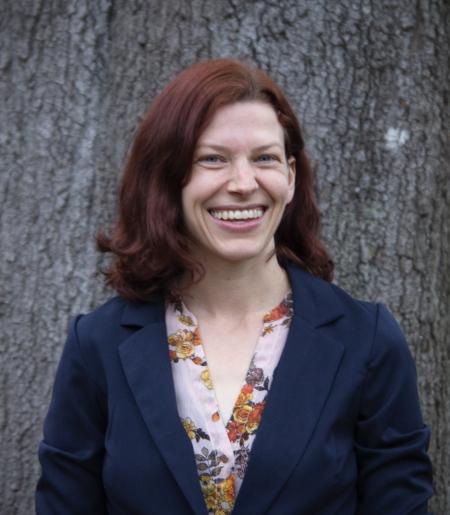
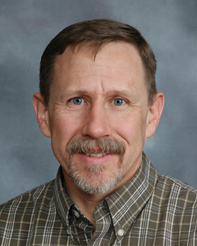
Katherine Tschida is the Mary Armstrong Meduski ‘80 Assistant Professor in the Department of Psychology at Cornell University’s College of Arts and Sciences. Her research focuses on neural circuits governing animal vocalizations, particularly ultrasonic vocalizations in mice during social interactions. Studied social context encoding in neural circuits Investigates coordination of vocal muscle movements with respiration via brainstem neurons Examines communication deficits in autism spectrum disorder models Her lab employs optogenetic, chemogenetic, in vivo imaging, and behavioral assays to dissect these mechanisms. Scientific Awards Sloan Fellowship Lab Focus The Tschida Lab explores how mice use ultrasonic vocalizations for courtship and social communication, applying cutting-edge neuroscience techniques to model human communication disorders.
Assoc. Prof. Dr. Beste DEMİRCİ is a faculty member at Kastamonu University, Faculty of Veterinary Medicine, Department of Veterinary Medicine Basic Sciences. She has been serving as a full-time Doctoral Faculty Member since 2019, and also holds administrative positions as Institute Deputy Director since 2022, Research Application Center Deputy Director since 2021, and Department Chair since 2019. Previously, she worked as a Research Assistant at Ondokuz Mayıs University, Faculty of Veterinary Medicine, Basic Sciences Department from 2009 to 2013. Dr. DEMİRCİ earned her Doctorate in Veterinary Anatomy from Ondokuz Mayıs University Institute of Health Sciences (2008-2016) and completed her Bachelor's Degree in Veterinary Medicine at Ondokuz Mayıs University Faculty of Veterinary Medicine (2003-2008). She is proficient in English (YÖKDİL score 67, 2018) and holds certifications in Stereology, Experimental Animal Use, and Equine Foot Anatomy. Her research focuses on veterinary anatomy with particular emphasis on comparative anatomical studies across various species. She has conducted extensive research on avian anatomy (especially pheasants), fish anatomy (rainbow trout and common carp), and rodent morphology. Her work frequently employs advanced microscopic techniques including light microscopy and scanning electron microscopy to examine tissue structures at detailed levels. She has also investigated pharmacological interventions in animal models of disease. Dr. DEMİRCİ has been involved in 8 research projects, primarily as principal investigator, covering topics such as comparative anatomy of digestive systems, microscopic examination of tissues, and pharmacological studies in animal models. Her publication record shows consistent output with 43 publications including 22 articles, 19 presentations, and 2 book chapters, demonstrating active engagement in her field. She collaborates extensively with researchers including Murat Erdem Gültiken (21 joint publications), Burcu Onuk (14), Funda Terzi (8), and others across various institutions. Her work spans multiple disciplines within veterinary science, with notable contributions to understanding anatomical structures across different animal species and their physiological implications.
Dr James Hughes is a Lecturer at the Centre for STEM Education and Innovation , part of the Faculty of Sciences, Engineering and Technology at the University of Adelaide. His expertise lies in the fatigue and fracture of metals , with a focus on predicting crack growth and measuring crack opening loads . He remains an active researcher in these fields. As a co-supervisor, Dr Hughes supports postgraduate students at the Masters and PhD levels , emphasizing practical research in metallurgy and structural integrity. His contact details include james.m.hughes@adelaide.edu.au . While specific scientific awards are not mentioned in his current profile, his work contributes to structural engineering and materials science through both theoretical and experimental approaches.
Dr. Ramona Heim is a researcher at the Institute of Landscape Ecology at the University of Münster , where she leads work in the Biodiversity and Ecosystem Research Group . She holds a Master of Science in Ecology, Evolution and Nature Conservation (University of Potsdam) and a Bachelor of Science in Biology (University of Freiburg). Current Role: Akademische Rätin auf Zeit (Fixed-Term Academic Counselor) since 2025 Prior Roles: PostDoc at University of Münster (2024–2025), University of Zurich (2022–2024), and guest researcher at University of Turku (2021–2022) Research Interests focus on Vegetation Ecology , Fire Ecology , and Biodiversity Conservation in Arctic and subarctic ecosystems. Her work explores climate change impacts on tundra vegetation, fire disturbance effects on carbon/nitrogen cycles, and anthropogenic threats to migratory birds. Publication Trends span 2018–2025, emphasizing: Arctic tundra responses to climate change and fires Bird migration tracking using geolocators Human-wildlife conflict mitigation Microplastic pollution in urban ecosystems High-resolution ecological mapping via remote sensing Honors: Recipient of the Studienstiftung des deutschen Volkes scholarship (2018–2021). Collaborates with international teams across Germany, Switzerland, Finland, and Russia.
Michael W. Sanderson is a Professor in Epidemiology and Beef Production at Kansas State University's College of Veterinary Medicine , where he serves as the Associate Director of the Center for Outcomes Research and Epidemiology and holds the W.S & E.C Jones Professorship . He specializes in veterinary epidemiology, with a focus on disease risk analysis and biosecurity in beef operations. Education : DVM (1988), Colorado State University MS (1995), Washington State University Diplomate, American College of Veterinary Preventive Medicine (Epidemiology Specialty), 1995 Research Focus : Dr. Sanderson's work integrates epidemiological tools and simulation modeling to address critical issues in beef production systems. His research spans three major domains: FMD Biosecurity : Modeling foot-and-mouth disease (FMD) spread through livestock networks and evaluating Secure Beef Supply plans. Pathogen Transmission : Analyzing E. coli O157 and non-O157 STEC dynamics in feedlots, including pen environment contamination and hide-to-carcass transfer. Network Epidemiology : Utilizing real-time location systems (RTLS) for contact network analysis and developing Bayesian methods for diagnostic test validation. Scientific Contributions : His 2020-2024 publications reveal a focus on Temporal and spatial contact networks in cattle Antimicrobial resistance implications of BRD treatments Meta-analytic approaches to STEC prevalence Geospatial and data processing challenges in FMD modeling Structural equation modeling for complex cattle data Awards & Recognitions : Diplomate, American College of Veterinary Preventive Medicine (Epidemiology Specialty), 1995 Key contributor to USDA-funded biosecurity research Teaching & Mentorship : Dr. Sanderson teaches graduate courses in Intermediate Epidemiology, Disease Modeling, and Quantitative Risk Analysis. He actively mentors MPH, MS, and PhD students in veterinary epidemiology and animal health economics.
Shawn D. Newlands, M.D., Ph.D., M.B.A. is a Professor in the Department of Otolaryngology and a joint appointment in the Department of Neuroscience at the University of Rochester Medical Center. He leads the Newlands Lab, focusing on vestibular system physiology and salivary gland cancer research. As Chair of Otolaryngology, he integrates clinical expertise with multidisciplinary research. Education: MD from University of Texas Medical Branch (1990), Residency in Otolaryngology at University of Washington Medical Center (1991-1995). Awards: Recipient of the Edmund Prince Fowler Award (2004) and Kozmetsky Award (2002). His research explores vestibular compensation mechanisms using anatomic, behavioral, and physiologic methods . Recent publications examine salivary gland tissue engineering and radiation therapy effects . The lab investigates active vs. passive head movement dynamics and vestibular-neural interactions . Scientific Awards : Edmund Prince Fowler Award (2004) Kozmetsky Award (2002) A.R.O. Travel award (1995) James Beall Award (1989) The Newlands Lab is affiliated with the Del Monte Institute for Neuroscience and Neurobiology & Anatomy Ph.D. Program . His clinical focus includes salivary gland and thyroid cancers , with ongoing trials like the Phase II Atorvastatin Hearing Loss Study .
Diana Stuart is a Professor at Northern Arizona University’s School of Earth and Sustainability, specializing in environmental sociology. Her work examines systemic drivers of environmental crises, potential solutions, and pathways for social transformation. Key research areas include climate change, biodiversity conservation, animal studies, agricultural systems, and water management. She critiques industrial agriculture’s environmental impacts and explores the intersections of political economy, technological rationality, and climate policy. Her research integrates interdisciplinary frameworks, addressing topics like degrowth economics, climate activism (e.g., Extinction Rebellion), and the ethical dimensions of environmental policies. Recent work highlights tensions between economic growth imperatives and ecological sustainability, emphasizing systemic change over incremental reforms. She has collaborated on studies of farmer decision-making, conservation biologists’ ethical challenges, and community-led climate adaptation strategies. Publications often analyze the role of technology (e.g., nuclear fusion, geoengineering) and corporate influence in perpetuating environmental crises. She advocates for transformative approaches to address climate change, including rethinking agricultural practices and challenging capitalist structures. Dr. Stuart’s work bridges academic research with practical solutions, aiming to foster socially just and ecologically sustainable futures.
Hodjat Pendar is an Instructor in the Department of Mechanical Engineering at Virginia Tech, part of the College of Engineering. His research focuses on biomechanics, animal locomotion, robotics, and inverse problems, with particular emphasis on insect physiology and fluid dynamics. He holds a Ph.D. in Engineering Mechanics from Virginia Tech (2015), and M.Sc. and B.Sc. degrees in Mechanical Engineering from Sharif University of Technology (2004 and 2002, respectively). His research interests span biomechanical systems analysis, including the study of animal locomotion mechanics, fluid-structure interactions in robotics, and physiological responses to environmental factors like gravity. His work integrates computational tools for data inversion and uncertainty estimation, particularly in respirometry systems, and explores functional compartmentalization in insect circulatory systems. Pendar’s publications highlight trends in biomimetic robotics design, optimization of caudal fin dynamics for swimming efficiency, and the mechanical adaptations of insects to gravitational and hemolymph pressure challenges. His studies bridge mechanical engineering principles with biological systems, offering insights into both natural and engineered systems. No scientific awards are explicitly listed for Dr. Pendar. His advising and grant activities are not detailed in the provided information, and no affiliated labs or teams are mentioned.
David Bolton is an Associate Professor in the Department of Kinesiology and Health Science at Utah State University. He leads the 'Perception-Action' Laboratory, focusing on neural mechanisms of balance control and motor learning. His research spans 20 years, integrating animal models, human studies, and neuroimaging techniques to explore sensorimotor systems. Key affiliations include postdoctoral work at the University of Waterloo and Queens University Belfast, with current funding from the National Institute on Aging. Education: PhD in Neuroscience (University of Alberta, 2009), MS in Exercise and Sport Science (University of Florida, 2003), BS in Human Kinetics (University of Guelph, 1996). Active certifications include CITI Training for Social/Behavioral Research (2019). Research interests emphasize inhibitory control mechanisms in balance recovery, aging-related changes in motor control , and neural adaptations during motor learning . Recent studies investigate how prefrontal cortex activity modulates postural responses and develop interventions to reduce fall risk in older adults. His lab employs fNIRS, motion capture, and behavioral paradigms to study neural correlates of balance. Teaching focuses on neural aspects of rehabilitation, with courses like KIN 6850. Awards include the Discretionary Award for Exceptional Staff Performance (Queens University Belfast, 2015). Advising includes mentoring 9 graduate students since 2017, with expertise in motor control research. Current grants explore anticipatory brain roles in reactive balance control. Labs/Teams: Director of Perception-Action Lab at USU, collaborating with interdisciplinary teams in neuroscience and rehabilitation engineering.
Georgette Leah Burns is an Associate Professor in the School of Environment and Science (Environment and Marine Department) at Griffith University. She serves as Director of the Centre for Planetary Health and Food Security and Program Director for the Master of Environment program. Her expertise lies in environmental anthropology, focusing on human-wildlife interactions, sustainable development, and wildlife tourism ethics. Dr. Burns has held leadership roles at Hólar University and the Icelandic Seal Center, contributing to transnational environmental governance. She co-edited Engaging with Animals and advises organizations like the IUCN Green List and Wildlife Tourism Australia. Educational Background Doctor of Philosophy (Environmental Studies), University of Western Australia (2008) Master of Science (Environmental Management), University of Western Australia (1997) Bachelor of Science with Honours, University of Western Australia (1990) Research Interests Dr. Burns investigates wildlife tourism ethics, sustainable rural development, and animal welfare in agriculture. Her work bridges anthropology, ecology, and policy to promote equitable human-wildlife coexistence. Current projects focus on zero-deforestation policies in Brazil and livestock welfare in Asia-Pacific. Awards & Recognition 2021 Eric Anderson Award (Best Article in Australasian Journal of Environmental Management) Grants & Collaborations Leading ACIAR-funded projects on sustainable agriculture in the Philippines and Bangladesh Managing environmental economic accounts for Queensland's Mitchell River catchment Collaborating with Tasmanian Government on seal interaction policies Labs & Teams She directs Griffith's Centre for Planetary Health and Food Security, fostering interdisciplinary research on global food systems and ecological resilience.
Dr. Diego Leiva Van De Maele serves as a Lecturer at Griffith University's School of Government and International Relations, with research appointments at both the Griffith Asia Institute (2023–present) and Centre for Governance and Public Policy (2022–2024). His work bridges international relations theory, foreign policy analysis, and global health governance. His research interests focus on China-Latin America relations , Presidentialism , politics of expertise during crises , and gender dimensions in public health . Recent work examines Ukraine War responses in Latin America, China's economic influence in Chile, and social science integration in animal health governance. Analysis of his 10 publications (2017–2025) reveals an evolving trajectory: early work centered on China-Latin America dynamics (2017–2020), shifting toward crisis governance (2021–2025) with increasing focus on health policy and expertise during pandemics. His research consistently employs qualitative methods across international relations, public health, and political economy frameworks. Based at Nathan Campus (N72-1.17), he contributes to Griffith University's Sustainable Development Goals initiatives for Reduced Inequalities , Good Health , and Gender Equality . His collaborations span institutions across Australia, Chile, China, and the Caribbean, reflecting transnational research networks.
Bob H. Laon is a Researcher affiliated with Demovivo University, focusing on interdisciplinary research in Cubism France 1500-1599 and Manifold algebra . His work spans fields such as Chemistry, Biology, Theology, and Art History, with notable contributions to Accounts of Chemical Research , Acta Astronautica , and Nature . Recent research emphasizes theoretical frameworks in manifold theory and historical analysis of 16th-century French art movements. Publications Trends (2010–2017) Interdisciplinary focus: Combines mathematical concepts (e.g., manifold algebra) with biological and ecological studies. Conservation themes: Regular contributions to marine biology and wildlife conservation. Biblical analysis: Multiple studies integrate theological interpretations with historical and ecological contexts. His work bridges abstract mathematical models with real-world applications in ecology and cultural studies, reflecting a commitment to interdisciplinary collaboration.
Janine Lupo, PhD, is a Professor in the Department of Radiology and Biomedical Imaging at the University of California, San Francisco (UCSF). She holds affiliations with the Surbeck Laboratory of Advanced Imaging and Neuroimaging Research Interest Group, as well as the UCSF/UC Berkeley Graduate Group in Bioengineering, Helen Diller Family Comprehensive Cancer Center, Institute for Computational Health Sciences, and Quantitative Biosciences Institute. Her research focuses on developing novel MRI techniques for neurological disease evaluation, with applications in brain tumor imaging and therapy monitoring. Dr. Lupo completed her BSE in Bioengineering at the University of Pennsylvania (1997–2001) and her PhD in Bioengineering at UCSF/UC Berkeley (2001–2006). She conducted postdoctoral training in High Field MRI of Brain at UCSF (2006–2010) before joining the faculty. She has served as Principal or Co-Principal Investigator on over a dozen NIH and DoD grants, including leadership roles in NIH Programmatic Project Grants and Brain Tumor SPORE initiatives. Her research interests span ultra-high field MRI, algorithm development, imaging biomarkers, and statistical modeling for brain tumors and neurological conditions. Notable projects include AI-driven response assessment in neuro-oncology (AI-RANO), MRI-based therapy monitoring, and 7T MRI advancements for Huntington’s disease and glioma evaluation. Award highlights include the Johnson & Johnson Women in STEM2D award (2017), NIH Clinical Loan Repayment Program awards (2010, 2012), and multiple UCSF RAP grants. She has authored over 75 peer-reviewed articles and contributed to clinical guidelines through collaborations with the Response Assessment in Neuro-Oncology (RANO) group. Her work bridges clinical and translational research, with grants spanning 2005–2024. Current efforts emphasize preanalytic factors in brain tumor studies, imaging biomarker validation, and ethical considerations in precision medicine imaging.
Ivan Dimauro is an Associate Professor at the Department of Human Movement Sciences and Health (SSD) at the University of Rome 'Foro Italico'. His research focuses on molecular mechanisms induced by physical activity related to healthy aging, including antioxidant systems, heat shock proteins, telomere biology, and epigenetic modulations. He holds leadership roles such as President of the Ateneo Research Commission. Key research interests include studying oxidative stress markers (myeloperoxidase, malondialdehyde), neurotrophic factors (BDNF), and genomic stability parameters (telomere length, DNA methylation). His work explores both human and animal models under physiological and pathological conditions. Major collaborative projects include 'Biomarkers and artificial intelligence for ACL recovery', 'Epigenetic modulations in breast cancer survivors', and 'Physical activity levels in systemic sclerosis patients'. Teaching responsibilities include courses on 'Biologia e Biochimica applicate allo sport' (LM68-02A) and 'Biologia e Biochimica generale e umana' (L22-02) for Sport Science programs.
Dr. Sylwia Słowińska is a Professor at the Institute of Pedagogy , University of Zielona Góra. She serves as Head of the Workshop of Cultural Animation and Andragogy within the Department of Andragogy and Social Research Methodology. Research Interests: Cultural education for adults, intergenerational learning, grassroots cultural initiatives, and social research methodology. Academic Leadership: Leads the Cultural Animation and Andragogy Workshop, focusing on participatory practices in cultural education. Her work explores the intersection of cultural participation and societal transformation, particularly in post-1989 Poland and cross-border German-Polish collaborations. Publications highlight tensions in bottom-up cultural projects, the role of social capital in aging populations, and critiques of educational terminology. Contact: Email: s.slowinska@ips.uz.zgora.pl Address: A-16, al. Wojska Polskiego 69, 65-762 Zielona Góra