Jian Tang is an Assistant Professor at HEC Montréal and a core member of the Montreal Institute for Learning Algorithms (MILA). His research focuses on graph representation learning, generative models, and their applications in drug discovery and material science. Prior to this, he was a postdoctoral researcher at the University of Michigan and Carnegie Mellon University, and a researcher at Microsoft Research Asia (2014-2016). He has received several prestigious recognitions, including the Canada CIFAR Artificial Intelligence Chairs (CCAI Chair) and best paper nominations at WWW’16. His work on LINE (WWW’15) was recognized as the most cited paper in its year. Tang’s research spans theoretical foundations and practical systems, such as GraphVite for scalable graph embedding and TorchDrug for drug discovery. Key research interests include geometric deep learning for molecular structures, generative models for protein design, and neural-symbolic reasoning for knowledge graphs. He actively collaborates with leading biological labs and leverages industry partnerships for GPU resources. Recent publications emphasize molecular property prediction, 3D conformation generation, and algorithmic reasoning frameworks. He has secured grants from IBM/MILA, Amazon, and the National Research Council Canada, supporting projects like molecular pretraining and geometric representation learning. Tang teaches courses on graph representation learning and deep learning, and mentors a vibrant team of PhD and master’s students. His lab has developed impactful software tools like LINE, PTE, and LargeVis, widely used in the research community.
An Verberckmoes is an Associate Professor at Ghent University in the Faculty of Engineering and Architecture, specifically within the Department of Materials, Textiles and Chemical Engineering. She is affiliated with multiple research units including the Biomolecules Center for Sustainable Chemistry, ChemTech Materials, and the Industrial Catalysis and Adsorption Technology group. Her research expertise centers on heterogeneous catalysis with a strong focus on sustainable chemical processes. Dr. Verberckmoes specializes in catalyst synthesis, particularly zeolite-based catalysts for bio-alcohol conversion and lignin valorization. Her work bridges fundamental catalyst design with practical applications in biomass conversion, aiming to develop more efficient and environmentally friendly processes for producing renewable chemicals and materials. Analysis of her recent publications (2024-2025) reveals a dominant research trajectory focused on lignin depolymerization technologies, with particular emphasis on catalytic approaches using noble and non-noble metals. She has made significant contributions to understanding reaction mechanisms in zeolite catalysis, especially for dehydration reactions of bio-alcohols to valuable chemicals like butadiene. Her work often combines experimental approaches with kinetic modeling to optimize both catalyst performance and process conditions. Dr. Verberckmoes collaborates extensively within Ghent University and with external partners on projects related to sustainable chemistry and biomass conversion. Her research group appears to focus on developing integrated approaches that combine catalyst design, process engineering, and advanced analytical techniques to advance lignin valorization and sustainable chemical production.
Carolina Osorio is a Professor at HEC Montréal, holding the Scale AI Research Chair in Artificial Intelligence for Urban Mobility and Logistics. She is affiliated with the Department of Decision Sciences and is a member of the Group for Research in Decision Analysis (GERAD) and the Interuniversity Research Centre on Enterprise Networks, Logistics and Transportation (CIRRELT). Her research focuses on transportation optimization, urban mobility, and data-driven simulation-based methods. She has been recognized among the world’s most influential researchers in 2023 and 2024. Education: Ph.D. in Mathematics, École Polytechnique Fédérale de Lausanne (EPFL) M.Sc. in Statistics, University College London (UCL) Bachelor’s in Engineering, École nationale supérieure d'informatique et de mathématiques appliquées de Grenoble (ENSIMAG) Research Interests: Her work emphasizes scalable transportation modeling, simulation-based optimization, and AI applications for urban logistics. She develops methods for large-scale network analysis, traffic demand estimation, and sustainable urban mobility solutions. Key areas include traffic signal optimization, car-sharing service design, and high-dimensional stochastic systems. Publications: Recent articles highlight advancements in scalable traffic demand estimation, Bayesian optimization for transportation systems, and simulation-based toll optimization. Her work addresses challenges in global highway networks, urban congestion dynamics, and multi-city calibration. Awards: Scale AI Research Chair (Artificial Intelligence for Urban Mobility and Logistics) Recognition as a world-leading researcher in transportation science Advising & Grants: Osorio collaborates on projects funded by Scale AI and leads research initiatives through GERAD and CIRRELT. Her supervision activities include teaching courses such as Decision Analysis and Sample Efficient Optimization at HEC Montréal. Labs & Teams: She contributes to interdisciplinary teams at GERAD and CIRRELT, focusing on integrating advanced analytics into urban transportation systems.
Anders Karlström is a Professor at KTH Royal Institute of Technology, specializing in Transport Modelling and Economics. His research focuses on sustainable transportation systems, emissions reduction, and energy efficiency. Key interests include activity-based modelling, dynamic discrete choice frameworks, and policy analysis for urban mobility. He has contributed to studies on travel behavior, infrastructure planning, and environmental impacts of transport systems across multiple international cities. His work integrates advanced methodologies such as recursive logit models, spatial regression, and machine learning for predictive analytics. Notable research areas involve evaluating weather variability effects on travel patterns, optimizing traffic state estimation with sensor data, and developing scenario-based models for future employment growth. Karlström collaborates with industries to enhance the competitiveness of sustainable transport solutions globally.
Mustafa A. Mustafa is a Senior Lecturer (Associate Professor) in the Department of Computer Science at The University of Manchester, where he leads the Trusted Digital Systems Cluster as part of the university-wide Centre for Digital Trust and Society. His academic journey spans prestigious institutions including The University of Manchester, where he completed his PhD, and KU Leuven in Belgium, where he served as a post-doctoral research fellow. Dr. Mustafa earned his educational qualifications through an impressive academic path: a B.Sc. in communications from the Technical University of Varna, Bulgaria (2007), an M.Sc. in communications and signal processing from Newcastle University, UK (2010), and a Ph.D. in computer science from The University of Manchester, UK (2015). His doctoral research focused on "Smart Grid Security: Protecting Users' Privacy in Smart Grid Applications," laying the foundation for his subsequent research career. Dr. Mustafa's research expertise centers on information security, data privacy, and applied cryptography with particular focus on smart grid systems, smart city applications, e-health, and IoT. His work addresses critical challenges in securing peer-to-peer electricity trading markets, smart metering infrastructure, electric vehicle charging systems, and health data management. He has developed innovative solutions for keyless car sharing systems, frictionless authentication mechanisms, and privacy-preserving protocols for data collection and distribution. His scholarly contributions demonstrate a consistent trajectory toward increasingly sophisticated privacy-preserving techniques applied across multiple domains. Recent work shows a growing integration of artificial intelligence and machine learning approaches with traditional cryptographic methods, particularly in federated learning systems and large language model verification. His research bridges theoretical cryptography with practical implementations in energy systems and healthcare applications. Dr. Mustafa's scientific achievements have been recognized with several prestigious awards: Winner of the Student Video Competition at IEEE SmartGridComm 2017 for "Secure and Privacy-friendly Local Electricity Trading" Best Paper Award at SECURWARE 2017 Distinguished Achievement Award as Postgraduate Research Student of the Year nominee by the School of Computer Science of The University of Manchester (2015) Dame Kathleen Ollerenshaw Research Fellowship (2018-2023) As an academic supervisor, Dr. Mustafa has mentored numerous graduate students through their PhD and Master's research, with a particular focus on privacy and security challenges in emerging technologies. His current supervision portfolio includes research on privacy-friendly multi-agent systems for smart grids, security for IoT in e-health, vulnerability detection in IoT cryptography, and bot detection systems. He has secured significant research funding through multiple competitive grants including EnnCore: End-to-End Conceptual Guarding of Neural Architectures (EPSRC, 2020-2024), SCorCH: Secure Code for Capability Hardware (EPSRC, 2019-2023), and SNIPPET: Secure and Privacy-friendly Peer-to-peer Electricity Trading (FWO-SBO project, 2019-2023). Dr. Mustafa leads the Trusted Digital Systems Cluster within the Centre for Digital Trust and Society at The University of Manchester. His research group comprises PhD students, postdoctoral researchers, and collaborators working on cutting-edge security and privacy solutions. The team maintains strong international collaborations, particularly with KU Leuven in Belgium, and contributes to standards development as evidenced by Dr. Mustafa's role as an expert in the IEC/SYC/WG 3 "IEC Smart Energy Roadmap."
Luis F. Ayala H. is the Department Head and William A. Fustos Family Professor in the John and Willie Leone Family Department of Energy and Mineral Engineering at Penn State University. He holds dual summa cum laude degrees in Chemical and Petroleum Engineering from Universidad de Oriente (Venezuela), and M.S. and Ph.D. degrees from Penn State. His research focuses on computational fluid dynamics modeling of multiphase flow in unconventional reservoirs, hydrocarbon thermodynamics, and reservoir simulation. Education: Ph.D. (Petroleum and Natural Gas Engineering), Penn State University M.S. (Petroleum and Natural Gas Engineering), Penn State University Petroleum Engineering Degree, summa cum laude, Universidad de Oriente Chemical Engineering Degree, summa cum laude, Universidad de Oriente Research Interests: Advanced reservoir simulation, unconventional gas reservoir analysis (shale gas, tight sands), multiphase flow in porous media, hydrocarbon thermodynamics, and lattice Boltzmann methods. His work aims to improve predictive capabilities for unconventional reservoirs through quantitative modeling of multiphase transport dynamics. Key Awards: SPE Distinguished Member (2022) Fulbright-Colciencias Innovation Award (2016-2017) Howard B. Palmer Faculty Mentor Award (2022) Wilson Award for Excellence in Teaching (2008) Grants & Advising: He has led numerous research projects funded by industry and federal agencies, advising graduate students in energy systems and reservoir engineering. His administrative roles include service as executive editor for the SPE Journal and as an Administrative Fellow at Penn State’s Office of Research. Labs & Teams: His research group collaborates on projects involving advanced simulation tools for unconventional reservoirs, with a focus on multiphase flow dynamics and thermodynamic interplay in nano-pore systems.
Rameshwar Dubey is a Full Professor of Operations Management at Montpellier Business School (France), Visiting Professor at Liverpool John Moores University (UK), and Adjunct Professor at Indian Institute of Management Jammu (India). He holds editorial roles across multiple journals, including Senior Associate Editor of the International Journal of Logistics Management and Associate Editorships at Journal of Humanitarian Logistics & Supply Chain Management, International Journal of Information Management, and others. His research focuses on supply chain resilience, humanitarian operations, sustainable practices, and digital transformation in crisis scenarios. He has been recognized as a top 1% cited scholar in Web of Science and among the top 200 in SCOPUS for Business Management and Operations Research. Dr. Dubey’s academic contributions include over 75 journal reviews, supervision of seven PhD and five DBA students, and examination of 37 theses globally. His work emphasizes applications in healthcare logistics, disaster relief, and emerging technologies like AI and IoT in supply chains. He has taught at institutions including the University of Leeds, UNESP Brazil, and Southern University of Science and Technology China. Awards: Outstanding Reviewer Awards (IJPE, JBR, JCP), Best Reviewer Awards (JHLSCM 2014/2016, MD 2018), and a 2019 Lifetime Achievement Title for contributions to supply chain science. Teaching: Logistics, Operations Management, Analytics, Research Methodology, and Data Science. Labs/Teams: Editorial leadership in over seven international journals, active participation in global SCOR and B2B risk frameworks.
Pierre Colmez is a French mathematician affiliated with the École Polytechnique (1993-2010) and the National Center for Scientific Research (CNRS) at the Institut de Mathématiques de Jussieu since 2010. His academic journey includes postdoctoral positions at the Institut Joseph Fourier (Grenoble) and the Max Planck Institute for Mathematics (Bonn). Ph.D. in 1988 (Grenoble) under Jean-Marc Fontaine and John Coates École Polytechnique: Professor (2006-2010), Teaching Professor (1993-2005) Colmez’s research lies at the intersection of arithmetic geometry , Galois representations , p-adic Hodge theory , and the Langlands program . His work explores connections between automorphic forms, p-adic analysis, and cohomological structures in number theory. His most recent publications focus on p-adic cohomology, Drinfeld towers, and syntomic complexes, reflecting his expertise in advanced topics of nonarchimedean geometry and Galois cohomology . Collaborations with Gabriel Dospinescu and Wiesława Nizioł highlight his contributions to modern arithmetic geometry. Prix Léonid Frank (2016) Aisenstadt Chair (2015) Prix Fermat (2005) Prix Gabrielle Sand et Guido Triossi (1999) Colmez has held editorial roles at Astérisque (1999-2004), directed the SMF Mathematical Documents collection (2001-2016), and served on editorial boards for Annales de l'ENS and Publications de l'IHES . His academic network includes collaborations with Laurent Berger, Christophe Breuil, and Jean-Pierre Serre.
Mark Thouin is a Clinical Professor of Information Systems and Associate Dean for Graduate Programs - Academic Operations at The University of Texas at Dallas (UT Dallas), Jindal School of Management. He holds an MBA from George Mason University and a PhD from Texas Tech University. His research focuses on IT business value, experiential learning, and postsecondary leadership, with notable contributions to information systems curriculum development and agile methodologies. He teaches courses like Business Analytics with SAS and Agile Project Management. His awards include the Outstanding Undergraduate Teaching Award from UT Dallas Jindal School of Management and AITP Region 3 Star Performer of the Year. His recent articles emphasize competency models in information systems education, experiential learning simulations for agile methodologies, and curriculum standards through collaborations like ACM/AIS IS2020 initiatives. Education: PhD, Texas Tech University, 2007 MBA, George Mason University, 2004 BS, Virginia Tech, 1992 Professional Organizations: Association for Information Systems (AIS) Society for Information Management Association for Computing Machinery His work bridges academic curriculum design with industry needs, particularly through competency-based frameworks and experiential learning approaches. He has contributed to global standards for information systems graduate programs (MSIS 2016) and undergraduate curriculum guidelines (IS2020).
Arrvindh Shriraman is an Associate Professor and Program Director of Software Systems at Simon Fraser University's School of Computing Science in Surrey. His research focuses on energy-efficient software, multicore memory systems, and optimizing hardware/software interfaces for parallel programming. He holds a Ph.D. (2010) and M.S. (2006) in Computer Science from the University of Rochester, and a B.Eng. (2004) from the University of Madras. He teaches courses on parallel programming and energy-conscious software design. His research interests include synchronization mechanisms for domain-specific architectures, cache optimization, and FPGA-based acceleration. He has contributed to frameworks like Mu-grind for HLS-generated RTL instrumentation and TAPAS for parallel accelerator generation. Notable projects include RANGE-BLOCKS for synchronization in domain-specific systems and TapeFlow for gradient computation in neural networks. His work emphasizes real-time verification of autonomous systems and safety-critical trajectory planning for underwater vehicles. Shriraman collaborates closely with the Tangent Lab, exploring cutting-edge solutions in hardware-software co-design and embedded systems. His teaching and research bridge theoretical computer science with applied engineering challenges, addressing scalability, efficiency, and safety in modern computing systems.
Prof. Dr. Frank-Martin Belz is a full professor of corporate sustainability at the TUM School of Management and Director of the TUM SEED Center, a global interdisciplinary research hub. His career includes studies in business administration at the University of Mannheim (1990), followed by doctoral and post-doctoral research at the University of St. Gallen in Switzerland. He has conducted extensive research stays in Sweden, the USA, Canada, and Finland. His research focuses on sustainable entrepreneurship, sustainability marketing, and community-based enterprise creation. He emphasizes integrating social identity theory and structuration theory into entrepreneurial processes, particularly in environmental and social contexts. His work bridges academic theory with practical applications, including innovative approaches to consumer integration in product development and sustainability-driven marketing strategies. Key achievements include the award-winning textbook "Sustainability Marketing: A Global Perspective" (2010) and influential publications on sustainable entrepreneurship models and community-based enterprises. He actively promotes cross-sector collaboration through his leadership at the TUM SEED Center, fostering global partnerships in sustainability research and education.
Elizabeth Lemmon is a Research Fellow within the Health Economics Group of the Edinburgh Clinical Trials Unit at the Usher Institute, University of Edinburgh. Her work focuses on applying econometric methods to healthcare and social care data, particularly in the context of aging populations and long-term care provision. PhD in Economics, University of Stirling (2019) MSc in Economics, University of Edinburgh (2014) BA Hons in Economics, University of Stirling (2013) Her research spans applied econometric analysis of survey and administrative data, economic aspects of aging, unpaid care dynamics, long-term care provision, health and care resource utilization at end-of-life, and policy implications derived from data-driven insights. A key component of her work involves leveraging Scottish and English national health data repositories to evaluate cancer care costs, screening efficiency, and treatment outcomes. Recent publications highlight her expertise in analyzing colorectal cancer economics, end-of-life hospital cost trajectories, and long-term care vulnerabilities during pandemics. She has contributed to the development of the national CORECT-R data repository and has explored international comparisons of care home mortality during the COVID-19 crisis. Elizabeth is actively engaged in public and patient involvement initiatives, ensuring her research informs both policy and clinical practice through the integration of administrative datasets.
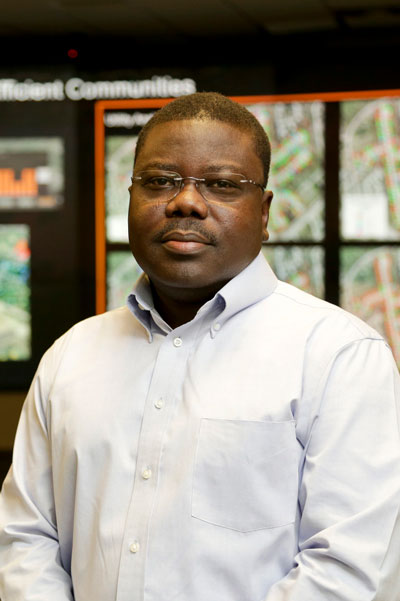
Olufemi A. Omitaomu is an Adjunct Professor at the Department of Industrial and Systems Engineering within the Tickle College of Engineering at the University of Tennessee, Knoxville. He serves as a Group Leader and Distinguished R&D Staff at Oak Ridge National Laboratory (ORNL), leading the Computational Urban Sciences Group in the Computational Sciences and Engineering Division. Ph.D., Industrial Engineering (Information Engineering concentration), University of Tennessee, Knoxville M.S., Mechanical Engineering, University of Lagos, Nigeria B.S., Mechanical Engineering, Lagos State University, Nigeria Dr. Omitaomu’s research focuses on artificial intelligence in energy systems , cognitive coupling of human-machine systems , anomaly detection in complex systems , energy infrastructure siting and analysis , and disaster risk analysis with urban systems resilience . His work integrates computational models, optimization techniques, and geospatial frameworks to address challenges in critical infrastructure systems. The 15 most recent publications highlight trends in renewable energy integration , climate adaptation strategies , and emergency resource allocation . Key methodologies include agent-based modeling , multicriteria decision analysis , and wavelet shrinkage , applied to domains like energy systems , disaster management , and urban sustainability . Scientific recognition includes: Distinguished R&D Staff, Oak Ridge National Laboratory Senior Member, Institute of Industrial and Systems Engineers (IISE) Senior Member, Institute of Electrical and Electronics Engineers (IEEE) He actively mentors MS and PhD students with expertise in Python programming , game theory , and human-machine systems . His research is supported by collaborations with ORNL and interdisciplinary grants.
Myrto Mavraki is an Assistant Professor in the Department of Mathematics at the University of Toronto, with affiliations to both the St. George and Mississauga campuses. She specializes in arithmetic geometry and dynamical systems, particularly the theory of unlikely intersections and canonical heights in families of rational maps. Institution: University of Toronto School: Faculty of Arts and Science Department: Department of Mathematics Rank: Assistant Professor Her research focuses on deep connections between arithmetic geometry and dynamical systems. Key areas include equidistribution, variation of canonical heights, preperiodic points, and unlikely intersections in families of maps, especially on the projective line and in elliptic surfaces. These topics lie at the heart of modern arithmetic dynamics and have strong ties to Diophantine geometry and number theory. The most recent publications show a sustained focus on canonical height variation, equidistribution, and the geometry of post-critically finite and preperiodic loci in parameter spaces. Collaborations with leading mathematicians such as Laura DeMarco, Harry Schmidt, and Hexi Ye reflect her central role in current developments in arithmetic dynamics. Her work combines algebraic, analytic, and arithmetic techniques to solve deep conjectures and establish foundational results. Her research is supported by an NSERC Discovery Grant and an Early Career Supplement (2024–2029), and previously by an NSF grant (DMS-2200981). She has mentored or collaborated with several prominent researchers and is likely supervising graduate students, though none are explicitly named. She does not list formal awards, but her publication record in top journals and prestigious fellowships indicate high recognition in the mathematical community. Mavraki held the Benjamin Peirce Fellowship at Harvard (2020–2023), a highly competitive postdoctoral position, and prior positions at the University of Basel and Northwestern University. She earned her PhD from the University of British Columbia under Dragos Ghioca.
Patrick Brown is an Associate Professor at the University of Toronto , affiliated with the Department of Statistical Sciences and cross-appointed to the Centre for Global Health Research and St. Michael's Hospital . His research focuses on spatio-temporal data modeling , Bayesian inference , and non-parametric methods for spatial epidemiology and environmental sciences. Fields of Interest : Spatial Statistics, Cancer Statistics, Statistical Software Education : PhD from University of Lancaster His methodological work encompasses Bayesian inference for non-Gaussian spatial data, Gaussian Markov random fields, and computational techniques like INLA and MRA. Applied research themes include disease mapping, environmental risk assessment, and public health surveillance using real-world data sources such as electronic health records and wastewater monitoring . He has developed key R packages (mapmisc, geostatsp, diseasemapping) supporting spatial statistical applications. Current collaborative projects span diverse fields: Ultra-diffuse galaxy detection with astrophysical applications Multi-pollutant mortality studies in Canadian cities SARS-CoV-2 seropositivity tracking Homelessness population estimation using EHR Geospatial cancer risk tools for Nova Scotia His work bridges statistical innovation with global health challenges , emphasizing computationally efficient solutions for large-scale spatiotemporal datasets.