Dr. Marcus Faulkner is a Senior Lecturer in War Studies at King's College London, specializing in 20th-century naval and intelligence history with a focus on WWII. He holds degrees from KCL (BA War Studies) and UCL (MA History), and a PhD from KCL on Kriegsmarine intelligence. His research explores naval intelligence development (1919–1945), seapower strategy, and fleet operations. He teaches modules on Cold War history and seapower and edits volumes like Decision in the Atlantic (2019). Publications include naval atlases, analyses of aircraft carrier capabilities, and studies of signals intelligence. He is affiliated with the Corbett Centre for Maritime Policy Studies and Laughton Naval History Unit.
Howard Fuller is a Reader in War Studies at the University of Wolverhampton within the Faculty of Arts, Business, and Social Sciences, specializing in History, Politics and War Studies. He has held academic positions at the University of Wolverhampton since 2005, progressing from Senior Lecturer to Reader in War Studies in 2018, while also serving as Associate Professor of History at University of Maryland University College Europe until 2018. BA in History, Ohio State University (1986-1991) MA in War Studies, King's College London (1996-1997) PhD in War Studies, King's College London (1997-2004) Fuller's research focuses on Military and Naval History, with particular expertise in the Crimean War, American Civil War, First World War, and the Russian Civil War. His work emphasizes Anglo-American 19th-century history and the British Empire, examining geopolitical developments, military and naval technology, strategy and warfare, and modern international relations and diplomacy. He has also published in the area of professional war-planning, popular wargaming, and historical simulations. His scholarly output includes three major monographs: Clad in Iron: The American Civil War and the Challenge of British Naval Power (2007), Empire, Technology and Seapower: Royal Navy Crisis in the Age of Palmerston (2013), and Turret vs. Broadside: An Anatomy of British Naval Prestige, Revolution and Disaster, 1860-1870 (2020). His most recent work includes a chapter on U.S. Geostrategic Deterrence in the American Civil War (2024) and an article on HMS Captain (2025), reflecting his ongoing interest in naval technology and strategy. His publications demonstrate a consistent focus on the intersection of naval power, technological innovation, and geopolitical strategy. Rear Admiral John D. Hayes Fellow in U.S. Naval History (2002-2003) West Point Fellow in Military History Caird Research Fellow Fellow of the Royal Historical Society Caird Fellowship (2017-2019) Scouloudi Award (2017) Vice Admiral Edwin B Hooper Research Grant (2017-2023) As an educator, Fuller has led the online MA in Military History since 2012, developed numerous undergraduate and graduate modules in War Studies, and supervised multiple research degrees. He currently serves as Editor for the International Journal of Naval History and Managing Editor for the British Journal of Military History. His 'Find the Captain' Project, launched in 2021, aims to locate the wreck of HMS Captain, an experimental turret-armed ironclad that capsized in 1870 with the loss of nearly 500 lives.
Dr. Marcin Karkut is an Assistant Professor at the Department of Spanish Studies, Politics and International Relations, Faculty of Humanities, John Paul II Catholic University of Lublin. He specializes in modern Spanish history, military history, and the Spanish Monarchy during the Enlightenment. His academic roles include editorial secretaryships and conference organization. Historian focusing on Spain's political and military developments Active in promoting Hispano-American studies Specializes in Enlightenment-era figures like Carlos III Research interests include: Modern Spanish military campaigns Enlightened monarchs and their policies Church-state relations in the 18th century Hispano-American cultural intersections Spanish diplomatic history Comparative studies between Polish and Spanish history His recent publications analyze Spanish military maxims, Enlightenment-era correspondence, and contemporary cultural phenomena. He has organized multiple conferences on Hispanist topics and contributed to academic journals like Roczniki Humanistyczne . Teaching activities include Spanish history courses using primary sources from the 16th-20th centuries.
Kevin Rowlands is a Visiting Professor at the Department of War Studies, King’s College London, and Head of the Royal Navy’s Strategic Studies Centre, an internal MOD think tank. He also serves as Associate Director of the Council on Geostrategy’s Sea Power Laboratory. With a 30-year naval career including 20 years at sea, he retired as a Captain. His research focuses on contemporary seapower, naval diplomacy, maritime culture development, Cold War naval history, and the interplay between geography and strategy. Education: PhD in War Studies (King’s College London), MSc Defence Studies (KCL), MA Education (Open University), BA Geography (QMUL). He is open to supervising PhD students in military/naval strategy, sea power, and naval diplomacy. Publications include books like 21st Century Gorshkov (2017), Naval Diplomacy in the 21st Century (2019), and articles on Indo-Pacific strategy, Russian naval behavior, and submarine warfare tactics. His work emphasizes strategic analysis for policy-making and maritime security challenges. He collaborates with the Corbett Centre for Maritime Policy Studies and the Centre for Grand Strategy, which applies historical expertise to modern statecraft and foreign policy.
Chunying Li serves as an Assistant Professor in the Department of Electronic and Electrical Engineering at the College of Engineering, Southern University of Science and Technology (SUSTech). Recognized as a 2024 Shenzhen Pengcheng Peacock Program Distinguished Talent and Ocean Power Young Scientist nominee, her research pioneers spherical underwater robotics and multi-agent systems for complex marine environments. Her educational foundation includes: Ph.D. in Intelligent Mechanical Systems Engineering from Kagawa University, Japan (2021-2023) M.S. in Control Engineering from Tianjin University of Technology, China (2017-2020) Dr. Li's research integrates biomimetic principles with advanced engineering to solve underwater navigation challenges. Her work on multi-sensor fusion enables robust environmental perception, while adaptive control algorithms allow spherical robots to operate in turbulent conditions. Key applications include ocean monitoring, resource exploration, and collaborative multi-robot missions where traditional systems fail. Recent publications (2020-2024) reveal a strong focus on performance optimization and biomimetic sensing , with 7 of 11 representative papers appearing in Q1 journals like Information Fusion (IF=17.564). A notable trend is the development of artificial lateral line systems inspired by fish, significantly improving obstacle recognition in murky waters. Her accolades include: 2024 Young Scientists Nomination for Ocean Power 2024 Shenzhen Pengcheng Peacock Program Distinguished Talent 2023 Chinese Society of Automation Natural Science Award (Second Prize) 2022 CSC National High-Level University Scholarship Dr. Li leads the Shenzhen Outstanding Science and Technology Innovation Talent Program while contributing to international projects: Shenzhen Grants: Pengcheng Peacock Program (Principal Investigator) International Collaboration: Japan SPS KAKENHI Program (Key Researcher) Regional Projects: Tianjin Science and Technology Innovation Cooperation Program Her laboratory develops spherical underwater robot platforms featuring hybrid thrusters and multi-sensor arrays, emphasizing father-son robot coordination and jellyfish-inspired swarm behaviors. Through IEEE ICMA conference leadership roles (Finance Chair 2025, Publication Co-Chair 2024), she actively shapes robotics research standards in Asia-Pacific.
Dr. Lee Windsor is an Associate Professor in the Historical Studies department at the University of New Brunswick . He holds the Fredrik S. Eaton Chair in Canadian Army Studies and co-directs the Brigadier Milton Gregg VC Centre for the Study of War and Society. His research focuses on Canadian military involvement in multinational operations, including World Wars and UN/NATO missions in the Balkans, Middle East, and Afghanistan. Windsor also leads field study programs in Sicily, Italy, and Western Europe. Education: B.A., Acadia University M.A., Wilfrid Laurier University Ph.D., University of New Brunswick Research interests include military coalition dynamics, Canadian armed forces historiography, and the socio-political impacts of warfare. His publications analyze tactical leadership (World War I), artillery regiment histories, and modern conflicts like Afghanistan. He collaborates with military institutions such as the Combat Training Centre at Gagetown. Teaching spans undergraduate/graduate courses on warfare history, including specialized seminars on World Wars and unconventional warfare. Overseas field schools integrate historical sites into experiential learning. Advising and grants involve supervision of military history students and program development with the Canadian Armed Forces. Current initiatives include War and the Canadian Experience teacher development programs.
Edward Salo is a Professor of History at Arkansas State University, where he teaches courses on the global history of World War II and the cultural history of comics. His interdisciplinary approach bridges military strategy, cultural heritage preservation, and pop culture analysis, making him a distinctive voice in contemporary historical scholarship. Dr. Salo earned his undergraduate degree from Middle Tennessee State University under the mentorship of Dr. Thad Smith, who ignited his passion for historical research and student mentorship. His academic journey reflects a commitment to connecting classroom learning with real-world applications, from Normandy battlefield studies to comic book cultural analysis. His research centers on the weaponization of cultural heritage in modern conflicts, maritime strategy in the Indo-Pacific, and the historical narratives embedded in professional wrestling and comics. Salo examines how heritage sites become tactical targets in irregular warfare while advocating for their preservation as vital links to shared human history. His work on climate change's strategic implications reveals unexpected intersections between environmental science and military planning. Recent publications (2023-2025) demonstrate a sharp focus on contemporary geopolitical flashpoints, particularly China's maritime strategy and Ukraine conflict dynamics. Salo consistently identifies cultural narratives as strategic tools—whether analyzing comic books' portrayal of the Korean War or wrestling's reflection of civil-military relations. His scholarship reveals how seemingly niche topics like heritage interdiction or logistics warfare fundamentally shape modern conflict outcomes. Outside academia, Salo embodies the 'renaissance man' ideal: a devoted family man who attends WrestleMania with his son, collects comics, and finds inspiration in Jimmy Buffett lyrics. His teaching philosophy—'opening a door to a larger world'—manifests in courses that transform historical analysis into lived experience, whether through Normandy pilgrimages or dissecting Casablanca's enduring resonance.
Professor Matthew Seligmann is a leading scholar in naval and military history at Brunel University London, where he serves as Professor of Naval History in the Department of Politics and History within the College of Business, Arts and Social Sciences. He joined Brunel as a Reader in 2012 and was promoted to Professor in 2015. His research focuses on intelligence, threat assessment, armaments races, and the origins of the First World War, with particular emphasis on Anglo-German naval competition and British naval policy. His educational background includes a D.Phil in History from the University of Sussex and an M.A. (Hons) in History from the University of Edinburgh. Seligmann’s research interests center on the Royal Navy during the early 20th century, especially the Anglo-German naval race, naval intelligence, espionage, battleship building, and naval strategy. He has published extensively, authoring or co-authoring over ten books and numerous articles in top-tier journals. His work often explores how British policymakers perceived and responded to the German threat before 1914. He has won the Julian Corbett Prize for an article on the origins of the Home Fleet. His recent publications span themes such as economic warfare, convoy systems, Catholicism in the Royal Navy, amphibious warfare, and historiographical debates on naval strategy. These works reflect a deep engagement with primary sources and a critical eye toward official narratives and historical interpretation. Julian Corbett Prize for excellence in Naval History Seligmann supervises PhD students on topics related to the Royal Navy and British foreign policy before and during the First World War. He has secured research funding, including an AHRC Fellowship for a project on the Royal Navy and the German threat (1901–1914). He also holds a Caird Library Fellowship. He plays a significant administrative role as Director of Internationalisation and Academic Exchanges Coordinator for Politics and History. He is a Fellow of the Royal Historical Society and a member of the Navy Records Society’s Publications Committee, contributing to the broader academic and archival community in naval history.
Slyusarov Oleksandr Stepanovych serves as an Associate Professor at the Department of Automobiles, Heat Engines and Hybrid Power Plants within the Faculty of Transport at Zaporizhzhia Polytechnic National University. With over 35 years of continuous service since 1989, he maintains an active research profile with numerous recent publications and patents. His academic credentials include a Candidate of Technical Sciences degree with a dissertation on "Passability of vehicles when overcoming water obstacles" (1986) from the Moscow Automobile and Road Institute. His educational background includes a degree with honors from Zaporizhzhia Machine-Building Institute named after V.Ya. Chubar (1976) in Automotive Engineering, specializing in "Automobiles and tractors" with qualification as an "engineer-mechanic". He teaches courses in Vehicle Performance, Specialized Rolling Stock, Fundamentals of Car Strength and Durability, and Design of Non-Standard Diagnostic Equipment. Dr. Slyusarov's research primarily focuses on amphibious vehicles, vehicle passability, and hydrodynamic characteristics of water-borne propulsion systems. His recent work demonstrates continued innovation in physical modeling techniques, dimensional analysis, and the development of testing methodologies for automotive components. His publications consistently address practical engineering challenges in vehicle design and performance validation. His research output shows a clear progression from fundamental studies of vehicle-water interactions in the 1980s to sophisticated modeling techniques and practical applications in modern vehicle design. The consistent theme throughout his career has been optimizing vehicle performance in challenging environments, particularly water obstacles. His scientific recognition includes: Chest badge of NU "Zaporizhzhia Polytechnic" "For impeccable work" II degree (2025) Chest badge of ZNTU "For impeccable work" III degree Honorary certificate of Zaporizhzhia Regional Council (2012) Honorary certificate of Zaporizhzhia Regional State Administration (2011) Honorary certificate of Zaporizhzhia Regional Administration (2000) As guarantor of the Doctor of Philosophy educational program in "Industrial Mechanical Engineering," he plays a significant role in academic leadership. His recent professional development includes internships at Priazovsky State Technical University (2023) and Tavria State Agrotechnological University (2018), focusing on modern service systems and agricultural vehicle passability. His ORCID (0000-0003-2416-8978), Web of Science (JHS-7950-2023), and Google Scholar profiles document his extensive publication record of 30 scientific papers, including 2 patents.
Kjell Saebbö serves as a Lecturer at Maritime Studies and Research Engineer at Revere (Chalmers Resource for Vehicle Research) within Chalmers University of Technology. He leads the development of Tracks—a major initiative for track courses targeting students and alumni—and delivers specialized instruction in maritime safety, seamanship, and machine systems. His operational responsibilities include overseeing all fire training protocols at Chalmers, providing CPR/AED certification, and driving Systematic work environment management initiatives at the M2 facility. His research centers on autonomous vehicle systems through Revere, while his teaching integrates practical maritime domain expertise derived from military service aboard warships in the Amphibious Corps. This unique background enables applied approaches to safety-critical systems, occupational health management, and emergency response training within marine engineering contexts. His work bridges theoretical vehicle autonomy with real-world maritime operational safety. At Revere, Kjell contributes to Chalmers' strategic vehicle research infrastructure with emphasis on autonomous navigation systems. His cross-functional roles in safety training and environmental management demonstrate commitment to holistic risk mitigation across academic, operational, and research environments at the university.
Eric Heginbotham is a Principal Research Scientist at MIT’s Security Studies Program (SSP) and Co-Director of SSP’s Wargaming Lab. He holds a PhD in Political Science from MIT and previously served as a Senior Political Scientist at the RAND Corporation and Senior Fellow at the Council on Foreign Relations. His expertise centers on Asian security, particularly China’s military strategy and U.S.-China relations. Heginbotham has authored/co-authored influential works including China Steps Out (2018) and China’s Evolving Nuclear Deterrent (2017). He has advised U.S. policymakers on defense strategy and contributed to war games analyzing Taiwan contingency scenarios. His research spans Japan’s military modernization, China’s defense spending, and the strategic implications of emerging technologies. Education: PhD in Political Science (MIT), BA from Swarthmore College. Languages: Fluent in Chinese and Japanese. Military service: Captain in U.S. Army Reserve. Key contributions include assessing China’s military capabilities, evaluating U.S. policy options in the Indo-Pacific, and analyzing China’s engagement with the Global South. His work often intersects with operational planning, such as CSIS studies on cruise missile effectiveness in Taiwan scenarios. Current projects include a book on Japanese military strategy. Awards and recognition: None explicitly listed, but his publications are widely cited in policy and academic circles. Grants and fellowships: Not detailed in provided texts.
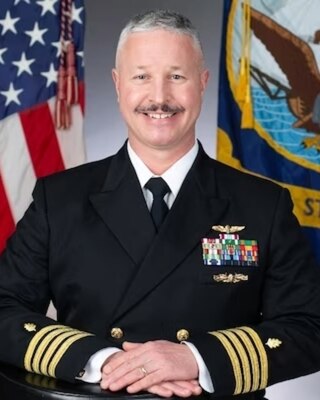
Captain Gregory H. Freitag, MD, USN, is an Assistant Professor at the Dwight D. Eisenhower School of the National Defense University. He holds a medical degree from the Uniformed Services University of the Health Sciences (2002) and a Master of Science in National Security Strategy from the National War College (2019). His research focuses on Health Security policy in fragile nations, particularly the Horn of Africa, advocating for U.S. healthcare system support to counter violent extremism and geopolitical threats. Key roles include Chief Medical Officer at Navy Medicine Readiness and Training Command Quantico (2019), CMO for Combined Joint Task Force – HOA (2021), and leadership positions in Amphibious Squadron SIX and Naval Hospital Oak Harbor. He is board-certified in Family Medicine and holds certifications in Flight Surgery and Surface Warfare Medical Operations. His awards reflect decades of service: three Meritorious Service Medals, two Navy/Marine Corps Commendation Medals, and the Defense Meritorious Service Medal, among others. He also contributed to NATO mentorship programs for Afghan medical forces and led institutional reforms in medical treatment facilities.
Daniel Ortiz Arroyo is an Associate Professor at Aalborg University's Faculty of Engineering and Science, affiliated with the Intelligent Energy Systems and Flexible Markets department. His research focuses on AI-driven solutions for energy systems, wastewater treatment optimization, robotics, and deep learning applications in industrial systems. He leads and collaborates on projects such as AITEKS (AI for Tech Support), OPTIMIZE (Deep Reinforcement Learning in Fermentation), and amphibious drone development for infrastructure inspection. Key research areas include reinforcement learning for environmental control systems, synthetic data generation for defect detection, and predictive modeling in wastewater treatment. His work integrates machine learning with physical systems to enhance efficiency and sustainability. Notable contributions include grey-box models for N₂O dynamics and amphibious quad-rotor designs for pipeline inspection. Dr. Arroyo has contributed to over 97 publications, including peer-reviewed journal articles and conference proceedings, focusing on AI applications in energy, environment, and robotics. He actively participates in editorial peer review for journals like Evolutionary Intelligence and CRC Press . His projects involve collaborations with industry partners like Novo Nordisk Foundation and Innovation Fund Denmark, addressing challenges in microbial fermentation, fiber rope inspection, and wind turbine maintenance. He maintains a strong emphasis on data-driven innovation and interdisciplinary research.
Dr Jon Robb-Webb is a Senior Lecturer in Defence Studies at the Defence Academy of the UK, based in the School of Security Studies. He has held this position since 2000, with prior teaching roles at the Joint Services Command and Staff College and King's College London. His academic background includes a PhD in War Studies from King's College London and a Postgraduate Certificate in Education from the University of East Anglia. His research focuses on naval history, maritime strategy, and contemporary security. Key areas include the Royal Navy and US Navy in the 20th century, maritime security, and the British Pacific Fleet's role in World War II. He has authored books and articles on naval strategy, empire decline, and Pacific naval operations. Dr Robb-Webb is affiliated with the Corbett Centre for Maritime Policy Studies, the Second World War Research Group, and the Sir Michael Howard Centre for the History of War. He supervises PhD students in naval history, maritime strategy, and amphibious operations. His work emphasizes interdisciplinary approaches to maritime policy and historical analysis.
Dr. Paul Bouman is an Associate Professor at the Erasmus School of Economics (Erasmus University Rotterdam), affiliated with the Econometric Institute. He holds a PhD in Operations Research (2017) from Erasmus University, focusing on passenger behavior and complexity in public transport. His research interests span algorithm design, logistics optimization, public transportation systems, and computational methods for resource allocation. **Education**: - BSc in Computer Science (Utrecht University) with a minor in Artificial Intelligence - MSc in Applied Computing Sciences (Utrecht University), thesis on Recoverable Robust Optimization - PhD in Complexity in Public Transport (Erasmus University Rotterdam), thesis: “Passengers, Crowding and Complexity” **Research Focus**: Bouman’s work addresses challenges in public transport optimization, including route planning, disruption management, and algorithmic solutions for logistics. He explores decentralized control systems, ship-to-shore logistics, and evolutionary road network modeling. His research integrates operations research, complexity science, and computational tools. **Teaching & Tools**: He teaches programming and operations research courses, supervising over 20+ master’s theses annually. He developed tools like Grade Handler (browser-based grading system) and Examination Software for online proctoring. His scheduling software automates teaching assistant assignments using optimization algorithms. **Affiliations**: - Erasmus Research Institute of Management (ERIM) - Erasmus Center for Optimization in Public Transport (ECOPT) - Dutch Network on Mathematics of Operations Research (LNMB) **Impact**: Bouman’s research contributes to improving public transport efficiency and resilience. Notably, his student Rolf van Lieshout’s thesis received an honorable mention in the TSL Dissertation Award.