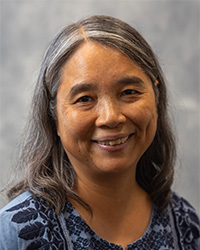
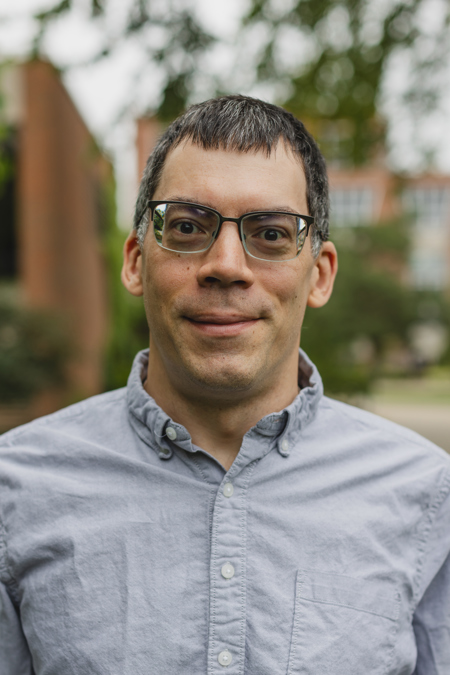
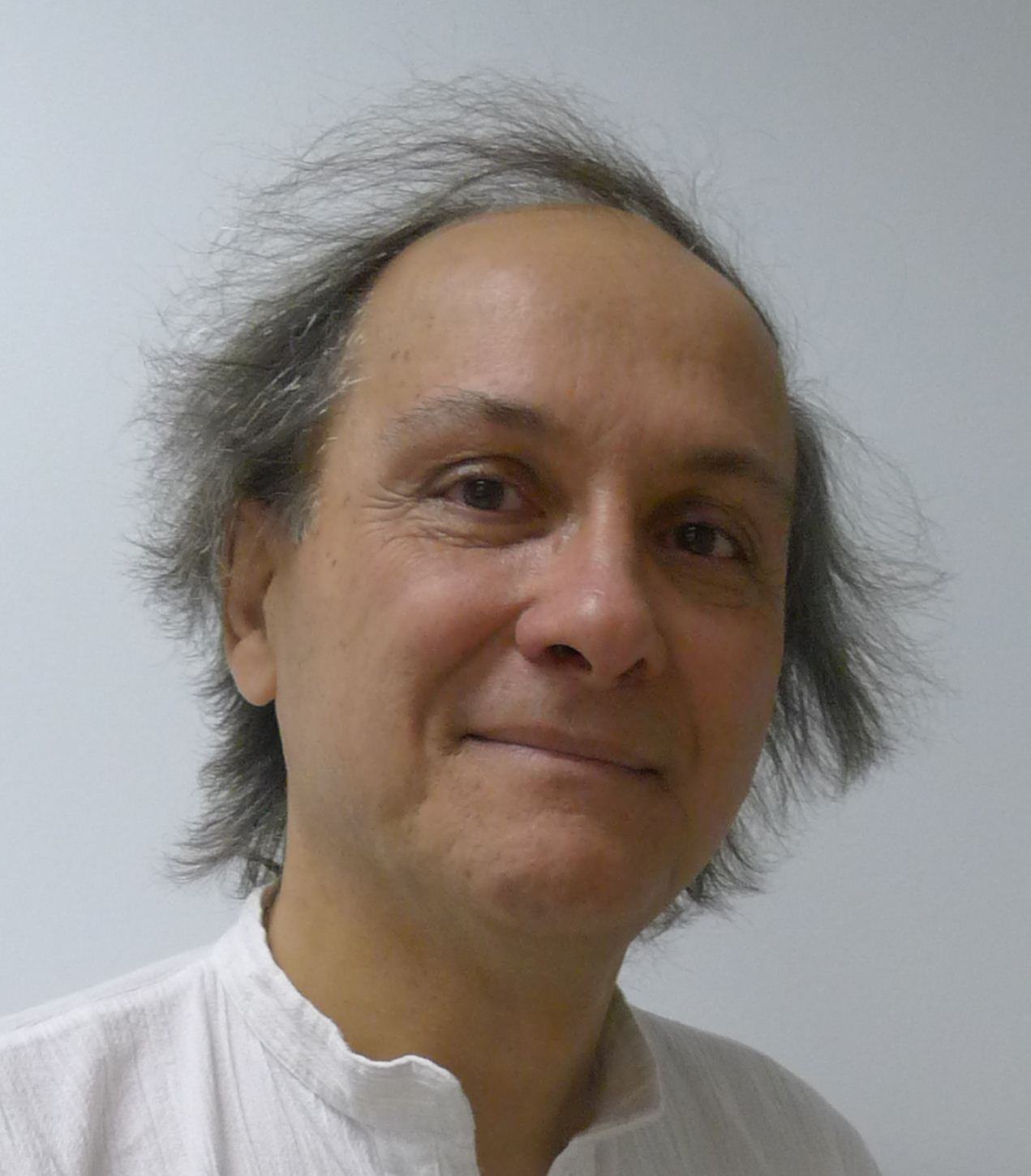
Ching Chou is a Professor in the Department of Mathematics at the University at Buffalo. He holds a PhD from the University of Rochester. His research focuses on functional analysis and invariant means, with notable contributions to operator theory, harmonic analysis, and group theory. His work often explores weakly almost periodic functions, ergodic group actions, and the structure of von Neumann algebras. Ching Chou’s research spans over four decades, with publications addressing topics such as invariant means on operator spaces, approximation of compact operators, and the properties of Fourier-Stieltjes algebras. His articles frequently intertwine functional analysis with algebraic and topological group structures. He is affiliated with the College of Arts and Sciences and maintains an office in the Mathematics Building on UB’s North Campus. Contact details include phone: (716) 645-8806 and email: chouc@buffalo.edu.
Yeon Hyang Kim is a Professor in the Department of Mathematics at Central Michigan University (CMU), affiliated with the College of Science and Engineering. Her office is located in PEARCE 201G. She holds a Ph.D. from the University of Wisconsin-Madison (2008), M.A. degrees from both the University of Wisconsin-Madison (2001) and Pohang University of Science & Technology (1996), and a B.S. from Duksung Women's University (1994). Education: Ph.D., Mathematics, University of Wisconsin-Madison, 2008 M.A., Mathematics, University of Wisconsin-Madison, 2001 M.A., Pohang University of Science & Technology, 1996 B.S., Duksung Women's University, 1994 Her research focuses on wavelet theory , approximation theory , Gabor systems , and data representation via frames . She has contributed to publications such as *Constructive Approximation* and presented at international conferences like WAVELETS AND APPLICATIONS (Saint Petersburg, 2009) and the SUMMR Conference (Central Michigan University, 2009). She coordinates the Applied and Computational Mathematics Seminar and teaches courses including Calculus I, Linear Algebra, and Differential Equations. Her work integrates theoretical frameworks with applications in signal processing and harmonic analysis.
Professor Alexander Rashkovskii is a faculty member in the Department of Mathematics and Physics at the University of Stavanger, affiliated with the Faculty of Science and Technology. His research focuses on pluripotential theory, complex analysis, and convex geometry, with particular emphasis on plurisubharmonic functions, Monge-Ampère operators, and Lelong numbers. He has contributed to advancements in interpolation of extremal functions, geodesics in complex geometry, and applications of pluripotential theory to algebraic geometry and signal processing. Key research interests include the study of singularities of plurisubharmonic functions, asymptotic multiplicities in algebraic geometry, and the interplay between convex geometry and complex analysis. His work often bridges theoretical results with applications in areas like mobile sampling and harmonic analysis. Publications span over three decades, with notable contributions in Mathematische Annalen , Journal of Geometric Analysis , and Applied and Computational Harmonic Analysis . Active in international conferences and workshops, including NORDAN meetings and the International Congress of Mathematicians. His research trends reflect a deep engagement with the structure of plurisubharmonic singularities, regularization techniques, and the geometry of complex Monge-Ampère equations. Recent work explores geodesic connectivity and rooftop envelopes in Cegrell classes, advancing the theoretical foundations of pluripotential theory.
Ilya Kachkovskiy is an Associate Professor in the Department of Mathematics at Michigan State University (MSU), located in Wells Hall. His research focuses on mathematical physics, spectral theory, and operator theory, with particular emphasis on quasiperiodic systems, Schrödinger operators, and their spectral properties. He explores topics such as ballistic transport, localization phenomena, and the interplay between periodicity and boundary conditions in quantum systems. His work spans theoretical analysis of transport properties, spectral continuity, and mathematical structures in C*-algebras. Key contributions include studies on absolute continuity of spectra in periodic systems, localization in quasiperiodic operators, and the behavior of interacting particles in such environments. He has also investigated the mathematical foundations of almost commuting operators and distance estimates in functional analysis. Dr. Kachkovskiy’s research demonstrates a deep engagement with both the abstract frameworks of operator theory and their applications to physical systems, particularly in understanding complex quantum dynamics and spectral behavior in structured environments.
Murat Adivar is a Full Professor in the School of Business and Economics at Fayetteville State University , where he serves as SAP Faculty Coordinator, Director of the SAP Next-Gen Lab, and Director of the ERP and Advanced Analytics Center. He holds a Ph.D. in Applied Mathematics from Ankara University and completed postdoctoral research at Missouri University of Science and Technology. Ph.D., Applied Mathematics, Ankara University, 2003 Postdoc, Applied Mathematics, Missouri University of Science and Technology, 2004 Stanford University, Design Thinking Certification, 2019 SAP Certified Associate, 2016 Data Analytics Certificate, Johns Hopkins University, 2015 His research bridges applied mathematics and data analytics , focusing on differential and difference equations, time scales, optimization, fuzzy decision making, and machine learning applications in business. He has published extensively in mathematical and interdisciplinary journals. His recent work explores machine learning in sales research and dynamical systems on hybrid domains. The 15 most recent publications reflect a strong trend toward theoretical analysis of functional, difference, and integral equations on time scales, with increasing interdisciplinary applications in optimization, fuzzy systems, and business analytics . The keywords span applied mathematics, operations research, and data science. Scientific Awards and Recognitions: Honorary Professorship, Anhui University of Science and Technology (2013–2018) Ph.D. Fellowship, TUBITAK (1998–2003) NATO Scholarship for Postgraduate Studies (2004) He has advised numerous research projects and supervised student engagement initiatives. He has secured multiple research grants from TUBITAK and Izmir University of Economics. A dedicated educator, he teaches courses in SAP, data analytics, and business intelligence, and has led SAP academic initiatives and lab development. Dr. Adivar has organized major international conferences such as the World Congress on Global Optimization and has collaborated with researchers at North Carolina State University, University of Dayton, and Missouri S&T. He leads the SAP Next-Gen Lab, focusing on experiential learning and industry-academia collaboration.
Marino Belloni is an Associate Professor of Mathematical Analysis in the Department of Mathematical, Physical and Computer Sciences at the Faculty of Engineering, University of Parma, Italy. He has been a core faculty member since 1994 and holds a PhD from the University of Pisa. His academic work spans teaching, research, and service in mathematical analysis and its applications. Research Interests: His primary research lies in the Calculus of Variations and nonlinear analysis, with focus areas including shape optimization, optimal control problems, the Lavrentiev phenomenon, variational problems without compactness (e.g., Newton's problem), and eigenvalue analysis of the infinity Laplacian. His work combines theoretical depth with applications in mechanics and geometry. The recent publications reflect both research and pedagogical contributions, including theoretical and exercise-based textbooks on Mathematical Analysis. These works support engineering and mathematics education and demonstrate a sustained commitment to curriculum development. Academic Service: Reviewer for Mathematical Reviews (AMS). Referee for journals such as SIAM Journal on Control and Optimization , Journal of Convex Analysis , and Pacific Journal of Mathematics . Member of GNAMPA (Gruppo Nazionale per l'Analisi Matematica, la Probabilità e le loro Applicazioni). Member of the national research project Calcolo delle Variazioni , hosted at the University of Pisa. Former scientific committee member (2005–2007) at the University of Parma. Teaching and Mentoring: Belloni has taught a wide range of courses including Mathematical Analysis I, II, III, Numerical Analysis, and Measure Theory across Engineering, Mathematics, and Architecture faculties. He has served as a tutor and reference professor for numerous undergraduate and graduate students in Mathematics and Management Engineering programs. He has also organized research seminars and invited leading mathematicians to Parma, fostering academic exchange. International Engagement: He has delivered seminars at universities in Germany (Cologne, Aachen), France (Toulon, Chambery), Portugal (Coimbra, Évora), Sweden (Linköping), Italy (Pisa, Bologna, Rome), and Bulgaria (Plovdiv), indicating an active role in the European mathematical community.
Antonio Galbis Verdu is a Full Professor in the Department of Mathematical Analysis at the Faculty of Mathematics, University of Valencia, Spain. His research is centered on functional analysis, operator theory, and harmonic analysis, with a particular focus on ultradifferentiable functions, time-frequency analysis, and convolution operators. PhD, Universitat de València, 1988 His research interests include functional analysis, operator theory, harmonic analysis on Euclidean spaces, partial differential equations, and integral transforms. He works extensively with weighted spaces of holomorphic functions, Gelfand-Shilov spaces, and pseudodifferential operators. His work often bridges abstract functional analytic frameworks with concrete problems in analysis and mathematical physics. The recent articles highlight a strong and consistent research trajectory in functional and harmonic analysis, particularly in time-frequency localization, Gabor systems, and operator theory on function spaces such as Fock and modulation spaces. The publications demonstrate deep engagement with ultradifferentiable function classes, convolution and Toeplitz operators, and foundational aspects of frame theory in non-Banach settings. The keywords span functional analysis, operator theory, and harmonic analysis, with subfields including time-frequency analysis, pseudodifferential operators, and spaces of smooth and holomorphic functions. There are no scientific awards explicitly mentioned in the provided text. Antonio Galbis has collaborated extensively with researchers such as José Bonet, Carmen Fernández, Joachim Toft, and David Jornet. He has been involved in numerous joint publications, indicating a strong advisory and collaborative role in the mathematical community. While specific grant details are not provided, his sustained publication record in high-impact journals suggests active funding support. He is a member of the research group ESALDI (Spaces and Algebras of Differentiable Functions), which focuses on functional analytic structures and their applications. He is a key member of the ESALDI research group at the University of Valencia, which investigates spaces and algebras of differentiable functions, with applications to partial differential equations and operator theory. This group fosters collaboration on advanced topics in analysis and supports the training of early-career researchers.
Venta Terauds is a Researcher in Mathematics at the University of Tasmania, affiliated with the School of Natural Sciences. Their research focuses on algebraic structures in mathematical physics, biological mathematics, and pure mathematics, with notable contributions to genome rearrangement models and functional analysis. They have collaborated on studies involving phylogenetic inference and evolutionary distance calculations. Research interests include algebraic methods in genomics, symmetry analysis, and representation theory applied to biological systems. In pure mathematics, work spans diffraction theory, measure theory, and functional calculus extensions. Their work bridges abstract mathematical frameworks with applications in genetics and materials science. Publications span topics like genome rearrangement algorithms (e.g., circular genome studies), diffraction inversion in aperiodic crystals, and operator theory in Banach spaces. Supervision includes doctoral work on algebraic phylogenetic methods. No awards listed, though active in interdisciplinary research collaborations.
Aditya Mahajan is a Professor in the Department of Electrical and Computer Engineering at McGill University, Montreal, Canada. He holds affiliations with prominent research institutes including Mila (Quebec Artificial Intelligence Institute), CIM (Center for Intelligent Machines), GERAD (Group for Research in Decision Analysis), and ILLS (International Laboratory for Low Temperature Science). His research focuses on stochastic control, reinforcement learning, decentralized systems, and multi-agent decision-making. Key themes include analysis of Markov decision processes (MDPs), robust control strategies, and optimization in partially observable environments. He explores theoretical foundations of actor-critic algorithms, human-automation collaboration, and networked control systems with applications to robotics and autonomous systems. Recent work emphasizes scalable methods for complex systems, including approximation techniques for MDPs with unbounded costs, delay-resistant stochastic approximation, and policy design in POMDPs. His contributions span both algorithmic innovations and rigorous theoretical analysis, bridging gaps between control theory and modern machine learning paradigms. Major research directions include: Reinforcement learning in decentralized and partially observable settings Optimal control for human-machine teams Robustness and convergence properties of stochastic algorithms Multi-agent systems and mean-field games His articles highlight advancements in control theory, with recent attention to: Decision-making under cognitive load Convergence guarantees for Q-learning variants Structural results for restless bandits and resource allocation He participates in interdisciplinary collaborations through his affiliations, contributing to AI applications in robotics, energy systems, and networked control architectures.
MARIA CARMEN FERNANDEZ ROSELL is a Professor in the Department of Mathematical Analysis at the Faculty of Mathematics, University of Valencia. She is a member of the ESALDI research group (Spaces and Algebras of Differentiable Functions), focusing on functional analysis, operator theory, and time-frequency analysis, with significant interdisciplinary contributions in Bayesian statistics and econometrics. Her research spans Functional Analysis , Operator Theory , Harmonic Analysis , and Bayesian Modeling . She investigates ultradifferentiable functions, pseudodifferential operators, composition operators on function spaces, and time-frequency localization. Her statistical work includes Bayesian inference for fat tails, skewness, model averaging, and spatial modeling, often in collaboration with prominent statisticians like Mark F. J. Steel and Peter J. Green. The most recent publications highlight her expertise in composition operators on Gelfand-Shilov classes, spectral analysis, and characterizations of function spaces via harmonic oscillators. Her work bridges pure mathematical analysis with applied statistical modeling, particularly in econometrics and biological systems. On Bayesian modeling of fat tails and skewness (1998) Benchmark priors for Bayesian model averaging (2001) Annihilating sets for the short time Fourier transform (2010) Dynamics and spectra of composition operators on the Schwartz space (2018) She has supervised doctoral research, including Dr. Manuel Valdivia Ureña. Her work is supported by extensive collaborations, particularly with Antonio Galbis, José Bonet, and Mark F. J. Steel. She has contributed to major journals such as the Journal of Mathematical Analysis and Applications, Journal of Econometrics, and The Journal of Fourier Analysis and Applications. She is active in the research group ESALDI, which focuses on the theory of spaces and algebras of differentiable functions, exploring structural properties, duality, and applications to partial differential equations and signal analysis.
Angelo Mingarelli is a Professor in the School of Mathematics and Statistics at Carleton University, Ottawa, Canada. He specializes in Differential Equations, Spectral Theory, and Fuzzy Cellular Automata, with contributions to Celestial Mechanics and Number Theory. His research explores topics such as asymptotic analysis of differential equations, inverse Sturm-Liouville problems, and the dynamics of cellular automata. Dr. Mingarelli has taught numerous courses, including Calculus for Engineers, Advanced Calculus, and Theory of Differential Equations, spanning over two decades at Carleton. His work bridges pure and applied mathematics, with a focus on theoretical foundations and their applications. His publications span over 50 peer-reviewed articles, emphasizing nonlinear differential equations, spectral analysis, and fuzzy systems. Recent trends in his work include asymptotic methods, inverse problems, and the mathematical modeling of dynamic systems. While no formal awards are listed, his extensive contributions to mathematical research and education reflect his expertise and dedication to academia. He maintains an active role in mentoring students and advancing interdisciplinary mathematical inquiry.
Igor Krasovsky is a Professor of Pure Mathematics at Imperial College London's Department of Mathematics within the Faculty of Natural Sciences. His research focuses on asymptotic analysis of orthogonal polynomials, determinants, and multiple integrals in random matrix theory and integrable models, alongside spectral properties of quasiperiodic Schrödinger operators. He has been affiliated with the CNRS-Imperial Abraham de Moivre UMI and contributes to the Pure Analysis and PDEs research group. Teaching: Measure and Integration, Distribution Theory, Metric Spaces and Topology, Probability, Random Matrices, Fourier Analysis and Distributions. Affiliations: Mathematics research staff, Pure Mathematics, Applied Mathematics, and Numerical Mathematics groups. His work bridges pure mathematics and theoretical physics, particularly in analyzing complex systems through advanced analytical techniques. Recent research emphasizes Toeplitz determinants, quasiperiodic operators like the almost Mathieu operator, and their spectral behaviors. Publications span topics such as determinant asymptotics in random matrix ensembles and spectral gap properties of quasiperiodic systems, reflecting interdisciplinary connections between analysis, probability, and mathematical physics.
Anton Gorodetski is a Full Professor of Mathematics at the University of California, Irvine (UCI), specializing in dynamical systems and ergodic theory. He holds a Ph.D. from Moscow State University (2001) and has held academic positions at Caltech and Moscow State University before joining UCI in 2007. His research focuses on hyperbolic dynamics, dynamically defined Cantor sets, spectral theory, and mathematical physics. Education : Ph.D. in Mathematics, Moscow State University, 2001 M.S. in Mathematics, Moscow State University, 1995 Research Interests : Gorodetski explores the intersection of dynamical systems with other fields such as spectral theory, quasicrystals, and celestial mechanics. His work includes studies on the Fibonacci Hamiltonian, Anderson localization, and the properties of non-hyperbolic ergodic measures. He has organized international workshops on topics like spectral properties of quasicrystals and random matrix products. Awards and Grants : 2019 NSF Grant DMS-1855541 (Principal Investigator) 2018 Simons Fellowship in Mathematics 2015 AHP Prize (Best Paper in Annales Henri Poincaré) Multiple Simons Foundation awards and NSF grants Professional Service : Gorodetski has served on editorial boards, organized conferences, and mentored numerous graduate students. He is a frequent speaker at international conferences and collaborates with researchers worldwide.
Volker Runde is a Professor in the Department of Mathematical and Statistical Sciences at the University of Alberta. His research focuses on functional analysis, operator theory, and abstract harmonic analysis with particular interest in Banach algebras, amenability, and quantum groups. He holds a Diplom (M.Sc.) from Westfälische Wilhelms Universität Münster (1990), a Ph.D. from University of California, Berkeley (1993), and a Habilitation from Universität des Saarlandes (1999). Runde has taught advanced courses in real/complex variables, topology, and functional analysis at both undergraduate and graduate levels. His work bridges classical functional analysis with modern operator space theory, addressing questions of amenability, operator amenability, and structure of Banach algebras. He has authored multiple influential books including *Lectures on Amenability* (2002) and *Amenable Banach Algebras: A Panorama* (2020), and over 60 peer-reviewed articles in journals like *Journal of Functional Analysis* and *Proceedings of the London Mathematical Society*. Runde has organized international conferences such as Banach Algebras 2009 and CAHAS 2020, and contributed to editorial work for *Contemporary Mathematics* volumes. His Erdős number is 4.
Xueyin Wang is a Visiting Assistant Professor in the Department of Mathematics at Texas A&M University (2024–2027). He holds a Doctor of Science in Pure Mathematics from Nankai University (2020–2024), advised by Prof. Jiangong You, with a thesis on spectral analysis of non-self-adjoint quasi-periodic operators. His research focuses on dynamical systems, mathematical physics, and spectral theory, with notable contributions to quasi-periodic operators, non-self-adjoint systems, and energy market modeling. Education: Doctor of Science, Pure Mathematics, Chern Institute of Mathematics, Nankai University (2020–2024) Research Interests: Spectral theory of non-self-adjoint operators, quantum dynamical systems, ergodic Schrödinger operators, and energy economics modeling. Recent Research Trends: Recent work emphasizes spectral properties of non-Hermitian systems, quasi-periodic dynamics, and applications in energy demand response mechanisms. Publications explore topics like winding numbers, density of states, and stabilization of time-varying systems. Awards: 2023 First Prize, Nankai University Gongneng Scholarship 2022 Shiing-Shen Chern Academic Scholarship Grants & Foundations: Nankai Zhide Foundation (2020–2024) Jiangsu Tao Shing Pee Education Foundation (2013–2017) Advising & Services: Currently mentoring students in spectral theory and dynamical systems. Serves as an American Mathematical Society (AMS) reviewer.