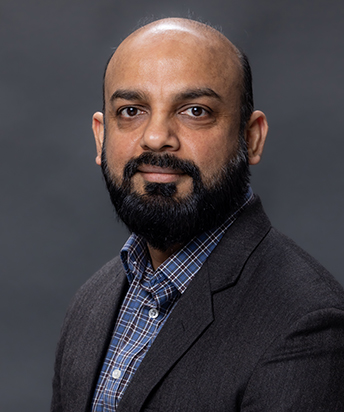
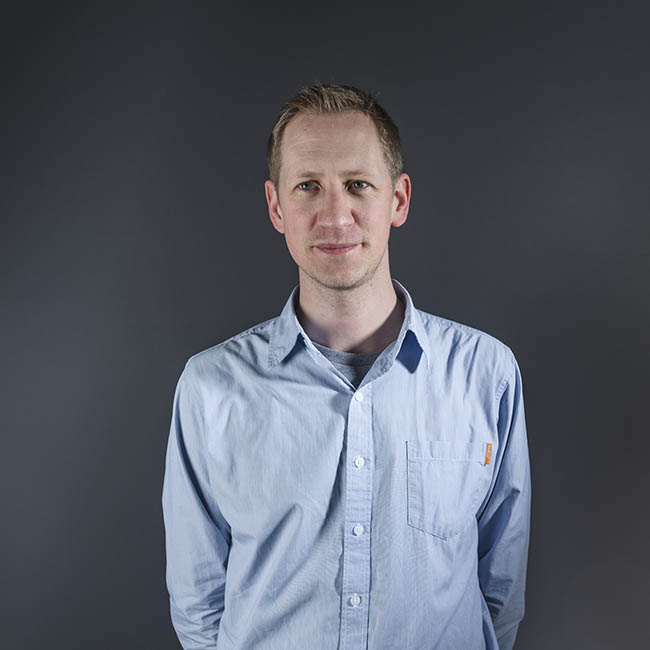
Dr. Christopher Dillon is an Assistant Professor in the Department of Mechanical Engineering at Brigham Young University , where he applies his expertise in heat transfer and thermal therapy. Prior to joining BYU, he worked at Sandia National Laboratories and completed a postdoc in the Radiology Department at the University of Utah, focusing on focused ultrasound for non-invasive tissue ablation. Education: Biomedical Engineering, University of Utah Postdoctoral Research, University of Utah (Radiology) Dr. Dillon’s research centers on optimizing thermal therapies using high-intensity focused ultrasound (HIFU) and magnetic resonance-guided focused ultrasound (MRgFUS). His work integrates computational modeling, tissue property characterization, and medical imaging to enhance treatment planning and efficacy, particularly in cancer therapy and non-invasive drug delivery. He also develops open-source tools like conformable skin-cooling systems to improve treatment safety. His recent publications highlight advancements in reduced-order modeling , temperature-dependent tissue properties , and MR-guided thermal monitoring . Themes include treatment optimization for breast cancer, phase aberration correction, and acoustic-property estimation. Dr. Dillon emphasizes collaboration, stating that effective engineering arises from strong teams and shared values. He balances his academic work with family life, raising four children, and pursuing mountain biking and Roald Dahl literature.
Prof. Hassan Abdalla serves as Vice-President (London Campus) at the University of East London (UEL), where he also contributes to research across interdisciplinary fields. His work spans blockchain technology, healthcare informatics, sustainable engineering, and cybersecurity. He has co-authored numerous peer-reviewed articles and conference papers, focusing on applications of technology to address societal challenges such as corruption in smart cities, energy efficiency in housing, and pandemic impacts on healthcare systems. Research Interests: Development of blockchain-based solutions for e-procurement and cybersecurity. Healthcare innovations, including predictive diagnostics for necrotizing enterocolitis using machine learning. Sustainable design methodologies, including fractal approaches to particulate systems and autonomous vehicle systems for reducing emissions. Neurological and biomechanical studies on gait stability and pedestrian behavior analysis. Energy conservation through smart technologies and behavioral interventions in domestic settings. Notable Articles Trends: His publications reflect a strong emphasis on interdisciplinary research, integrating computer science, engineering, and healthcare. Recent work highlights blockchain’s role in public administration transparency, while earlier studies explore materials science and manufacturing optimization. Grants and Awards: No specific grants or awards are documented in the provided texts. Labs/Teams: While not explicitly stated, his research collaborations suggest involvement with UEL’s technology and health sciences groups, as well as international partnerships in global health studies.
Professor Haiying Huang is a faculty member in the Department of Mechanical and Aerospace Engineering at The University of Texas at Arlington (UTA), serving as the Director of Engineering Education within the College of Engineering. She holds a Ph.D. in Aerospace Engineering from Georgia Institute of Technology and has extensive experience in academia and industry, including roles at Bell Laboratories and Purdue University. Her research focuses on Structural Health Monitoring (SHM) , ultrasonic sensors , wireless sensor networks , and fracture mechanics . Key projects include developing passive wireless sensors for aerospace structures and fatigue analysis of materials. Education: Ph.D. in Aerospace Engineering, Georgia Institute of Technology, 1998 M.S. in Electrical Engineering, Georgia Institute of Technology, 1997 B.E. in Aircraft Propulsion, Beijing University of Aeronautics and Astronautics, 1987 Research Interests: Wireless microwave and ultrasound sensors Structural health monitoring of aerospace structures Fatigue and sensitization corrosion analysis Engineering education innovation Prosthetic and biomedical sensor integration Notable Achievements: Recipient of 2008 NSF CAREER Award Fellowships: ORISE (2018), Air Force Summer Faculty (2007) Over 150 journal/conference publications and 8 patents Principal Investigator on federal grants totaling $10M+ from NSF, ONR, and DoD Lab: Advanced Sensor Technology Laboratory (ASTL) focuses on developing novel sensor technologies for SHM and interdisciplinary student training. Recent lab advancements include ultrasound waveguide networks and fatigue crack prediction algorithms.
Rajan Ambat is a Professor in Corrosion and Surface Engineering at the Department of Civil and Mechanical Engineering, Technical University of Denmark (DTU). He also serves as Visiting Professor at the University of Bournemouth, UK, and leads multiple research centers including the Center for Electronic Corrosion (CreCon) and the PDJF Center for Climate Robust Electronic Design (CRED). His research focuses on corrosion mechanisms in engineering materials, environmental reliability of electronics, and AI-driven corrosion analysis. Key research areas include corrosion in lithium-ion batteries, CO₂ corrosion of steels for carbon capture applications, humidity robustness of printed circuit boards (PCBs), and intergranular corrosion in aluminum alloys. He actively supervises PhD students in topics like electrochemical migration in implants and corrosion prediction algorithms. His work contributes to UN Sustainable Development Goals related to climate action (SDG 13) and industry innovation (SDG 9). Notable collaborations involve industry consortia like CreCon and academic partnerships across Europe and Asia. Current projects address corrosion failure in high-voltage electronics, phase-field modeling of corrosion fatigue, and predictive analytics for CO₂ corrosion mitigation. He is affiliated with DTU’s Corrosion Research Group and the Centre for Electronic Corrosion.
Dr Daniel Loch is a Postdoctoral Researcher at the Materials and Engineering Research Institute, Sheffield Hallam University. He holds a PhD in Plasma Science and Materials Engineering (2015) from the National HIPIMS Technology Centre and a Diplom-Ingenieur (FH) in Mechatronics from Jade University of Applied Sciences (2009). His research focuses on advanced plasma-based thin film deposition techniques such as Inductively Coupled Impulse Sputtering (ICIS) and HIPIMS, particularly for magnetic coatings and high-aspect-ratio structures in MagMEMS devices and sensors. He has developed novel sputtering techniques and characterized plasma properties using tools like Plasma Sampling Mass Spectroscopy and Scanning Electron Microscopy. In 2016, he won the Joint SHU-Fraunhofer IST Research Centre Award for his work on ICIS processes. His research areas include highly ionized plasma technology, magnetic thin films, and electrically insulating coatings. He has contributed to studies on thin film deposition for photovoltaic applications, semiconductor-compatible materials, and biomedical alloy coatings. Daniel has published extensively on HIPIMS, ICIS, and plasma nitriding processes, with notable work on transition-metal nitrides and nanocomposite coatings. His recent publications (2012–2025) highlight advancements in plasma-based deposition methods, including reverse pulse strategies for silicon dioxide coatings and CMOS-compatible plasmonic films. His research emphasizes practical applications in electronics, biomedical engineering, and optoelectronics, leveraging cutting-edge plasma analysis and thin film characterization techniques.
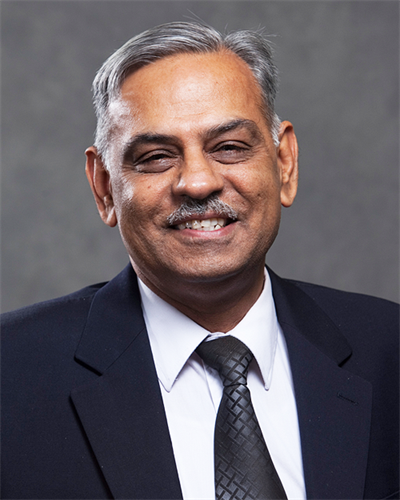
Anil Saigal is a Professor in the Department of Mechanical Engineering at Tufts University's School of Engineering. He has been at Tufts since 1983, progressing from Assistant Professor to his current position as Professor. During his tenure, he served as Department Chair from 2002-2007 and as Director of International Programs for the School of Engineering from 2007-2009. His primary academic home is within the Mechanical Engineering department, where he teaches courses related to materials and manufacturing. Dr. Saigal received his educational foundation from prestigious institutions: B.Tech. with distinction from the Indian Institute of Technology (IIT), Mumbai, India (1979) M.S. from Georgia Institute of Technology, Atlanta, United States (1980) Ph.D. from Georgia Institute of Technology, United States (1983) Professor Saigal's research focuses on materials engineering and science, with particular emphasis on composite materials, polymer processing, and advanced manufacturing techniques. His work spans fundamental material characterization to applied manufacturing processes, with strong connections to both industrial applications and emerging technologies. Key areas include: Characterization of composite materials and polymers Additive manufacturing and directed energy deposition techniques Materials processing and quality control Mechanical behavior of advanced materials at various temperatures Structure-property relationships in engineered materials His recent publications reveal a strong focus on additive manufacturing technologies, particularly directed energy deposition methods for creating advanced metal and composite materials. There's a clear trajectory toward biomedical applications of materials science, as evidenced by studies on cryogenic processing of biodegradable polymers and mechanical characterization of materials for medical devices. The research consistently bridges fundamental material science with practical engineering applications. Professor Saigal has received significant recognition for his contributions to the field: Fellow of the American Society of Mechanical Engineers (ASME) 2011 Distinguished Service Alumni Award from IIT Mumbai Vajra Fellowship from the Government of India (2020-2023) Best Paper Award from Minerals Metals and Materials Society (2017) Honorable Mention from American Society of Mechanical Engineers (2017) Throughout his career, Professor Saigal has been actively involved in mentoring students and securing research funding. His grant portfolio includes projects funded by the National Science Foundation, industry partners like Conn-Selmer, Inc., and internal Tufts University programs. He has served as an advisor for numerous student research projects and has contributed to skill development initiatives aimed at high school students. In addition to his research grants, he has held significant administrative roles including serving as an ABET Program Evaluator and on various university committees focused on tenure and promotion, academic calendar planning, and diversity initiatives. Professor Saigal leads the Research and Characterization of Composites and Polymers (RECCAP) Lab at Tufts University, which serves as the primary research hub for his work on advanced materials. The lab focuses on experimental characterization and computational modeling of composite materials and polymers, with particular emphasis on manufacturing processes and structure-property relationships. The RECCAP Lab supports both fundamental research and industry collaborations, providing students with hands-on experience in state-of-the-art materials characterization techniques.
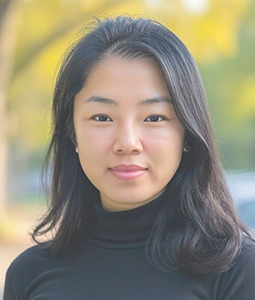
Dr. Xue Chen is an Assistant Professor in the Department of Mechanical and Construction Engineering at Northumbria University. She holds a PhD in Solid Mechanics from École Polytechnique (France) and conducted postdoctoral research at the University of Toronto. Her expertise spans smart materials, soft matter physics, and energy conversion, with a focus on multi-scale modeling and designing flexible sensors/actuators. Education: PhD in Solid Mechanics, École Polytechnique (2014) Engineer’s Diploma (MEng), ENSTA ParisTech (2009) BEng in Mechanical Engineering, Shanghai Jiao Tong University (2006) Research interests include energy-harvesting materials, biomimetic systems, and advanced composites. Recent work explores hydrogel-based encryption, super-hard wood composites, and dragonfly-wing inspired adhesives. Her studies on Ni-Mn-Ga alloys and graphene oxide metamaterials highlight contributions to smart material dynamics and human-machine interfaces. Grants and collaborations involve industry partnerships in energy storage and sensor development. No specific awards are listed, but her work reflects sustained innovation in materials science and engineering applications.
Yanjiao Yi is a Research Assistant Professor in the Department of Chemical Engineering at the University of South Carolina's Molinaroli College of Engineering and Computing. Her expertise centers on rational catalyst synthesis through methodologies controlling metal particle size (single atoms to clusters) and structure (core-shell, alloy configurations). Research interests include renewable energy applications, liquid hydrogen storage systems, electrochemical energy storage technologies, sustainable chemical production pathways, and plastic upcycling processes. Her experimental approach combines catalyst preparation with comprehensive characterization using advanced equipment and evaluation via fixed-bed/batch reactors. Current projects focus on developing catalyst systems for energy conversion and storage, with emphasis on structure-property relationships in heterogeneous catalysis.
Armin Feldhoff is an Extraordinary Professor (apl. Prof.) at the Faculty of Natural Sciences of the Leibniz University Hannover , leading the Thermo-Iono-Electronic Materials and Microstructure Analysis Group within the Institute of Physical Chemistry and Electrochemistry . He has held this position since 2012 and also serves as Department Student Advisor for the Chemistry M.Sc./M.Ed. program. Academic Career : Habilitation in Physical Chemistry (2009), Leibniz University Hannover Ph.D. in Physics (1997), Martin Luther University Halle-Wittenberg Diploma in Physics (1994), Westfälische Wilhelms-University Münster His research focuses on thermoelectric materials , mixed ionic-electronic conductors , and oxygen transport membranes , with expertise in high-resolution electron microscopy (HRTEM, EFTEM, STEM-HAADF) and X-ray diffraction . He has developed advanced ceramic composites for energy harvesting and CO2 conversion systems, emphasizing microstructure engineering and material sustainability . Recent publications highlight trends in: Textured and asymmetric ceramic membranes Electrospun nanoribbons for thermoelectrics Spark plasma sintering/texturing techniques Microemulsion-based synthesis Hydrogen-tolerant oxygen transport systems Mixed-phase stability analysis Scientific awards include the ACerS Global Ambassador (2022), DT Rankin Award (2022), and Luther Medal (1998). He serves on editorial boards for the Journal of the American Ceramic Society , Entropy , and Energy Harvesting and Systems .
Dr. Jie Lian is the William Weightman Walker Professor of Engineering at Rensselaer Polytechnic Institute (RPI), affiliated with the School of Engineering's Department of Mechanical, Aerospace, and Nuclear Engineering. He holds a Ph.D. in Nuclear Engineering from the University of Michigan and additional degrees in Materials Science and Electrical Engineering. His research focuses on advanced materials for nuclear energy systems, radiation-tolerant materials, and nuclear waste forms. He has been recognized with prestigious awards, including the NSF CAREER Award and the Distinguished Scholar Award from the Microbeam Analysis Society. Education: Ph.D., Nuclear Engineering & Radiological Sciences, University of Michigan (2003) M.S., Materials Science & Engineering, Tsinghua University (1998) M.S., Electrical Engineering, University of Michigan (2001) B.S., Materials Science & Engineering, Yanshan University (1995) Research interests include: Design of nanomaterials for nuclear energy systems Radiation-tolerant ceramics and composites Graphene synthesis and applications Nuclear fuel development and corrosion resistance Waste form immobilization for radioactive materials Grants and Awards: NSF CAREER Award (2012) for nuclear materials research DOE grants for clean energy projects NRC Faculty Development Award (2009) Labs and Collaborations: Center for Performance and Design of Nuclear Waste Forms and Containers (WastePD) Research partnerships with the U.S. Department of Energy and Nuclear Regulatory Commission.
Prof. Rüdiger Deike is the Chair holder of the Chair of Metallurgy and Forming Technology at the University of Duisburg-Essen. His research focuses on metallurgical processes, raw material markets, recycling technologies, and sustainability in the foundry and steel industries. He leads the Institute for Metal Technologies (ITM), emphasizing innovation in material flow analysis, energy efficiency, and circular economy applications. Key research areas include analyzing global raw material market dynamics, optimizing waste-to-resource systems for foundries, and advancing metallurgical processes for non-ferrous and ferrous alloys. His work integrates numerical modeling of solidification behaviors and process optimization for industrial applications. Publications highlight trends in commodity markets, recycling strategies for valuable materials, and material recovery from industrial byproducts. His interdisciplinary approach bridges technical challenges with economic and environmental sustainability, influencing policy and industry practices. Laboratory and team activities center around the ITM, where research spans experimental and computational methods to address global metallurgical challenges. No specific grants or awards are listed, but his contributions are evident through extensive publication output and institutional leadership.
Sandeep Singhal is Associate Professor of Pathology and Biomedical Engineering at UND. His research develops multi-omics biomarkers for cancer prognosis/therapy response, focusing on breast cancer disparities and prostate radiation toxicity. Key contributions include PIK3CA mutation signatures for endocrine therapy response and DNA methylation-based immune classifiers. Recent work explores arsenic-related bladder carcinogenesis and radiogenomics models. Published in Nature Genetics and Journal of Clinical Investigation, he serves on Scientific Reports editorial board. Secured grants for clinical genomics and toxicity prediction. Holds adjunct appointments at Columbia University and directs bioinformatics for North Dakota INBRE.
Rosalie Hocking is an Associate Professor and ARC Future Fellow at Swinburne University of Technology, affiliated with the School of Science, Computing and Emerging Technologies. Her research focuses on developing electrochemical devices for sustainable energy production, utilizing solar-derived electricity to produce chemicals like hydrogen and ammonia. She extensively leverages synchrotron-based techniques, including X-ray analysis, to study material behavior and catalytic mechanisms. Her work also includes sensor technology for real-time chemical analysis, such as asbestos detection in construction materials. Education: PhD in Physical and Inorganic Chemistry from the University of Sydney (2004). Prior roles include positions at Stanford University, CSIRO Land and Water, Monash University, and James Cook University. She holds an ARC Future Fellowship. Research Interests: Electrochemical devices, renewable energy storage, catalyst design, synchrotron analysis, and sensor technology. Key areas include CO2 reduction, hydrogen production, and sustainable ammonia synthesis. Scientific Awards: ARC Future Fellow (2024–2028). Grants: Includes ARC-funded projects on liquid metal catalysis, synchrotron-based techniques, and green chemical manufacturing. Collaborates with industry on hydrogen electrolyser development and PFAS remediation. Professional Activities: Committee memberships in synchrotron user advisory groups (e.g., Australian Synchrotron’s XAS beamline). Active in advancing synchrotron infrastructure and applications. Labs/Teams: Leads research in electrocatalysis, liquid metal systems, and sensor development. Collaborates with interdisciplinary teams on energy transition and environmental solutions.
Antonio Cassinese is a Full Professor at the CNR Institute for Superconductors, Innovative Materials and Devices (SPIN), affiliated with the Department of Physical Sciences and Technologies of Matter. His research focuses on advanced materials science, superconductivity, organic electronics, photonics, and biosensors. Key areas include the development of hybrid nanocomposites, 2D materials for electrocatalysis, superconducting single-photon detectors, and organic electrochemical transistors for biosensing applications. Publications since 2022 highlight contributions to memristive systems, superconducting microstrip detectors, and optoelectronic devices. His work spans interdisciplinary topics such as nanotechnology, energy materials, and environmental remediation through photocatalysis. The research emphasizes both fundamental material characterization and applied device engineering. Dr. Cassinese collaborates extensively within SPIN, contributing to cutting-edge projects in quantum sensing, optoelectronics, and bioelectronics. His team explores novel material interfaces and fabrication techniques, with applications ranging from medical diagnostics to energy conversion systems.
Tim Spencer is a Research Fellow at the Materials and Fluid Flow Modelling Group within Sheffield Hallam University . His work focuses on applying theoretical and computational methods to model complex fluid systems, with expertise in the lattice Boltzmann method , finite differencing , and high performance computing . His research spans diverse applications in liquid crystals , biological flows , and microfluidics . His educational background includes a PhD (2005) and MSci (2002) in Engineering Physics from Sheffield Hallam University, where he received the Jeremy Laskowski Award and Mössbauer Award . He has supervised K. Burgin in their doctoral thesis on lattice-Boltzmann models for food rheology and collaborated with institutions like CNR Rome and University of Manchester . Recent publications highlight his work on non-Newtonian particle transport (2019), multicomponent lattice Boltzmann models (2017), and anisotropic medium optical nonlinearities (2017). These studies intersect computational physics , biomedical engineering , and materials science , emphasizing multi-scale modeling , fluid dynamics , and numerical methods . Scientific awards include: Jeremy Laskowski Award Mössbauer Award His research projects have involved consultancy for Seiko Epson Corporation and ZBD Displays Ltd. , modeling liquid crystal devices , and developing microfluidic systems for monodisperse drop formation. Collaborations extend to CNR Rome (hemodynamic flows) and University of Manchester (cell seeding in bioreactors).