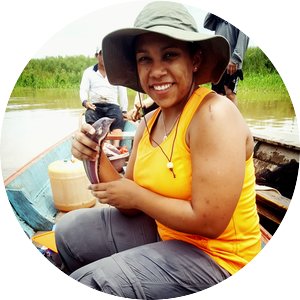
Kassandra Fordمشاهده پروفایل
استادیار
Kassandra Ford serves as Assistant Professor and Curator of Ichthyology and Molluscs at the Bell Museum, University of Minnesota - Twin Cities, with appointments in the Department of Fisheries, Wildlife, & Conservation Biology. She leads The Convergence Lab, focusing on evolutionary morphology in freshwater fishes. Her educational foundation includes: PhD in Environmental & Evolutionary Biology from University of Louisiana at Lafayette BS in Genetics from University of Wisconsin - Madison Dr. Ford's research centers on convergent evolution across biological hierarchies, investigating whether morphological convergence translates to functional/ecological convergence, its genetic basis in non-model organisms, and tropical-temperate divergence patterns. Her methodology integrates 3D morphometrics, phylogenetic comparative analysis, and biomechanical testing, primarily using Neotropical and Afrotropical electric fishes as model systems. Analysis of her 2018-2023 publications reveals consistent focus on craniofacial evolution in Gymnotiformes and Mormyroidea, with increasing methodological sophistication in morphological investigations. Her work bridges ichthyology, evolutionary developmental biology, and functional morphology while emphasizing cross-continental comparisons of freshwater fish radiations. Her recognition includes: Best Student Paper (American Society of Ichthyology & Herpetology, 2023) NSF Postdoctoral Fellowship ($138,000, 2022) BioOne Ambassador Award Nomination (2023) ICVM Research Travel Award ($2,000, 2019) Dr. Ford teaches Ichthyology (FW4136/5136) and graduate seminars while directing The Convergence Lab. She currently has no active graduate student recruitment due to funding constraints but evaluates future opportunities based on research alignment and grant availability, requiring prospective students to initiate contact during summer/fall for the following academic year. The Convergence Lab employs micro-CT scanning and geometric morphometrics to analyze teleost craniofacial evolution, maintaining active collaborations with ichthyology collections across North America and specializing in electric fish systematics.