معرفی
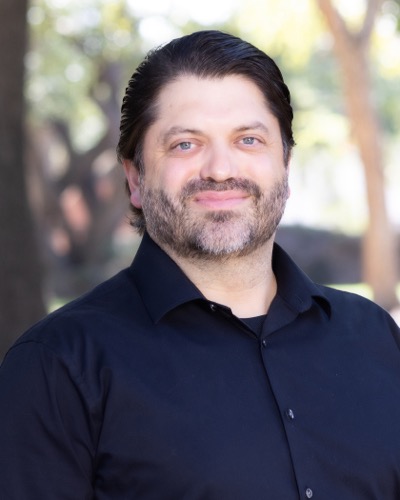
Dr. Bruno Alves Buzatto is a Senior Lecturer in Terrestrial Ecology at Flinders University's College of Science and Engineering. He is a behavioral and evolutionary ecologist specializing in arthropod biodiversity, particularly insects and arachnids, with an h-index of 23 and 1,362 citations across 59 research outputs.
His educational background includes:
- PhD in The evolution of male dimorphism in arthropods from the University of Western Australia (2013)
- MSc in Reproductive biology of the harvestman Acutisoma proximum from Universidade Estadual de Campinas (2008)
- BSc (Honours) from Universidade Estadual de Campinas (2005)
Dr. Buzatto's research focuses on sexual selection, alternative reproductive tactics, and the evolution of mating systems in arthropods. His work often employs experimental evolution approaches to study phenotypic plasticity in terrestrial arthropods including dung beetles, earwigs, bulb mites, and spiders. He has made significant contributions to understanding male dimorphism, weapon allometry, and sperm competition in invertebrates.
Analysis of his recent publications reveals a strong focus on sexual selection dynamics in arthropods, particularly examining how environmental factors like climate change and resource availability influence mating behaviors and reproductive strategies. His work spans taxonomic groups from spiders and scorpions to mites and harvestmen, with recent emphasis on Australian arachnids including the Sydney Funnel-Web Spider. He has also contributed to biodiversity discovery, notably with the identification of a millipede species with over 1,000 legs.
His scientific contributions include:
- Discovery of the first true millipede with more than 1,000 legs
- Research on short-range endemic invertebrates in Western Australia's Pilbara and Goldfields regions
- National Geographic-funded project on Sydney Funnel-Web Spider movement ecology
Dr. Buzatto maintains active research collaborations through external positions as Research Associate at the Western Australian Museum, Honorary Lecturer at Macquarie University, and Adjunct Research Fellow at the University of Western Australia. His work contributes to UN Sustainable Development Goals related to biodiversity conservation and environmental protection.
His laboratory and field research involves studying arthropod behavior, morphology, and ecology, with particular focus on Australian terrestrial invertebrates. His team combines field observations with experimental approaches to understand evolutionary processes shaping arthropod diversity.