معرفی
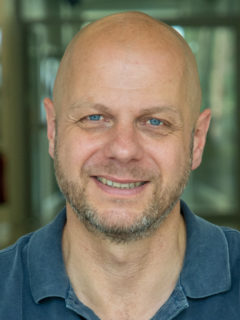
Gunther Andersson is a full Professor at Flinders University, specializing in surface science and materials research. He leads a research group focusing on liquid surfaces, photocatalysis for hydrogen generation, and catalysis based on nano-clusters. His work involves developing advanced surface analysis techniques like Neutral Impact Collision Ion Scattering Spectroscopy (NICISS) and Metastable Induced Electron Spectroscopy (MIES). Andersson holds a PhD in Physics from the University of Witten/Herdecke (1998) and a Habilitation in Physical Chemistry from Leipzig University (2006). He joined Flinders University in 2007 and is currently Deputy Director of the Flinders Institute for Nanoscale Science & Technology.
His research interests span liquid surface analysis, ion specificity effects, and sustainable energy applications, including photocatalytic water splitting. Andersson has secured significant funding, including Australian Research Council grants for surface analysis equipment and projects on ion specificity and hydrogen generation. He teaches courses in thermodynamics, electromagnetic waves, and research methods, and actively engages with professional societies such as the Australasian Colloid and Interface Society.
- Education:
- PhD in Physics, University of Witten/Herdecke (1998)
- Habilitation in Physical Chemistry, Leipzig University (2006)
- Master’s and Bachelor’s in Physics, Dortmund University (1994)
Andersson’s research group develops novel methods for studying soft matter surfaces under extreme conditions, including liquid and ultra-high vacuum environments. His work bridges fundamental surface science with applied energy technologies, emphasizing sustainable solutions for renewable energy storage and conversion.
Awards & Grants:
- Australian Research Council: $460,000 (2023–2025), $540,000 (2019–2020)
- Australian Renewable Energy Agency: $730,000 (2019–2021)
Media Expertise: Renewable energy technologies, photocatalysis for hydrogen generation.